Listen to this article
The recent developments surrounding Trump Venezuela intervention have sent shockwaves through the geopolitical landscape of Latin America. With President Donald Trump announcing military action aimed at dethroning Nicolás Maduro, the implications for regime change are profound and fraught with uncertainty. This operation has not only reinvigorated discussions about US military action in Venezuela but also highlighted the dire human rights violations that have plagued the Maduro regime. As international response to Venezuela’s plight intensifies, the focus shifts to the Venezuelan opposition leader who now potentially stands at the forefront of a new government. Amidst this chaotic backdrop, questions loom about the real motivations behind the intervention and its potential ramifications for the future of the nation.
In the wake of President Trump’s military maneuvers in Venezuela, the situation has escalated dramatically, with potential regime change on the horizon. The boldness of US military action raises critical dialogues around the leadership of Nicolás Maduro and the oppressive conditions faced by Venezuelan citizens under his rule. As the world watches, the plight of human rights violations in Venezuela becomes starkly apparent, prompting both supporters and detractors to rethink their positions. The Venezuelan opposition leader now finds himself in a pivotal role as the nation stands on the precipice of what could be a significant political transformation. This intervention not only sparks debates about sovereignty and ethics but also questions the feasibility of a peaceful transition amid the chaos.
The Implications of Trump’s Military Action in Venezuela
Trump’s decision to intervene militarily in Venezuela marks a significant turning point for U.S. foreign policy in Latin America. The swift operation aimed at removing Maduro has brought the concept of regime change to the forefront, mirroring techniques reminiscent of previous U.S. interventions in the region. This anticipated military action, however, not only poses immediate risks to the inhabitants of Venezuela but also raises broader questions about the outcomes of such direct involvement. The potential for instability looms large, especially considering the Maduro regime’s firm control over military and paramilitary forces.
Moreover, the international response to this intervention is expected to be varied and complex. While some countries might support U.S. intentions, others express concern about respect for sovereignty and the possibility of human rights violations under the pretext of restoring democracy. As the situation unfolds, it is crucial to monitor the backlash from neighboring countries that have historically opposed U.S. military actions in Latin America. The repercussions of these actions could either lead to the emergence of a new government aligned with U.S. interests or plunge the country into further chaos, highlighting the delicate balance the U.S. must maintain in its foreign policy.
Maduro Regime Change: Challenges Ahead for the Venezuelan Opposition
With Trump’s announcement of Maduro’s removal, the Venezuelan opposition finds itself at a historical crossroads. Leaders like Maria Corina Machado, touted as a potential successor, face tremendous challenges in consolidating power amid a fractured and divided opposition landscape. The decades of Maduro’s rule have solidified a deeply entrenched political system that is resistant to change. Furthermore, the opposition must navigate the treacherous waters of U.S. military support while avoiding perceptions of being mere puppets of American interests.
Additionally, the ongoing accusations of human rights violations by the Maduro regime continue to haunt the opposition’s quest for legitimacy. As investigations reveal the extent of abuses committed against dissidents, the opposition must present a united front capable of asserting its governance legitimacy. There is substantial global scrutiny on how they would engage with the remnants of a militarized regime and how to address the heavy toll on civilians caught in the crossfire. The transition from a dictatorship to a democratic government is always a daunting task, especially one backed by external intervention.
International Responses to U.S. Intervention in Venezuela
The international community’s response to U.S. military action in Venezuela has the potential to shape global geopolitical relations considerably. Countries like Russia and China, which have historically supported Maduro, are likely to condemn the action vehemently. Their criticism could further escalate military tensions in the region, especially if they choose to intervene indirectly by supporting pro-Maduro factions or exacerbating the existing humanitarian crisis. Given the strategic importance of Venezuela’s vast oil reserves, many nations will closely watch how this intervention unfolds.
Moreover, nations in Latin America are also facing a dilemma. While many could be inclined to echo Washington’s rhetoric against Maduro, they are also wary of the long-term implications of U.S. interventionism in the region. Many governments remember the darker chapters of U.S. interventionist history, where the fierce imposition of democracy often led to protracted instability. Discussions around humanitarian assistance and rebuilding efforts following military intervention will play a significant role in shaping international relations going forward.
The Human Rights Violation Narrative in Venezuelan Politics
Amidst the chaos of regime change, allegations surrounding human rights violations under the Maduro regime continue to be a pivotal issue. Groups like Amnesty International and Human Rights Watch have documented extensive abuses, including arbitrary detentions, torture, and extrajudicial killings, framing the regime as a violator of human rights. The unveiling of these abuses often serves as a rallying cry for international intervention, amplifying calls for accountability but also raising concerns about the potential for a cycle of violence as rival factions take to the streets in a struggle for power.
As the Venezuelan opposition gears up for a potential power shift, it faces immense pressure to address these human rights concerns proactively. How the new leaders engage with the realities of human rights violations can influence the legitimacy of their governance. Furthermore, cooperation with international bodies to investigate these claims will be crucial for establishing a new precedent for human rights in Venezuela, ensuring that the mistakes of the past are not repeated under a new regime.
US Military Action: Its Impact on Venezuela’s Future
The ramifications of Trump’s military action against Venezuela will undoubtedly shape the country’s immediate future and potentially its long-term trajectory. Analysts suggest that the current violence could incite further divisions within the country, possibly leading to a fragmented political landscape fraught with violence and instability. For many Venezuelans, the prospect of U.S.-led military intervention raises fears about returning to the chaos of past coups, leaving ordinary citizens to bear the brunt of the conflict.
Moreover, there are concerns about how this intervention might affect U.S.-Venezuelan relations in years to come. If the U.S. is seen solely as an aggressor, it could alienate segments of the Venezuelan population who desire genuine change, thus complicating prospects for democratic transition in the future. The ultimate goal of fostering a stable, democratic Venezuela amidst territorial and military turmoil will require not just military might but also a comprehensive diplomatic strategy that aims for reconciliation and rebuilding.
The Role of Maria Corina Machado in Venezuela’s Opposition Movement
Maria Corina Machado’s rise as a leading figure in the Venezuelan opposition signifies a crucial moment for those seeking democratic change in the country. Her leadership could prove to be instrumental in consolidating the fragmented opposition and presenting a viable alternative to Maduro’s regime. Machado’s previous experience in government and her advocacy for human rights resonate with a populace desperate for reform, positioning her as a beacon of hope amid pervasive corruption and violence.
However, her association with U.S. military intervention poses significant risks. Many Venezuelans are wary of foreign influence, and some factions within the opposition are skeptical of her ability to unify a deeply divided electorate. Faced with impending challenges, Machado must navigate the complexities of U.S. support while fostering a sense of national sovereignty and self-determination among her followers. The direction she chooses could well determine the future of Venezuela’s political landscape.
Nicolas Maduro’s Response to U.S. Military Interventions
The Maduro regime’s reaction to the U.S. military intervention underscores the resilience and defiance of his government in the face of external aggression. Maduro has long accused the United States of attempting to undermine Venezuela’s sovereignty and steal its vast oil wealth. His narrative of resistance has garnered support among those who view the U.S. as a historical aggressor, reinforcing national unity against perceived foreign domination.
In response to the recent U.S. actions, the regime is likely to intensify its militaristic rhetoric and rally its supporters around a campaign of resistance. By framing the intervention as an assault on Venezuelan dignity, Maduro aims to consolidate his power while delegitimizing the opposition. The effectiveness of his strategy will play a crucial role in determining whether the regime can maintain control, especially in light of the internal and external pressures shaping the future of Venezuela.
Prospects for Democratic Elections in a Post-Maduro Venezuela
The possibility of democratic elections in a post-Maduro Venezuela hinges on the success of the opposition to establish stability and legitimacy post-regime change. If the opposition emerges unified and supported by the U.S. and international community, the road could potentially lead to free and fair elections. However, this requires overcoming profound divisions within the opposition itself and negotiating with factions loyal to Maduro, which continue to exert strong influences over both military and civil institutions.
Furthermore, any push for elections must prioritize human rights observers and transparency to mitigate skepticism surrounding the electoral process, a key demand from the international community. Without a framework that ensures fairness and security, the potential for renewed cycles of violence and mistrust remains high. The path to a democratic Venezuela depends not only on removal of Maduro but also on building a foundation for sustained political engagement among the citizenry.
The Economic Impact of Intervention on Venezuelan Citizens
The economic ramifications of U.S. military intervention in Venezuela are poised to be profound and multifaceted, impacting ordinary citizens the most. As the U.S. seeks to impose sanctions and direct military actions, the already collapsing economy might plunge deeper into a humanitarian crisis. Access to necessary resources, including food and medicine, could become increasingly limited, exacerbating poverty levels and suffering among Venezuelans.
Furthermore, the geopolitical consequences of intervention could lead to sanctions from opposing countries and deterioration in international trade relations. The prospect of international economic aid could provide a lifeline, yet it remains contingent on effective governance from an opposition-led government. For citizens of Venezuela, the fundamental challenge revolves around survival and sustaining hope amidst the uncertainty brought on by foreign intervention.
Frequently Asked Questions
What is Trump’s plan for Venezuela and the Maduro regime change?
Trump aims for swift regime change in Venezuela, targeting President Nicolás Maduro’s government with military action. His administration believes that removing Maduro will pave the way for a democratic government, possibly led by opposition leader María Corina Machado.
How has the international response to Maduro’s regime changed since Trump’s intervention?
The international response has intensified following Trump’s military actions, with many supporting efforts for regime change in Venezuela. However, there is also significant opposition from countries like Brazil and Colombia, as well as concerns over human rights violations associated with US military intervention.
What human rights violations has the Maduro regime been accused of before Trump’s intervention?
Before Trump’s intervention, the Maduro regime faced severe accusations of human rights violations, including extrajudicial killings, torture, and political imprisonments. These actions have drawn considerable international condemnation and contributed to calls for regime change.
What has been the role of the Venezuelan opposition leader during Trump’s intervention?
The Venezuelan opposition leader, María Corina Machado, has become a significant figure during Trump’s intervention. Advocating for change, she is seen as a potential leader if the Maduro regime falls, but her position is not universally supported among all opposition factions.
What are the risks associated with US military action in Venezuela under Trump’s leadership?
US military action in Venezuela under Trump’s leadership carries risks of escalating violence and political instability. Critics worry it could lead to a power struggle and a backlash against such intervention, reminiscent of historical US regime change efforts in Latin America.
How do recent US military actions in Venezuela compare to past interventions?
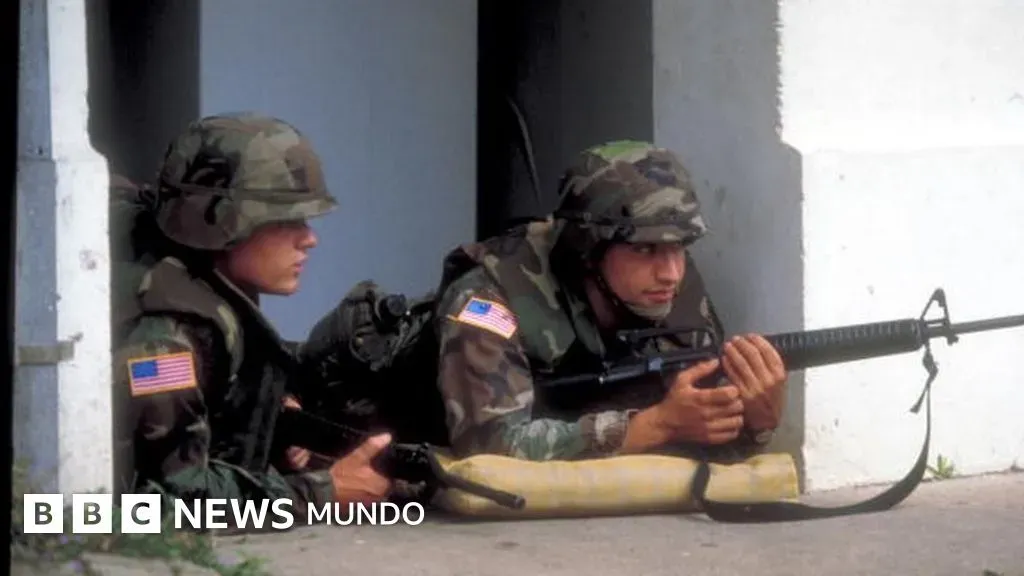
Recent US military actions in Venezuela mark a significant escalation and are comparable to past interventions like the 1989 Panama invasion. Unlike those previous operations, Trump’s military action directly targets the Maduro regime amid claims of their involvement in drug trafficking and international crime.
What are the implications of Trump’s intervention for the future of Venezuela?
Trump’s intervention may lead to a shift in power dynamics within Venezuela, potentially strengthening the opposition while posing questions about the stability of any new government. The long-term implications remain uncertain, with fears of violence and further human rights abuses.
Has the US’s staunch opposition to the Maduro regime influenced global perceptions of Venezuela?
Yes, the US’s firm stance against the Maduro regime has influenced global perceptions, framing the government as tyrannical and corrupt, which has garnered some international support for regime change but also drawn criticism over the methods employed.
What do human rights organizations say about Trump’s military actions in Venezuela?
Human rights organizations express deep concern over Trump’s military actions in Venezuela, fearing they may exacerbate human rights violations and lead to civilian casualties, complicating the humanitarian crisis that has already been attributed to the Maduro regime.
What steps might the US take following the ousting of Maduro as a result of Trump’s actions?
Following Maduro’s ousting, the US may push for new elections and support the Venezuelan opposition in establishing a transitional government. However, the exact steps depend on the political landscape and the acceptance of the opposition among various factions within Venezuela.
| Key Points |
|---|
| Trump’s announcement of military strikes against Venezuela marks a significant increase in US intervention in Latin America since the 1989 invasion of Panama. |
| Nicolás Maduro has been allegedly captured and faces trial in the US for drug and weapons charges, amid accusations of leading a criminal trafficking organization. |
| The US has historically accused Maduro of human rights abuses, with the UN highlighting severe violations under his regime. |
| The military action coincides with an effort to support the Venezuelan opposition, notably leader Maria Corina Machado, in their goal to assume power. |
| Concerns persist about potential violence and instability within Venezuela following the intervention, especially given the government’s stronghold on power. |
| The US’s military presence in the region has escalated significantly, raising alarms about the long-term implications of Trump’s interventionist strategy. |
Summary
Trump’s Venezuela intervention reflects the current US administration’s aggressive stance on foreign policy, aiming to remove Maduro from power. The military action, unprecedented in recent history, showcases not only a desire to counter alleged human rights violations but also to influence the geopolitical landscape of South America. The complex aftermath of this intervention leaves many uncertain about the immediate future of Venezuela and the potential for continued conflict.