
Listen to this article
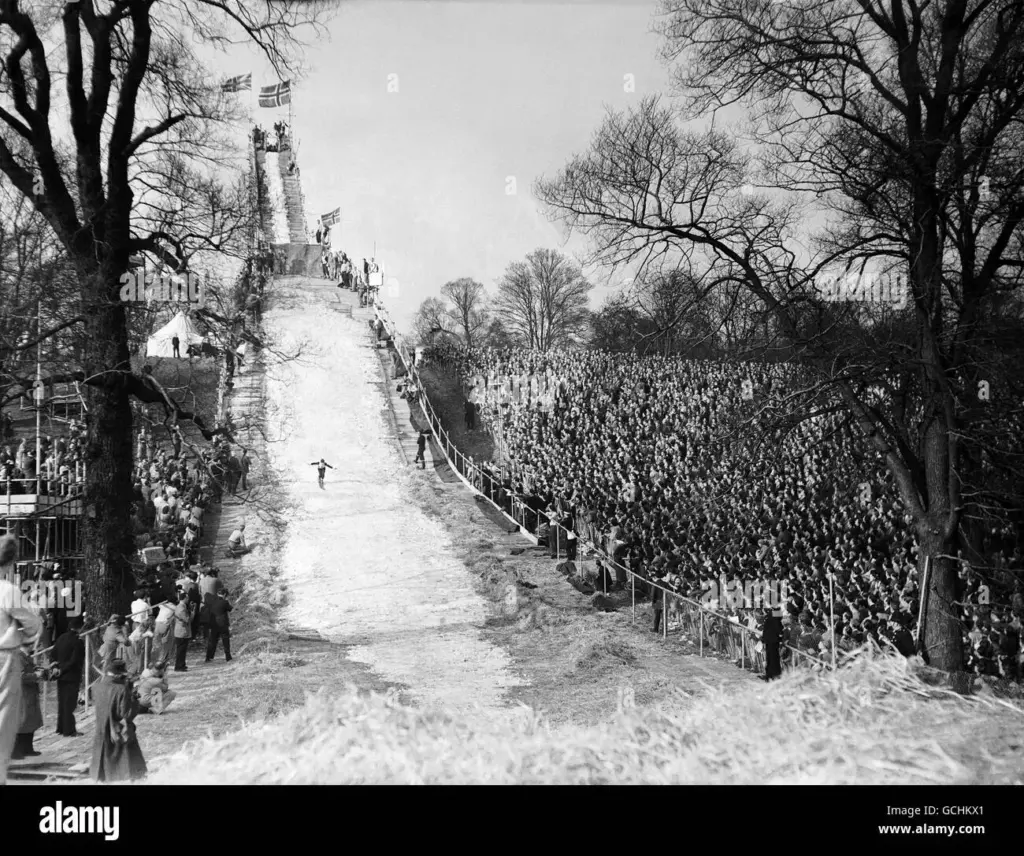
Hampstead Heath ski jumping made its historic debut in March 1950, marking a significant moment in London’s winter sports scene. This event drew a staggering crowd of 100,000 spectators who came to witness the thrills of ski jumping, a sport that, while not traditionally British, captivated the hearts of many. As athletes prepared for the Winter Olympics in Italy that same year, the eyes of the sporting world turned to this remarkable setting where ski jumping history was being written. The inaugural competition, co-organized by the Ski Club of Great Britain and the Oslo Ski Association, featured notable competitors, including Arne Hoel from Norway, and heralded the spirit of determination seen later in iconic figures like Eddie the Eagle. With the ramp constructed from scaffolding and snow transported all the way from Norway, Hampstead Heath’s ski jumping event blended a challenging past with the excitement of a budding winter sports culture in London.
The exhilarating world of ski jumping found a unique stage in the heart of London, specifically at Hampstead Heath, where ski jumpers took flight in front of an enthusiastic audience. This thrilling winter sport, often graced by underdog athletes, created a new chapter in London ski jumping history during the early 1950s. Back then, watching the incredible aerial feats of jumpers like Hoel was as mesmerizing as Eddie the Eagle’s 1988 Olympic debut, showcasing British tenacity on snow. The 1950 event not only highlighted the skills necessary for ski jumping but also reflected the camaraderie between nations in a post-war landscape, with Norway displaying remarkable generosity despite its struggles. The legacy of Hampstead Heath ski jumping remains a fascinating tale of aspiration and athleticism in a city not typically associated with winter sports.
The Historic Ski Jumping Event at Hampstead Heath
In March 1950, ski jumping made its memorable arrival at London’s Hampstead Heath, drawing in an impressive crowd of 100,000 spectators eager to witness this thrilling event. The competition emerged at a time when Britain was portraying ski jumpers as the determined underdogs on the global stage, a narrative epitomized by the eventual Olympic ski jumper, Eddie the Eagle. Collaboratively organized by the Ski Club of Great Britain and the Oslo Ski Association, this inaugural event featured a magnificent jump structure made of scaffolding rising 18 meters, specifically built to cater to a thrilling skiing showdown.
The logistics behind the event were as fascinating as the competition itself. Given London’s typical lack of snow, an astounding 45 tonnes of snow were shipped from Norway to ensure the jumpers could compete under fair conditions. Despite the challenges, including a dauntingly narrow landing area on the constructed slope, the event reflected a spirit of resilience during a post-war period where resources were scarce. This historical event not only marked the birth of ski jumping in London but also highlighted the tenacity of athletes and organizers striving to elevate this exhilarating sport.
The Significance of Ski Jumping in London’s Cultural Landscape
The 1950 Hampstead Heath ski jumping event was a landmark occasion that symbolized more than just a sporting competition; it represented a significant moment in London’s cultural landscape. The spectacle of ski jumpers defying gravity in a city not typically associated with winter sports reflected a growing interest in skiing and adventure sports within the urban environment. It was a time when many in Britain were beginning to explore new recreational activities, and ski jumping, despite its challenges, captured the imagination of the public.
Following the Hampstead Heath events, ski jumping would continue to resonate within British sports culture. The intrigue surrounding British ski jumper Eddie the Eagle, who later became a household name during the 1988 Winter Olympics, served to further intertwine the sport with London’s identity. Ski jumping wouldn’t just be relegated to the peaks of the Alps but would instead flourish as an emblem of British tenacity and spirit, igniting hopes for future generations of jumpers to compete on an international stage.
Eddie the Eagle: The Underdog of Ski Jumping
No discussion about British ski jumping would be complete without mentioning Eddie the Eagle, whose story further popularized the sport beyond its niche audience. As Britain’s first Olympic ski jumper in 1988, Eddie, or Michael Edwards to those closer to him, became synonymous with the underdog spirit, capturing hearts and spirits during a time when the sport was seeking relevance in the UK. His endearing persona and unconventional journey through the sport drew a substantial following, making him an integral part of ski jumping lore and British sporting history.
Eddie’s impact extends well beyond his performance on the jumps; he became a symbol of determination and perseverance, encouraging many aspiring athletes in London and beyond. The legacy of the Hampstead Heath ski jumping events, paired with Eddie’s popular accolades, created a unique blend of history and fandom that has allowed ski jumping to remain a part of British consciousness, despite the sporadic nature of its events.
The 1950 Hampstead Heath Snow Import
The fascinating logistics behind the 1950 Hampstead Heath ski jumping event were characterized by the notable challenge of securing snow for the competition. Given London’s famously mild winters, nearly 45 tonnes of snow had to be imported from Norway, meticulously stored in wooden boxes, insulated with dry ice, and transported via refrigerated barges. This remarkable undertaking was spearheaded by the very ski jumpers who arrived for the competition, reinforcing the collaborative spirit among the global skiing community.
Ingrid Christophersen, a source of first-hand experience from those days, recalled the surprising effort from Norwegian competitors who brought along the snow amid the struggles of a post-war economy. Their willingness to contribute to the Hampstead Heath event speaks volumes about the historical kinship shared across ski jumping nations, showcasing an unwavering commitment to promoting and elevating the sport, regardless of the broader societal challenges faced.
The Legacy of Ski Jumping Competitions in London
While the events at Hampstead Heath in 1950 and subsequent years were pivotal, they ultimately crafted a legacy that transcends individual competitions. The heightened interest in ski jumping instigated a series of subsequent events, including the major 1961 contest at Wembley Stadium, which introduced a new level of international attention and competition to London’s skiing aspirations. This trajectory not only set the stage for continued interest in ski jumping but also initiated a journey to restore Britain’s position on the world ski jumping map.
Beyond the immense competition at Wembley, these early events fostered an enduring community passionate about ski jumping. The excitement generated in the streets of London as crowds gathered year after year established a cultural phenomenon that intertwined with the hopes of many individuals aspiring to partake in skiing, thus leaving an indelible mark that continues to inspire future jumpers and skiing enthusiasts alike.
The Evolution of Ski Jumping Facilities in London
The evolution of ski jumping facilities in London reflects the sport’s adaptability and growth over the years. Starting with the makeshift ramps and limited snow supply of the early events at Hampstead Heath, subsequent competitions led to the development of more sophisticated facilities like the impressive scaffolding ramp constructed at Wembley Stadium in 1961. This ramp ultimately offered a remarkable height of 46 meters, signifying significant advancements in both design and safety measures, allowing for larger jumps and more competitive performances.
As ski jumping continued to evolve within the urban sphere of London, the shift from the rudimentary structures of the past to more refined facilities underscored the increasing professionalism of the sport. This progress mirrored the global advancements in winter sports infrastructure, paving the way for future generations of competitors to take center stage and capture the imagination of a broader audience. The legacy of those iconic early competitions remains an inspirational thread in the fabric of London’s ongoing winter sports narrative.
Challenges Faced by Early Ski Jumpers at Hampstead Heath
The 1950 ski jumping event at Hampstead Heath was marked by as many challenges as triumphs. Jumpers faced unique hazards linked to the construction of the scaffolding-based ramp, with Ingrid Christophersen reflecting on the dangers associated with the narrow run-out area. The limited snow coverage and confined space created an unsafe environment where wind shifts could jeopardize the skiers’ landings and, as a result, their safety during jumps. This precariousness highlighted the courage and skill of early ski jumpers who pushed through these obstacles in pursuit of their sport.
Furthermore, the unpredictability of London’s weather presented additional complications for organizers and athletes alike. The warm March conditions melted the imported snow, leading to a challenging competition environment. Despite these adversities, the determination of the ski jumpers shone through, showcasing their commitment to the sport and the audience. These instances illustrated how early skiers navigated not only physical challenges but also persevered in establishing ski jumping as a beloved sport in an urban setting.
The Role of Norwegian Ski Jumpers in Establishing the Sport
Norwegian ski jumpers played a crucial role in establishing the sport within Britain, notably during events like the Hampstead Heath competition. Their prominence in the skiing world, combined with their willingness to share their expertise and skills, helped foster a deeper appreciation for ski jumping among British audiences. At the forefront of this influence was Arne Hoel, who won the London Challenge Cup in 1950 and became a local hero in Britain, solidifying the bond between Norwegian athletes and the development of ski jumping in London.
The collaboration between Norwegian and British ski clubs was instrumental in facilitating the necessary conditions for successful ski jumping events in London. The contributions from Norwegian ski jumper teams not only provided an opportunity for local athletes to witness world-class performances but also allowed them to aspire to compete on global stages. This camaraderie laid the foundations for future ski jumping endeavors within the UK and helped nurture a supportive environment for upcoming talent.
Remembering the First Ski Jumping Events at Hampstead Heath
The inaugural ski jumping event at Hampstead Heath remains etched in the memory of those who attended or participated. The excitement of witnessing ski jumpers perform on a temporary scaffolding ramp created an atmosphere filled with awe and celebration. For many Londoners, the event represented an unprecedented opportunity to engage with a fascinating sport that was otherwise foreign to them. The successful outcome bolstered a sense of pride for the locality, creating a prominent chapter in the history of British winter sports.
As we reflect on these early ski jumping competitions, it is essential to remember how they shaped perceptions of winter sports within London. They initiated conversations about the feasibility of hosting similar events and encouraged future generations to consider winter sports as a viable pursuit. The memory of Hampstead Heath’s ski jumping events serves as a reminder of London’s ability to embrace new sporting ventures, leaving behind a rich legacy that continues to inspire.
Frequently Asked Questions
What is the history of ski jumping in Hampstead Heath?
Ski jumping made its debut in Hampstead Heath in March 1950, coinciding with the Winter Olympics in Italy. The event drew around 100,000 spectators and featured a 18m high jump made from scaffolding, with 45 tonnes of snow imported from Norway.
Who was the first winner of the Hampstead Heath ski jumping competition?
The inaugural Hampstead Heath ski jumping competition was won by 23-year-old Norwegian Arne Hoel, who achieved a jump of 28m (91ft 10 inches) during the London Challenge Cup in March 1950.
What challenges did ski jumpers face at Hampstead Heath?
Ski jumpers at Hampstead Heath faced several challenges, including a narrow landing area due to limited snow coverage and the dangers posed by the scaffolding used to build the ramp, which made the jumps riskier.
How did Eddie the Eagle influence British ski jumping?
Eddie the Eagle, known as Britain’s first Olympic ski jumper, gained recognition in 1988, 27 years after the Hampstead Heath event. His story exemplifies the underdog spirit in British ski jumping and has helped popularize the sport in the UK.
When did Hampstead Heath last host ski jumping events?
The last ski jumping event at Hampstead Heath took place in 1951, after which ski jumping in the UK moved to other venues like Wembley Stadium, which hosted a larger event in 1961.
What was the significance of the 1950 ski jumping event in Hampstead Heath?
The 1950 ski jumping event at Hampstead Heath was significant as it introduced ski jumping to London and captured the public’s imagination, showcasing British spirit and attracting a massive audience, despite challenging conditions.
Can you explain the logistics behind the Hampstead Heath ski jumping event?
To facilitate the Hampstead Heath ski jumping event in 1950, organizers imported 45 tonnes of snow from Norway, packed in wooden boxes and transported using refrigerated trucks and barges, highlighting the effort put into this unique event.
What impact did weather conditions have on ski jumping at Hampstead Heath?
Weather conditions played a crucial role in the Hampstead Heath ski jumping events; the warm March weather in 1950 and heavy rain in 1951 affected snow quality and jump conditions, leading to unique challenges for competitors.
Was there a notable British competitor at the Hampstead Heath ski jumping events?
Yes, British competitor Alex Sykes participated in the 1961 event at Wembley Stadium, achieving an impressive jump of 27.4m (90ft), which represented Britain’s presence in international ski jumping competitions.
What other ski jumping events followed the Hampstead Heath competition?
After the Hampstead Heath events, ski jumping demonstrations continued in Britain, including a notable event in Edinburgh in 1951, and the large-scale 1961 competition at Wembley Stadium, which brought together top European ski jumpers.
| Key Point | Details |
|---|---|
| First Ski Jumping Event | March 1950 on Hampstead Heath, marking the sport’s debut in London. |
| Imported Snow | 45 tonnes of snow were brought from Norway due to the rarity of snow in London. |
| Inaugural Competition | Organized by the Ski Club of Great Britain and the Oslo Ski Association on March 24-25, 1950. |
| Spectator Turnout | Around 100,000 spectators attended the event, causing significant traffic disruption. |
| Highlight of the Event | Norwegian jumper Arne Hoel won the London Challenge Cup with a jump of 28m. |
| Return of Ski Jumping | Ski jumping returned in 1951, featuring a larger ramp but poor weather affected conditions. |
| Subsequent Events | Further events continued in Edinburgh and later at Wembley Stadium in 1961. |
| Legacy | Eddie the Eagle became the face of British ski jumping many years later. |
Summary
Hampstead Heath ski jumping made a historic debut in March 1950, captivating around 100,000 spectators. This first event showcased the sport in London with significant participation from Norwegian athletes who transported snow for the occasion. Despite challenging conditions and limited facilities, the competition highlighted the British spirit and the enthusiasm of the sports community. Although subsequent events were rare, the legacy of Hampstead Heath ski jumping paved the way for future competitions and celebrated the resilience of skiers from Britain.