
Listen to this article
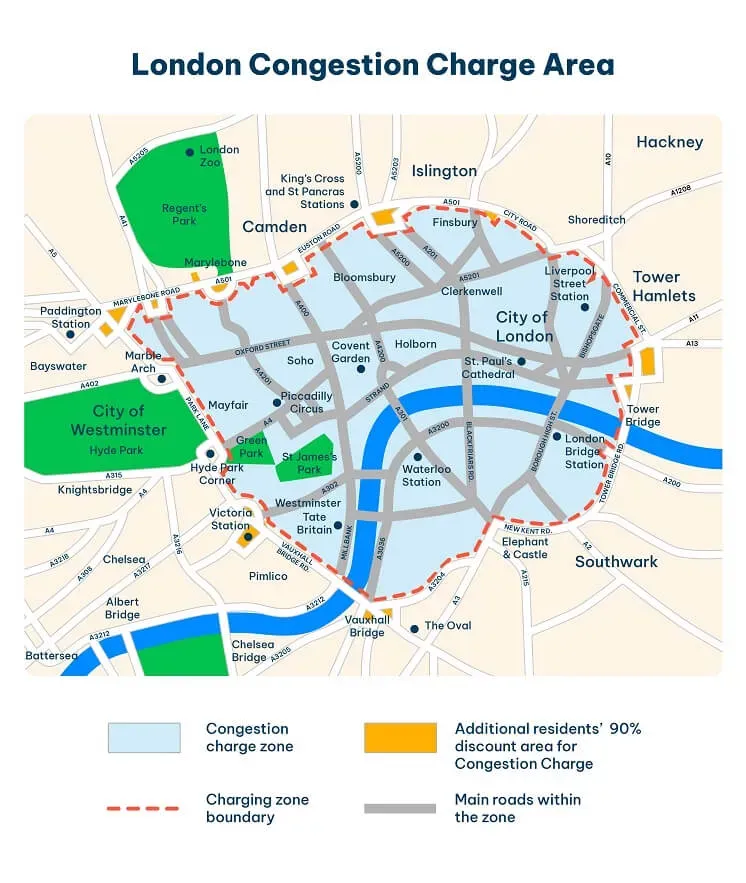
The London congestion charge for electric vehicles has become a notable development for drivers in the city’s bustling heart. This landmark change means that electric vehicle (EV) owners must now factor in congestion fees, which have risen for traditional vehicles from £15 to £18 for the first time since 2020. However, those who register for the EV Auto Pay discount can enjoy a reduced rate of just £13.50 per day, helping to offset some costs in the central London driving environment. Mayor Sadiq Khan has emphasized the need for these adjustments, arguing that increased congestion from additional non-EVs necessitates such measures to maintain London’s traffic flow. As London continues to push towards more sustainable transportation, navigating the evolving landscape of electric vehicle charges in London becomes crucial for residents and visitors alike.
The introduction of congestion fees for environmentally friendly vehicles in London marks a significant shift in urban driving dynamics. Electric car users are now confronted with central city driving fees that were once exclusive to traditional combustion engine vehicles. As Mayor Sadiq Khan oversees these updates, drivers must adapt to the potential congestion charge increase, even as discounts like the EV Auto Pay offer some financial relief. The policy aims to mitigate potential traffic rises by compelling all vehicle types, including EVs, to contribute to the congestion management system. Consequently, the incorporation of these fees into the cost of owning an electric vehicle alters the incentive structure that has historically encouraged the transition to greener transport options.
Understanding the London Congestion Charge for Electric Vehicles
The London congestion charge has evolved significantly since its introduction in 2003, aiming to decrease traffic congestion in central London. As of January 2, 2024, electric vehicle (EV) drivers must pay this charge for the first time, juxtaposed against an increase in the daily fee for non-electric vehicles from £15 to £18. This marks a pivotal moment in London’s approach to managing urban traffic and promoting sustainable transportation. Mayor Sadiq Khan’s administration has faced pressure to mitigate vehicle numbers and protect the integrity of congestion charge funding, which is essential for maintaining public transportation and infrastructure.
The announcement has sparked mixed reactions among residents and EV owners. Some see it as a necessary step toward a cleaner, less congested city, while others, including dedicated drivers like Joan Owen, express concerns about the detrimental effects on community engagement and charitable work. The new fee structure, while providing a 25% discount for registered EVs using Auto Pay, raises questions about the future incentive for investing in electric vehicles in a city already grappling with transportation challenges.
Impact of Congestion Charge Increase on Central London Driving Fees
Increasing the congestion charge to £18 is significant, especially considering it is the first increase since 2020. The hike in fees not only directly affects non-electric vehicle owners but also poses challenges for electric vehicle drivers who will now participate in these fees. The rising costs may deter potential EV buyers, establishing concerns about not adequately incentivizing sustainable transportation adoption in the capital. With many residents relying on personal vehicles for transportation, understanding the nuances of central London driving fees becomes even more critical.
Moreover, the implications of the congestion charge increase resonate throughout the community. The ongoing adjustments serve not just as a financial burden but also signal a shifting attitude toward urban mobility and collective efforts to foster a greener city. As a part of this transition, participation in the congestion charge system becomes a balancing act between maintaining accessibility within the city while combating increasing congestion and pollution levels.
Sadiq Khan’s Strategy for Electric Vehicles Amidst Congestion Charge Changes
Mayor Sadiq Khan’s recent initiatives surrounding the London congestion charge reflect a broader strategy aimed at adjusting to the growing number of vehicles in the city. As electric vehicles grow more prevalent, the need for equitable policies becomes apparent. Some critics argue that the decision to charge EV drivers diminishes the attractiveness of greener options, as they have historically enjoyed exemptions from congestion fees. The balance that Khan seeks to achieve includes preparing for future transportation trends while still addressing the sustainability goals of the city.
By incorporating measures such as the EV Auto Pay discount, aimed at making electric vehicle usage more economical, Khan’s administration wishes to ensure that environmental policies keep pace with demands on urban infrastructure. With every decision, there is a nuanced interplay of public sentiment, environmental responsibility, and economic viability, crucial for forging a sustainable transport strategy in central London.
The Future of Electric Vehicle Charges in London
Looking ahead, the future of electric vehicle charges in London is poised for significant changes, particularly with the scheduled reductions in discounts for EVs. The current 50% discount for electric vans and larger vehicles will shift to 25% by 2030, creating new dynamics in the market for electric mobility. The adjustments reflect Transport for London’s (TfL) ongoing evaluation of congestion patterns and vehicle entries into the charging zone. As more electric vehicles are expected to enter London, the sustainable transport landscape will require continual adaptation.
These changes, while aligned with long-term sustainability goals, can create potential friction in an urban setting. The gradual reduction of incentives may prompt existing EV users to reassess their driving habits, especially for those who drive for charitable purposes or community service, like Joan Owen. Thus, maintaining a focus on enhancing public transportation and integrating new technologies will remain critical for leaders in London as they navigate the complexities of urban mobility.
Exploring Alternatives to Congestion Charges in London
As London adjusts its congestion charge policy, the conversation is expanding to explore viable alternatives that could preserve accessibility while addressing the city’s traffic challenges. Options are being discussed that range from public transport enhancements to ride-sharing incentives, which may lessen the dependence on personal vehicles and reduce congestion in the long term. Such developments could provide a more integrated approach to managing urban traffic, allowing for more efficient travel and coherent alignment with the city’s sustainability objectives.
Innovative solutions aimed at minimizing congestion could include expanding bus lanes or cycling infrastructure, which would cultivate a positive environment for both residents and visitors. With Sadiq Khan’s focus on reducing congestion levels, the exploration of these alternatives not only addresses immediate traffic concerns but also encourages a collective shift toward greener travel options, preserving incentives for electric vehicle use amidst changing fee constructs.
Public Sentiment and Reactions to Congestion Charge Adjustments
Public sentiment surrounding the introduction of congestion charges for electric vehicles has been variable. Many electric vehicle owners worry about the perceived undermining of their perceived benefits of going green. Joan Owen’s views reflect a prevalent attitude among users who feel that the policy shift could deter future investments in electric vehicles, as the remaining incentives may appear insufficient to counterbalance the new fees. This disquiet underscores the need for clearer communication from city leaders about the objectives driving these changes.
Feedback from the community highlights the broader implications of congestion charging policies. The concern that financial burdens could dissuade residents from adopting electric vehicles may resonate significantly with policymakers, compelling them to rethink the trajectory of London’s transportation strategy. This dialogue illustrates the balancing act city officials face between enforcing necessary congestion pricing while promoting an eco-conscious culture.
Innovations in Electric Vehicle Technology and Urban Traffic Management
As London navigates its challenges regarding electric vehicle congestion charges, innovations in technology are likely to play a pivotal role in urban traffic management. Emerging solutions such as smart charging stations and real-time traffic monitoring systems represent the future of how cities may control congestion levels while supporting electric vehicle uptake. By leveraging technology, city planners can gather data on traffic patterns and adjust infrastructure accordingly, optimizing both driving and parking experiences for EV users.
The integration of these technologies within London’s framework could help reconcile increasing vehicle numbers with sustainable practices. As the Metro system continues to modernize, it could work alongside advancements in EV models to create a more cohesive urban mobility plan. Therefore, the future of electric vehicle management within London relies not only on policy developments but also on the capacity for innovation to facilitate smoother transit experiences for all road users.
The Role of Electric Vehicle Incentives in Urban Sustainability
Electric vehicle incentives play a crucial role in London’s urban sustainability initiatives. With rising concerns about air quality and greenhouse gas emissions, encouraging electric vehicle adoption has become a significant aspect of the city’s environmental strategy. Although the new congestion charges represent a move to level the playing field among vehicle types, they have raised concerns regarding the potential retrogression in EV adoption rates, highlighting the intricate relationship between charge structures and their motivations for sustainable behavior.
Sadiq Khan’s administration must ensure that incentives that contribute significantly to urban sustainability remain attractive to current and potential electric vehicle owners. While the implementation of such initiatives reflects a progressive approach to urban policy, there must also be a sustained focus on making EV ownership appealing to further encourage the exodus from traditional fossil fuel vehicles. With the evolution of London’s transport landscape, striking the right balance between necessary revenue generation through congestion charges and supporting electrification will be vital for the city’s path towards a greener future.
Assessing the Long-Term Effects of Congestion Charges on Electric Vehicle Adoption
The long-term consequences of implementing congestion charges on electric vehicle adoption remain a significant area of discussion among policymakers and citizens alike. While the objective is to manage traffic congestion effectively, there is a real risk that increasing fees could deter potential electric vehicle buyers. As seen with feedback from advocates like Joan Owen, the worries about losing momentum in the transition to electric may necessitate ongoing adjustments to the fee structures or the introduction of additional benefits.
Exploring public sentiment can inform policy adjustments as the city strives to maintain a forward trajectory in electric vehicle uptake. The ongoing dialogue about congestion fees highlights an essential balancing act for city planners: ensuring that sustainable transportation is financially viable for all demographics. By monitoring the impact of these changes on electric vehicle adoption rates, London can adapt its strategies to ensure long-term success in its environmental goals.
Frequently Asked Questions
What is the London congestion charge for electric vehicles as of 2024?
As of 2024, electric vehicles (EVs) are required to pay the London congestion charge for the first time. The daily charge is set at £18, but if an electric vehicle is registered for Auto Pay, drivers can benefit from a 25% discount, reducing the charge to £13.50.
How does the congestion charge increase affect electric vehicle drivers in London?
The congestion charge increase, which raises the standard fee from £15 to £18, now applies to electric vehicle drivers in central London. This change means that EV drivers need to account for this additional cost when planning their trips within the charging zone.
Is there an EV Auto Pay discount for the London congestion charge?
Yes, electric vehicles registered for Auto Pay can receive a 25% discount on the London congestion charge, bringing the daily fee down to £13.50. This incentive aims to support EV adoption despite the recent requirement to pay the congestion charge.
What are the central London driving fees for electric vehicles?
Central London driving fees for electric vehicles now include paying the London congestion charge, which has recently increased. Electric vehicles are required to pay £18 per day unless they are registered for Auto Pay, which provides a discount.
What changes did Sadiq Khan announce regarding the London congestion charge for EVs?
Mayor Sadiq Khan announced that starting January 2, electric vehicles will no longer be exempt from the London congestion charge. The daily fee will be £18, but registered EVs on Auto Pay will receive a discounted rate of £13.50.
When is the London congestion charge applicable for electric vehicles?
The London congestion charge is applicable for electric vehicles in central London from 07:00 to 18:00 on weekdays, and from 12:00 to 18:00 on weekends and public holidays. This applies to all vehicles, including electric ones.
Are there discounts available for electric vehicles and vans in London?
Yes, electric vehicles registered for Auto Pay can receive a 25% discount on the congestion charge. Additionally, electric vans, HGVs, and other eligible vehicles can get a 50% discount, which is expected to decrease in upcoming years.
How do the new driving fees impact the motivation for drivers to switch to electric vehicles in London?
The introduction of the London congestion charge for electric vehicles and its associated fees may reduce the incentive for some drivers to switch to electric cars, as highlighted by concerns from drivers like Joan Owen, who noted rising costs may impact their usage.
What is the future outlook for congestion charge discounts for electric vehicles in London?
In the future, discounts for electric vehicles in London are set to change. The existing 25% discount for EVs is planned to drop to 12.5% by 2030, meaning drivers should plan for increased costs as these changes take effect.
How was the decision to charge electric vehicles in London justified?
Transport for London justified the decision to impose the congestion charge on electric vehicles by citing concerns over increasing congestion. They estimated that without fee changes, an additional 2,200 vehicles could enter the congestion zone each weekday by 2026.
| Key Points | Details |
|---|---|
| Congestion Charge for EVs | Electric vehicle drivers must now pay a congestion charge for the first time. |
| Increased Daily Fee | The daily fee for non-EVs increased from £15 to £18. |
| Discount for EVs | Pure battery-powered EVs can get a 25% discount if registered for Auto Pay, lowering the charge to £13.50. |
| Effective Date | The changes will take effect on January 2. |
| Congestion Charge Time Frame | Charge applicable from 07:00 to 18:00 on weekdays; 12:00 to 18:00 on weekends/public holidays. |
| Concerns from EV Drivers | Drivers like Joan Owen express concerns about the lack of incentives for EV ownership now. |
| Future Discount Changes | Discounts for electric vans and other specific vehicles will be reduced in the coming years. |
Summary
The London congestion charge for electric vehicles has been a significant shift in the city’s transport policy, requiring EV owners to pay for daily access to the congested central areas. This change, prompted by increasing vehicle numbers and traffic congestion, may alter perceptions of electric vehicle advantages in London. As the city continues to navigate urban transport challenges, the future discount adjustments and the impact on EV ownership will be closely monitored.