
Listen to this article
Stateless individuals face an existential crisis that often renders them invisible in societies where identity and citizenship are paramount. Lacking essential documents, like birth certificates, these individuals are cut off from fundamental rights and services, perpetuating a cycle of marginalization. In South Africa, the challenges of stateless people are starkly visible in the lives of thousands who have been unable to prove their citizenship, despite being born within the country’s borders. The impact of statelessness extends beyond mere bureaucratic hurdles; it affects access to education, employment, and healthcare, highlighting a pressing social issue. As stories like that of Arnold Ncube illustrate, this lack of formal recognition can lead to an overwhelming sense of invisibility and despair.
Individuals without citizenship or recognized legal status endure profound challenges that go beyond their immediate circumstances. Often referred to as undocumented persons, these communities grapple with significant barriers to social integration and personal development. The lack of a birth certificate can trigger a cascade of complications, leaving many struggling to access basic rights and societal participation in places like South Africa. This situation raises crucial questions about identity and belonging, as countless individuals remain trapped in a limbo of uncertainty regarding their nationality. Addressing the realities of statelessness requires urgent attention to policy reforms and advocacy, ensuring that everyone, regardless of their background, has the opportunity to thrive.
Understanding Statelessness and Its Global Impact
Statelessness is a condition that affects millions of individuals around the world, rendering them invisible in society. Without the essential documentation such as birth certificates, these individuals struggle to prove their identity and citizenship, placing them in vulnerable positions. The lack of birth certificate not only impacts their access to basic rights and services but also diminishes their opportunities for education and employment. For instance, stateless people in South Africa, like Arnold Ncube, face significant barriers that prevent them from contributing to society.
The consequences of statelessness extend beyond mere documentation issues; they impact essential aspects of life including healthcare, schooling, and the ability to partake in the economic activities of their communities. Individuals often navigate a complex web of legal and bureaucratic hurdles while lacking resources for legal assistance. This situation leaves many stateless individuals, particularly in regions like South Africa, contending with psychological distress, social stigma, and economic instability as they search for pathways to citizenship and recognition.
### The Challenges of Stateless Individuals in South Africa
Stateless individuals in South Africa endure a unique set of challenges exacerbated by their inability to obtain legal documents. As Arnold Ncube’s experience illustrates, without a birth certificate, obtaining a bank account, pursuing education, or securing gainful employment becomes nearly impossible. This ostracization and invisibility are echoed among many others in the country, creating a cycle of poverty and despair. Many stateless individuals like Arnold were born in South African territory but are unable to prove their nationality due to administrative oversights or lack of proper registration.
Moreover, the lack of systemic support for these individuals places them at heightened risk of exploitation and marginalization. The bureaucratic nature of citizenship processes poses an additional barrier, particularly for those with limited knowledge of legal procedures or who cannot afford legal representation. Initiatives aimed at addressing statelessness must consider the unique circumstances of those affected, ensuring accessible pathways to citizenship for stateless individuals and recognizing their inherent rights.
### The Role of Documentation in Identity and Citizenship
Documentation plays a critical role in establishing identity and citizenship; without it, individuals like Arnold are often perceived as ghosts within their own countries. The lack of a birth certificate can lead to a disconnection from the legal frameworks that dictate one’s rights and responsibilities as a citizen. The South African government’s stringent requirements for certified documents contribute to the complexities surrounding statelessness, disproportionately affecting marginalized communities. As noted by human rights advocates, the bureaucratic delays and complicated processes often keep stateless individuals in limbo, perpetuating a cycle of disenfranchisement.
Establishing a standardized procedure for birth registration and recognizing alternative forms of identification can significantly alleviate the burden faced by stateless individuals. Advocacy groups are pushing for policy reforms that would simplify these processes and enable easier access to necessary documentation. By doing so, societies can foster inclusivity and ensure that every individual has the opportunity to claim their identity and, by extension, their rights as citizens.
### Hope for a Brighter Future: Steps Toward Ending Statelessness
Despite the overwhelming challenges faced by stateless individuals, there is hope on the horizon. Advocacy initiatives, such as those led by organizations like the UNHCR, actively work to highlight the plight of stateless individuals and promote legal reform that addresses their needs. The stories of individuals like Christy Chitengu show that change is possible; through legal aid and community support, many have successfully obtained their citizenship, reclaiming their status in society and gaining access to essential services.
The path forward involves a multi-faceted approach that includes legislative reforms, increased awareness, and education about the rights of stateless individuals. Awareness campaigns highlighting the realities of statelessness can mobilize communities and empower individuals to seek their rights. Furthermore, partnerships between governments, NGOs, and civil society can create a robust framework for addressing the socio-economic challenges faced by stateless individuals while ensuring their voices are heard.
### Conclusion: The Importance of Addressing Statelessness Globally
Addressing statelessness should not only be seen as a legal issue but as a fundamental human rights challenge that affects millions around the globe. The complexity of identity and citizenship is ever-changing, and without proactive measures, the plight of stateless individuals will continue to go unnoticed. For many, like Arnold and Christy, the journey towards reclaiming their rightful status is fraught with obstacles, but systemic change can illuminate a path to equality and justice. As a global community, it is imperative we work towards eradicating statelessness and advocate for the rights of all individuals, ensuring that everyone has a place and a voice in society.
Frequently Asked Questions
What are stateless individuals and what challenges do they face in South Africa?
Stateless individuals are people who do not possess nationality or citizenship, which often results in a lack of basic rights and access to essential services. In South Africa, many face significant challenges due to their statelessness, including difficulties in obtaining education and healthcare. For instance, individuals like Arnold Ncube experience barriers to employment and social integration, as their lack of birth certificates prevents them from proving their identity and eligibility for citizenship.
How does the lack of a birth certificate impact stateless individuals in South Africa?
The lack of a birth certificate profoundly impacts stateless individuals as it hinders their ability to access important public services, such as education and healthcare. Without this essential document, stateless people struggle to secure jobs, open bank accounts, or even receive basic human rights, leading to a marginalized existence. Individuals like Arnold Ncube in South Africa exemplify the painful reality of living without official identification, which perpetuates a cycle of poverty and invisibility.
What is the estimated number of stateless individuals in South Africa?
There are approximately 10,000 estimated stateless individuals in South Africa, although no official statistics are available. This estimation is primarily based on data from organizations such as the UNHCR and civil rights groups. Statelessness in South Africa often goes unregistered due to barriers in the administrative system, resulting in many individuals not being recognized legally, similar to the experiences of Arnold Ncube.
What are the global challenges associated with statelessness?
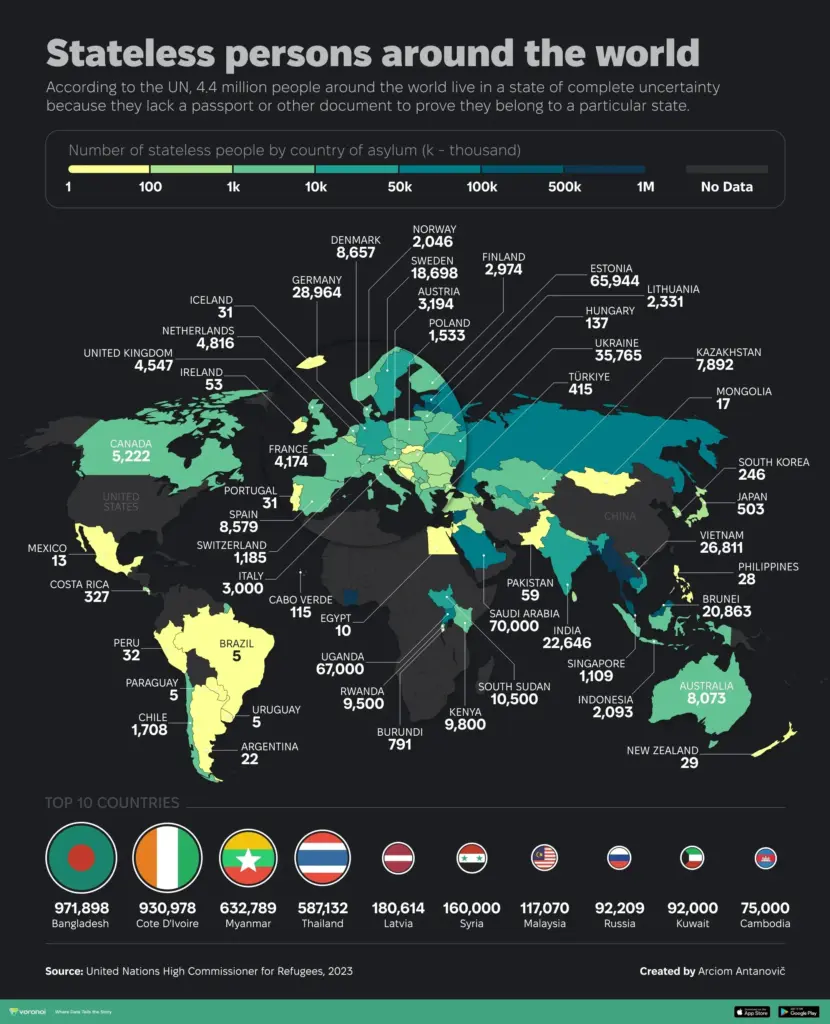
Globally, statelessness presents significant humanitarian challenges, impacting approximately 4.5 million people, with estimates suggesting the number could be as high as 15 million. Stateless individuals often lack access to basic services, education, and legal employment, making it difficult for them to contribute to society. Experts advocate for policy changes to address statelessness, such as allowing for better registration processes and recognizing nationality rights that could alleviate the difficulties faced by stateless individuals worldwide.
How can addressing the identity and citizenship issues of stateless individuals improve their lives?
Addressing the identity and citizenship issues faced by stateless individuals is crucial for their inclusion in society. By providing pathways to citizenship, such as allowing registration of children at birth regardless of their parents’ national status, individuals can access education, healthcare, and lawful employment. This recognition can transform the lives of stateless individuals, enabling them to contribute positively to their communities, as seen in stories like that of Arnold Ncube, who dreams of pursuing education in computer science.
What are the human rights implications of statelessness?
Statelessness raises serious human rights implications, as individuals without nationality are often denied basic rights and freedoms. They may encounter difficulties in accessing healthcare, education, and employment, trapping them in a cycle of poverty and isolation. Advocates argue that recognizing the rights of stateless individuals is fundamental for dignity and equality, emphasizing that citizenship should be viewed as a human right rather than a privilege, as stated by activists like Christy Chitengu.
What can be done to combat the impact of statelessness on individuals?
To combat the impact of statelessness, a multi-faceted approach is necessary. This includes legislative reforms to simplify the process of obtaining citizenship, enhancing birth registration systems, and increasing public awareness of the rights of stateless individuals. Support from NGOs and civil society in providing legal aid and advocacy can also help stateless individuals secure their rights and navigate the complexities of identity and citizenship, paving the way for a more equitable society.
| Key Point | Details |
|---|---|
| Stateless Individuals | Life without official documents like birth certificates leads to a struggle for basic rights, affecting millions globally. |
| Arnold Ncube’s Story | A 25-year-old South African unable to prove his citizenship due to the absence of a birth certificate, resulting in limited job opportunities. |
| Impact on Life | Stateless individuals face significant barriers to education, healthcare, and economic stability. |
| Causes of Statelessness | Factors include poor record-keeping and administrative barriers, complicating the determination of citizenship. |
| Statistical Estimates | Significant disparities exist in the documentation of stateless people, with estimates ranging from 4.5 to 15 million globally. |
| Legal Struggles | Individuals like Christy Chitengu have fought for citizenship, highlighting the challenges faced by those seeking to prove their nationality. |
| Societal Response | Human rights advocates stress that citizenship should not be seen as a reward but as a fundamental right. |
| The Bigger Picture | Addressing statelessness requires global policy changes and societal inclusion for individuals to contribute meaningfully. |
| Hope for the Future | Arnold now has legal assistance and aspires to achieve his education and career goals with proper documentation. |
Summary
Stateless individuals face significant hurdles in asserting their identities and rights due to the absence of foundational documents like birth certificates. Arnold Ncube’s story exemplifies the pressing challenges of statelessness in South Africa, where many struggle for basic essentials, including education and healthcare. Addressing the issue of statelessness is crucial for those affected to gain recognition, dignity, and the ability to participate fully in society.

