
Listen to this article
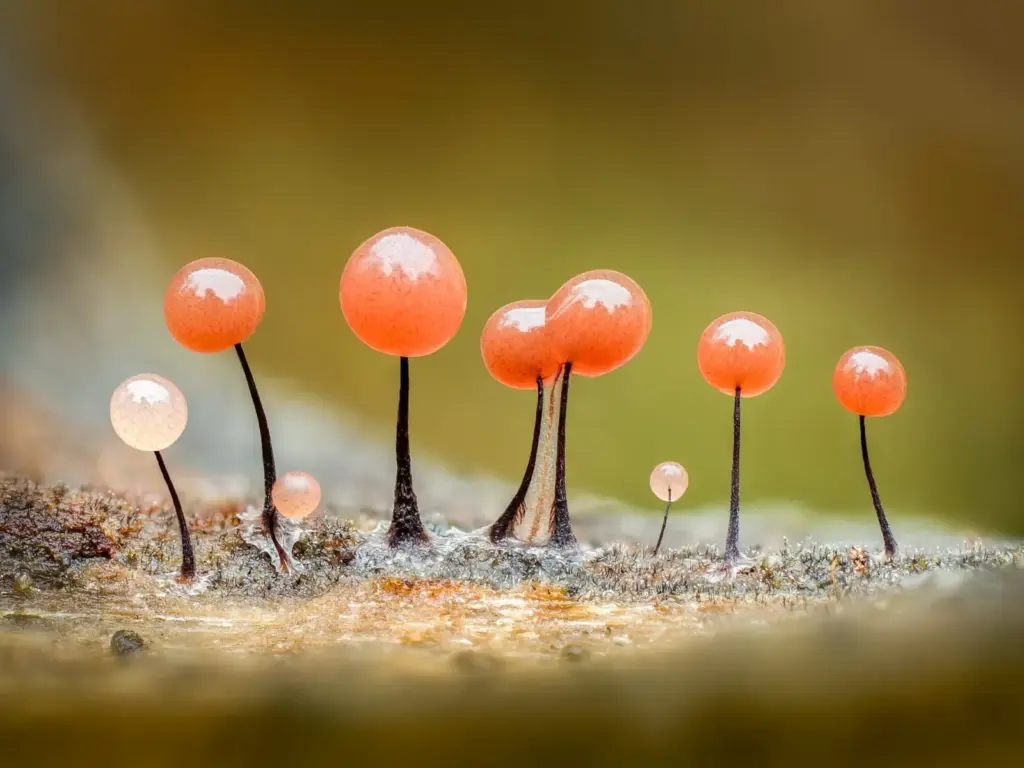
Slime Mould Photography unveils an enchanting realm of artistry where minute, single-celled organisms come to life through the lens of skilled photographers like Barry Webb. With his award-winning image “Glistening Slime Mould” taking the top spot in the macro category at the British Photography Awards in 2025, Webb’s work captivates audiences by revealing the hidden structures of these fascinating creatures. Utilizing a precise focus bracketing technique, he enhances detail and sharpness, allowing viewers to explore a hidden world rarely seen by the naked eye. This intriguing subject not only represents the art of macro photography but also showcases the ecological significance of slime moulds in various habitats. As we dive deeper into this subject, we discover how Barry’s passion has transformed simple organisms into extraordinary visual stories that celebrate nature’s unique beauty.
Exploring the captivating universe of slime moulds offers a glimpse into incredible biological phenomena that many overlook. Known for their unique characteristics, these microorganisms are neither fungi, plants, nor animals, yet they play vital roles in their ecosystems. The captivating images produced by dedicated photographers reveal the intricate details of these organisms, showcasing a hidden world brimming with life. Using advanced macro techniques, such as Barry Webb’s celebrated focus bracketing method, enthusiasts are able to capture the lush colors and vivid forms of slime moulds, transporting viewers into their microscopic dimension. As we expand our understanding of these remarkable life forms, we also appreciate the artistry involved in their representation through photography.
Exploring the Fascinating World of Slime Mould
Slime mould presents a mesmerizing glimpse into a hidden world teeming with life. Unlike plants or fungi, these unique organisms exhibit traits that blur the lines between categories, making them an intriguing subject for photographers and scientists alike. As Barry Webb demonstrates through his remarkable work, slime mould can be found in various habitats, thriving in environments as diverse as forests and deserts. By employing macro photography techniques, he captures intricate details that showcase the beauty and complexity of these single-celled organisms.
The sight of slime mould in its natural habitat is unlike anything else; it often appears as vibrant splashes of color and unusual shapes on decaying wood or leaf litter. Such visual richness provides a compelling narrative for photographers seeking to explore the unseen aspects of the ecosystem. With Webb’s award-winning images garnering attention at the British Photography Awards, it’s clear that the hidden world of slime mould is beginning to resonate with a broader audience, inviting them to appreciate the subtle wonders of nature.
The Art of Slime Mould Photography
Capturing the essence of slime mould is no easy feat. Barry Webb’s process involves a blend of creativity and technology, utilizing high-powered macro lenses to expose the small-scale details of these organisms. Through focus bracketing techniques, he can create stunning composite images that allow viewers to immerse themselves in the minute world of slime mould. This meticulous method is essential given the tiny size of the subjects; a single frame may not encompass all the intricate details, which is why taking multiple photos from different focal points is crucial.
Moreover, as Webb explains, the evolution of photography technology has significantly facilitated this artistic pursuit. Previously, photographers had to painstakingly adjust focus for each shot manually, a process that could become cumbersome. Today, automated systems can carry out these adjustments much faster, freeing the artist to concentrate more on the creative side of capturing nature’s hidden wonders. This technological advancement is a game-changer for macro photography and has amplified the potential for artists to explore and articulate the extraordinary beauty of slime mould.
Barry Webb’s Award-Winning Photography
In the realm of macro photography, Barry Webb stands out for his innovative and insightful approach to capturing slime mould. His recent accolade—the people’s choice award in the macro category at the British Photography Awards—highlights not only his skill but also the compelling narratives embedded in his work. Webb’s photographs invite viewers to reconsider their relationship with nature, showcasing the hidden life forms that contribute significantly to our ecosystems. By presenting slime mould in all its glory, he encourages a deeper understanding of these organisms beyond their superficial appearance.
Webb’s success can be attributed to his unique perspective on nature as a gardener and hobby photographer. His passion is evident in every shot, as he reveals an often-overlooked world brimming with life. This recognition at the British Photography Awards is not just a personal achievement for Webb; it serves as a platform to amplify awareness regarding the ecological roles of slime mould. By focusing on his subject matter with such fervor, Barry Webb is a crucial advocate for environmental appreciation through the lens of art.
The Importance of Slime Mould in Ecosystems
Slime moulds play a pivotal role in the ecosystems where they thrive, primarily by decomposing organic matter and recycling nutrients back into the soil. They are natural recyclers that feed on bacteria, fungi, and decaying vegetation. As Barry Webb highlights in his photography, the visually captivating fruiting bodies of slime moulds are not merely beautiful; they signify a greater ecological function that benefits the environment. Understanding and appreciating these organisms is crucial as they contribute to soil health and the balance of various habitats.
Additionally, slime moulds have found practical applications beyond their ecological significance. Researchers have recently discovered their ability to model complex systems, such as urban transport networks, revealing their potential contributions to scientific advancements. The study of slime mould can lead to innovative solutions in fields as diverse as materials science and robotics. Barry Webb’s focus on these organisms not only showcases their beauty but also elevates their importance in modern science, inspiring further exploration into their myriad contributions.
Techniques Used in Slime Mould Photography
The art of slime mould photography requires a blend of technical skill and the right equipment to capture their stunning details. Barry Webb utilizes a combination of macro lenses and a focus bracketing technique to achieve spectacular shots that reveal the hidden intricacies of these organisms. By taking multiple photographs at different focal depths, Webb can compile them into a single detailed image that showcases the vast landscape of slime mould structures. This method allows him to create photographs that are rich in detail and clarity, presenting a view that is often unseen by the naked eye.
Moreover, the use of technology in macro photography has evolved significantly, enabling photographers to capture the unique characteristics of slime mould with greater ease. While Barry once had to make tedious manual adjustments to achieve the desired focus, advancements in camera technology now allow for quicker and more efficient processes. This evolution has been pivotal in enhancing the quality of nature photography and inspiring a new generation of photographers to explore the wonders of the microscopic world.
The Artistic Vision Behind Slime Mould Captures
At the heart of Barry Webb’s photography is an artistic vision that seeks to communicate the stunning complexities of the natural world. His images of slime mould are not just representations of scientific curiosities; they are pieces of art that provoke thought and evoke emotions. By focusing on the vibrant colors and unique forms of these organisms, Webb inspires a sense of awe in viewers, inviting them to appreciate the beauty that remains largely concealed from everyday sight.
Webb’s artistic interpretation goes beyond mere documentation; it serves as a platform for storytelling. Each photograph tells a tale of resilience and ecological importance, prompting audiences to recognize the interconnectedness of all life forms. As such, slime mould photography becomes a medium for advocacy, cultivating environmental awareness and appreciation. Webb’s work highlights the necessity of preserving these hidden wonders, urging people to take a closer look at the intricate patterns of life that exist all around us.
Viewer Engagement: The Public’s Response to Slime Mould Photography
The public’s fascination with slime mould photography is evident in Barry Webb’s recent people’s choice award at the British Photography Awards. The unique charm and the unseen beauty of these organisms motivate viewers to engage more closely with nature. This interest reflects a growing trend where people are increasingly drawn to macro photography as a way to understand and appreciate the lesser-known aspects of our environment. Webb’s work, in particular, has opened up discussions about the significance of biodiversity and the hidden textures of life that exist in our backyards.
Audiences respond positively to the vibrancy and detail in Webb’s photographs, recognizing the artistry intertwined with scientific exploration. By merging these fields, he creates work that resonates with both art lovers and environmentalists, sparking curiosity and engagement. As viewers look at his images, they are reminded of the fragile beauty of these organisms and the ecosystems they inhabit. This connection is essential in fostering a sense of responsibility and stewardship toward our natural world.
The Future of Macro Photography: Innovations and Trends
As technology continues to advance, the future of macro photography, particularly in the realm of slime mould, holds exciting possibilities. Innovations in camera technology, like improved sensors and automated focusing capabilities, allow photographers like Barry Webb to push the boundaries of their art. These developments not only enhance the precision and clarity of images but also empower photographers to explore new creative avenues. As we witness an ongoing interest in the world of macro photography, particularly regarding the hidden wonders of slime mould, audiences can expect more captivating images that reveal the beauty of the microscopic world.
Moreover, the sustainability of nature photography is becoming an increasingly important consideration for modern photographers. The use of eco-friendly practices and advocacy for conservation is at the forefront of many artists’ efforts to responsibly capture the beauty of nature. Barry Webb and others like him emphasize the need to approach photography with a consciousness of the environment, ensuring that the artistic process does not disturb delicate ecosystems. As macro photography evolves, we can anticipate a rich tapestry of artistic expression that balances innovation with a commitment to the natural world.
Frequently Asked Questions
What is Slime Mould Photography and how is it different from traditional photography?
Slime Mould Photography involves capturing detailed images of slime moulds, often using macro photography techniques to reveal their intricate structures that are normally invisible to the naked eye. Unlike traditional photography, which may focus on broad scenes or landscapes, Slime Mould Photography highlights the hidden world of these fascinating organisms, emphasizing their unique characteristics and ecological importance.
Who is Barry Webb and what role has he played in promoting Slime Mould Photography?
Barry Webb is an acclaimed photographer known for his exceptional work in Slime Mould Photography. His award-winning piece, ‘Glistening Slime Mould,’ won the people’s choice in the macro category at the British Photography Awards 2025. Through his photography, Barry has introduced many to the hidden world of slime moulds, demonstrating their beauty and ecological significance.
What techniques are used in Slime Mould Photography to capture these tiny organisms?
In Slime Mould Photography, photographers like Barry Webb often employ a focus bracketing technique. This involves taking numerous photos with varying focus points to ensure that every detail is captured, as one image alone may not provide enough clarity. These images are then compiled using specialized software to create a final composite image that showcases the intricate details of the slime mould.
Why is macro photography important in the study of slime moulds?
Macro photography is crucial in studying slime moulds because it allows photographers to capture the fine details of these microscopic organisms that cannot be seen with the naked eye. This type of photography reveals the complex structures and vibrant colors of slime moulds, enhancing our understanding of their biological and ecological roles.
What awards has Barry Webb received for his Slime Mould Photography?
Barry Webb has received recognition for his Slime Mould Photography, including winning the people’s choice award in the macro category at the British Photography Awards 2025. His innovative approach and stunning imagery have raised awareness of the hidden world of slime moulds and their significance in nature.
How has technology impacted Slime Mould Photography?
Technology has significantly advanced Slime Mould Photography by enabling photographers to utilize focus bracketing techniques more efficiently. Modern cameras can automatically adjust the focus for numerous shots, allowing photographers like Barry Webb to capture detailed images of slime moulds with greater ease and precision, compared to manual adjustments in earlier years.
What ecological role do slime moulds play that makes them significant subjects for photography?
Slime moulds play important ecological roles by feeding on bacteria, algae, and decaying matter, thus contributing to nutrient cycling in ecosystems. Their unique position in the food web and their potential applications in research, such as urban transport mapping and studying dark matter, make them significant subjects for photography and ecological study.
Where can one view Barry Webb’s work in Slime Mould Photography?
Barry Webb’s work in Slime Mould Photography, including award-winning images like ‘Glistening Slime Mould,’ can typically be viewed at photography exhibitions and shows, as well as in various photography publications and online galleries that focus on macro and nature photography.
| Key Points | Details |
|---|---|
| Photographer | Barry Webb, winner of the people’s choice award in the macro category of the British Photography Awards 2025. |
| Subject of Photography | Slime mould organisms, which are single-celled and found in diverse environments. |
| Photography Technique | Macro photography using composite images to capture minute details. |
| Discovery, | Webb discovered tiny mites while photographing slime mould, highlighting the hidden world of these organisms. |
| Ecological Importance | Slime mould plays a key role in ecosystems by feeding on bacteria and fungi. |
| Applications | Used in urban transport mapping simulations and dark matter research. |
| Personal Background | Barry Webb is a gardener and hobby photographer who became passionate about slime mould during the Covid lockdown. |
| Technological Advances | Focus bracketing technology has improved the capturing process of these tiny subjects. |
Summary
Slime Mould Photography unveils the hidden beauty of these fascinating organisms, offering an unprecedented glimpse into their microscopic world through the lens of skilled photographer Barry Webb. His award-winning work not only honors the unique characteristics of slime mould but also highlights their ecological significance and innovative applications. By utilizing advanced photography techniques, Webb brings to life the drama and vibrancy of a creature that defies traditional classification, showcasing the enchanting diversity found within our natural environment.