
Listen to this article
Nestled within the bustling environment of London’s tube stations, the World Time Linear Clock stands as a captivating representation of global timekeeping. Located at the bustling Piccadilly Circus Station, this innovative timepiece offers a unique perspective on Earth’s rotation and how time is measured around the world. Unlike traditional clocks that conform to a round design, the World Time Linear Clock features a striking horizontal strip of Roman numerals that glide across a world map. This modern marvel not only showcases the time in various cities but also provides commuters with a vivid reminder of our planet’s continuous movement. As travelers pass by, they can experience a blend of practicality and artistry, making the World Time Linear Clock a true highlight in London’s iconic transit landscape.
In the heart of London’s public transportation hub, the innovative Global Time Linear Timepiece presents a distinctive approach to time on a worldwide scale. Found at the iconic Piccadilly Circus Station, this extraordinary clock marries artistic design with the precision of modern time measurement methods. By utilizing a strip of Roman numerals that corresponds to various locations, viewers are able to contemplate the rhythms of Earth’s rotation and synchronous timekeeping across different time zones. As an unconventional yet functional accent to the London tube stations, it invites curiosity and admiration from passengers. Its unique structure and illumination systems evoke a sense of connectivity in a world where time is essential to our daily lives.
Understanding the World Time Linear Clock
The World Time Linear Clock is an extraordinary timepiece situated at the Piccadilly Circus Station, one of London’s busiest tube stations. Unlike conventional clocks that utilize a spherical silhouette, this innovative timekeeping instrument boasts a linear design that runs across a detailed world map. This particular design choice not only serves a practical function but also reflects the evolution of modern clocks and their ability to demonstrate Earth’s rotation in real-time.
At Piccadilly Circus Station, the clock allows passengers to easily determine the time across different global locations. Illuminated lightbulbs highlight key cities, showcasing the striking synchronization with Greenwich Mean Time (GMT) and British Summer Time (BST). The use of Roman numerals along a linear format offers a fresh perspective on timekeeping, making it an engaging attraction for both locals and tourists.
The Significance of Earth’s Rotation in Timekeeping
Earth’s rotation is a fundamental concept that underpins how we measure time. As the Earth spins on its axis, it creates distinct time zones, highlighting the importance of precise timekeeping in our daily lives. The World Time Linear Clock at the Piccadilly Circus Station encapsulates this idea by visually representing the passage of time as it correlates with the Earth’s movement, allowing watchers to comprehend the global time system with ease.
Incorporating Earth’s rotation into its design, the clock provides a unique way for individuals to understand and appreciate the structure of time zones. Cities illuminated on the clock, such as Sydney and New York, give commuters a geographical reference point, enhancing the experience of time by connecting it to physical locations around the globe. This awareness is crucial in our ever-globalized world, where schedules and communications span multiple time zones.
Exploring Piccadilly Circus: A Timekeeping Landmark
Piccadilly Circus is not only famous for its bright lights and bustling atmosphere, but it also serves as a crucial hub for travelers navigating through London. The installation of the World Time Linear Clock transforms this vibrant location into a historical site for modern timekeeping. Since its installation after the station’s redesign in 1928, the clock has drawn visitors fascinated by its rarity and functionality.
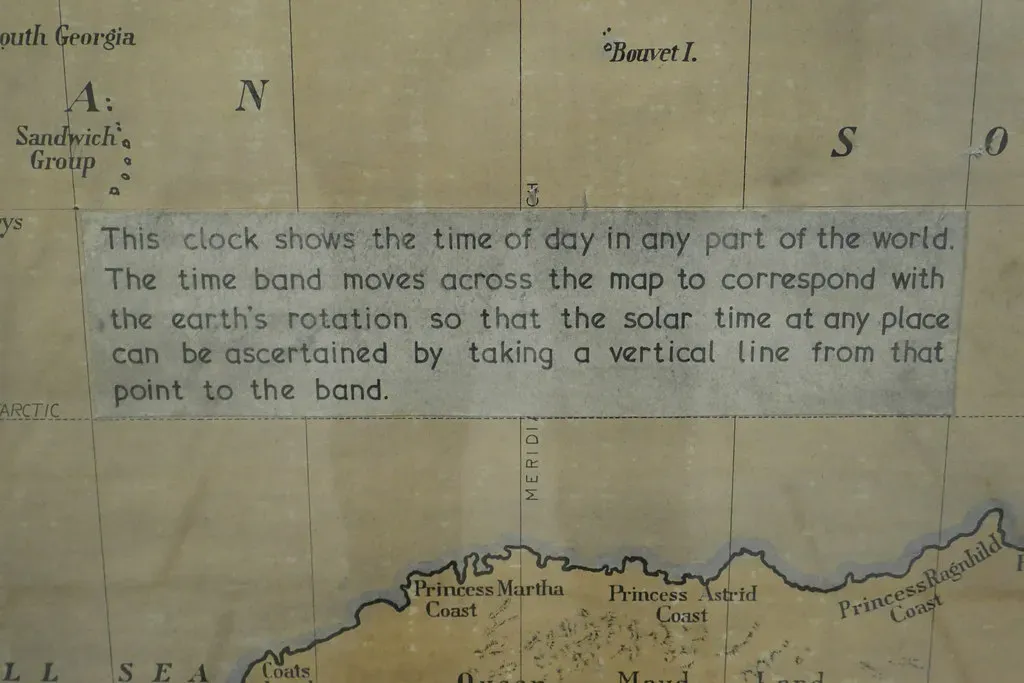
Admiring the clock’s innovative design is an essential part of any visit to Piccadilly Circus. Its notable inscription, which explains how the clock corresponds with Earth’s rotation, adds depth to its presence, inviting viewers to ponder how time is perceived across different cultures and places. This aspect of the clock makes it a perfect landmark for those interested in the history of timekeeping and the evolution of public clocks.
Modern Clocks and Their Role in Society
In contemporary society, clocks play an essential role in the synchronization of daily activities, travel, and global commerce. The design evolution of modern clocks, including unique timepieces like the World Time Linear Clock, emphasizes functionality and aesthetics. Such clocks not only tell time but also bridge connections across diverse time zones, reflecting our increasingly interconnected world.
Moreover, the transition from traditional clocks to modern designs represents a broader shift in technology and societal norms. As our understanding of timekeeping evolves, it becomes clear that clocks are not merely tools for measuring time but also symbols of innovation and human ingenuity, prompting us to reflect on how we perceive and value temporal measurement.
The Artistic Features of the World Time Linear Clock
One of the most captivating aspects of the World Time Linear Clock is its artistic design that fuses functionality with visual appeal. The clock’s linear layout, adorned with Roman numerals across a world map, serves as a testament to the creative capabilities of clockmakers. This stunning piece draws not only commuters but art enthusiasts who appreciate the blend of timekeeping with aesthetic expression.
The attention to detail in its design, including illuminating bulbs for major cities, not only enhances its visual impact but also serves a practical purpose. It allows users to quickly ascertain time without needing to decipher complex details. This innovative artistry has positioned the World Time Linear Clock as a cherished symbol of modern design within public spaces, demonstrating how art and utility can coexist.
A Tourist Attraction at London’s Tube Stations
London’s tube stations are celebrated for their iconic architecture and historical significance, with the World Time Linear Clock at Piccadilly Circus standing out as a notable attraction. Visitors are drawn to this unique clock, intrigued by its innovative approach to displaying time from around the globe. The clock enhances the overall experience of navigating London’s extensive underground network.
Moreover, the experience of interacting with such a distinctive piece underscores the importance of public art and historical landmarks in urban settings. The World Time Linear Clock not only serves a functional role but also acts as a cultural landmark that enriches the public’s understanding of timekeeping, inviting tourists to engage with the concept of time on a global scale.
Historical Context of the World Time Linear Clock
The installation of the World Time Linear Clock at Piccadilly Circus was not only a technological advancement but also a representation of the era’s progressive view of time and travel. After the station’s redesign in 1928, the clock became a herald of modernity, signifying the growing relevance of accurate timekeeping in a rapidly changing world. During a time when global travel was becoming more accessible, the clock catered to the needs of both locals and travelers who required timely information.
Additionally, the historical context surrounding the clock illuminates how public spaces can evolve alongside technological advancements. As more people began to rely on public transport, the need for reliable time indicators became paramount. The World Time Linear Clock embraced this need, embedding itself into the fabric of London’s commuting culture and symbolizing the interconnected nature of time within different societies.
The Engineering Behind the Clock’s Mechanism
The engineering prowess involved in the creation of the World Time Linear Clock is a notable aspect often overlooked by passers-by. Behind its elegantly simple design lies intricate mechanics that allow it to synchronize with Earth’s rotation. This sophisticated mechanism is precisely what enables the clock to display accurate times for various global locations, catering to travelers and commuters alike.
Such innovative engineering challenges the conventional perceptions of timekeeping devices. The clock’s linear strip of Roman numerals requires a unique approach to its mechanics, ensuring that the time not only flows in sync with Earth’s rotational movement but also presents it in an easily readable format. This creativity in engineering further enhances the appreciation of modern clocks as both functional devices and works of art.
Appreciating the Function of Time Zones
The concept of time zones is vital to traveling and global business, where every moment holds value on a worldwide scale. The World Time Linear Clock at Piccadilly Circus brings attention to this essential element of timekeeping by visually representing how time zones relate to one another. This educational aspect of the clock intrigues onlookers and encourages them to think about the implications of time differences as they navigate their daily lives.
By understanding time zones better, individuals can enhance their effectiveness when scheduling international meetings or planning cross-continental travel. The clock serves as a reminder that while time may seem uniform, it varies immensely depending on geographic location. In today’s globalized world, appreciating the nuances of time can facilitate improved communication and productivity.
Frequently Asked Questions
What is the World Time Linear Clock at Piccadilly Circus?
The World Time Linear Clock is a unique timekeeping installation located at Piccadilly Circus, London. It features a strip of Roman numerals aligned with a world map, allowing viewers to easily determine the current time across various global locations by syncing with the Earth’s rotation.
How does the World Time Linear Clock differ from modern clocks?
Unlike traditional spherical clocks, the World Time Linear Clock displays time on a flat band that moves westward, reflecting Earth’s rotation. This design provides a clear and straightforward way to see the time in different time zones, a significant advancement in timekeeping techniques.
Where can I find the World Time Linear Clock in London?
To find the World Time Linear Clock, head to Zone 1 at Piccadilly Circus Station. Look for it across from the Frank Pick memorial, away from the main escalators, where it serves as an intriguing timekeeping guide for visitors.
What cities are illuminated on the World Time Linear Clock?
The World Time Linear Clock highlights key cities such as London, Buenos Aires, New York, Sydney, and Cape Town. Illuminated lightbulbs mark these locations, offering a way to see their corresponding times while celebrating historical reference points from the 1920s.
What is the significance of Greenwich Mean Time (GMT) and British Summer Time (BST) on the World Time Linear Clock?
The World Time Linear Clock incorporates both GMT and BST to provide accurate time readings according to United Kingdom standards. This dual time structure adds to its function as a global timekeeping symbol, enabling users to understand time variations across the world.
Why was the World Time Linear Clock installed at Piccadilly Circus?
Installed in 1928 during a redesign of Piccadilly Circus, the World Time Linear Clock was intended to symbolize modernity in timekeeping. It offers a unique visual representation of time in relation to the Earth’s rotation, linking London’s rich history with contemporary time awareness.
What is the inscription under the World Time Linear Clock?
The inscription under the World Time Linear Clock reads: “This clock shows the time of day in any part of the world. The time band moves across the map to correspond with the Earth’s rotation so that the solar time at any place can be ascertained by taking a vertical line from that point to the band.” This emphasizes its role in global timekeeping.
Can you hear the World Time Linear Clock?
Yes! For those curious enough to lean close, the World Time Linear Clock emits sounds of ticking, adding an auditory layer to its visual timekeeping experience. It enhances the interaction of visitors with this modern clock design at Piccadilly Circus.
| Key Feature | Description |
|---|---|
| Location | Piccadilly Circus Station, London, opposite the Frank Pick memorial. |
| Design | A linear clock with a strip of Roman numerals on a world map, instead of a traditional circular design. |
| Functionality | Shows the time for any location globally, in line with Earth’s rotation. |
| Time Zones | Features both Greenwich Mean Time (GMT) and British Summer Time (BST). |
| Illumination | Lightbulbs indicate major world cities: London, Buenos Aires, New York, Sydney, Cape Town. |
| Installation Date | Installed in 1928 during the redesign of Piccadilly Circus. |
| Significance | Symbol of modernity and an innovative way to understand time across the world. |
| Unique Feature | When close enough, viewers can hear the clock ticking, adding to its charm. |
| Inscription | “This clock shows the time of day in any part of the world…” |
Summary
The World Time Linear Clock offers a unique perspective on time and the Earth’s rotation, making it a must-see attraction at Piccadilly Circus Station in London. This innovative clock not only serves as a functional timepiece but stands as a modern symbol that connects viewers to various time zones around the globe. With its creative design and historical significance, it engages passers-by in a dialogue about time and place, allowing them to appreciate the global tapestry of timekeeping.