
Listen to this article
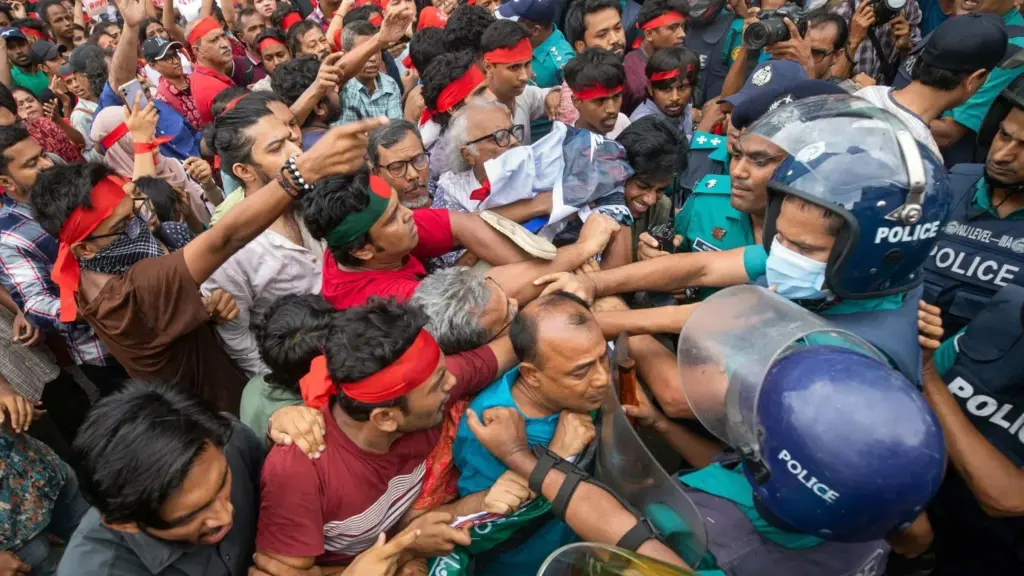
In recent days, violence has erupted in Bangladesh, a stark reminder of the deep political unrest that has gripped the nation. The turmoil stems from the tragic death of a prominent youth leader, Sharif Osman Hadi, who was killed in what many believe to be a politically motivated attack. His shooting has sparked widespread protests across the country, as thousands rally against government actions and demand accountability. In the immediate aftermath of Hadi’s death, buildings were vandalized, and clashes erupted, highlighting the intensity of emotions among the population. With upcoming elections in Bangladesh on the horizon, these events have raised concerns about the future of democracy and governance in the region.
The current situation in Bangladesh underscores a period of severe instability and agitation, particularly following the assassination of a key figure in the youth protest movement. This incident, which many view as a significant flashpoint, has ignited widespread demonstrations reminiscent of past political struggles in the country. Activists are rallying under the memory of Sharif Osman Hadi, whose tragedy has galvanized a new wave of dissent against the ruling powers. As public anger surges, the implications for the electoral process become increasingly precarious, begging important questions about the integrity of upcoming elections in Bangladesh. With calls for justice resonating across the streets, the nation grapples with the potential ramifications of such violence on its fragile democratic foundations.
Bangladesh Violence Following Youth Leader’s Death
The recent eruption of violence in Bangladesh is a direct response to the shocking death of Sharif Osman Hadi, a youth leader whose activism played a pivotal role in the protest movement against the political status quo. Following his assassination outside a mosque, his supporters quickly mobilized in the streets, leading to widespread unrest across the capital. Reports indicate that demonstrations turned chaotic as protesters vandalized media offices, reflecting the deep-seated frustrations within the populace regarding ongoing political unrest and the impending elections.
Hadi’s death marks a significant moment in Bangladesh’s political landscape, highlighting the volatility as the nation prepares for its first elections since the 2024 uprising. The atmosphere has transformed rapidly, with government officials blaming the chaos on premeditated attacks aimed at destabilizing the electoral process. As investigations unfold, the fear of further violence looms; the interim government has vowed that any party attempting to derail the electoral process through acts of violence will face severe consequences.
Implications of Hadi’s Death on Bangladesh Protests
The assassination of Sharif Osman Hadi has profound implications for the ongoing protests in Bangladesh, as it galvanizes a new wave of activism among the youth and opposition groups. Hadi, who was set to contest the upcoming elections as an independent candidate, became a symbol of resistance against the government’s repressive strategies. His death has incited passion among his followers, who view the protests as both a tribute to Hadi’s legacy and a necessary fight for their democratic rights.
Leaders of various political parties have also voiced their shock and anger, emphasizing that Hadi’s murder should act as a catalyst for an urgent call to action among the citizens of Bangladesh. The protests, fueled by grief and outrage, could potentially reshape the political landscape, pushing for accountability, justice, and a reconsideration of policies that have led to such tragic outcomes, particularly against youth activists.
Political Unrest in Bangladesh: A Historical Context
The current political unrest in Bangladesh has deep historical roots, with a cycle of protests and governmental crackdowns marking the landscape for decades. The violent reactions to dissent illustrate the ongoing struggle between the ruling authorities and various civil society groups pushing for democratic reforms. The rise of youth movements, like the one led by Hadi, signifies a shift in political engagement, where younger generations are demanding a voice and accountability from their leaders.
Notably, the recent history of political violence in Bangladesh, particularly surrounding past elections, contributes to the current atmosphere of fear and volatility. The identity of political parties and the ruling government has often been contested through means of violence rather than democratic dialogue. This history frames the narrative around Hadi’s untimely death, with many viewing it through the lens of a systemic failure to protect its citizens’ right to protest and engage in the democratic process.
Sharif Osman Hadi: A Symbol of Change
Sharif Osman Hadi emerged as a prominent figure in the recent youth-led protests in Bangladesh, encapsulating the aspirations and frustrations of a generation seeking change. His leadership of the Inqilab Mancha movement positioned him as a vocal critic of not only the current government but also of external influences, namely India, which many protesters believe have skewed Bangladesh’s political narrative. Hadi’s commitment to galvanizing youth participation in political discourse underscored his vision for a more democratic and equitable future.
The outpouring of grief following his death has transformed him into a poignant symbol of hope among supporters, emphasizing the resilience of a populace yearning for reform. By taking a stand against injustices and advocating for the voice of the youth, Hadi’s legacy continues to inspire protests aimed at challenging the established order and demanding a political environment that acknowledges the will of the people.
The Role of Media in Bangladesh’s Political Climate
The role of media in the unfolding events surrounding Hadi’s death has been increasingly scrutinized, especially given the violent attacks on major newspapers during the protests. Media outlets like The Daily Star and Prothom Alo have found themselves at the center of political unrest, often being accused of fostering dissent or being complicit in spreading narratives that threaten the state’s control. Such assaults underline the dangers faced by journalists in their pursuit of truth within a politically charged environment.
Moreover, the media’s coverage of protests and political events plays a critical role in shaping public perception and mobilization. As the nation grapples with its turbulent political climate, the ability of media to report freely and accurately is paramount for fostering informed public discourse. The challenges faced by journalists in Bangladesh serve as a stark reminder of the fine line between reporting on issues of national importance and the severe repercussions that such reports can attract.
Future of Elections in Bangladesh: Risks and Considerations
As Bangladesh approaches its elections in 2024, the risks associated with political violence and unrest have reached a critical point. The killing of Hadi has amplified concerns regarding the safety of candidates and voters alike, as well as the integrity of the electoral process. Observers fear that continued violence could deter voter participation or manipulate the outcome of the elections, further complicating an already delicate situation in the nation’s tumultuous political history.
Moreover, the political climate is charged with skepticism around the government’s ability to ensure free and fair elections amidst ongoing civil unrest. As leaders and organizations rally for a peaceful transition, it becomes essential for all parties involved to prioritize dialogue and reconciliation over violence. The upcoming elections are more than just a political event; they represent a test of the resilience of the Bangladeshi democratic process and the commitment to uphold justice for Hadi and his supporters.
Youth Activism and Its Impact on Bangladeshi Society
The rise of youth activism in Bangladesh has fundamentally transformed the social and political landscape, particularly following events that have galvanized movements for change. The tragic death of leaders like Sharif Osman Hadi serves as a rallying cry for the youth, who are increasingly vocal about their rights and the need for transparency in governance. This activism reflects a broader shift in societal values where young people are refusing to accept the status quo and are demanding accountability from their leaders.
Youth-led initiatives have commenced discussions around critical issues such as education, environment, and political participation, rippling through society in a way that is hard to ignore. The influence of these movements fosters a sense of empowerment and unity amongst young people, encouraging a collective fight against systemic injustices pervasive in Bangladeshi society. As they continue to mobilize, their vision for a better future reshapes the national dialogue around governance and democracy.
Responses from the International Community
The international community has responded with alarm following the violent events in Bangladesh, specifically those surrounding Hadi’s assassination. Foreign governments and organizations have called for immediate investigations into the violence, urging the Bangladeshi authorities to uphold human rights and democratic principles as they navigate the complexities surrounding the upcoming elections. Such international pressure can play a crucial role in shaping domestic policy, especially in a country where political turmoil is often exacerbated by state-sponsored violence.
Furthermore, the global response underscores the interconnectedness of political struggles, with many analysts noting how external perceptions can impact internal stability. The involvement of international watchdogs and human rights organizations also highlights the urgency of addressing issues related to political violence and civil liberties in Bangladesh. As the eyes of the world turn toward Dhaka, the responsibility to foster peaceful dialogue and political reform increases, making accountability a global concern.
Mobilizing for Justice: The Call for Accountability
In light of Sharif Osman Hadi’s death, there is a growing demand for accountability from both the government and institutions responsible for maintaining public safety. Protesters are not only seeking justice for Hadi but also for a broader mandate that holds officials accountable for political violence in the country. This landscape of activism calls for transparent investigations and legal consequences for those involved in orchestrating violence against peaceful demonstrators.
The push for accountability reflects a vital aspect of the struggle for democracy in Bangladesh, where citizens are uniting to affirm their rights and demand justice in the face of oppression. This movement, galvanized by recent events, could potentially signify a turning point where the fight against impunity gains traction, urging the government to rectify the historical injustices that have marred the political system.
Frequently Asked Questions
What were the circumstances surrounding the recent violence in Bangladesh related to Sharif Osman Hadi?
The recent violence in Bangladesh erupted following the death of Sharif Osman Hadi, a key youth protest leader who was fatally shot by masked assailants. His death came just as elections were announced, leading to widespread protests from his supporters who blamed the state for his murder. This incident highlights the persistent political unrest in Bangladesh.
How did Sharif Osman Hadi’s death impact the ongoing political unrest in Bangladesh?
Sharif Osman Hadi’s death significantly escalated the political unrest in Bangladesh, with massive protests erupting in Dhaka, where his supporters vandalized media offices and clashed with law enforcement. His death is perceived as a catalyst that could influence the upcoming elections in Bangladesh, intensifying the demands for justice amidst a climate of fear.
What role did Sharif Osman Hadi play in the Bangladesh protests?
Sharif Osman Hadi was a senior leader of the Inqilab Mancha, a student protest group, and a vocal opponent of the current government. His leadership during the protests against Prime Minister Sheikh Hasina’s regime positioned him as a significant figure in the push for democratic reforms in Bangladesh, making his recent death a focal point for the current turmoil.
What has the interim government in Bangladesh said about the circumstances of Hadi’s death?
The interim government, led by Nobel laureate Muhammad Yunus, has condemned the violence surrounding Hadi’s death, calling it a premeditated attack meant to derail the upcoming elections in Bangladesh. Yunus emphasized that violence would not be tolerated and announced a national day of mourning to honor Hadi.
What are the implications of the violence following Hadi’s death for future elections in Bangladesh?
The violence following Hadi’s death raises significant concerns about the upcoming elections in Bangladesh. The interim government has warned that attempts to disrupt the electoral process through violence will not be tolerated, suggesting that the political climate could remain volatile as tensions escalate in the lead-up to the elections.
How has the broader population reacted to the political unrest in Bangladesh due to Hadi’s death?
The broader population’s reaction to Hadi’s death has been one of outrage and mobilization, with thousands participating in protests across the country. Many view Hadi’s death as emblematic of the systemic violence and political repression in Bangladesh, which has fueled ongoing demands for justice and accountability from the government.
What investigations are currently underway regarding the violence linked to Hadi’s death?
Investigations into the violence linked to Hadi’s death are ongoing, with several individuals detained in connection to the shooting. The authorities are under pressure to uncover the truth behind this incident amid fears that it may be part of a broader pattern of attacks on political dissenters in Bangladesh.
| Key Point | Details |
|---|---|
| Death of Youth Leader | Sharif Osman Hadi was shot and later died receiving treatment in Singapore. |
| Protests Erupt | Following his death, hundreds gathered to protest, vandalizing newspaper offices. |
| Political Reactions | Political leaders called for justice and mourned the loss, emphasizing the threat of violence to democracy. |
| Ongoing Investigations | Authorities are investigating the shooting, with several individuals detained. |
Summary
Bangladesh violence has escalated dramatically following the tragic death of a prominent youth protest leader. The shooting and subsequent protests not only highlight existing political tensions but also bring forth the pressing issues of electoral integrity and governmental accountability. As the nation grapples with the implications of Hadi’s death, the call for justice and stability remains ever more crucial for the future of its democracy.

