
Listen to this article
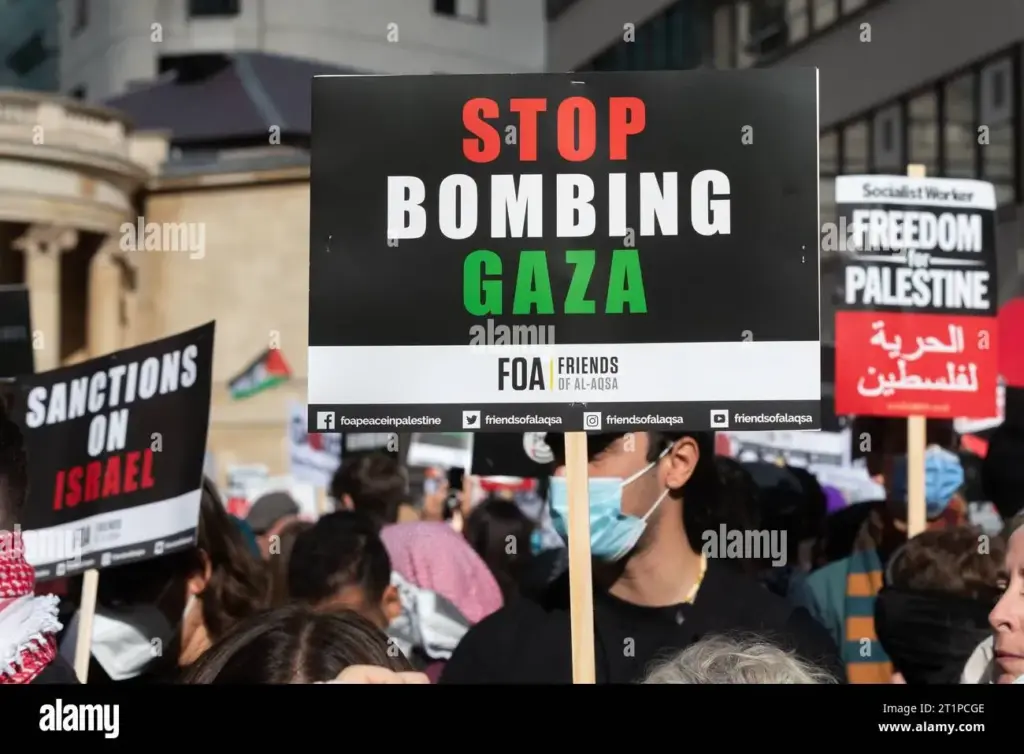
The recent Gaza protest placard arrest of Aisha Jung has sparked heated discussions over freedom of speech and the role of the police in regulating public demonstrations. During a November 2023 protest in Trafalgar Square, Jung was detained merely for holding a placard that criticized Israeli actions, raising significant concerns about the Metropolitan Police’s approach to lawful expression. Following her arrest, which was shrouded in controversy and highlighted issues under the Public Order Act, the Metropolitan Police agreed to pay £7,500 in damages to the woman they detained. This incident has brought to light the delicate balance between maintaining public order and safeguarding individual rights, especially in the context of politically charged protests. As the police grapple with maintaining safety, the implications of such arrests could profoundly impact how future protests are perceived and conducted in the UK.
The arrest of a woman during a protest in support of Gaza, known as the Gaza demonstration, underscores an ongoing debate about the limits of free expression within public gatherings. Aisha Jung’s detention and subsequent compensation from the Metropolitan Police highlight issues surrounding the management of protests and the application of laws aimed at preserving public order. This situation raises questions not just about policing methods but also about the broader implications for civil liberties when it comes to dissenting voices against governmental actions. With heightened scrutiny on the police’s handling of such protests, it is essential to reflect on how legal frameworks, like the Public Order Act, intersect with the rights of individuals to peacefully express their opinions. This incident is yet another reminder that the dialogue surrounding freedom to protest remains a pivotal aspect of democratic society.
Understanding the Context of the Gaza Protest Placard Arrest
The incident involving Aisha Jung’s arrest at a Gaza protest highlights the complex intersection of freedom of speech and law enforcement. While citizens have the right to express their opinions, particularly on politically charged subjects such as the Gaza conflict, this right often faces limitations under various laws, including the Public Order Act. Aisha’s experience serves as a reminder of the challenges faced by protesters who wish to voice dissent, especially when the content of their message may be deemed provocative or offensive by authorities.
The Metropolitan Police’s response to Jung’s placard directly raises questions about how officers interpret and enforce laws related to public demonstrations. As seen in her case, the police were unable to provide a clear legal basis for the arrest, which led to financial damages being awarded to Jung. This case echoes broader concerns about the appropriate use of police powers during protests and the potential overreach that can arise from misunderstanding or misapplying legislation designed to maintain public order.
The Legal Implications of Aisha Jung’s Case
Aisha Jung’s settlement of £7,500 from the Metropolitan Police not only signifies a personal victory for her but also reflects the growing scrutiny on police practices surrounding public protests. The allegations raised included false imprisonment and misfeasance in public office, which highlight critical legal issues about the limits of police authority. The settlement sets a precedent for other protesters who may face similar circumstances, signaling that unlawful arrests may lead to both legal challenges and the necessity for law enforcement to reassess their actions under the Public Order Act.
The involvement of the Equality and Human Rights Commission in this case underscores the need for a more nuanced understanding of free speech rights, particularly during times of public dissent concerning international issues like the conflict in Gaza. The legal framework governing police interactions during protests needs to be transparent and consistent, ensuring that citizens can engage in civil discourse without the fear of unjust repercussions, thereby safeguarding democratic values within society.
The Impact of Police Actions on Future Protests
Aisha Jung’s experience reflects a larger trend where public demonstrations, particularly those addressing sensitive political issues, are increasingly met with police action. The fear created by the arrest not only affects the individual but also has a chilling effect on others who may wish to express their views through protests. As Jung noted, her children were concerned about attending future demonstrations, emphasizing the societal ramifications of police actions that may deter peaceful protests. This growing climate of apprehension poses a significant threat to civil liberties and the democratic principle of freedom of expression.
Moreover, the Metropolitan Police’s acknowledgment of their misstep illustrates a pivotal moment for law enforcement agencies. It is crucial that policing strategies evolve to protect the rights of citizens who engage in lawful protests. As officers face scrutiny for their decisions in potentially volatile situations, they must be equipped with clearer guidelines that respect freedom of speech while balancing public safety. Failure to achieve this could lead to further unrest and a significant erosion of trust between the community and those sworn to serve and protect.
The Role of Legal Representation in Protest Cases
Legal representation is vital in cases like Aisha Jung’s, where the intersection of law enforcement and civil rights is called into question. Bríd Doherty’s involvement as a civil liberties solicitor illustrates how essential knowledgeable advocacy is in securing justice for individuals whose rights have been violated during protests. Legal experts play a pivotal role in challenging police actions that might otherwise go unexamined, ensuring that the principles of justice and accountability are upheld.
The presence of experienced legal counsel can also empower protesters, providing them with a stronger defense against potentially arbitrary police decisions. Jung’s case serves as a catalyst for the legal community to engage more rigorously on behalf of those facing protest-related arrests, thus creating an environment where free speech can flourish. This underscores the necessity for proactive legal advocacy to ensure that historical or systemic issues surrounding police conduct are addressed comprehensively.
Public Sentiment Towards Police Authority during Protests
Aisha Jung’s arrest has revealed the public’s increasing wariness regarding police authority during protests, especially those related to contentious political issues like the Gaza conflict. Many citizens are becoming more aware of their rights and are vocalizing their concerns about what they perceive as an overreach of police powers. Her case adds to the dialogue surrounding the role police play in monitoring and controlling public expression and highlights a prevalent anxiety among citizens about the potential for intimidation during peaceful protests.
As discussions about public order and police responsibility continue, it is crucial for law enforcement agencies to foster trust within communities by demonstrating respect for citizens’ rights. Transparency in policing procedures and open dialogue regarding the legalities of protest can help mitigate public fears. The balance between maintaining order and respecting civil liberties must be a focal point for authorities to support crucial democratic values.
The Importance of Clear Protest Guidelines
The complexity of policing protests necessitates clear and concise guidelines for both law enforcement and civilians. Aisha Jung’s case has amplified calls for more definitive instructions on how to handle politically sensitive demonstrations without encroaching on citizens’ rights. It is vital that police receive ongoing training that allows them to differentiate between lawful protest activity and genuine security threats, promoting an approach that prioritizes civil engagement over suppression.
This situation emphasizes the need for comprehensive guidelines around the Public Order Act as it relates to protests. Establishing clear rules will empower officers to make informed decisions, ultimately reducing the likelihood of misunderstandings that can lead to unlawful arrests. Furthermore, transparent policies can help the public understand their rights while also demystifying the role of police in managing protests, thereby fostering an atmosphere of mutual respect and understanding.
The Role of Civil Liberties Organizations
Civil liberties organizations play a critical role in advocating for the rights of individuals like Aisha Jung, particularly when it comes to issues surrounding freedom of speech and the right to protest. Groups focused on civil rights are essential in raising awareness about the implications of police conduct during demonstrations and ensuring that dissent is not stifled by intimidation. Their involvement can lead to greater scrutiny of police actions and the implementation of policies that safeguard the rights of protesters.
These organizations often provide resources and support to individuals facing legal challenges arising from their participation in protests. By highlighting cases like Jung’s, they can mobilize community support and advocate for legislative changes that protect civil liberties. The alliance between civil rights advocates and affected individuals is crucial in the broader fight for justice and accountability in law enforcement practices surrounding public demonstrations.
Aisha Jung’s Impact on Public Discourse about Protest Rights
The outcome of Aisha Jung’s case has sparked important conversations about the rights of individuals protesting politically sensitive issues. Her experience serves as a real-world example of the challenges faced by citizens engaging in fundamental democratic processes. By sharing her story, Jung has shed light on the importance of understanding protest rights, allowing for a broader discussion about the implications of police actions during demonstrations. This case may inspire others to advocate for their rights and participate actively in public discourse.
Moreover, Jung’s journey and the subsequent legal recognition of her ordeal push society to reflect on the necessity of protecting free speech and assembly as foundational elements of democracy. The discussion surrounding her placard and arrest emphasizes the need for society to remain vigilant against practices that threaten freedom of expression, ultimately encouraging a culture that values open dialogue and respectful dissent.
Frequently Asked Questions
What happened during the Gaza protest placard arrest of Aisha Jung?
Aisha Jung was arrested by the Metropolitan Police at a Gaza protest in November 2023 for holding a placard deemed offensive. She was detained until the early hours and later received £7,500 in damages due to false imprisonment and other allegations.
What was the impact of Aisha Jung’s Gaza protest placard arrest on her life?
Following her Gaza protest placard arrest, Aisha Jung experienced significant stress, worrying about potential legal repercussions and implications for her job and role as a school governor. This incident raised concerns about police conduct during freedom of speech protests.
Why did the Metropolitan Police settle with Aisha Jung over her Gaza protest placard arrest?
The Metropolitan Police settled with Aisha Jung for £7,500 due to acknowledging mistakes made during her arrest, which included allegations of false imprisonment and misuse of powers under the Public Order Act.
How does the Gaza protest placard arrest relate to the Public Order Act?
Aisha Jung was arrested under suspicion of committing offences related to the Public Order Act, which governs public protests in the UK. Her case highlights concerns about police interpretations of what constitutes an offensive sign during protests.
What concerns have been raised about police arrests during Gaza protests?
Concerns have been raised by the Equality and Human Rights Commission regarding the potentially heavy-handed approach of police during Gaza protests, particularly regarding freedom of speech and the rights of individuals to engage in peaceful protest.
What are the implications of the police arrest controversy regarding protests over Gaza?
The police arrest controversy regarding protests over Gaza underscores the delicate balance between maintaining public order and protecting freedom of speech. It raises questions about how police interpret laws and their responsibility to respect lawful protest activities.
What role does Aisha Jung’s case play in discussions about freedom of speech protests?
Aisha Jung’s case has become a focal point for discussions about the right to protest freely without intimidation, especially regarding sensitive issues like the Gaza conflict. It emphasizes the need for clarity in police actions to safeguard citizens’ rights during demonstrations.
How has the Metropolitan Police responded to criticism regarding their actions at Gaza protests?
The Metropolitan Police acknowledged their mistake in Aisha Jung’s arrest and are committed to learning from such incidents to provide better guidance to officers, as policing protests is complex and can lead to misjudgments about legality.
| Key Point | Details |
|---|---|
| Settlement Amount | Met police agreed to pay Aisha Jung £7,500 in damages. |
| Incident Description | Aisha Jung was arrested for holding a placard at a Gaza protest in Trafalgar Square. |
| Arrest Circumstances | Police deemed the placard offensive and arrested her without providing legal justification. |
| Detainment | Jung was held until 4 AM, during which she faced fingerprinting and DNA collection. |
| Impact on Jung and Family | She expressed concerns about her job prospects and her children’s perception of police. |
| Legal Representation | Jung was represented by a civil liberties solicitor highlighting police’s hostile approach. |
| Conclusion Statement from Police | Met police acknowledged the complexity of policing protests and promised to improve guidance. |
Summary
The recent case regarding the Gaza protest placard arrest highlights a concerning instance of police overreach, wherein Aisha Jung was wrongfully detained for expressing her views through a satirical placard. This incident has shed light on the need for greater awareness and protection of the rights to peaceful assembly and free speech. It is crucial for authorities to recognize and rectify such errors to ensure that voices of dissent, especially on critical issues like the situation in Gaza, are not stifled.