
Listen to this article
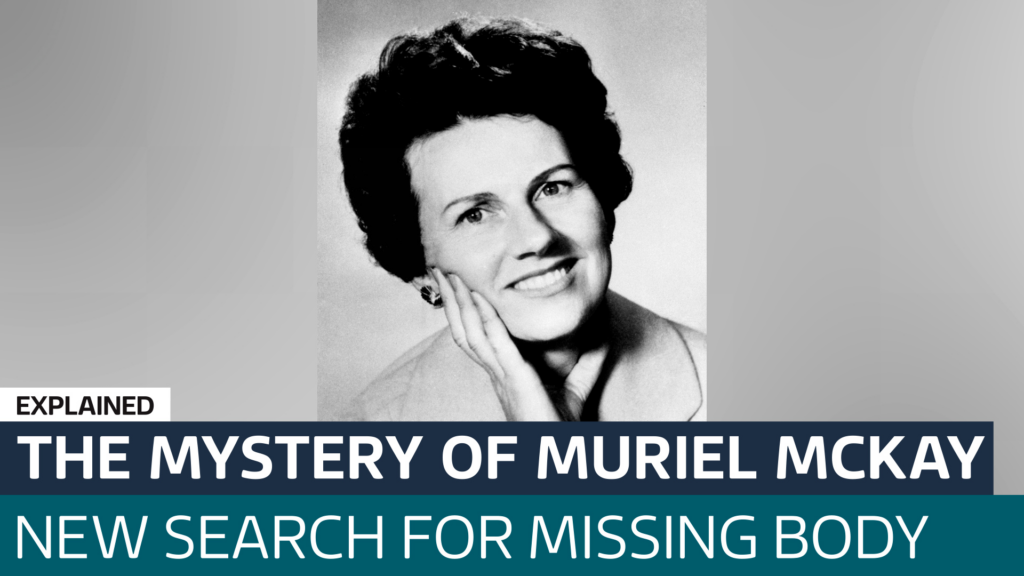
The Muriel McKay murder case remains one of the most haunting mysteries in British history, drawing attention not only for the brutal crime but also for the ongoing quest to locate her remains. After being kidnapped in 1969, Muriel, the wife of a prominent newspaper executive, was never seen again, leading to a decades-long search by her family. Recently, a High Court ruling denied her children the opportunity to conduct a ground-penetrating radar survey in an East London garden where they believe she may be buried. This location has been considered pivotal in their search for Muriel McKay’s remains, a pursuit intertwined with the family’s emotional turmoil and perseverance. Despite new information suggesting the possibility of unearthing vital evidence, the court’s decision reflects the complexities looming over this chilling case.
The tragic story of the McKay family highlights the struggles of loved ones left behind after a violent crime. In the case of Muriel McKay’s abduction and murder, the relentless search for closure has driven her descendants to seek permission for surveying a garden believed to conceal her remains. This struggle underscores the intense emotional stakes involved in their pursuit, as each legal hurdle presents a new challenge for the family. As the courts grapple with the implications of their search, the McKay family’s determination to find peace and answers remains a poignant reminder of the lingering effects of unresolved grief in the wake of tragedy. Ultimately, the ongoing legal battles symbolize a desperate hope that the shadows of the past might finally give way to a semblance of closure.
The Muriel McKay Murder Case: A Dark Chapter in History
The Muriel McKay murder case is one of the most notorious crimes in British history, capturing the public’s fascination since it unfolded over 55 years ago. The wife of Alick McKay, a prominent newspaper executive, Muriel was kidnapped in a case that garnered widespread media attention after her abductors mistakenly believed she was Anna Murdoch, the wife of media tycoon Rupert Murdoch. The subsequent investigation led to the arrest and conviction of the Hosein brothers, who were sentenced to prison without the discovery of her remains, an unprecedented legal outcome that left many questions unanswered and fueled speculation about her fate.
Despite the initial convictions and the passage of decades, the search for Muriel McKay’s remains continues to haunt her family and the community. The lack of closure has spurred ongoing interest and recent developments, with her children pressing for new investigations into potential sites where she may be buried. The case illustrates the enduring impact of unsolved crimes on families and society, making the quest for closure not just a personal matter but also one that resonates with the public consciousness.
Recent High Court Ruling on Ground-Penetrating Radar Survey
In a significant ruling, the High Court recently denied the McKay family’s request to conduct a ground-penetrating radar survey in a shared garden on Bethnal Green Road, East London, where they believe Muriel’s remains might be located. This decision came after the family presented new information suggesting a possible link to her disappearance, but the judge ruled that the evidence was insufficient to warrant such an intrusive measure. Mr. Justice Richard Smith emphasized the need for objectivity and discretion, reflecting on the complexities involved in the McKay family’s desperate quest for answers.
The denial of the radar survey has drawn mixed reactions, as it raises questions about legal rights versus the family’s need for closure. While the McKay family argued that the search for their mother’s remains is a vital part of their healing process, the judge highlighted concerns about the implications of invading someone else’s property. These circumstances underscore the challenges faced by families of missing individuals, balancing the desire for resolution with respect for others’ rights and privacy.
Implications of the High Court Decision on the McKay Family’s Search
The implications of the High Court’s decision extend beyond the immediate rejection of the radar survey, shining a light on the ongoing struggles families face when seeking closure for unresolved cases. For the McKay family, this ruling not only delays their search for Muriel’s remains but also complicates their emotional journey as they wrestle with the pain of loss. The judge’s remarks regarding the family’s previous conduct towards the homeowners further complicate their quest, introducing elements of legal and moral responsibility that must now be navigated.
Furthermore, the ruling highlights a broader issue facing families dealing with historical crimes, particularly cases that lack physical evidence like remains. The emotional distress and sense of urgency felt by the McKay family resonate deeply with many others who share a similar plight of searching for loved ones. The balance between pursuing justice and respecting legal boundaries is precarious, and this case exemplifies the often severe implications of such a delicate intersection.
Community Reaction to the McKay Family’s Pursuit for Closure
Community reaction to the McKay family’s continued pursuit for closure in the murder case has been a mixture of sympathy and frustration. Many individuals appreciate the family’s emotional struggle, acknowledging the profound grief that accompanies the unresolved nature of Muriel’s disappearance. The fact that her remains have never been found creates an atmosphere of lingering sorrow not just for the family but for the community that witnessed the crime unfold decades ago.
However, some residents of East London have expressed concerns about perceived invasions of privacy and the emotional toll that the McKay family’s relentless search for answers may impose on others. The community’s mixed feelings highlight a broader debate about public fascination with true crime narratives and how they affect those who live in close proximity to such traumatic histories. The desire for closure for one family must contend with the rights and feelings of others, creating a complex social dynamic that continues to unfold.
The Role of New Evidence in the McKay Case
The introduction of new evidence, particularly claims made by Hayley Frais regarding her father’s observations on the premises during Muriel McKay’s disappearance, has rekindled hope for the McKay family and the public. This unexpected twist in the case underscores how fresh information can catalyze renewed interest in a decades-old mystery, leading to potential developments in the search for Muriel’s remains. The family’s determination to leverage this new insight reveals their unwavering commitment to finding closure, despite the legal hurdles they currently face.
However, the High Court’s ruling also serves as a reminder of the stringent evidential standards required in legal cases. While the new evidence seemed promising, the judge maintained that the claims were not compelling enough to override existing privacy rights, illustrating the complex interplay between legal processes and emotional needs. The ongoing investigation into the details surrounding the murder case ultimately hinges on effectively interpreting such evidence within the context of the law, a challenging endeavor for the McKay family.
Ground-Penetrating Radar: Potential Impact on the Search
Ground-penetrating radar (GPR) has emerged as a technology that could potentially transform searches for human remains, particularly in cold cases like that of Muriel McKay. By utilizing high-frequency radar pulses to detect subsurface anomalies, GPR offers a non-invasive means of probing areas believed to conceal forensic evidence. For the McKay family, it represented a glimmer of hope in their enduring quest to uncover the truth surrounding their mother’s disappearance.
Despite the recent setback in gaining approval for a GPR survey, its potential applications in similar cases cannot be overlooked. Advances in GPR technology continue to evolve, enhancing the precision with which investigators can identify buried remains or other significant artifacts. As discussions around innovative forensic methods unfold, the McKay case may encourage a broader dialogue on integrating such technologies into existing investigative frameworks, ensuring families receive the support and closure they seek.
The Emotional Toll of Seeking Justice for Muriel McKay
The emotional toll on the McKay family as they seek justice for Muriel can hardly be overstated. Each new turn in the case, despite the disappointment of recent court rulings, brings forth a flood of emotions ranging from hope to despair. This protracted struggle not only affects the immediate family members but also impacts wider social connections, as friends and community members rally to support their quest. The visibility of their pain serves as a poignant reminder of the unresolved grief that lingers when a loved one goes missing.
Furthermore, media attention on the McKay case continually reopens old wounds, compelling family members to relive the trauma associated with their mother’s murder. The juxtaposition of sorrow and public interest can create a sense of isolation, as the family grapples with the challenge of feeling understood while also facing scrutiny. This emotional complexity is a significant aspect of many unresolved cases and calls for greater empathy towards those affected by violent crimes.
Lessons Learned from the Muriel McKay Case
The Muriel McKay case offers vital lessons about the intersection of crime, law, and family dynamics. It emphasizes the profound effects unresolved cases can have on families navigating the loss of a loved one. The lengthy legal processes and high-profile nature of such cases serve as a crucible for familial relationships, often highlighting tensions between the desire for closure and respect for legal boundaries. Families like the McKays must negotiate the anguish of loss while grappling with legal challenges, which can ultimately complicate their pursuit for justice.
Moreover, the case underscores the need for a compassionate approach towards the families of crime victims. As new technologies like ground-penetrating radar come into play, stakeholders must balance investigatory pursuits with sensitivity to the complex emotional landscapes involved. The ongoing quest for Muriel McKay’s remains reflects not just a search for physical closure but also a broader human desire for understanding and healing in the wake of tragedy.
Future Directions for Investigating Muriel McKay’s Murder
As the McKay family continues their quest for closure, the future directions for investigating Muriel’s murder will likely involve a combination of modern forensic techniques and renewed legal efforts. The case exemplifies how emerging technologies, such as ground-penetrating radar, could potentially yield new clues even decades after the crime occurred. Activating public interest and support through campaigns for justice could also play a crucial role in propelling new investigations.
Simultaneously, the legal landscape remains a challenging element in the ongoing pursuit of answers. Families of unsolved cases must navigate intricate community relations and legal rights, as evidenced by the recent High Court ruling. As the McKay family’s journey unfolds, their experiences will undoubtedly contribute to evolving discussions around justice, accessibility of forensic technologies, and the rights of families seeking closure in long-standing cold cases.
Frequently Asked Questions
What is the current status of the Muriel McKay murder case regarding the search for her remains?
The current status of the Muriel McKay murder case is that the family is not allowed to conduct a ground-penetrating radar survey of a garden in East London where they believe her remains may be buried. A High Court judge ruled against their request, stating that the evidence for her remains being at that location was weak.
Why was the High Court ruling against the family’s search for Muriel McKay’s remains significant?
The High Court ruling against the family’s search for Muriel McKay’s remains is significant because it underscores the legal challenges faced by the family in their pursuit for closure after her kidnapping and murder over 55 years ago. The judge emphasized the lack of sufficient evidence to justify the use of ground-penetrating radar in the garden.
What led to the family of Muriel McKay requesting to search the East London garden?
The family of Muriel McKay requested to search the East London garden after receiving new information from a witness, suggesting that her remains might be buried there. This was part of their ongoing search for closure in the case of her abduction and murder.
How did the homeowners respond to the request for a ground-penetrating radar survey related to the Muriel McKay case?
The homeowners opposed the request for a ground-penetrating radar survey related to the Muriel McKay case, claiming it caused them distress and harassment. They argued that the McKay family had made multiple unsolicited visits to their property to gain access.
What were the grounds for the judge’s refusal of the McKay family’s search request for Muriel’s remains?
The judge refused the McKay family’s search request for Muriel’s remains based on insufficient evidence to support the claim that her remains were in the East London garden. He cited a lack of compelling proof that a radar survey would yield any definitive results.
What crimes were associated with the Muriel McKay case, and who was convicted?
The Muriel McKay case is associated with her kidnapping and murder in 1969. Brothers Arthur and Nizamodeen Hosein were arrested and convicted of her murder, with sentences of 25 and 15 years in prison, respectively, despite her body never being found.
What is the significance of the new testimony from Hayley Frais in the Muriel McKay case?
The significance of the new testimony from Hayley Frais in the Muriel McKay case lies in its potential implication for the location of her remains. Frais claimed that her father had noted a strong smell in the area when McKay disappeared, which motivated the family to pursue the search in the East London garden.
How has the McKay family expressed their feelings regarding the search for Muriel McKay’s remains?
The McKay family has expressed that finding Muriel McKay’s remains is of utmost importance to them, providing a path to closure after decades of uncertainty. Family members, including her grandson Mark Dyer, have vocally shared that they wish for her remains to be returned, especially during family gatherings like Christmas.
What actions has the McKay family taken that led to further conflict with the homeowners?
The actions of the McKay family that led to conflict with the homeowners included repeated requests for access to the property, claims of deception during their inquiries, and actions they described as harassment, which made the homeowners feel significantly distressed.
What did the judge say about the conduct of Muriel McKay’s family during the court proceedings?
The judge noted the ‘egregious conduct’ of Muriel McKay’s family, highlighting threats, deception, and harassment of the homeowners, which significantly influenced his decision to deny the injunction for the radar survey. He emphasized the need for the family to respect the rights and safety of others during their search for closure.
| Key Points |
|---|
| Muriel McKay was kidnapped in 1969 and has never been found. She is believed to have been murdered after a ransom was demanded. |
| The McKay family sought permission to conduct a radar survey in a garden where they suspect her remains might be buried. |
| A judge ruled against the family’s request, citing insufficient evidence and previous problematic behaviors by the family towards the homeowners. |
| Laid out were accusations of harassment against the McKay family from the homeowner whose property shared the garden. |
| The original kidnappers were prosecuted without a body, marking a significant legal precedent. |
| The McKay family contends they received new information suggesting her remains may be in the garden. |
| Despite the families’ claims, police have indicated the location does not meet their evidential threshold for further action. |
| The ruling highlighted the need for respect for the homeowners’ rights and living conditions. |
Summary
The Muriel McKay murder case remains unresolved, with the search for her remains continuing to impact her family and those involved legally. Despite their efforts, including a request for a radar survey of a suspected burial site, a judge has ruled that there is insufficient evidence to permit such actions, emphasizing the need for respect towards the homeowners and legally established procedures. The McKay family’s emotional pursuit for closure reflects the complexities and sensitivities surrounding cold cases and the struggles of those seeking justice after decades.