
Listen to this article
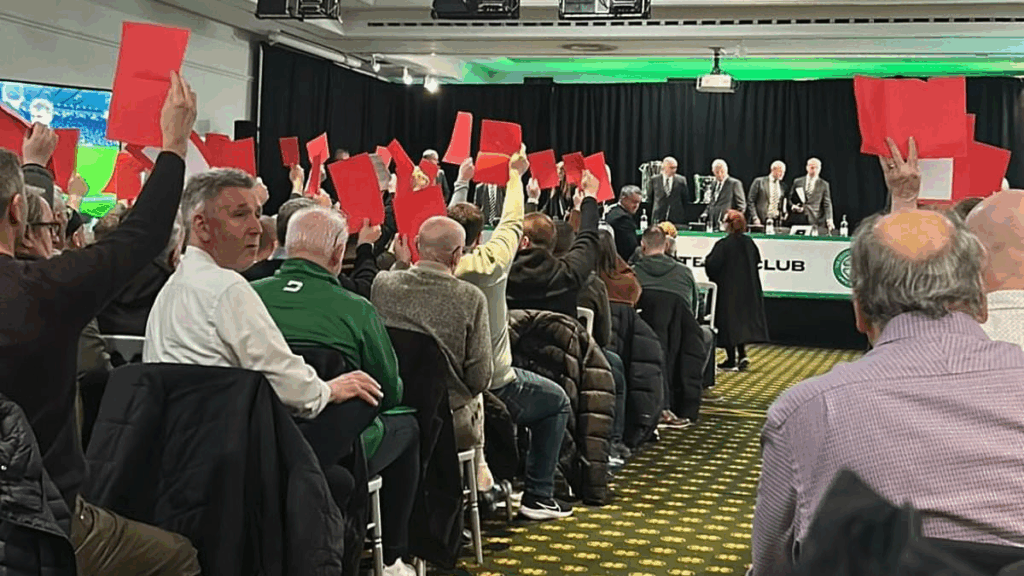
Celtic AGM chaos erupted this week as the annual general meeting descended into disarray, showcasing the palpable frustration of both shareholders and dedicated fans. Tensions reached a boiling point when a loud chorus of “sack the board” echoed through the room, highlighting a significant wave of Celtic shareholders protest against the current leadership. In just a matter of minutes, the meeting was adjourned, leaving crucial agenda items unaddressed, which fueled further Celtic fan unrest. As Ross Desmond branded the dissenters as “shameful” and “bullies,” it became evident that deep-seated leadership issues within the Celtic board were pushing supporters to their breaking point. The abrupt closure of the meeting, which left stakeholders unable to vote on vital resolutions, serves as a stark reminder of the chasm between the club’s directors and its passionate fanbase.
The recent upheaval during Celtic’s annual meeting has highlighted a significant disconnect between the club’s management and its loyal supporters. This gathering not only brought to light urgent concerns voiced by shareholders but also reflected wider leadership challenges faced by the organization. With calls for accountability echoing through the venue, it is clear that fan dissatisfaction is reaching unprecedented levels. As many attendees expressed concerns over the board’s decisions and financial strategies, alternative solutions became a hot topic among Celtic’s supporters. The chaotic scenes witnessed during this pivotal event underscore the urgent need for thorough dialogue between the fanbase and management to address these growing tensions.
Celtic AGM Chaos: Shareholder Unrest Explained
The recent Celtic AGM was marked by significant turmoil, reflecting deep-seated frustrations among shareholders and fans alike. Protesters showcased their discontent with the board’s handling of various critical issues by waving red cards and vocally demanding accountability. The chaos that ensued was not merely a spontaneous outburst; it was a culmination of pent-up grievances concerning leadership decisions and the management’s failure to address pressing matters affecting the club’s future.
Despite this turmoil, the board’s response seemed to lack the necessary sensitivity to the shareholders’ concerns. Ross Desmond’s remarks branding dissenting fans as ‘shameful’ only exacerbated tensions. With the spotlight on Celtic leadership issues more evident than ever, the need for a reevaluation of communication strategies and fan engagement has never been more pressing. Shareholder protests serve as a testament to the deep rift that exists between the board and the supporter base, exacerbated by the perceived disregard for their sentiments.
Celtic Shareholder Protests: Addressing the Underlying Issues
The protests witnessed during the Celtic AGM highlight an urgent need for the club’s leadership to address the concerns of its shareholders more effectively. Many supporters expressed their dissatisfaction with the significant cash reserves that remain untouched despite overwhelming calls for investment in player acquisitions. This financial strategy is seen by many as a missed opportunity to bolster the team, particularly after what fans describe as a ‘transfer window to forget.’ The disconnect between financial capabilities and on-field performance has ignited discontent that reverberates through the community.
Additionally, the leadership struggles at Celtic play a significant role in this unrest. With the club currently operating without a permanent manager following Brendan Rodgers’ departure, many fans are clamoring for clarity and decisive action from the board. The lack of a clear succession plan raises further questions regarding the board’s commitment to the club’s success. Shareholders seek transparency regarding leadership appointments and strategic decisions moving forward, underscoring a need for the board to take definitive steps to bridge this growing divide with the supporter base.
Understanding Celtic Leadership Issues Amidst AGM Fallout
Celtic’s AGM chaos does not solely lie in the immediate emotions felt by shareholders; it opens the door to deeper discussions surrounding the club’s leadership issues. The inability of the board to engage constructively with fans and shareholders has drawn heavy criticism, leading to urgent calls for a reformation in governance. Commentators note that the club’s illustrious history and significant achievements have been overshadowed by recent mismanagement, creating an imbalance that must be rectified to restore faith among supporters.
Moreover, the apprehensions of the shareholder base regarding the strategic direction of the club have escalated since the abrupt executive shake-up. With an indisputable legacy of success to uphold, the leadership must now earn back the trust of its fans. The unrest highlighted during the AGM signals a pivotal moment for Celtic, necessitating an introspective analysis of its governance practices, stakeholder communications, and operational decision-making—a task that the current leadership must tackle to navigate the turbulent waters ahead.
The Implications of an Unresolved AGM for Celtic’s Future
The fallout from the Celtic AGM, characterized by abrupt closures and unresolved questions, casts a shadow over the club’s future strategies. As the board faced widespread backlash for their perceived shortcomings, the failure to address the voting on key resolutions leaves many shareholders in a lurch. Such oversight can lead to a heightened sense of instability within the club, raising alarms over the management’s ability to steer Celtic toward a successful future.
The unresolved agenda, especially concerning the reappointment of directors and financial decisions regarding the club’s cash reserves, speaks volumes about the disconnect between the board and its supporters. The immediate impact of the AGM chaos could ripple through the season, influencing fan engagement, investor confidence, and performance on the pitch. Longevity in success at Celtic will require building trust and openness in leadership, ensuring that the club remains united in purpose as it navigates these challenging times.
Assessing Celtic’s Financial Prudence Post-AGM
One of the most contentious issues highlighted during the AGM was the club’s cash reserve, estimated at around £80 million. Many shareholders expressed frustration over the failure to utilize these funds for team enhancements, particularly after a disappointing transfer window. In light of the protests, the board must reconsider its financial strategies and clearly communicate its future investment plans to alleviate doubts among supporters.
Moving forward, it will be crucial for Celtic’s leadership to strike a balance between financial prudence and the urgent call for competitive reinforcements. The lingering unrest points towards a need for transparency and strategic clarity—a roadmap illustrating how these significant reserves will function in the club’s long-term vision. Future board meetings should focus not only on financial sustainability but also on fostering engagement and trust with the supporter base that’s vital to the club’s identity.
Strategizing for a Permanent Manager: Key Considerations
The recent AGM highlighted that a primary concern for Celtic is the ongoing search for a permanent manager. With the club presently managed by Martin O’Neill in a temporary capacity, clarity on the future direction is paramount. Shareholders were eager to understand the board’s long-term vision for leadership, particularly following the controversial departure of Brendan Rodgers, underscoring the importance of decisive action in stabilizing the team’s performance.
Finding the right permanent manager is critical not only for team dynamics but also for restoring faith among fans and shareholders alike. The ideal candidate must align with Celtic’s rich history and ambition for success on both domestic and European fronts. This pivotal decision will undoubtedly influence the club’s standing in the upcoming seasons and our approach to strengthening the squad—a topic that requires in-depth discussion and transparent decision-making from the board.
Reflections on Celtic’s AGM: Leadership Accountability in Focus
The recent turmoil at Celtic during the AGM encapsulates a growing demand for accountability within the club’s leadership. As shareholders voice their discontent through protests, it becomes evident that many are looking for answers, and the board’s response will significantly impact their trust. The chaos that erupted signifies not only a need for effective communication but also for a visible commitment to the fans’ overarching concerns, promoting a culture of collaboration and responsiveness.
Going forward, it is essential for the board to embrace constructive criticism as an opportunity for growth and development. By addressing issues head-on, including the management of cash reserves and the search for a permanent manager, Celtic can begin to mend relations with its supporters. Ensuring inclusive dialogue and transparent governance will be critical as the club strives to align itself once more with its passionate fanbase.
Celtic Board Meeting Outcomes: What Lies Ahead?
The abrupt conclusion of the Celtic board meeting raised serious questions regarding the club’s future decision-making processes. With 17 resolutions tabled and the opportunity for shareholders to engage directly with executives cut short, many are pondering what this means for the club’s governance. The board’s inability to navigate this pivotal moment solidifies the existing tensions and calls into question the strategies employed going forward.
Future board meetings must prioritize not only addressing outstanding resolutions but also engaging shareholders in meaningful dialogue. The capacity to foster relationships with supporters while addressing critical issues will be integral to Celtic’s ability to propel itself out of this challenging phase. Only through comprehensive engagement can the board rebuild confidence and reinforce its commitment to mutual success.
Navigating the Future: Lessons from Celtic’s AGM Disorder
The lessons derived from the chaos during Celtic’s AGM are invaluable for navigating the future, especially in terms of leadership approaches. Clearly, there exists a significant gap between the board’s perceptions and the realities faced by shareholders and fans. By acknowledging the need to listen and adapt to the community’s voices, the club can begin to heal and foster greater loyalty and support among its base.
As Celtic moves forward, establishing effective channels for fan communication and embracing transparency will be crucial in rebuilding a positive relationship with stakeholders. By ensuring that future AGMs are inclusive, engaging, and transparent, the board can work towards reestablishing trust and confidence. The path ahead demands a collective effort and the willingness of leadership to prioritize the needs and aspirations of both the shareholders and passionate fans alike.
Frequently Asked Questions
What happened during the Celtic AGM 2023 that led to chaos?
The Celtic AGM 2023 descended into chaos primarily due to shareholder protests and fan unrest over the board’s handling of club issues. The meeting was abruptly adjourned without addressing the entire agenda, leading to significant anger among attendees.
Why were there protests at the Celtic AGM regarding shareholders?
Shareholders protested at the Celtic AGM due to dissatisfaction with the board’s leadership and management decisions, particularly concerning the large cash reserves of around £80 million that many felt should have been invested in improving the team.
What issues were highlighted by Celtic shareholders during the board meeting?
Celtic shareholders raised concerns about the board’s failure to use the substantial cash reserves for team enhancements and the ongoing search for a permanent manager following Brendan Rodgers’ resignation, which created a sense of urgency for clarity on leadership issues.
How did the Celtic board respond to fan unrest during the AGM?
During the AGM, CEO Michael Nicholson acknowledged the club’s mistakes and shared fans’ frustrations regarding recent transfer decisions. However, tensions escalated when board member Ross Desmond dismissed the protesters as ‘shameful’ and ‘bullies’, aggravating the unrest.
What was the outcome of the Celtic board meeting after the shareholder protests?
The Celtic board meeting ended abruptly without voting on the 17 scheduled resolutions, including the reappointment of directors, and denied shareholders the opportunity to formally question the board during the expected Q&A session.
What does the Celtic AGM chaos indicate about the current state of the club’s leadership?
The chaos at the Celtic AGM highlights significant discontent among fans and shareholders regarding the club’s leadership issues. The protests signal a deep-seated frustration with the board’s performance and decisions affecting the team’s future.
What implications does the AGM chaos have for the future of Celtic’s management?
The AGM chaos suggests there may be increased pressure on the Celtic board to address leadership issues promptly, particularly in light of the need for a permanent manager and improved transparency regarding financial decisions and team development.
What were some reactions from the Celtic board members during the AGM chaos?
During the Celtic AGM chaos, board member Peter Lawwell defended the club’s historical success but admitted to current mistakes, reflecting a struggle to balance legacy with present accountability in response to fan unrest.
How did Celtic fans express their dissatisfaction at the AGM?
Celtic fans expressed their dissatisfaction during the AGM by displaying red cards and chanting slogans such as ‘sack the board’, which underscored their demand for accountability and changes in club management.
What unresolved matters arose from the Celtic AGM 2023 chaos?
The Celtic AGM chaos left several important matters unresolved, including the need for leadership clarity, the management of the club’s cash reserves, and the future direction of team development without a permanent manager.
| Key Points | Details |
|---|---|
| Celtic AGM Chaos | The meeting ended abruptly with no resolution to various issues, leading to shareholder frustration. |
| Shareholder Protests | Shareholders expressed discontent through red cards and chants demanding the board’s resignation. |
| CEO Acknowledgment | Michael Nicholson admitted mistakes were made during the summer transfer window. |
| Cash Reserves Concern | Fans questioned the club’s £80 million cash reserve and its lack of investment in the team. |
| Managerial Uncertainty | The search for a permanent manager after Brendan Rodgers’ resignation remains unclear. |
| Meeting Closure Issues | The meeting was closed without addressing 17 key resolutions or allowing a Q&A session. |
Summary
The Celtic AGM chaos reflected significant discontent among shareholders and fans regarding the management’s decisions and lack of engagement. The abrupt closure of the meeting without discussing crucial resolutions highlights the growing divide between the board and supporters. As frustrations mount over managerial uncertainty and unaddressed financial concerns, it is clear that the Celtic AGM chaos symbolizes a pivotal moment in the club’s governance.

