
Listen to this article
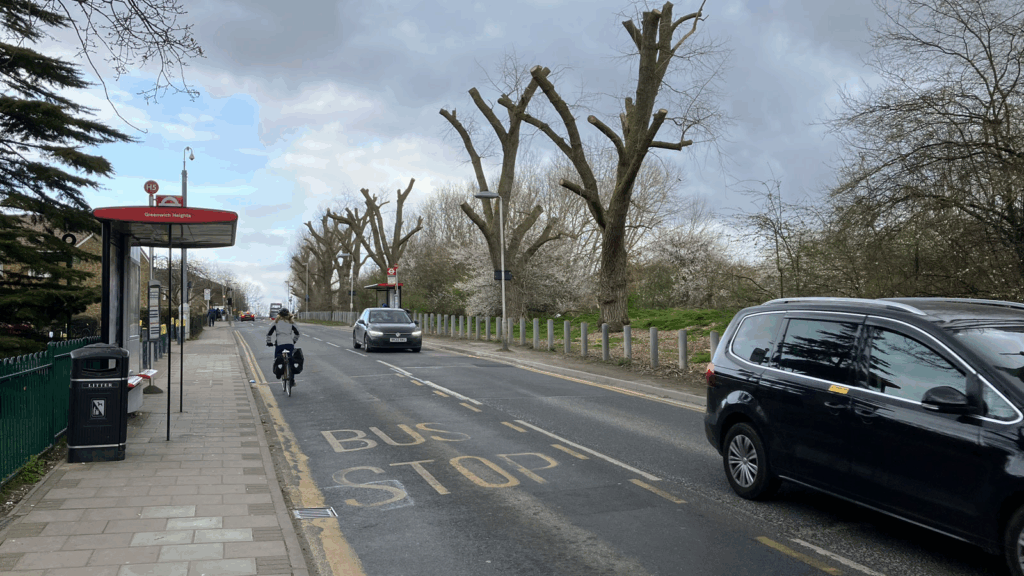
The Woolwich Common cycle lane is at the center of a heated debate in southeast London, where plans to create a dedicated cycling path have ignited local concerns over environmental impact. More than 50 mature trees are proposed for removal along a crucial 0.62-mile stretch owned by the Lewisham and Greenwich NHS Trust. This infrastructure overhaul aims to enhance cycling safety but has faced significant backlash from residents and community groups, who fear losing green space and the ecological benefits mature trees provide. With hundreds of objections filed, including from local cycling advocates, the discussion has escalated as authorities consider the balance between improved cycling facilities and preserving the area’s natural heritage. The NHS Trust’s commitment to planting 76 replacement trees has done little to quell the concerns, as many argue that these saplings will take years to provide the same ecological benefits as the trees they replace.
The proposed cycle route on Woolwich Common reflects an ongoing trend towards enhancing cycling infrastructure in urban areas. With the NHS Trust’s plans to convert a segment of roadway into a safe cycling lane, local objections have surfaced from various stakeholders who are concerned about the environmental ramifications of tree removal. Residents have united, vocalizing their apprehension over not just the impending loss of trees but also the broader implications on the community’s green spaces. Although the initiative promises improved cycling access, it raises critical discussions about the necessity for green enhancements, such as replacement trees, to offset the potential ecological damage. As the Greenwich Council weighs its options, the conversation underscores the need for thoughtful planning that balances urban development with environmental preservation.
Proposed Woolwich Common Cycle Lane: A Source of Controversy
The proposal for a new cycle lane on Woolwich Common has sparked significant debate among residents and community groups. The 0.62-mile stretch of road, maintained by the Lewisham and Greenwich NHS Trust, aims to improve cycling infrastructure in the area by creating a dedicated pathway for cyclists. However, this development comes at a considerable environmental cost, as over 50 trees are slated for removal. Local objections, fueled by concerns over the ecological impact, have led to widespread calls for reconsideration of the project.
While the NHS Trust argues that the upgrades are necessary for modernizing the road and improving safety for both cyclists and pedestrians, the backlash from the community suggests a deep-rooted concern for the green spaces that could be lost. Many activists and local residents are advocating for alternatives that would preserve existing trees while still enhancing cycling routes, emphasizing that sustainable development must balance infrastructure improvement with environmental stewardship.
Environmental Impact of Tree Removal in Greenwich
The potential removal of mature trees along the route of the proposed cycle lane raises serious environmental concerns. Trees play a crucial role in urban ecosystems, acting as natural air filters and providing shade. The Greenwich tree removal initiatives have been met with strong local objections, as residents recognize that removing established trees can lead to a loss of biodiversity and increased urban heat.
While the NHS Trust has indicated plans for planting 76 replacement trees, critics argue that these new saplings cannot quickly replace the significant ecological benefits offered by mature trees. The carbon sequestration capabilities of older trees are unmatched, raising questions about the long-term effectiveness of such mitigation efforts. Thus, there is a pressing need for the Greenwich Council to carefully consider the environmental implications of their decision regarding the cycling infrastructure.
Community Response to the Woolwich Common Cycling Proposal
The response from the community regarding the Woolwich Common cycle lane proposal has been overwhelmingly cautious, with 539 objections lodged against the plan. Local advocacy groups, including Greenwich Cyclists, have emphasized the importance of developing cycling facilities without compromising local ecosystems. Their stance highlights the need for community engagement during planning processes, suggesting that alternative designs could meet both cycling needs and environmental preservation.
Organized groups like the Friends of Woolwich Common have also voiced their concerns, stressing the value of maintaining the area’s natural beauty. They argue that cycling infrastructure could be achieved through less invasive means, which would allow for the existing trees to remain intact, thus preserving the essential environmental benefits they provide.
NHS Trust and Their Plans for Road Redevelopment
The Lewisham and Greenwich NHS Trust is undertaking the redevelopment of the road to meet highway standards, thus allowing future public maintenance. Their plans involve widening the carriageway, which ostensibly marks an effort to improve local transport safety. This initiative reflects a broader trend towards enhancing urban cycling infrastructure, aiming for a more cyclist-friendly city living. However, potential drawbacks include the removal of up to 46 trees along with those deemed unhealthy.
The NHS Trust’s commitment to planting replacement trees indicates a recognition of the need for mitigative measures in the face of community opposition. However, doubts remain about the effectiveness of these initiatives, particularly regarding the timeline for growth and ecological function of younger trees compared to their mature counterparts. A continued dialogue between the Trust and the community is paramount to ensuring that development aligns with local environmental ethos.
Addressing Local Objections: A Need for Dialogue
With several hundred objections raised against the Woolwich Common cycle lane plans, it is evident that there exists a disconnect between the proposed infrastructure improvements and community sentiments. Local groups are calling for transparent dialogue and engagement with residents to explore alternative designs that prioritize both cycling safety and tree preservation. This approach could foster a more collaborative atmosphere, where community members feel heard and valued in the decision-making process.
Acknowledging the diverse opinions among residents is crucial. Many community members express a strong desire for improved cycling conditions but are equally passionate about preserving the environment. The local authorities, including Greenwich Council and the NHS Trust, must consider integrating community feedback into their planning strategies to find solutions that reflect the priorities of all stakeholders involved.
Tree Replacement Strategies and Their Efficacy
In light of the plans for the removal of trees along the Woolwich Common road, the proposed strategy of planting replacement trees has been met with skepticism. While the NHS Trust asserts that new trees will be planted as close to the original sites as possible, critics highlight that newly planted trees often require years to establish and develop the ecological functions that mature trees have developed over decades. This raises fundamental questions about the real effectiveness of such mitigation strategies.
Furthermore, local activists argue that simply replanting trees does not adequately compensate for the immediate environmental costs of cutting down mature trees. With the imminent release of sequestered carbon associated with the cutting process, the urgency of finding better solutions becomes evident. Sustainable planning must prioritize the conservation of mature trees as part of a holistic approach to urban cycling infrastructure.
The Role of Cycling Advocacy Groups in Urban Planning
Cycling advocacy groups, such as Greenwich Cyclists, play a crucial role in shaping urban planning initiatives, particularly regarding new cycling infrastructure. Their collective input helps ensure that developments consider both practical cycling needs and environmental impacts. By voicing concerns over the proposed removal of trees, these groups have highlighted the need for sustainable and community-sensitive designs—a balance that is critical in urban development.
Engaging with local cycling advocacy not only supports better infrastructure but also empowers residents to participate actively in discussions about landscape changes. The advocacy group’s recommendations for enhanced community engagement suggest that involving local voices in the planning process could lead to innovative solutions that meet both cycling and ecological needs simultaneously.
Planning Decisions and their Implications for Future Developments
The upcoming decision by Greenwich Council regarding the Woolwich Common cycle lane proposal marks a pivotal moment in urban planning for the area. The implications of this decision will stretch far beyond just transportation; it will set a precedent for how future developments balance cycling infrastructure with environmental preservation. A decision that underscores the importance of preserving local ecosystems could encourage more sustainable planning practices across London.
Additionally, the outcome of this proposal might influence how community objections are factored into urban development debates. If the Greenwich Council leans towards retaining mature trees while enhancing cycling facilities, it could inspire similar approaches in other neighborhoods undergoing infrastructural changes, fostering a wave of green urban planning initiatives that prioritize ecological balance.
Looking Ahead: The Future of Woolwich Common and its Green Spaces
As the debate surrounding the cycle lane proposal unfolds, the future of Woolwich Common remains a subject of concern for many local residents. Preserving green spaces while integrating modern infrastructure will require thoughtful planning and innovative solutions. Stakeholders must work collaboratively to find ways to enhance cycling routes without compromising the integrity of the local environment.
The outcome of this cycle lane debate will likely serve as a case study for urban planners and local councils, demonstrating the importance of community engagement in achieving sustainable development goals. The lasting impact on Woolwich Common’s green spaces is a reminder that urban expansion must not come at the cost of ecological health and community well-being.
Frequently Asked Questions
What are the plans for the Woolwich Common cycle lane regarding tree removal?
The Woolwich Common cycle lane proposal includes plans to remove more than 50 trees to create a continuous footpath and cycleway along a 0.62-mile stretch. This decision has sparked significant local objections due to concerns about the loss of mature trees.
How does the Woolwich Common cycle lane proposal address local objections about tree removal?
In response to local objections regarding the loss of trees, the NHS Trust has proposed planting 76 replacement trees as part of the Woolwich Common cycle lane project to mitigate the environmental impact.
What is the current status of the Woolwich Common cycle lane and associated tree removal plans?
The Woolwich Common cycle lane proposal, which could lead to the removal of numerous trees, is awaiting a decision from Greenwich Council, following significant local opposition and discussions among stakeholders.
What impact will the Woolwich Common cycle lane have on the local environment?
The proposed Woolwich Common cycle lane is expected to lead to the removal of up to 46 trees and others in poor condition, raising environmental concerns. Objectors argue that cutting down mature trees could release stored carbon, while newly planted replacements take years to mature.
Who is responsible for the maintenance of the Woolwich Common stretch where the cycle lane is planned?
The stretch of road designated for the Woolwich Common cycle lane is owned and maintained by the Lewisham and Greenwich NHS Trust, which is working on plans to upgrade it to public highway standards.
What alternatives to tree removal have been suggested for the Woolwich Common cycle lane?
Greenwich Cyclists and other objectors have suggested that the NHS Trust engage with the community to explore alternative designs for the Woolwich Common cycle lane that minimize the loss of mature trees while still improving cycling infrastructure.
What facilities are being proposed alongside the Woolwich Common cycle lane?
In addition to the Woolwich Common cycle lane, various crossing facilities are proposed to enhance safety for both cyclists and pedestrians along the route.
What are the benefits expected from the Woolwich Common cycle lane?
The Woolwich Common cycle lane is designed to provide enhanced and safer cycling and pedestrian facilities along the route, promoting healthier modes of transportation.
Are there any community discussions regarding the Woolwich Common cycle lane?
Yes, a meeting was held involving local groups, including Friends of Woolwich Common and Greenwich Cyclists, to discuss the Woolwich Common cycle lane plans; however, no consensus was reached on the issue of tree removal.
What is the timeline for the decision on the Woolwich Common cycle lane proposal?
Greenwich Council is expected to make a decision on the Woolwich Common cycle lane proposals soon, following a period of community feedback and objection.
| Key Points |
|---|
| More than 50 trees may be cut down to create a cycle lane on Woolwich Common. |
| The proposed cycle lane will stretch 0.62 miles (1km) between Woolwich Common and Queen Elizabeth Hospital. |
| The road is maintained by Lewisham and Greenwich NHS Trust, and plans aim to upgrade it to highway standards. |
| Local objections total 539, with strong opposition to the tree loss. |
| NHS Trust plans to plant 76 replacement trees to mitigate tree loss. |
| Proposals include widening the road to create a continuous footpath and cycleway. |
| A previous meeting involving key stakeholders did not reach a consensus on tree removal. |
| Many argue that mature trees should not be removed due to their carbon sequestration benefits. |
Summary
The Woolwich Common cycle lane project has sparked significant controversy, primarily due to plans that may result in the removal of over 50 mature trees. While the initiative aims to enhance cycling and pedestrian facilities along the busy road, local opposition highlights a crucial concern regarding environmental impacts, particularly the loss of trees. Replacement trees proposed by the NHS Trust may take years to offer similar ecological benefits as the existing mature trees. The ongoing discussions and feedback from the community emphasize the need for balanced solutions that prioritize both infrastructure development and environmental preservation.