Listen to this article
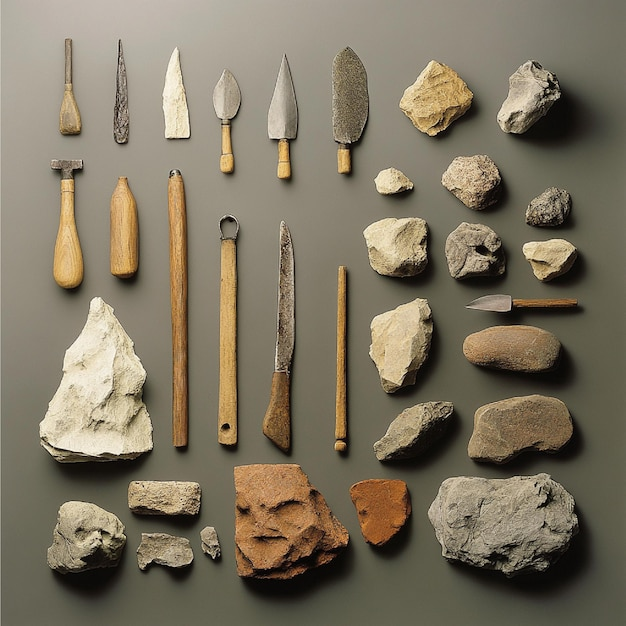
Early human tool use marks a pivotal moment in the trajectory of human evolution, representing a significant leap forward in our ancestors’ ability to manipulate their environment. Archaeological findings, particularly from the Namorotukunan site in Kenya, reveal that the earliest inhabitants, who lived 2.75 million years ago, created and utilized ancient stone tools known as Oldowan tools with remarkable ingenuity and skill. These primitive tools weren’t merely rudimentary objects; they were essential for survival, allowing early humans to adapt to changing climates and varying food sources. Through a continuous legacy of tool-making spanning 300,000 years, these advancements illustrate a sustained continuity of behavior that was crucial in shaping early technology and the human experience. As researchers delve deeper into the implications of these findings, it becomes increasingly clear that early human tool use laid the groundwork for technological innovation and social behavior that would define what it means to be human.
The dawn of human creativity is vividly illustrated through the lens of ancient technology, particularly in the form of primitive stone implements. This artistry, often identified as the first instances of human craftsmanship, reflects a growing intelligence among our ancestors, who began to employ materials around them to enhance their daily survival skills. Evidence from Namorotukunan supports the notion that these innovative pioneers not only constructed tools but also developed a sophisticated understanding of their environment, showcasing their adaptability in the face of evolving climatic challenges. Such ingenuity marks the beginning of a prolonged era of technological advancement, paving the way for future generations to build upon these foundational skills. By exploring the evolution and progression of these early tools, we gain invaluable insight into the cognitive and cultural development of our species.
The Significance of Early Human Tool Use
The discovery of stone tools at the Namorotukunan site has redefined our understanding of early human ingenuity. These tools, dating back 2.75 million years, signify that early humans were not merely survivors, but inventors of technology that facilitated their adaptation to the rapidly changing environments of their time. The continuous use of tools for 300,000 years suggests a skills transfer across generations, indicating a level of cultural continuity thought to have emerged much later in human evolution. This feature of early human tool use points to an advanced cognitive ability to innovate and improve upon existing technologies in response to environmental challenges.
The archaeological evidence, including a variety of sharp tools and hammerstones, illuminates how significant these early inventions were for survival. With knowledge of how to craft and utilize these tools, early humans could access a diverse diet comprising plants and animal carcasses. This adaptability not only ensured their survival amidst ecological shifts but also laid the groundwork for subsequent technological advancements in human history.
Oldowan Tools: The First Technological Breakthroughs
The Oldowan tool-making technique represents one of the earliest known forms of technology utilized by hominins, highlighting a pivotal moment in human prehistory. This method involved simply striking stones to create sharp flakes, an approach that reflects not just a functional need for tools but an inherent understanding of material properties and geological formations. The sophistication observed in the craft at Namorotukunan challenges previous assumptions about the cognitive capabilities of early tool users, illustrating a remarkable level of skill and requisite knowledge about their environment.
Dating back to over 2.7 million years, Oldowan tools are critical indicators of the evolutionary trajectory of early humans. They demonstrate that our ancestors possessed an ability for systematic problem-solving that was essential for survival. As the Namorotukunan findings show, the early humans effectively adapted to drastic climate changes, not only altering their behavior but leveraging their tools to meet their needs. This capacity to innovate and create tools reflects a fundamental shift in the human experience, marking the dawn of what we would now recognize as technological advancement.
Insights from the Namorotukunan Discoveries
The recent findings from the Namorotukunan site have given scholars a fresh perspective on the timeline of human evolution and the development of technology. Prior to this discovery, it was believed that the use of tools was sporadic during the early stages of human existence. However, the evidence of continuous tool usage for 300,000 years suggests a much deeper and more consistent engagement with technology, emphasizing the importance of cultural transmission in early human societies. This paradigm shift compels us to reconsider our understanding of technological evolution as an intrinsic part of early human life.
Moreover, the tools found at Namorotukunan reflect not only the survival strategies of early humans but their interaction with the environment. The adaptation to various ecological conditions, such as shifting from wetlands to grasslands, highlights the importance of these tools in maintaining their social and dietary needs. Archaeological evidence such as butchered animal bones indicates that these tools were crucial for securing consistent food sources. The exceptional skill involved in crafting these tools reveals that early human technology was not just about survival; it represented a complex, sophisticated understanding of their surroundings.
The Role of Technology in Human Evolution
The discoveries at Namorotukunan illustrate a transformative era in human evolution, where technological innovation began to redefine how early humans interacted with their environment. The ability to create and consistently use tools suggests a significant cognitive leap that allowed these primitive beings to navigate dramatic environmental changes effectively. This advanced adaptability positioned early humans in a unique evolutionary niche, enabling them to thrive in varying ecological contexts rather than relying solely on biological adaptation.
As environments changed from lush ecosystems to harsher conditions, early humans employed their technological prowess to explore new sources of food. This shows that technology played a critical role in shaping the trajectory of human evolution, facilitating survival and the proliferation of human populations across diverse landscapes. By manipulating their surroundings through the use of tools, early humans were able to enhance their feeding strategies, which is essential not only for sustenance but also for fostering further cognitive and social developments in their communities.
The Intersection of Culture and Innovation in Tool Use
The findings at Namorotukunan reveal that cultural factors were integral to the development and transmission of early technology. The continuous use of stone tools over hundreds of thousands of years implies that these tools were not mere inventions made in isolation. Instead, they represent a cultural practice that developed through shared knowledge within early human groups. Such cultural connections were likely vital for the survival of these populations, enabling them to navigate the complexities of their environment and establish a communal identity centered around shared innovations.
As technology advanced, it inevitably influenced social structures and dynamics among early humans. The reliance on tools for hunting and gathering food likely fostered cooperation and communication within groups, enhancing social bonds and leading to a more integrated community life. These cultural dimensions of technological use underscore the significance of human innovation as more than a collection of skills; it represents fundamental aspects of identity, survival, and adaptation that have shaped human evolution throughout history.
Challenges to Traditional Views of Human Evolution
The discoveries at Namorotukunan challenge long-standing beliefs regarding the timeline of tool use and evolutionary milestones in early humans. Traditionally, the emergence of sophisticated tool use was thought to correlate strictly with increases in brain size. However, the evidence from this site suggests that our ancestors were creating and utilizing tools long before significant anatomical changes occurred. This indicates that cognitive abilities related to technology may have developed independently, marking earlier hominins as more capable than previously thought, defying our understandings of cognitive evolution.
By extending the timeline of tool development, the Namorotukunan finds invite a reevaluation of the relationship between tool use and human cognitive evolution. This research posits that the cognitive capabilities necessary for innovation and technological creation were present much earlier, positioning the origins of human adaptive skills further back in history. Such a reevaluation not only enhances our comprehension of when and how early humans interacted with their environments but also compels us to explore the broader implications of these revelations for the narrative of human evolution.
Adaptation Strategies of Early Humans
The adaptation strategies reflected in the Namorotukunan discoveries highlight the remarkable resilience and innovation of early human societies. The ability to exploit and manipulate their surroundings through the use of tools was essential for early humans, particularly in the face of environmental upheaval. This evidence paints a picture of adaptive strategies that were less about physical evolution and more about technological ingenuity, marking a decisive turning point in the narrative of human existence. Early humans demonstrated incredible resilience, navigating through ecosystems that fluctuated dramatically by employing crafted tools.
These adaptation strategies allowed for flexibility in dietary choices and survival tactics. With their stone tools, early human societies were empowered to efficiently access various food sources, enhancing their overall fitness in changing landscapes. As these early populations thrived, the synergy between technology and adaptation laid the foundation for future human societies to continue evolving, effectively setting the stage for the complexities of human culture that would follow.
The Future of Early Human Research
The revelations from Namorotukunan mark a significant leap forward in early human research, suggesting that the path to understanding human evolution is far from complete. The continuous discoveries from archaeological sites reveal nuanced details about early human life and adaptations, prompting a fresh inquiry into how ancient populations navigated their environments. These findings emphasize the need for additional research into other similar sites around the world to further unravel the technological advancements and cultural practices of our ancestors.
Future explorations will no doubt benefit from the evolving methodologies in archaeological research and advancements in technology, providing more insights into how early humans developed tools and how these innovations influenced social structures and interactions. As we delve deeper into humanity’s past, the ongoing discoveries will likely challenge our perceptions of not only human evolution but also the very nature of what it means to be human in the context of our creative and adaptive capabilities.
Frequently Asked Questions
What are Oldowan tools and their significance in early human tool use?
Oldowan tools represent one of the earliest known stone tool-making techniques, dating back to approximately 2.6 million years ago. These tools, characterized by simple flakes and cores, signify the beginnings of early human tool use, showcasing primitive innovation and the ability to manipulate materials for survival. Discoveries like those at Namorotukunan highlight their continuous use over long periods, underscoring their importance in human evolution.
How do Namorotukunan discoveries change our understanding of early human tool use?
The Namorotukunan discoveries, revealing a sustained use of stone tools over 300,000 years, suggest that early human tool use was more consistent and sophisticated than previously believed. This challenges earlier assumptions that tool use was sporadic and demonstrates that early humans actively passed down technological skills across generations, marking a significant evolutionary milestone.
What role did early technology, like stone tools, play in human evolution?
Early technology, particularly stone tools, played a crucial role in human evolution by enabling our ancestors to adapt to changing environments without needing significant biological changes. Tools allowed early humans to access various food sources and survive amid climatic shifts, showcasing ingenuity and the ability to manipulate the environment effectively.
Why were the tools found at Namorotukunan described as remarkably sharp and sophisticated?
The tools found at Namorotukunan were described as remarkably sharp due to their precise crafting methods, which involved striking rocks to create sharp flakes and cores. This level of craftsmanship indicates a deep understanding of material properties and suggests that early humans had developed a sophisticated approach to tool-making, vital for their survival.
What does the evidence of continuous tool use tell us about early human behavior?
The evidence of continuous tool use at Namorotukunan indicates that early humans demonstrated advanced behavioral adaptation, using tools systematically over generations. This suggests a significant cognitive ability to learn, innovate, and pass down knowledge, contributing to our understanding of the social and intellectual development of early human societies.
How did environmental changes influence early human tool use in East Turkana?
Environmental changes in East Turkana, transitioning from lush wetlands to arid grasslands, significantly influenced early human tool use. As habitats changed, the ability to create and utilize stone tools allowed early humans to adapt their foraging strategies and survive during harsh conditions, illustrating a successful technological response to environmental challenges.
What can the stone tools at Namorotukunan reveal about early humans’ dietary practices?
The stone tools excavated from Namorotukunan provide insights into early human dietary practices by showing signs of butchering and processing animal bones. This suggests that early humans not only consumed meat but also utilized tools to access a varied diet, indicating a broadening of food sources influenced by environmental changes.
What implications do the Namorotukunan findings have on theories of human evolution?
The findings at Namorotukunan imply that early human evolution involved a much earlier and more complex relationship with tool use than previously considered. This challenges the timeline of evolving larger brain sizes in relation to technological advancements, indicating that our ancestors possessed adaptive abilities much earlier, stemming back to 2.75 million years ago.
How does the study of ancient stone tools enhance our understanding of the early technology used by humans?
Studying ancient stone tools enhances our understanding of early technology by revealing the cognitive and practical skills that our ancestors possessed. These tools reflect not only their survival strategies but also their cultural development, communication methods, and the evolutionary pathways that led to modern technology.
What makes the discovery of the continuous use of stone tools at Namorotukunan unique in the study of early human tool use?
The discovery of continuous stone tool use at Namorotukunan is unique because it provides clear evidence that early humans maintained and refined their technological skills over a prolonged period, countering previous beliefs of sporadic usage. This continuity illustrates not only practical ingenuity but also the cultural transmission of knowledge across generations.
| Key Points | Details |
|---|---|
| Early Human Tool Use | Discovery of sophisticated stone tools dating back 2.75 million years suggests that early humans had advanced skills in tool making. |
| Continuous Usage | Research shows that these tools were used continuously for 300,000 years, demonstrating a significant shift away from the previous belief of intermittent tool use. |
| Oldowan Tool-Making | The tools were made using the Oldowan technique, and were crafted from high-quality rocks sourced from riverbeds. |
| Survival and Adaptation | These tools helped early humans adapt to environmental changes and survive in shifting climates. |
| Implications for Human Evolution | The findings challenge prior notions that tool use emerged after significant brain development, indicating advanced cognitive abilities in early humans. |
Summary
Early human tool use represents a pivotal moment in our evolutionary history. Recent discoveries from the Namorotukunan site in Kenya provide compelling evidence that the earliest humans were not only tool makers but also skilled inventors, using these tools for an extended period of 300,000 years. This continuous use over such a long duration illustrates a profound understanding of their environment and a significant leap in cognitive abilities far earlier than previously thought. Instead of merely adapting biologically to changing climates, these early humans leveraged technology to thrive, fundamentally altering our understanding of human evolution and the capabilities of our ancestors.