
Listen to this article
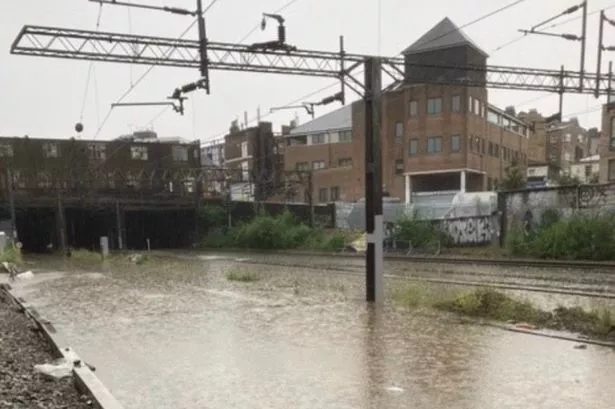
Amidst ongoing concerns over London flooding issues, the situation at Euston Station has attracted significant attention due to a persistent problem with a massive puddle forming outside its entrance. Often referred to as the “Euston puddle,” this collection of water at the intersection of Upper Woburn Place and Euston Road poses serious challenges for commuters, resulting in many wading through deep water just to access the station. Transport for London (TfL) has been urged to take immediate action to resolve these drainage problems, as they jeopardize the safety of all pedestrians, particularly those with disabilities who face risks navigating through the hazardous conditions. The Royal National Institute of Blind People vocalizes their grave concerns, indicating that the area’s accessibility is severely compromised. As calls for effective solutions grow, the spotlight remains on TfL, demanding a comprehensive response to alleviate the struggles of those relying on disabled access at Euston.
The flooding issue at Euston Station, prominently labeled the “Euston puddle,” highlights the urgent need for improved drainage systems in London. With significant rainfall causing water accumulation at this critical transport hub, authorities are facing mounting pressure to enhance pedestrian safety and accessibility, particularly for individuals with mobility challenges. Recent assessments have revealed that previous drainage efforts by Transport for London (TfL) were insufficient, and the re-emergence of these flooding concerns calls for immediate intervention. Activists and local organizations stress the importance of ensuring that public transportation facilities remain accessible during adverse weather conditions. As discussions around transport infrastructure continue, the focus is increasingly on how TfL can better manage their systems to prevent similar flooding scenarios across the city.
Persistent Issues at Euston Station Flooding
The flooding issues surrounding Euston Station have been a recurrent concern for both locals and commuters. Known locally as the “Euston puddle,” this significant accumulation of water forms every time it rains at the junction of Upper Woburn Place and Euston Road. Passersby often face challenges navigating through the depth of this water, which can lead to dangerous situations. Reports indicate that people have had to wade through these floodwaters to reach the station, raising alarms about safety and accessibility in the area.
Transport for London (TfL) has acknowledged that problems with flooding outside Euston have persisted, despite previous drainage work attempted last winter. The re-emergence of the “Euston puddle” highlights ongoing drainage issues that need urgent attention. Local authorities, including Camden Council, have called for comprehensive strategies aimed at resolving these drainage problems to ensure the safety and well-being of all sidewalk users, especially for vulnerable groups like the disabled.
Impact of Euston Puddle on Disabled Access
Concerns regarding the safety of disabled individuals near Euston Station have been voiced prominently by the Royal National Institute of Blind People. The charity points out that the persistent flooding has created dangerous situations where the accessibility of pathways and crossings for blind and partially sighted individuals becomes severely compromised. The accumulation of water not only obstructs paths but also covers critical signal-controlled crossings, which are essential for such individuals to navigate the busy streets safely.
This issue has raised fears that the area could become increasingly hazardous, potentially turning into a “no-go zone” for those with mobility difficulties. The local community has expressed frustration that despite ongoing discussions and reports of proposed solutions, the Euston puddle continues to pose significant barriers. It is imperative for TfL to prioritize the resolution of these drainage issues to safeguard the rights and safety of disabled patrons who depend on accessible and hazard-free routes.
Transport for London’s Response to Euston Flooding
In response to the flooding challenges at Euston Station, TfL has committed to taking measures to address the ongoing drainage problems. After the recent resurgence of the “Euston puddle,” officials from TfL stated that they would work closely with Thames Water to investigate the effectiveness of the current drainage system. The urgency of the flooding situation necessitates a thorough reassessment of previously implemented solutions, as locals have been left frustrated by the recurring nature of this issue.
TfL has noted that maintenance teams are scheduled to be deployed during heavy rainfall to address the puddle immediately. This proactive approach aims to reduce the inconvenience caused to pedestrians and prevent more extensive problems down the road. However, for many, these temporary fixes are not enough, and a more sustainable solution is required to eliminate the root causes of the flooding and prevent the formation of the Euston puddle.
Community Concerns Regarding Road Safety
The presence of the Euston puddle has sparked significant communal concern, particularly regarding pedestrian safety. Many local residents have raised alarm over the lake of water that forms at one of the busiest intersections close to Euston Station. The need for action is urgent, as numerous instances have been reported where vulnerable individuals, including the elderly and those with disabilities, have had to maneuver around traffic instead of safely crossing the street. This poses alarming risks of accidents and injuries.
Moreover, issues extend beyond just safety; the accumulation of water can cause disruption to transport schedules, forcing commuters to find alternative routes amidst the chaos. Multiple calls for the immediate attention of TfL have been made, emphasizing the importance of creating a safe environment for all who rely on public transport infrastructure. It is vital for local authorities to address the underlying drainage problems and ensure adequate solutions are in place to prevent future flooding incidents.
Long-term Solutions for London Flooding Issues
The flooding issues near Euston Station are indicative of broader London flooding challenges that require comprehensive and long-term solutions. Urban infrastructure is often under strain from heavy rains and inadequate drainage systems maintaining the structural integrity of roads and sidewalks. The recent discussions surrounding the Euston puddle have amplified the need for strategic planning in addressing such vulnerabilities throughout the city.
Investing in improved drainage systems and infrastructure upgrades not only helps mitigate flooding at specific points like Euston but can also significantly enhance overall urban mobility and safety. As authorities work to identify enduring solutions to combat London’s flooding issues, efforts must include community voices, local stakeholders, and specialists in urban design, ensuring that the needs of all residents, particularly those with mobility challenges, are considered.
Advocacy for Safer Pedestrian Spaces
The repeated flooding at Euston Station has galvanized various advocacy groups to push for safer pedestrian environments across London. Particularly, the Royal National Institute of Blind People has emphasized the plight of visually impaired individuals who struggle to navigate the flooded areas safely. Their campaigns highlight the importance of making public spaces accessible and inclusive, pushing for urgent action to alleviate the Euston puddle problem.
Commuters and advocacy groups alike have stressed the necessity of re-evaluating pedestrian access points. Ensuring that all crossings are adequately marked, maintained, and free of flooding is a non-negotiable aspect of urban development. As public sentiment grows stronger in favor of pedestrian safety, it’s critical for city planners and lawmakers to take these concerns seriously, working towards practical solutions to foster an environment that prioritizes the safety and accessibility of all citizens.
The Role of Camden Council in Euston Flooding Solutions
As a key local authority in the Euston area, Camden Council plays a crucial role in addressing flooding issues that impact commuters and residents. Council members have voiced their concerns regarding the chronic flooding near Euston Station and have actively campaigned for swift action from TfL. The council’s involvement underscores the importance of a collaborative approach to resolving urban flooding challenges, where local governance works hand in hand with public transport authorities.
The council’s strategy includes pushing for improved drainage systems and advocating for specific assessments to be performed by TfL. By articulating community needs and collaborating with relevant stakeholders, Camden Council aims to find effective solutions that not only prevent the reoccurrence of the Euston puddle but also enhance overall pedestrian safety and accessibility throughout the borough.
Understanding the Local Impact of Transport Infrastructure
The flooding at Euston Station serves as a stark reminder of the impact transport infrastructure can have on local communities. Inadequate drainage systems can turn essential transport hubs into danger zones, detracting from the overall public experience. Commuters should not have to navigate dangers such as deep puddles just to access vital services and facilities, which further emphasizes the need for continuous investment in urban infrastructure.
When transport problems like the Euston puddle arise, they can have extensive implications on daily commutes for thousands of individuals. These situations expose flaws in urban planning and highlight the necessity for an ongoing evaluation of the effectiveness of the drainage systems utilized in busy urban landscapes. There is an urgent need for proactive measures to ensure that our transport infrastructure can withstand heavy rainfall and remain functional for all users.
Community Engagement on Flood Prevention
Community engagement is essential in tackling persistent flooding problems like the “Euston puddle.” Residents and advocacy groups are vital sources of information about the issues surrounding this puddle, as they frequently experience the repercussions firsthand. Collaborative efforts that involve communities in discussing and shaping solutions can lead to more comprehensive strategies to address flooding challenges while ensuring that the voices of all affected individuals are heard.
Active participation from the local community in decision-making processes promotes transparency and accountability from authorities like TfL and Camden Council. Through public forums and consultation events, stakeholders can share firsthand accounts of the flooding experiences, facilitating constructive dialogue that can reshape future urban planning and resilience strategies. Ultimately, creating a flood-free environment at Euston Station requires not just infrastructural changes, but also a unified voice advocating for safe and accessible public spaces.
Frequently Asked Questions
What are the current issues regarding Euston Station flooding?
Euston Station is experiencing significant flooding issues, particularly a large puddle commonly referred to as the ‘Euston puddle.’ This accumulation of water forms at the intersection of Upper Woburn Place and Euston Road after rainfall, creating a hazardous situation for pedestrians.
How does the Euston puddle affect disabled access at Euston Station?
The Euston puddle poses serious challenges for disabled individuals trying to access Euston Station. The Royal National Institute of Blind People has expressed concern that this flooding obstructs safe crossings, particularly affecting visually impaired users who rely on signal-controlled pedestrian crossings to navigate the area safely.
What measures are being taken to address flooding issues at Euston Station?
Transport for London (TfL) has acknowledged the ongoing Euston Station flooding issues and has conducted drainage work in the past. Currently, they are investigating the drainage system further, and maintenance teams are being deployed before expected heavy rainfall to clear any accumulations.
Why is Euston Road a site of persistent flooding issues?
Euston Road suffers from persistent flooding issues due to inadequate drainage systems, which result in the formation of large puddles like the ‘Euston puddle.’ Despite past roadwork aimed at improving drainage, the problems have reappeared, leading to calls for more effective long-term solutions.
How does the Euston puddle impact pedestrian safety?
The Euston puddle significantly impacts pedestrian safety as it forces commuters to navigate through deep water. This situation is particularly dangerous for elderly individuals and those with mobility issues, who may have to dodge traffic while attempting to cross the road.
What has the community said about Euston Station flooding?
Local residents and organizations, including the Royal National Institute of Blind People, have voiced their concerns about the Euston Station flooding. They highlight that the ‘Euston puddle’ makes the area hazardous and could effectively turn it into a no-go zone for disabled individuals and other vulnerable pedestrians.
Are there any future plans to prevent Euston Station flooding?
While Transport for London is currently investigating the drainage issues contributing to Euston Station flooding, community leaders like Adam Harrison from Camden Council have called for a new strategy to address this longstanding problem effectively to prevent future occurrences.
What is TfL doing about the drainage problems at Euston Station?
Transport for London has stated that they are actively investigating the drainage issues associated with Euston Station flooding and are working collaboratively with Thames Water to find a solution. They have also increased maintenance efforts to address substantial puddle formations ahead of heavy rains.
| Key Points | Details |
|---|---|
| Euston Station Flooding Issue | Persistent flooding referred to as the ‘Euston puddle’ at Upper Woburn Place and Euston Road. |
| Impact on Disabled and Vulnerable Individuals | Concerns raised by the Royal National Institute for the Blind regarding access and safety. |
| Previous Drainage Work | Transport for London has reportedly completed drainage work, but the flooding has returned. |
| Calls for Action | Local authorities and residents are urging TfL to devise a comprehensive solution. |
| Risks for Pedestrians | The puddle poses dangers for pedestrians, especially the elderly and those with mobility challenges. |
| TfL’s New Measures | TfL plans to investigate drainage system further and deploy teams to clear water during heavy rain. |
Summary
The Euston Station flooding issue, known locally as the “Euston puddle,” remains a pressing concern for commuters and local residents. Despite previous drainage attempts by Transport for London, the accumulation of water has reappeared, creating significant challenges for safe access to the station, especially for disabled individuals and the elderly. Urgent action is required to effectively address this repeated problem to ensure that Euston Station remains accessible and safe for all its users.