Listen to this article
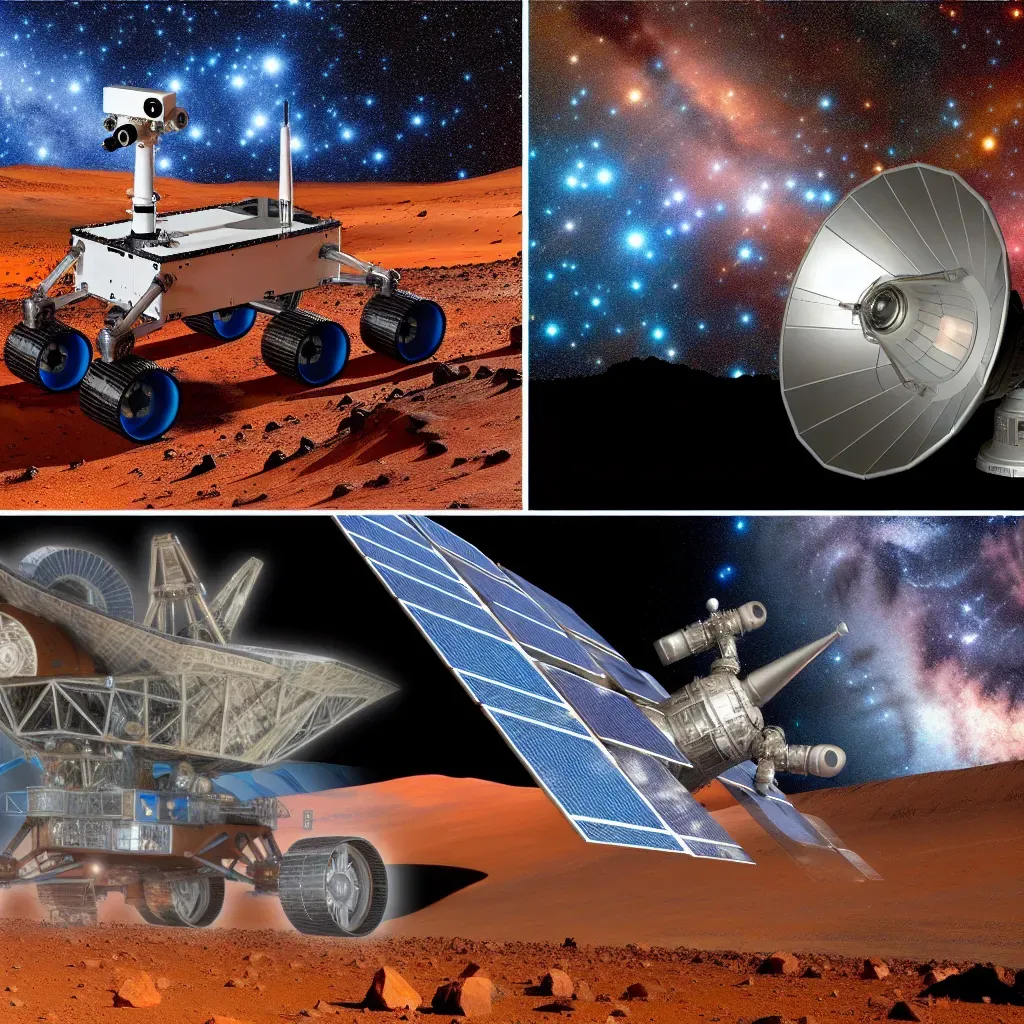
Space Exploration News is at the forefront of scientific discovery, showcasing the latest advancements in our quest to understand the cosmos. Recent activities have redefined our perceptions, notably through Mars missions like NASA’s Perseverance rover, which seeks ancient signs of life on the Red Planet. Additionally, the groundbreaking findings from the James Webb Telescope have unveiled previously unseen details about stellar evolution and exoplanets, offering tantalizing insights into distant worlds. With the Artemis program aiming to return humans to the Moon, and China’s Tianwen-1 mission paving new paths in planetary exploration, the fabric of space technology continues to evolve rapidly. As we turn our gaze to the future of space exploration, the excitement surrounding upcoming discoveries promises to be nothing short of extraordinary.
In the realm of cosmic investigation, the unfolding narrative of space exploration includes a plethora of significant missions and remarkable findings. The exploration of Mars, particularly through advanced robotic missions, has captured public imagination and scientific interest alike. The unprecedented discoveries facilitated by cutting-edge telescopes illuminate the mysteries of our universe, especially the search for exoplanets that might harbor life. Initiatives like the Artemis program symbolize humanity’s goal of sustainable extraterrestrial presence, while innovative contributions from global players such as China with the Tianwen-1 mission enhance our understanding of celestial bodies. As we anticipate the next milestones in our interstellar ventures, the potential for transformative discoveries becomes ever more compelling.
The Revolutionary Role of Mars Missions in Space Exploration
Mars missions have transformed our understanding of the Red Planet, with NASA’s Perseverance rover leading the charge. This rover not only searches for evidence of ancient microbial life but also collects crucial rock samples. By utilizing advanced technology and innovative techniques, Mars missions like Perseverance and China’s Tianwen-1 enable scientists to analyze the Martian surface in detail, providing insights into its geological and climatic history. As we send more missions to Mars, we gather not just data but hope for future human exploration.
The discoveries made by Mars missions stir public interest and investment in space exploration technologies. Each successful landing and data transmission brings us closer to answering profound questions about life beyond Earth. The findings on Mars—organic molecules and atmospheric compositions—have opened up new avenues for research, pushing the boundaries of our knowledge. With international collaborations enhancing the pace of these missions, Mars becomes a stepping stone toward future explorations of deeper space.
Uncovering the Universe with James Webb Telescope Discoveries
The James Webb Space Telescope (JWST) is a beacon of progress in the field of astronomy, opening a new chapter in cosmic discovery. Unlike its predecessor, the Hubble Space Telescope, JWST’s ability to observe infrared light allows scientists to penetrate cosmic dust and unveil complex structures of distant galaxies, star nurseries, and planetary systems. This revelation not only enhances our understanding of the universe’s formation but also fuels the ongoing exploration of exoplanets.
Recent JWST discoveries, such as the detection of water vapor in exoplanet atmospheres, have shifted the paradigms of habitability and life beyond Earth. These observations enable scientists to analyze the chemical compositions of distant worlds, driving forward the search for biosignatures. With each groundbreaking image and research finding from JWST, we are reminded of how advanced space technologies pave the way for future explorations and a greater understanding of our universe.
The Artemis Program: Pioneering Human Presence on the Moon
NASA’s Artemis program serves as a critical leap forward in humanity’s quest to establish a sustained presence on the Moon and beyond. Building on the legacy of the Apollo missions, Artemis aims to return astronauts to the lunar surface, pushing the boundaries of scientific exploration. With initiatives like Artemis I validating spacecraft capabilities and testing new technologies, this program not only focuses on lunar explorations but also lays the essential groundwork for future Mars missions.
As sustainable exploration concepts unfold, the Artemis program emphasizes international cooperation and the development of innovative space technologies. This approach is pivotal in preparing for more ambitious missions that could potentially reach Mars in the coming decades. By establishing a permanent base on the Moon, scientists hope to conduct experiments that inform our understanding of space travel’s long-term effects on human health, contributing significantly to future manned missions to Mars.
China’s Tianwen-1 Mars Mission: A Significant Milestone
China’s Tianwen-1 mission represents a remarkable achievement in global space exploration, marking the country’s ambitious entry into Mars exploration. Launched in July 2020, the mission has already provided significant insights about Martian geology through its Zhurong rover. By analyzing soil samples and mapping the Martian landscape, Tianwen-1 contributes vital data to the global understanding of Mars, enhancing cooperative international efforts in space science.
The success of Tianwen-1 showcases the rapid advancements in space technology and China’s commitment to exploring the cosmos. With a focus on analyzing the Utopia Planitia region, the mission’s findings will assist future exploratory missions, potentially aiding our understanding of past life on Mars. As countries around the world invest in space technology, collaborative efforts are becoming necessary to tackle the complex questions that lie in space exploration.
The Future of Space Exploration: Innovations on the Horizon
The future of space exploration is exceedingly promising, with groundbreaking missions on the horizon. NASA’s Europa Clipper mission aims to study Jupiter’s moon Europa, which is believed to harbor a subsurface ocean. This exploration could potentially yield insights into extraterrestrial life, underscoring the importance of technological advancements in uncovering the secrets of the solar system.
Simultaneously, the Mars Sample Return mission holds the capacity to bring back Martian soil and rock samples, allowing scientists to conduct in-depth analyses on Earth. These future space missions, combined with innovations in spacecraft technology and materials, set a precedent for a new age of exploration. As each mission unfolds, humanity inches closer to unraveling the mysteries of our universe, making space an ever-evolving frontier of discovery.
Frequently Asked Questions
What are the latest Mars missions in space exploration news?
The latest Mars missions include NASA’s Perseverance rover and China’s Tianwen-1 mission. Perseverance aims to search for signs of ancient life and collect samples for possible return to Earth, while Tianwen-1 successfully deployed the Zhurong rover to explore Mars’ surface and gather crucial geological data.
How has the James Webb Space Telescope transformed our understanding of space?
The James Webb Space Telescope (JWST), launched in December 2021, has revolutionized space exploration news by capturing infrared images of the universe. JWST has made significant discoveries, including detecting water vapor in exoplanet atmospheres, providing insights into potential habitability and the early formation of galaxies.
What is NASA’s Artemis program and its goals in space exploration?
NASA’s Artemis program aims to return humans to the Moon by the mid-2020s, focusing on creating a sustainable human presence. The Artemis I mission successfully tested new technologies and laid the groundwork for future crewed Mars missions, highlighting significant advancements in space technology.
What are the recent key discoveries in exoplanet exploration?
Recent space exploration news highlights that NASA’s TESS has identified thousands of exoplanets, particularly focusing on those in habitable zones where life could exist. Ongoing studies of exoplanet atmospheres, particularly for chemical biosignatures, are crucial for understanding the potential for life beyond Earth.
What upcoming space missions should we look forward to in the future?
Future space exploration news includes the NASA Europa Clipper mission, set to investigate Jupiter’s moon Europa for signs of life, and the Mars Sample Return mission, which aims to bring Martian samples back to Earth. Additionally, the Dragonfly mission will explore Titan, Saturn’s largest moon, for its unique chemical environment.
| Mission | Objective | Key Discoveries |
|---|---|---|
| Perseverance Rover | Search for signs of ancient life on Mars | Discovered organic molecules; demonstrated powered flight with Ingenuity helicopter |
| James Webb Space Telescope (JWST) | Observe the universe in infrared spectrum | Detected water vapor in exoplanet atmospheres; observed early galaxies |
| Artemis I | Return humans to the Moon by mid-2020s | Successfully tested SLS rocket and Orion in lunar orbit |
| Tianwen-1 (China) | Mars exploration and surface analysis | Landed Zhurong rover; conducted soil analysis and captured high-res images |
| Search for Exoplanets | Identify potentially habitable planets | Thousands of exoplanets identified; studies focus on biosignatures |
Summary
Space Exploration News is highlighting the remarkable advancements in the quest to uncover the secrets of our universe. The past year has been incredibly rich in missions and discoveries, from NASA’s groundbreaking Perseverance rover on Mars, which is searching for microbial life, to the James Webb Space Telescope’s ability to probe the depths of space in unprecedented detail. As space agencies around the globe, including China’s ambitious Mars mission, continue to emerge, the spirit of international collaboration drives science forward. Looking to the future, upcoming missions promise to explore new worlds and potentially even life beyond our own. As we stay updated with the latest in Space Exploration News, the enchantment of the cosmos invites curiosity and wonder.