Listen to this article
The Middle East is once again at the center of global attention as tensions between Iran, Israel, and the United States escalate into one of the most dangerous geopolitical crises in recent years. What began as a series of targeted strikes has quickly expanded into a wider conflict with consequences that could reshape the balance of power across the region and potentially impact the global economy.
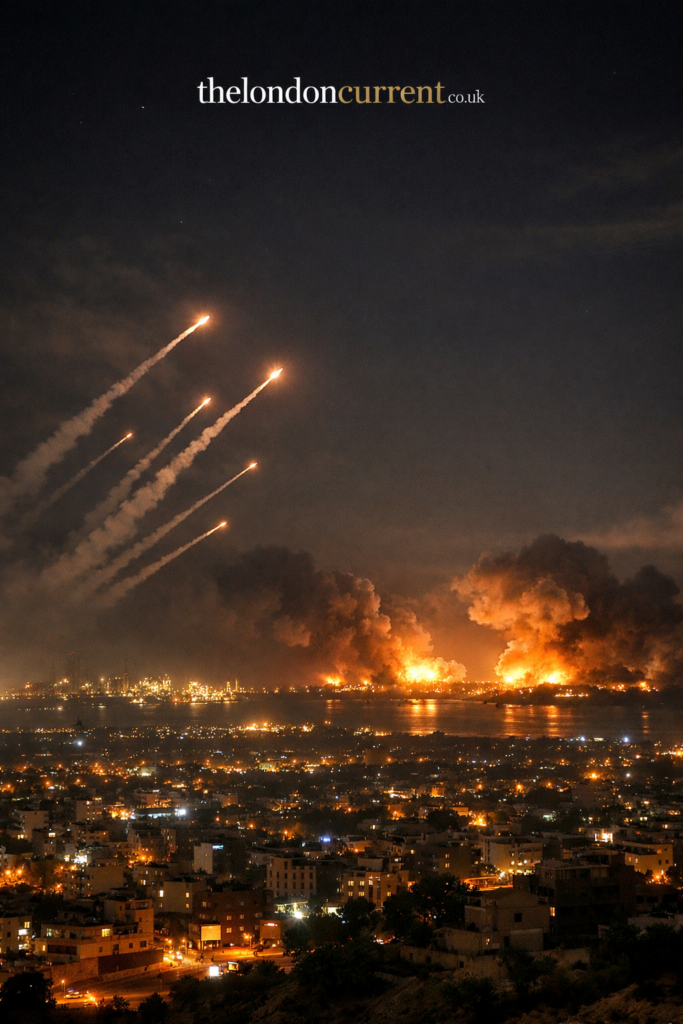
The latest escalation began in late February 2026 when Israel launched a coordinated military operation against Iranian targets, reportedly with support from the United States. The operation targeted key military installations, infrastructure, and leadership locations across Iran. Explosions were reported in multiple cities, including Tehran, as the strikes unfolded in what analysts describe as one of the most significant military confrontations between the countries in decades.
A Rapidly Escalating Military Conflict
The conflict quickly intensified when Iran launched retaliatory missile and drone attacks targeting Israeli positions and U.S. military facilities across the region. Several Gulf states reported incoming projectiles and drone interceptions as the crisis expanded beyond the borders of the original participants.
The situation escalated further after reports confirmed that Iran’s Supreme Leader, Ayatollah Ali Khamenei, had been killed during one of the strikes near Tehran. His death created a sudden leadership vacuum and intensified uncertainty about Iran’s political future.
Iran responded by mobilizing its armed forces and warning that it would retaliate against any country assisting attacks on its territory. Iranian officials declared that the conflict was not only a military confrontation but a fight for national sovereignty.
Military analysts say the strikes have already caused significant damage to infrastructure and military capabilities across multiple locations. At the same time, the conflict has sparked fears of a wider regional war involving allied groups and neighboring countries.
The Strait of Hormuz Crisis
One of the most serious consequences of the conflict has been disruptions in the Strait of Hormuz, one of the most critical maritime chokepoints for global oil supplies. The narrow waterway handles a large percentage of the world’s oil shipments each day, making it a vital component of the global energy system.
Following the strikes, Iranian forces issued warnings to shipping companies and threatened to restrict passage through the strait. As tensions increased, several shipping companies halted operations in the area due to security concerns.
Energy markets reacted immediately. Oil prices surged as traders feared supply disruptions. Economists warned that prolonged instability in the region could lead to higher energy costs worldwide and trigger broader economic consequences.
For countries heavily dependent on Middle Eastern oil, the situation represents a major risk. Governments and energy companies are now closely monitoring developments in the region.
Regional Impact and Expanding Conflict
The Iran conflict is not limited to the three main actors. Several regional groups allied with Iran have become increasingly active as the situation evolves.
In Lebanon, Hezbollah launched attacks on Israeli targets, prompting Israel to retaliate with airstrikes in Beirut and surrounding areas. This development significantly widened the scope of the crisis and raised concerns that the conflict could spread throughout the Middle East.
Missile strikes and military alerts have also been reported in several Gulf states. In Qatar, authorities reported missile debris and aerial interceptions after Iranian retaliatory actions in the region.
The United States has continued to deploy additional military assets across the Middle East, including naval forces and aircraft, signaling that the conflict may continue for weeks.
Humanitarian Concerns
While the geopolitical implications dominate headlines, the human cost of the conflict continues to grow. Thousands of civilians have been affected by the fighting, and humanitarian organizations warn that the number of casualties could increase as the conflict intensifies.
Reports from international observers indicate that large areas of urban infrastructure have been damaged, while hospitals and emergency services struggle to cope with the influx of injured civilians.
According to early estimates, more than a thousand people have already been killed since the conflict began, with many more injured across Iran and neighboring regions.
The United Nations has also expressed concern about attacks affecting civilian infrastructure and called for investigations into possible violations of international law.
Global Political Reactions
The international community has reacted with urgency as the conflict threatens to destabilize the entire Middle East.
European governments have called for immediate de-escalation and diplomatic negotiations to prevent further violence. However, divisions remain among Western countries regarding how to respond to the crisis.
Some governments support stronger military action against Iran’s military infrastructure, while others emphasize the need for urgent peace talks.
Russia and China have also called for restraint, warning that further escalation could trigger a broader geopolitical confrontation.
At the United Nations, emergency meetings have been held to address the situation and discuss potential diplomatic solutions.
Economic Consequences
Beyond the battlefield, the Iran conflict is already having major economic effects. Global markets have reacted sharply to the instability, particularly in energy and transportation sectors.
Air travel across parts of the Middle East has been disrupted due to airspace closures and safety concerns. Airlines have canceled or rerouted flights across the region as military activity intensifies.
Financial markets have also experienced volatility as investors assess the potential long-term consequences of the crisis.
Analysts say that if the conflict continues to escalate, global energy prices could rise significantly, affecting inflation and economic growth worldwide.
What Happens Next?
Despite ongoing military operations, the future of the conflict remains uncertain. Several scenarios are possible, ranging from a negotiated ceasefire to a prolonged regional war involving multiple countries.
Diplomatic channels remain open, but the intensity of the fighting has made immediate negotiations difficult.
Many experts believe the next few weeks will be critical in determining whether the conflict stabilizes or spirals into a larger war.
For now, the world is watching closely as one of the most dangerous geopolitical confrontations of the decade continues to unfold.