Listen to this article
Carbon neutrality has emerged as a pivotal goal for communities worldwide, aimed at balancing the greenhouse gases emitted with those removed from the atmosphere. Recent discussions at the Lincolnshire County Council reveal a contentious debate, as the council has decided to abandon its ambitious goal of achieving carbon neutrality by 2050, dubbed “completely unachievable” by its leader. This decision has ignited tensions among council members and environmental protesters alike, each voicing their opinions on climate change impact and the importance of net zero targets. The council’s move aligns with a new Green Masterplan, yet many question if financial concerns should overshadow critical green initiatives. Ultimately, the direction taken by local authorities like Lincolnshire will shape the county’s contribution to the global challenge of achieving a sustainable, carbon-neutral future.
Achieving an eco-friendly balance between carbon emissions and their reduction is a vital goal for many communities, referred to as reaching a “carbon-free” status or aiming for “net zero”. The recent decision by the Lincolnshire County Council to abandon its ambitious plan for a 2050 carbon-free target highlights the challenges some local governments face in the pursuit of environmental responsibilities. Critics, including ardent climate activists, emphasize the urgent need to address climate emergencies and call for decisive actions from local councils. The council’s new strategy, however, has sparked a dialogue on whether environmental targets can coexist with taxpayer financial considerations, raising concerns about a community’s environmental legacy. Actions taken by authorities during discussions, such as the ones in Lincolnshire, play a crucial role in shaping public policies and innovative green practices that impact future generations.
The Shift from Carbon Neutral Goals in Lincolnshire
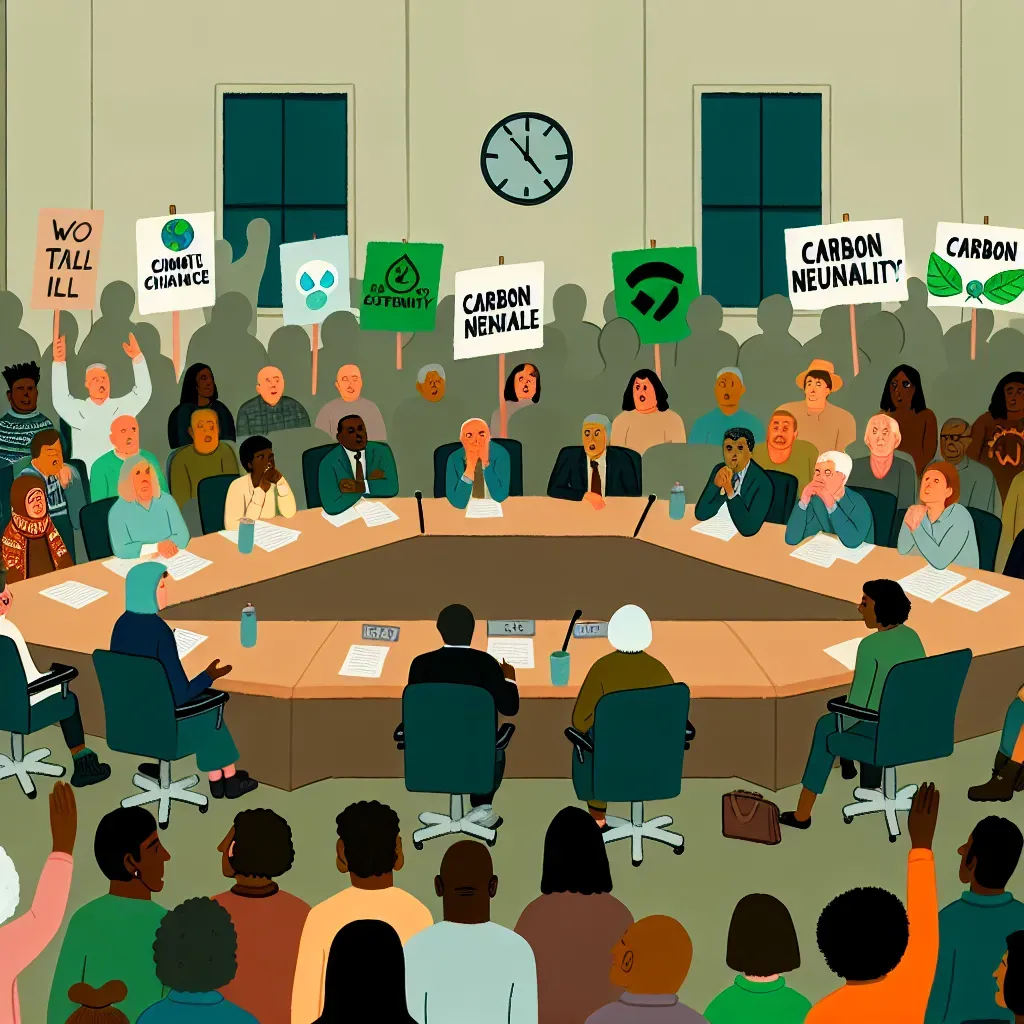
Recently, Lincolnshire County Council made headlines by abandoning its ambitious goal of achieving carbon neutrality by 2050. The decision, which came after a contentious council meeting, reflects concerns over the practicality of reaching net zero targets without adequate financial support. Council leader Sean Matthews articulated these frustrations, stating that it’s more beneficial to make gradual improvements to the environment rather than hastily adopting potentially unreasonable objectives. This shift raises significant questions about the council’s commitment to addressing climate change impacts in the region.
Critics of the decision, including environmental protesters who disrupted the council meeting, argue that abandoning the carbon neutral goal undermines essential green initiatives that can safeguard the future. They contend that the accountability of local governments includes pursuing sustainable practices that contribute positively to the environment. The decision from the council to redefine its goals may not only reflect local sentiments but also influence how climate policies are developed in similar regions.
Concerns Over Financial Burdens and Environmental Justice
Financial worries have been a significant factor in the council’s decision to withdraw from its carbon neutral commitment. Matthews indicated that the previous net zero targets were unrealistic without financial backing, effectively shifting the burden onto taxpayers. This perspective poses a dilemma: should environmental responsibilities take precedence, even if they impose significant financial strain on local communities? The debate touches on deep-rooted issues regarding environmental justice and who should shoulder the costs of climate action.
Moreover, the rise of environmental protests highlights a growing frustration among citizens who feel that their concerns are being ignored. Activists argue that climate change is not just an economic issue, but a humanitarian one. With extreme weather events becoming more frequent and severe, as noted by Extinction Rebellion members, the case for maintaining ambitious environmental targets becomes a matter of public health and safety. Ensuring future generations can thrive in a stable climate must be part of the dialogue surrounding financial considerations.
Responses from Environmental Activists
The reactions from environmental activists following the council’s decision have been vociferous. Members of Extinction Rebellion, such as Eddie Francis, have articulated the viewpoint that abandoning the carbon neutral target signals a retreat from responsibility in the face of urgent climate challenges. They emphasize that the consequences of climate change, if left unaddressed, will ultimately incur much higher costs—not just financially but socially and environmentally. This perspective calls for a reevaluation of priorities within local governance.
Activists argue that councils should adopt more proactive approaches to meet their net zero commitments, even if it means exploring innovative funding solutions. Christine Brookman’s concerns about her children’s future resonate deeply with many locals who feel a personal stake in climate action. By engaging in grassroots movements and calling on local authorities for accountability, citizens are pushing for an unwavering commitment to environmental integrity regardless of financial fears.
The New Green Masterplan and Its Implications
The Lincolnshire County Council approved a new Green Masterplan that aims to promote sustainability without the pressure of strict carbon neutral targets. Proponents of this plan suggest that it allows for more realistic and measurable outcomes concerning the environment. By fostering local green initiatives that are economically viable, the council hopes to strike a balance between financial responsibilities and ecological imperatives.
Critics remain skeptical about the efficacy of this new plan, questioning whether it can genuinely deliver on its promise to mitigate climate change. Many environmental advocates fear that without a clear commitment to ambitious carbon goals, there’s a risk that the council might prioritize short-term financial gains over long-term sustainable practices. The challenge for Lincolnshire will be finding an achievable path forward that maintains a serious commitment to both economic stability and environmental health.
Reactions from Council Members on Climate Policy
In the wake of the decision to abandon the carbon neutrality target, various council members have voiced their opinions on the future of environmental policy in Lincolnshire. Sean Matthews has reinforced his stance that providing financial support for taxpayers must take precedence, while other members have expressed concerns about the credibility of the council’s green initiatives. They warn that without the backing of policy that holds strict climate commitments, the council’s environmental merit is at risk of becoming superficial.
On the other hand, some council members recognize the necessity of addressing climate change in a meaningful way. They advocate for a collaborative effort that involves merging financial prudence with environmental responsibility. By doing so, they hope to achieve practical goals that can satisfy fiscal concerns while still contributing to a healthier planet. The dialogue within the council continues to evolve as members grapple with the implications of their decisions on both local communities and global climate initiatives.
The Role of Local Governments in Climate Action
The controversy surrounding Lincolnshire County Council’s recent environmental policy decisions underscores a broader debate about the role of local governments in climate action. Local authorities have a unique position that allows them to tailor climate initiatives directly addressing community needs and local environmental conditions. However, this also comes with the challenge of balancing ambitious environmental commitments with community financial realities.
Many advocates argue that local governments are critical in spearheading substantial change towards sustainability. Even in the face of economic concerns, city councils can pursue innovative approaches to implement green initiatives. This might include seeking partnerships with private sectors, investing in renewable solutions, or finding government grants that can subsidize climate-related projects. Ultimately, the effectiveness of local governments in climate action will hinge on their ability to engage with and empower their communities while leading by example.
Public Perception and the Future of Green Initiatives
Public perception plays a crucial role in shaping the future of green initiatives and climate policy in regions like Lincolnshire. With an increasingly informed and concerned populace, the demand for accountability and transparency in local government action has never been higher. Environmental activism is becoming more mainstream, and citizen responses to council decisions reflect a nuanced understanding of the challenges posed by climate change.
As more residents rally for proactive climate strategies, it is essential for local councils to gauge public sentiment carefully. Ignoring these calls may not only lead to public discontent but can also hinder progress toward creating a sustainable future. By prioritizing community voices and incorporating public feedback into environmental policies, councils can foster greater trust and cooperation, ultimately leading to more successful implementations of green initiatives.
Addressing the Myths of the Financial Burden
One significant argument against pursuing carbon neutrality targets has been the perceived financial burden on taxpayers. Opponents, including council leaders, have consistently framed ambitious climate policies as fiscally irresponsible. However, many experts argue that the initial investments in sustainability can yield significant long-term benefits, reducing costs associated with climate-related disasters and improving public health outcomes.
Debunking the myth that sustainability is inherently expensive is crucial in shaping effective climate policies. Studies have shown that transitioning to renewable energy sources and implementing efficiency measures often leads to considerable savings for local governments over time. Moreover, the economic opportunities generated through green initiatives—such as job creation in the renewable energy sector—can bolster local economies and offset initial investment costs.
Innovative Solutions for Sustainable Communities
In light of the challenges surrounding carbon neutrality and local climate policies, innovative solutions are essential for fostering sustainable communities. From urban planning that prioritizes green spaces to investing in renewable energy technologies, local governments are increasingly tasked with finding creative ways to address climate issues while accommodating community needs. Encouraging collaboration between residents, businesses, and government entities will help develop practical, grassroots solutions that benefit everyone.
For instance, community-led renewable energy projects can empower residents to take ownership of their local environment while providing actionable paths toward sustainability. Initiatives such as solar cooperatives, where consumers come together to invest in solar energy infrastructure, offer viable models for addressing climate change impacts without overwhelming local budgets. By fostering innovation, communities can build resilience and prepare for the cascading effects of climate change while promoting environmentally responsible growth.
Frequently Asked Questions
What does carbon neutrality mean for local councils like Lincolnshire County Council?
Carbon neutrality refers to balancing emitted carbon dioxide with an equivalent amount of carbon savings or offsets, effectively achieving ‘net zero’ emissions. For local councils, such as Lincolnshire County Council, this means implementing environmental policies and green initiatives aimed at reducing their carbon footprint and combating climate change.
Why has Lincolnshire County Council abandoned its carbon neutrality goal by 2050?
Lincolnshire County Council recently abandoned its carbon neutrality goal by 2050, citing that the net zero targets were deemed ‘completely unachievable’ due to financial concerns and the lack of governmental funding to support these initiatives.
What are net zero targets and why are they important for addressing climate change impacts?
Net zero targets are commitments to balance the amount of greenhouse gases emitted with those removed from the atmosphere. They are crucial in addressing climate change impacts because they guide local and national governments, including bodies like Lincolnshire County Council, towards sustainable practices that reduce global warming.
How do environmental protesters influence local councils’ decisions on carbon neutrality?
Environmental protesters often advocate for stronger climate action, pressing local councils such as Lincolnshire County Council to adhere to their carbon neutrality goals. Their actions can shed light on the urgency of climate issues and influence public opinion, thereby impacting council decisions.
What are the potential consequences of Lincolnshire County Council’s decision to remove its carbon neutral target?
Removing the carbon neutral target could delay critical green initiatives intended to combat climate change impacts. It risks exacerbating environmental problems and may lead to public backlash from activists and constituents concerned about the future of sustainability in Lincolnshire.
What is the new Green Masterplan adopted by Lincolnshire County Council?
The new Green Masterplan adopted by Lincolnshire County Council aims to provide a framework for environmental policies and practices that do not compromise the financial support for taxpayers while addressing local environmental issues, although it replaces the ambitious carbon neutral targets previously set.
What concerns do citizens have regarding the removal of carbon neutrality commitments?
Many citizens express concern that removing carbon neutrality commitments may jeopardize future generations’ health and safety in the face of a changing climate. Activists like Eddie Francis argue that extreme weather events highlight the critical need for stringent environmental policies.
How can communities still work towards carbon neutrality without council mandates?
Communities can pursue carbon neutrality through grassroots green initiatives, local partnerships, renewable energy projects, and community awareness programs, thereby promoting sustainable practices that may influence future council decisions to reinstate carbon neutrality goals.
| Key Point | Details |
|---|---|
| Council’s Decision | The council has abandoned its goal to achieve carbon neutrality by 2050, deeming it unachievable due to financial concerns. |
| Leader’s Statement | Sean Matthews, the council leader from Reform UK, expressed that gradual improvement of the planet is preferable to rushing towards carbon neutrality. |
| Opposition Remarks | Eddie Francis from Extinction Rebellion criticized the decision, arguing that abandoning the net zero target is irresponsible. |
| Origins of the Goal | The carbon neutrality goal was initially set in 2021 by the previous Conservative-led administration. |
| Financial Concerns | Reform UK council maintains that the net zero target would impose financial burdens on taxpayers. |
| Conclusion of Meeting | The council ratified the removal of the carbon neutral target as part of a new Green Masterplan. |
| Future Concerns | Protesters highlight the significance of extreme weather events and the need to address climate emergencies. |
Summary
Carbon neutrality is essential for combating climate change, yet the recent decision by the Lincolnshire County Council to abandon its 2050 target raises significant concerns. Leaders argue that the goal is financially unfeasible, while environmentalists express alarm over the implications for future generations. The dialogue surrounding carbon neutrality must continue, as the urgency of the climate crisis cannot be overstated.