
Listen to this article
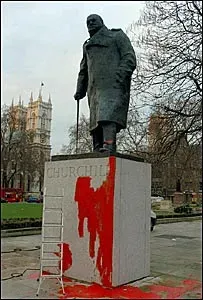
The recent Winston Churchill statue vandalism in Parliament Square has reignited debates concerning historical figures and their legacies. Graffiti messages such as “Free Palestine” and “Globalise the Intifada” were sprayed on one of Britain’s most iconic statues, sparking outrage among supporters of the former Prime Minister. This incident has drawn attention not only to UK statue vandalism but also to broader issues around the ongoing intifada protests and their implications on political discourse. While some view the Churchill graffiti as a powerful statement, others condemn the act as a despicable crime against a national symbol. As the debate unfolds, it is clear that tensions surrounding historical narratives and their representation remain ever-present in contemporary society.
The defacement of the Churchill statue represents a provocative intersection of history, politics, and public sentiment. This incident of graffiti vandalism has raised significant questions about how we confront the past, especially regarding figures like Churchill, whose legacies are hotly debated. The ongoing discourse surrounding Parliament Square crime indicates a growing unease with how historical monuments are perceived, especially in the context of current global movements. As protests continue to erupt around the world, the motivations behind such actions—whether they express solidarity with oppressed communities or a critique of imperialism—are complex and multifaceted. Ultimately, the act of vandalizing public statues, including significant figures in British history, symbolizes a clash between reverence for traditional narratives and the calls for justice and recognition in an evolving social landscape.
Overview of Winston Churchill Statue Vandalism
The statue of Sir Winston Churchill in Parliament Square has become a flashpoint for various forms of social and political expression, particularly through acts of vandalism. The incident that recently drew attention involved Caspar San Giorgio, who was charged with criminal damage after spray-painting graffiti on Churchill’s statue. This act, which occurred in the early hours, featured messages such as ‘Free Palestine’ and ‘Globalise the Intifada,’ highlighting the growing intertwining of political protests and public monuments in the UK.
This specific instance of UK statue vandalism is not an isolated event. Over the past few years, the monument has been subjected to various forms of graffiti, often during major protests. For example, in June 2020, during the Black Lives Matter protests, it was defaced with messages that criticized Churchill’s legacy regarding race, emphasizing a broader societal discourse on historical figures and their impact on contemporary issues. Such events reflect an increasing willingness among activists to use public spaces as canvases for their messages.
Understanding the Impact of Graffiti on Public Monuments
Graffiti on public monuments like the Winston Churchill statue poses significant questions about art, expression, and societal values. While some see it as a defacement of historical heritage, others view it as a necessary form of political commentary, particularly in times of social unrest. The recent vandalism has sparked debates about the appropriateness of defacing monuments to voice dissent. Critics of the act argue that the statue represents a substantial part of British history, while supporters may argue that challenging that history is vital for social progress.
Furthermore, the presence of messages such as ‘Globalise the Intifada’ ties local protests in the UK to broader global movements, suggesting that the struggles for social justice transcend geographical boundaries. Public reactions to these acts of vandalism can be sharply divided, reflecting growing polarization in society regarding national identity and the legacy of historical figures. Ultimately, how society chooses to address these acts will shape future interactions between monuments, memory, and activism.
The Role of Authorities in Addressing Statue Vandalism
Authorities, including the Metropolitan Police and local governments, play a crucial role in responding to acts of vandalism on public statues. In the case of the Winston Churchill statue vandalism, the police acted quickly to arrest the suspect and bring charges for criminal damage. This rapid response illustrates the seriousness with which the government views such incidents, particularly when they involve figures like Churchill who are emblematic of national pride. Officials from 10 Downing Street have described these actions as ‘abhorrent,’ showing that there is a clear governmental stance against vandalism.
However, the task of managing public sentiment around such acts is complex. While some officials advocate for strict punitive measures against vandalizers, others call for a deeper exploration of the issues surrounding the motivations behind these expressions. The recent incident raises important questions about how society balances the preservation of historical artifacts with the need to allow space for public discourse. Finding this balance may require a nuanced approach that recognizes both the significance of the monuments and the voices of those who seek change.
Comparing Recent Vandalism to Historical Context
The recent graffiti on the Winston Churchill statue has parallels to past instances of vandalism in the UK, particularly during moments of national upheaval. For instance, in 2020, the statue was defaced during the Black Lives Matter protests, which were ignited by the tragic death of George Floyd. Similarly, the messages that adorned the statue during the latest incident point to ongoing frustrations with societal injustices, illustrating how historical monuments often become focal points for contemporary political battles.
Understanding these comparisons allows for better reflection on the legacy of such figures as Churchill. Every act of vandalism brings forth layers of meaning, prompting discussions surrounding morality, history, and the implications of public displays. As each generation approaches these subjects, it can reshape the narratives surrounding iconic figures and their representation in the public space, highlighting the complex interplay between history and modern societal values.
Public Reactions to the Graffiti Messages
Public reactions to the graffiti messages on the Winston Churchill statue have been varied, with many expressing outrage and calling for the swift prosecution of the individual responsible. The messages ‘Free Palestine’ and ‘Globalise the Intifada’ have ignited discussions not just about the act of vandalism but also the broader political implications of those phrases in the context of ongoing conflict in Palestine. Such reactions highlight the deeply polarizing nature of political expression in public spaces, particularly concerning issues of national and international significance.
Conversely, there are segments of the public that view these messages as legitimate forms of protest and expression. They argue that public monuments should not only commemorate but also provoke critical conversations about historical narratives and present-day issues. As a result, the graffiti can be seen as a call to action, reflecting frustrations with certain historical figures and advocating for their re-evaluation in light of contemporary values and conflicts.
The Historical Significance of the Winston Churchill Statue
The statue of Sir Winston Churchill in Parliament Square has a rich historical significance, representing not just a prominent political figure but also a symbol of British resilience during World War II. Unveiled in 1973, this monument serves as a testament to Churchill’s leadership and influence during one of the UK’s most challenging periods. However, the statue’s significance has evolved over time, leading to contentious debates about the legacy of such figures in relation to contemporary social issues.
As discussions on Britain’s colonial past and its implications grow more prominent, figures like Churchill are often placed under scrutiny. His legacy is intertwined with both admiration for his wartime leadership and criticism for his policies during the colonial era. The graffiti and subsequent vandalism illustrate this duality, as they serve not only as expressions of dissent but also as invitations to engage with the complex narratives surrounding historical leaders and their impact on today’s society.
Legal Consequences of Statue Vandalism
Statue vandalism, such as the recent graffiti on the Winston Churchill statue, carries significant legal consequences in the UK. The Metropolitan Police have made it clear that individuals caught defacing public property will face criminal charges, as highlighted by the prompt arrest and charging of Caspar San Giorgio. Legal frameworks aimed at protecting cultural heritage are tightly enforced, and this serves both as a deterrent for potential vandals and as a commitment to preserving historical monuments.
Moreover, the legal repercussions extend beyond fines and possible imprisonment; they also raise broader societal questions about the acceptable limits of protest. Many argue that strict legal actions against acts of vandalism may stifle genuine political discourse and dissent. Balancing the enforcement of laws protecting monuments with a respect for free expression is an ongoing challenge for authorities, as seen in the reactions to repeated acts of graffiti on Churchill’s statue, which resonate with larger movements within society.
The Future of Public Statues and Graffiti
As acts of vandalism on statues like Winston Churchill’s become more frequent, the future of public monuments is being re-evaluated. Contemporary society grapples with the importance of historical figures and the ways they are remembered. Calls to remove, cover, or contextualize statues are growing louder, suggesting a shift toward a more inclusive and critical understanding of history that acknowledges the complexities of past leaders.
Graffiti on these statues may serve as a catalyst for change, propelling discussions about which figures merit celebration and how society chooses to engage with its history. As protests and movements evolve, the role of public monuments—once seen solely as commendations of historical figures—might transform into sites of dialogue and reflection, where contrasting views can coexist and be openly debated.
Exploring the Global Movement of Statue Vandalism and Protest
The graffiti on the Winston Churchill statue in Parliament Square resonates with a larger global trend of statue vandalism tied to political activism. In recent years, particularly during movements like Black Lives Matter and indigenous rights campaigns, statues around the world have faced similar fates as communities seek to reclaim public spaces and challenge established narratives. Such acts of vandalism underscore a collective demand for social justice and the reevaluation of historical narratives that marginalize certain voices.
This global movement highlights that the messages conveyed through graffiti, such as ‘Free Palestine’ and ‘Globalise the Intifada,’ are localized expressions of a broader fight against colonialism and oppression. Various societies engage with their histories through public monuments, and these acts reflect a visible struggle for identity and recognition in modern contexts. The converging dialogues surrounding these occurrences illustrate a universal theme: the fight for justice is as diverse and varied as the histories that monuments represent.
Frequently Asked Questions
What happened to the Winston Churchill statue recently?
The Winston Churchill statue in Parliament Square was vandalized with graffiti messages including ‘Free Palestine’ and ‘Globalise the Intifada’ in the early hours of Friday. A man, Caspar San Giorgio, has been charged with criminal damage following the incident.
Who has been charged with vandalism related to the Winston Churchill statue?
Caspar San Giorgio, a 38-year-old man with no fixed address, has been charged with criminal damage after graffiti was sprayed on the Winston Churchill statue. He was arrested shortly after the vandalism occurred.
What messages were found on the Winston Churchill statue during the vandalism?
The graffiti on the Winston Churchill statue included messages such as ‘Never again is Now’, ‘Free Palestine’, and ‘Globalise the Intifada’, highlighting the controversial political sentiments expressed through the vandalism.
Has the Winston Churchill statue faced vandalism before?
Yes, the Winston Churchill statue has previously faced vandalism, notably during the Black Lives Matter protests in June 2020, when it was covered in graffiti accusing Churchill of being a racist. This recent incident adds to a history of UK statue vandalism surrounding protests.
What was the reaction from authorities regarding the Churchill graffiti incident?
Authorities, including representatives from 10 Downing Street, condemned the graffiti on the Winston Churchill statue as ‘completely abhorrent.’ They emphasized that those responsible must be held accountable for such vandalism.
What measures have been taken against vandalism of political statues like Winston Churchill’s?
In response to the vandalism of political statues, including the Winston Churchill statue, police forces such as the Metropolitan Police have warned that individuals using phrases like ‘globalise the intifada’ may face arrest, highlighting efforts to curb UK statue vandalism.
What historical significance does the Winston Churchill statue hold?
The Winston Churchill statue is a 12ft monument created by Ivor Roberts-Jones and was unveiled in 1973 by Lady Churchill. It represents Churchill’s status as a prominent figure in British history, particularly for his leadership during World War II.
Where is the Winston Churchill statue located?
The Winston Churchill statue is located in Parliament Square, London, a site that has become notable for both its historical significance and recent incidents of Parliament Square crime, including various acts of vandalism.
| Key Point | Details |
|---|---|
| Incident | Graffiti sprayed on Winston Churchill statue in Parliament Square. |
| Arrest | Caspar San Giorgio, 38, was arrested and charged with criminal damage. |
| Graffiti Messages | Messages included ‘Never again is Now’, ‘Free Palestine’, and ‘Globalise the Intifada’. |
| Response from Authorities | 10 Downing Street condemned the act as ‘completely abhorrent’. |
| Past Incidents of Vandalism | The statue has been vandalized multiple times, including during protests related to Black Lives Matter. |
| Historical Context | Statue unveiled in 1973, created by Ivor Roberts-Jones. |
Summary
Winston Churchill statue vandalism has stirred significant public outrage after a man was charged for defacing the iconic monument. The statue stands as a symbol of national pride, and its repeated vandalism raises discussions about the historical figure’s legacy in contemporary society. Authorities have reiterated the need for accountability as this incident resonates with earlier events surrounding protests and graffiti, reflecting the complex narratives surrounding national monuments.