Listen to this article
A mesmerizing astronomical event known as a planetary parade offers stargazers a unique opportunity to witness multiple planets aligned in the night sky. This captivating sight, which will be visible again at sunset in the UK, showcases the beauty and grandeur of our solar system as seen from Earth. Taking the time to learn how to see a planetary parade can enhance your appreciation of the cosmos, especially when planning to capture breathtaking images of planets like Mercury, Venus, and Jupiter. Renowned photographer Josh Dury successfully photographed an incredible lineup of six planets in a single frame, underscoring the importance of upcoming astronomy events. Understanding planetary alignments can inspire both amateur and seasoned astronomers alike to engage in the magical world of photographing planets and broaden their knowledge of celestial phenomena.
The phenomenon often referred to as a celestial alignment or planetary alignment captivates onlookers and astronomy enthusiasts alike. As celestial bodies appear to draw into a line across the evening sky, it provides a spectacular experience for observers eager to spot these distant worlds. This gathering of planets offers an excellent occasion to hone skills in both stargazing and astrophotography or to join local astronomy communities who gather to marvel at such events. With planets like Neptune and Uranus making their rare appearances, enthusiasts can look forward to the thrill of the hunt, armed with tips on how to best spot these orbs in their nightly courses. As excitement builds for this stunning visual display, the anticipation of capturing images and sharing the experience only adds to the astronomical allure.
Understanding the Astronomical Phenomenon of Planetary Parade
A planetary parade is an astronomical event that captivates both seasoned astronomers and casual skywatchers alike. During this phenomenon, several planets align in the sky from the observer’s perspective, creating a breathtaking display. This alignment can result in stunning visuals as the celestial bodies line up in a formation often referred to as a ‘string of pearls.’ This unique event is not only aesthetically pleasing but also serves as a reminder of the vastness and order of our solar system, showing how the planets relate to one another and to our home, Earth.
The planetary parade is a reminder of the synchronized dance of celestial bodies and provides a unique opportunity for astrophotographers like Josh Dury. Capturing images of such events requires understanding the timing and positioning of the planets relative to Earth and the Sun. During a planetary parade, particularly because planets are positioned on one side of the Sun, it enhances the visibility of various planets like Mercury, Venus, Saturn, and Jupiter. Many enthusiasts mark these calendar events in order to photograph the planetary alignment and witness the splendor of the night sky.
Photography Tips for Capturing Planetary Alignments
When it comes to photographing planetary alignments, utilizing the right equipment and techniques is crucial. Photographers often opt for a wide-angle lens to cover a broader field of view, which is essential for capturing the full spectacle of a planetary parade. Josh Dury employed this method effectively to encompass nearly 180 degrees in his photograph. Additionally, stabilizing the camera on a tripod can greatly enhance clarity, minimizing the effects of shaky hands, especially in low light conditions that are typical of evening photography.
Furthermore, observing the celestial arrangement at the right time is key to capturing the ideal photograph. Photographers should plan their sessions during twilight, just after sunset, when the contrasts appear more vibrant. Scout locations with minimal light pollution and an unobstructed view of the horizon. As Dury demonstrated, reaching the viewing site ahead of time allows for optimal composition and timing, ensuring that when the planets emerge, the photographer is poised to capture a slice of the planetary alignment as it unfolds.
How to Witness a Planetary Parade from Your Area
Witnessing a planetary parade doesn’t require professional gear or vast astronomical knowledge. For those who want to see this spectacle, timing is crucial. Understanding when the next planetary parade will occur is essential, as it allows enthusiasts to schedule their viewing accordingly. Keep an eye on local astronomical calendars or join nearby astronomy societies that frequently host viewing events. Many communities offer public nights where telescopes are set up, guiding participants to see the best views of the planets aligned in the sky.
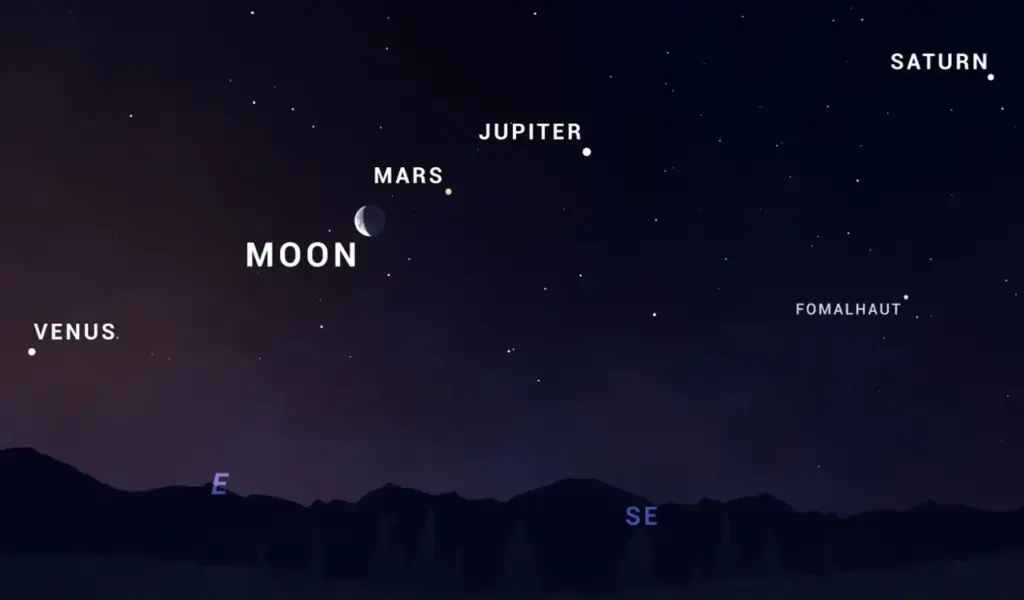
Finding a suitable location is equally important. For the best visibility of a planetary parade, choose sites away from city lights where the horizon is unobstructed. Hills or open fields can provide a perfect vantage to see the planets as they dip in the sky post-sunset. Additionally, knowledge about the positions of particular planets can elevate the experience. For example, knowing that Mercury and Venus will be low on the horizon while Jupiter and Saturn will be higher allows viewers to know where to look and what to expect, heightening the anticipation of the event.
The Role of Astronomy Events in Observing Planetary Alignments
Astronomy events provide a pivotal opportunity for individuals to engage with the cosmos, especially during significant phenomena like planetary parades. These gatherings often feature guided observations, educational talks, and the chance to use telescopes among astronomy lovers. Events organized by local clubs can greatly enhance the experience, offering insights into what to look for during the parade. The camaraderie of fellow skywatchers amplifies the excitement and enriches the appreciation of such celestial phenomena.
Moreover, astronomy events can serve as a gateway for newcomers interested in photographing planets or simply learning more about astronomy. Here, seasoned enthusiasts share their tips on how to see planetary formations, and resources like star maps and guides can inform attendees about the best practices for viewing and photographing planets. Consistently joining such events can nurture a deeper connection with astronomy, making one eager for the next planetary parade or alignment that graces our night sky.
Josh Dury: A Photographer’s Journey to Capture Celestial Wonders
Josh Dury’s journey to photograph six planets in a single frame illustrates the dedication and passion required for astrophotography. His four-hour trek to a picturesque location near Worth Matravers was marked by obstacles, yet his determination shined through. Such experiences resonate with many photographers who face similar challenges while pursuing the perfect shot of celestial events. The idea of battling against time and elements to catch a fleeting moment in the night sky is a test of patience and skill.
Capturing such rare occurrences also emphasizes the importance of being well-prepared and adaptable. Dury’s choice to use a wide-angle lens not only expanded his field of vision but also allowed him to creatively depict the planets in a visually stunning manner. His story serves as inspiration for photographers and astronomy enthusiasts alike, demonstrating that with persistence, the most breathtaking images of planetary alignments are achievable.
The Magnitude of Capturing Multiple Planets
Photographers like Josh Dury aim to encapsulate the rarity of spotting multiple planets within one image, showcasing the aligned beauty of the solar system. The intricacy of capturing each planet while also accounting for the Moon can pose a challenge that requires not only technical skill but also a comprehensive understanding of celestial movements. Each alignment of planets in a planetary parade is unique, making the resulting photographs both a personal triumph and a contribution to the visual documentation of our universe.
Moreover, the thrill of photographing multiple planets during one alignment adds to the excitement. It draws attention to the complexities of planetary motions and the fantastic arrangement in which they appear from Earth’s perspective. Capturing this phenomenon allows photographers to connect more deeply with space and share that connection with a broader audience, inspiring others to look towards the skies and appreciate the celestial wonders above us.
The Impact of Light Pollution on Planetary Viewing
Light pollution is a significant obstacle for astronomy enthusiasts and photographers hoping to capture planetary events like a planetary parade. Urban sprawl and excessive artificial lighting can wash out fainter celestial bodies, making it challenging to see planets, especially those setting low on the horizon. This reality highlights the importance of seeking dark locations with minimal light interference to fully appreciate the beauty of astronomical arrangements. Investing time in understanding one’s local environment and planning trips to more rural areas can vastly improve viewing experiences.
Moreover, communities are increasingly recognizing the importance of dark skies for astronomical activities and are implementing measures to reduce light pollution. Programs aimed at citizen science, advocating for dark skies, and encouraging local policymakers to adopt lighting measures can create an environment that allows for more accessible planetary viewing. As awareness grows, so does the opportunity for everyone to enjoy and document celestial events, making the joy of witnessing a planetary parade more attainable.
Preparing for Upcoming Astronomy Events
As astronomical events approach, preparation becomes key for avid star-gazers and photographers alike. Familiarity with an event’s specifics, such as exact timings, locations, and weather forecasts, ensures optimal viewing conditions. Engaging with local astronomy clubs or online forums can enhance your knowledge, lead to better viewing opportunities, and provide camaraderie among those sharing the same passion. With the anticipation building around the next planetary parade, preparation can make all the difference in having a fulfilling experience.
Additionally, preparing a checklist of equipment can ease the stress on the day of the event. This should include cameras, lenses, tripods, binoculars, and any star charts or apps that aid in identifying planets. On the evening of an astronomy event, knowing how to find planets, especially those in low visibility, can contribute vastly to the experience. Simple preparations and a shared excitement for the wonders of the universe can foster a sense of community among astronomy enthusiasts.
Frequently Asked Questions
What is a planetary parade and how can I see one?
A planetary parade occurs when multiple planets align in the night sky from our viewpoint on Earth. To see a planetary parade, choose a viewing time close to sunset and find a location with a clear horizon. Use binoculars or attend local astronomy events to enhance your viewing experience, especially for planets like Mercury and Venus that sit low in the sky.
How do I photograph a planetary parade effectively?
To photograph a planetary parade, select a wide-angle lens to capture a broad view of the sky. Position yourself in a spot with minimal light pollution just before sunset, so you can document the planets as they appear. Josh Dury’s technique, for instance, involved waiting for the sky to darken to showcase the planets like a ‘string of pearls’.
What planets can be seen during a planetary parade?
During a planetary parade, you may typically see planets such as Mercury, Venus, Earth, Saturn, Uranus, and Jupiter, depending on their alignment. For instance, Josh Dury photographed six planets during a recent parade, highlighting their unique arrangement in the night sky.
When is the next opportunity to see a planetary parade?
The next chance to witness a planetary parade will be visible after sunset on Saturday. It will feature planets like Mercury, Venus, Saturn, and Neptune in the western sky. Timed properly, skywatchers can enjoy the spectacle right at dusk.
What tools do I need to see a planetary parade?
To view a planetary parade, binoculars or a small telescope can greatly enhance your experience, allowing you to see planets clearly. Attending a local astronomy event can also provide access to more advanced equipment and knowledgeable guides for optimum viewing.
Why is photographing a planetary parade considered rare?
Photographing a planetary parade is rare due to the unique alignment of planets that only occurs occasionally. Josh Dury’s photograph is significant because it captures six planets in one frame, showcasing an exceptional celestial arrangement that offering insight into our solar system’s structure.
Who is Josh Dury and why is he notable in regards to a planetary parade?
Josh Dury is a photographer who gained recognition for capturing a stunning image of six planets during a planetary parade. His dedication to reaching the perfect location and patiently waiting for the right moment highlights the effort and skill involved in celestial photography.
| Key Point | Details |
|---|---|
| Photographer’s Achievement | Josh Dury captured six planets in a single image during a planetary parade. |
| Photograph Location | Taken from a radar memorial in Worth Matravers, Dorset. |
| Planets Featured | Image includes Earth, Mercury, Venus, Jupiter, Saturn, Uranus, Neptune, and the Moon. |
| Viewing Opportunity | The planetary parade will be visible in the UK starting at sunset on Saturday. |
| Photographer’s Journey | Dury faced a four-hour journey to the site, affected by road closures. |
| Capture Technique | Used a wide-angle lens to capture nearly a 180-degree view. |
| Rarity of the Event | Described as a rare photograph due to the unique planetary alignment. |
| Planetary Parade Explanation | A phenomenon where several planets align from Earth’s viewpoint. |
| Viewing Tips | For better viewing, consider attending astronomy events or find clear sightlines. |
Summary
A planetary parade is a breathtaking celestial event where multiple planets align in the night sky, creating a stunning visual for observers on Earth. Recently, photographer Josh Dury captured an incredible image of six planets, highlighting the beauty of this rare phenomenon. With upcoming opportunities for skywatchers in the UK to witness this natural spectacle, it offers a perfect occasion to explore the wonders of our solar system. Whether through photography or stargazing, the planetary parade invites us to appreciate our universe.