
Listen to this article
Aldi has made headlines with its recent wage increase announcement, highlighting a new pay structure for its store assistants. Beginning in April, employees will earn a competitive £13.50 per hour, marking a significant step in Aldi’s efforts to enhance its position in the fiercely competitive UK grocery market. This move not only benefits 28,000 staff members but also positions Aldi as a leader in supermarket staff wages, surpassing rivals such as Lidl. For those working in London, the wage rises even higher to £14.88. With this Aldi pay rise, the supermarket demonstrates its commitment to rewarding the hard work of its team members, setting a new standard for employee compensation in the sector.
In the latest development within the retail industry, supermarkets are increasingly focused on improving the remuneration of their employees. Aldi’s recent decision to elevate its wages comes amid a broader trend of competitors like Lidl and others announcing similar pay adjustments. The surge in supermarket staff wages reflects the ongoing competition within the UK grocery sector, as retailers strive to attract and retain quality personnel. This shift not only underscores the importance of fair pay for laborers in the supermarket chain but also depicts changing dynamics in how grocery retailers perceive employee value. As we see a transformation in how grocery store assistants are compensated, it raises questions about the future of wages across the entire retail landscape.
Aldi Wage Increase: Setting a New Standard in Supermarket Pay
Aldi has recently announced its second wage increase for store assistants in the UK, demonstrating a commitment to improving staff compensation amid rising living costs. Starting in April, floor staff will earn £13.50 per hour, with a higher rate of £14.88 for those based in London. This move aims to position Aldi as a leader in employee remuneration among major UK supermarkets. The decision reflects Aldi’s strategy to attract and retain top talent, especially in a market where competitors like Lidl and Waitrose are also enhancing their staff wages.
This wage increase is projected to benefit approximately 28,000 team members, underscoring Aldi’s focus on valuing its employees. By offering competitive rates that outstrip those of rival retailers, Aldi not only stands to increase its appeal as an employer but also enhances its reputation within the grocery sector. The approach taken by Aldi is crucial in a time when many supermarkets are grappling with inflation and increased operational costs, showcasing the company’s dedication to investing in its workforce.
Comparative Analysis of Supermarket Staff Wages
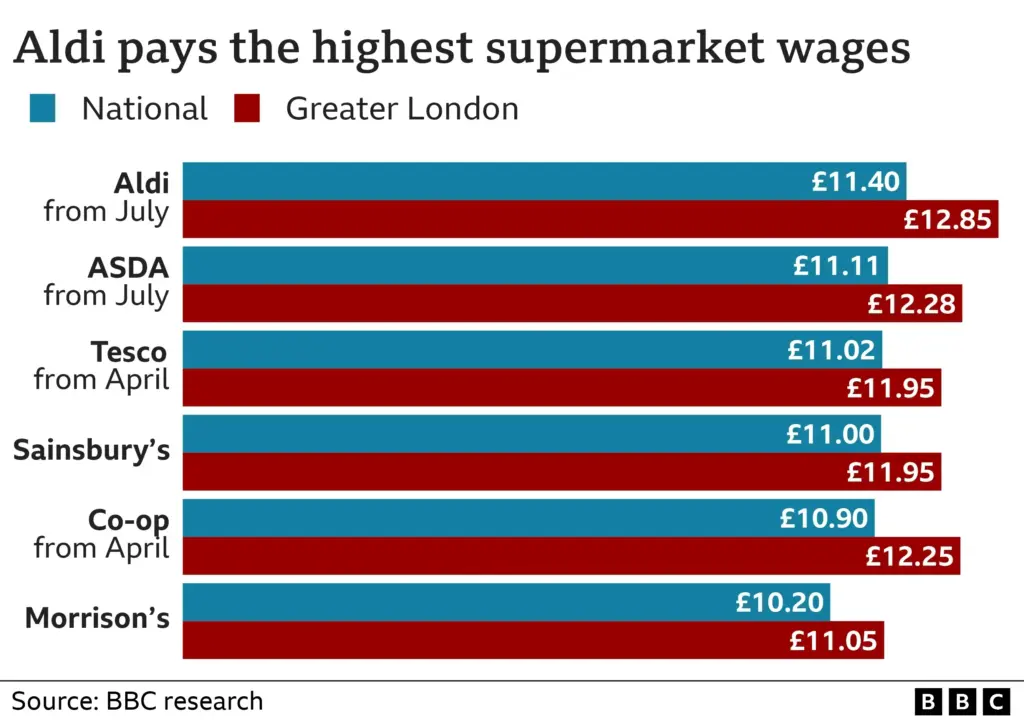
In a competitive retail landscape, managing staff wages effectively is essential for both attracting customers and retaining employees. Aldi’s recent pay rise positions it at the top of the supermarket wage hierarchy, surpassing well-known competitors like Lidl, Sainsbury’s, and Waitrose. While Lidl announced pay increases bringing its staff hourly rates to £13.45, Aldi’s approach signifies a robust response to the current economic climate affecting the UK grocery market. This wage structure incentivizes loyalty and diminishes turnover, which can often hamper service quality and operational efficiency.
The financial implications of these pay rises extend beyond just wages. A well-compensated workforce is more likely to be motivated and provide better customer service, ultimately contributing to store performance and sales growth. As grocery chains strive to navigate post-pandemic instability and inflation, maintaining competitive salaries can be a defining factor in establishing market leadership. For instance, as competitors react to Aldi’s moves, consumers might increasingly favor stores that prioritize employee welfare through fair pay.
Impact of Aldi’s Wage Strategies on the Grocery Sector
Aldi’s decision to implement significant wage increases not only benefits its employees but potentially sets a precedent in the UK grocery sector. As inflation continues to challenge the affordability of everyday essentials, supermarkets must adapt by ensuring that their staff can meet these rising costs. The announcement that Aldi is increasing wages comes in the wake of similar moves by Lidl and others, highlighting a broader trend toward enhancing employee compensation across the sector. This ripple effect could push wages higher in an industry that historically has had narrow profit margins.
By enhancing employee wages, Aldi reinforces its position as an employer of choice within the grocery market. This is particularly critical in light of market expansions, as both Aldi and Lidl are looking to increase their footprint. The advantage of offering employees a competitive salary and benefits such as paid breaks can significantly influence public perception, making these retailers more appealing. As grocery chains jockey for customer loyalty, the focus on employee satisfaction through wage increases might transform into a new competitive edge.
Aldi vs. Competitors: A Closer Look at Employee Benefits
While many supermarkets are raising their wages, Aldi stands out for not only increasing pay but enhancing employee benefits as well. By being the only major supermarket to offer paid breaks to all staff, Aldi emphasizes the importance of employee well-being. Paid breaks can dramatically improve workplace morale and employee satisfaction, leading to better productivity. As competitors like Lidl and Sainsbury’s roll out pay increases, they may need to consider how benefits packages can further enhance employee retention and satisfaction.
The move to provide paid breaks can also be understood as a strategic initiative to foster a positive work environment — a crucial element in the grocery retail landscape where staff frequently deal with high-pressure situations. By providing comprehensive support to its store assistants, Aldi may find itself building a more dedicated workforce. Additionally, as other chains observe the positive response from Aldi’s approach, we can anticipate a potential shift in how benefits are structured within the industry, pushing towards a more holistic model that values employee contributions.
Customer Responses to Aldi’s Wage Increase Initiative
Consumer perception plays a vital role in brand loyalty, and Aldi’s recent wage increase for store assistants could significantly enhance customer sentiment towards the brand. As shoppers become increasingly aware of the living wage and employee treatment, they may gravitate towards retailers that demonstrate ethical labor practices. The positive feedback from employees about their wage increases can create a favorable image of Aldi as a socially responsible supermarket. In a market where customers value transparency and fairness, Aldi’s wage strategy could translate into heightened consumer loyalty.
Moreover, with customers becoming more conscious of where they spend, especially in the wake of economic uncertainty, knowing that their purchases contribute to supporting fair wages can influence their buying decisions. As Aldi positions itself as a leader in employee pay, it will likely attract not only a more dedicated workforce but also a community of loyal customers who appreciate the company’s commitment to its employees. This connection between fair wages and consumer trust is crucial for long-term success in the competitive UK grocery market.
Future Prospects for Aldi and Employee Compensation
Looking ahead, Aldi’s strategy of implementing wage increases for employees appears to be part of a larger vision to solidify its market share in the UK grocery sector. As the cost of living continues to rise, maintaining competitive compensation will be vital for attracting both new hires and retaining existing staff. The proactive wage adjustments suggest that Aldi recognizes the uphill challenges posed by inflation and market dynamics and is prepared to adapt to maintain its advantageous position.
Additionally, as Aldi continues to expand its footprint across the UK, having a workforce compensated fairly will help in scaling its operations effectively. Investing in employee wages can lead to enhanced performance levels and improved store environments, thereby attracting more customers who seek a favorable shopping experience. The willingness to lead the way in supermarket pay can place Aldi in a favorable light, facilitating greater market penetration and solidifying its status as a premium budget retailer.
Aldi’s Commitment to Fair Pay and Market Dynamics
Aldi’s decision to implement a substantial wage increase reflects a broader understanding of market dynamics within the competitive supermarket landscape. By offering higher wages, Aldi positions itself not only as an employer of choice but also as a brand that values its team members. In an industry increasingly dictated by customer perceptions of fairness and corporate responsibility, such wage policies can make a significant difference. This commitment to fair pay serves a dual purpose: it directly supports employees while enhancing the overall corporate image.
As the UK grocery market adequately adjusts to the increased living expenses prompted by economic circumstances, Aldi’s forward-thinking approach illustrates how supermarkets can navigate these challenges by prioritizing sustainable employee compensation. Moreover, with other competitors starting to increase their pricing on goods, differentiating through fair pay practices could also lead to a strategic advantage in attracting price-sensitive customers who are also concerned about corporate ethics. This could set a new standard in the market, with Aldi leading the charge towards a more equitable retail environment.
Understanding Aldi’s Market Position Through Employee Satisfaction
Analyzing Aldi’s market position involves recognizing the importance of employee satisfaction in shaping customer experiences and perceptions. Aldi’s investment in staff wages directly correlates with motivation and morale among employees, which translates into better customer service and operational efficiency. As competitors respond with their own wage increases, the supermarket sector faces a critical juncture where employee satisfaction could dictate market leaders. Aldi’s proactive wage strategies might position it favorably as a benchmark for quality employment in an industry long characterized by slender profit margins.
Employee satisfaction and well-being are central to the long-term sustainability of any company. Aldi’s commitment to providing competitive pay and additional benefits can foster a culture of loyalty and hard work among staff, ultimately enhancing the customer shopping experience. With a growing focus on corporate social responsibility, more consumers may prefer to support brands like Aldi that prioritize their employees. As this trend develops, Aldi’s reputation as an ethical employer will not only strengthen its market position but also influence the dynamics of the retail sector as a whole.
Aldi’s Long-Term Strategy in Employee Compensation
Evaluating Aldi’s long-term strategy regarding employee compensation reveals a well-thought-out approach to maintaining its competitive edge in the UK grocery sector. By continuously adjusting wages to stay ahead of inflation and competitor offerings, the retailer underscores its commitment to workforce sustainability. This strategy not only helps in retaining talent but also ensures that employees feel valued and invested in their roles. Aldi’s understanding that employee satisfaction directly impacts customer experiences may very well define its future growth trajectory.
As Aldi looks to expand its influence in the UK market, consistent investment in employee wages could become a cornerstone of its operational strategy. The supermarket’s initiatives around pay increases, combined with exceptional customer service drawn from a motivated workforce, may increasingly differentiate Aldi from its competitors. By aligning its business model with the needs of both employees and consumers, Aldi stands poised for a more significant share of the grocery market while fostering a loyal community of staff and shoppers.
Frequently Asked Questions
What is the latest Aldi wage increase for store assistants?
Aldi has announced a wage increase for its store assistants, bringing their pay to £13.50 per hour starting in April. This follows a previous increase set to take effect in March, positioning Aldi workers as some of the highest paid in the UK grocery market.
How does Aldi’s pay rise compare to Lidl staff pay?
Aldi’s pay rise to £13.50 per hour for store assistants surpasses Lidl’s staff pay of £13.45 per hour, making it one of the highest rates in the UK supermarket staff wages sector.
Who benefits from the Aldi pay rise?
The Aldi wage increase will benefit approximately 28,000 staff members, ensuring that entry-level workers receive the highest pay among supermarket staff in the UK, including those working at Lidl.
When will Aldi’s new pay rates come into effect?
The new Aldi pay rates will take effect in April, with an initial increase happening in March. This ongoing wage increase reflects Aldi’s commitment to investing in its workforce.
Are there any differences in Aldi staff pay for employees in London?
Yes, Aldi employees working in London will receive an even higher rate of £14.88 per hour, ensuring competitive pay for those in high-cost living areas.
What is Aldi’s stance on paid breaks for its staff?
Aldi is notable for being the only major supermarket in the UK to offer paid breaks to all staff, further enhancing its reputation as a leading employer in the sector.
How do Aldi’s wages compare to those of other major supermarkets like Sainsbury’s and Waitrose?
Aldi’s wages for store assistants are competitive, with Sainsbury’s offering £13.23 and Waitrose £13.25 per hour. Aldi’s decision to raise wages reinforces its position as offering some of the highest pay in the UK grocery market.
What did Aldi’s CEO say about the wage increase?
Aldi’s CEO, Giles Hurley, expressed that every member of Team Aldi is vital to the company’s success and deserves the highest pay in the sector, highlighting the importance of recognizing employees’ dedication.
| Key Point | Details |
|---|---|
| Aldi Wage Increase | Aldi is increasing its wage for store assistants to £13.50 per hour starting in April. |
| London Pay Rate | Store assistants in London will earn £14.88 per hour. |
| Increased Pay from Length of Service | Both rates of pay will increase with length of service at Aldi. |
| Comparison with Competitors | Aldi’s rates make it the highest-paying supermarket, outperforming competitors like Lidl, Waitrose, and Sainsbury’s. |
| Employer Commitment | Aldi offers paid breaks to all staff, highlighting its employee-focused approach. |
| Industry Context | Lidl, Waitrose, and Sainsbury’s have also announced pay increases amid rising inflation. |
| CEO Statement | CEO Giles Hurley emphasized the importance of valuing each employee’s contribution to success. |
Summary
The Aldi wage increase is a significant step in the supermarket sector, reflecting the company’s commitment to its employees and its competitive strategy in the UK market. By raising pay to £13.50 per hour for store assistants and £14.88 in London, Aldi aims to attract talent and increase its market share. This wage hike positions Aldi as a leader in pay amongst UK supermarkets, further emphasizing its dedication to employee welfare with benefits like paid breaks. As competitors like Lidl, Waitrose, and Sainsbury’s also adjust their pay structures, Aldi’s announcement highlights the ongoing shifts in the retail industry amidst economic challenges.

