
Listen to this article
Business analytics is rapidly transforming how organizations operate by enabling data-driven decisions that propel them forward. In today’s competitive landscape, the importance of analytics cannot be overstated; it serves as the backbone for making informed choices that enhance profitability and customer satisfaction. Various types of business analytics—descriptive, predictive, and prescriptive—equip companies with the tools needed to analyze trends and optimize operations. With robust data analysis techniques at their disposal, businesses can navigate challenges proactively and respond to market dynamics effectively. In this article, we delve into the critical elements of business analytics and explore how it empowers organizations to turn data into impactful strategies for growth.
Harnessing the power of performance metrics and statistical insights, the practice of business intelligence plays a pivotal role in shaping strategic decisions across enterprises. This analytical approach extends beyond mere data collection—it encompasses the interpretation of information to foster innovative thinking and drive operational success. By leveraging numerous data assessment methodologies, organizations can identify emerging trends and enhance customer interactions, providing them with a competitive edge. Furthermore, understanding the various domains of analytical strategies allows businesses to not only assess their past performance but also predict future outcomes with greater accuracy. Ultimately, the incorporation of analytics into the core business strategy enables a more agile response to ever-evolving market demands.
The Power of Data-Driven Decision Making
In today’s fast-paced business environment, decision-makers are increasingly called upon to make choices supported by solid evidence rather than intuition. This shift towards data-driven decision-making underscores the importance of analytics in business. By leveraging analytics, organizations can sift through mountains of data to extract valuable insights that inform practical strategies. For example, a retail company might utilize sales data analytics to determine which products are underperforming, allowing them to adjust their inventory and marketing efforts effectively.
Moreover, data-driven decisions can help mitigate risks associated with new initiatives. By analyzing previous campaign results and customer behavior, businesses can better predict how new products may be received in the market. Employing robust analytics fosters a culture of accountability, as teams can back their decisions with data, increasing transparency and buy-in across the organization.
Frequently Asked Questions
What is the importance of analytics in business decision-making?
The importance of analytics in business decision-making lies in its ability to provide data-driven insights. By utilizing data analytics, organizations can move beyond gut-feeling decisions, ensuring that their strategies are informed by hard data, leading to more accurate and effective outcomes.
What are the types of business analytics that companies should consider?
Companies should consider three main types of business analytics: descriptive analytics, which summarizes historical data; predictive analytics, which forecasts future outcomes based on past trends; and prescriptive analytics, which recommends actions based on data analysis, thereby enhancing decision-making capabilities.
How does business analytics improve operational efficiency?
Business analytics improves operational efficiency by analyzing process data to identify bottlenecks and optimize workflows. This data analysis technique helps companies streamline operations, reduce costs, and enhance overall productivity.
What data analysis techniques are commonly used in business analytics?
Common data analysis techniques in business analytics include statistical analysis, predictive modeling, data mining, and machine learning, which help organizations derive meaningful insights from their data and inform strategic decision-making.
What challenges do organizations face when implementing business analytics?
Organizations face several challenges when implementing business analytics, including data overload, lack of in-house expertise, integration of disparate data systems, and resistance to changing traditional decision-making methods.
Why is it essential to foster a data-driven culture in organizations?
Fostering a data-driven culture is essential because it encourages employees at all levels to rely on data when making decisions. This culture promotes informed decision-making and ensures that strategies are based on accurate insights derived from business analytics.
How can businesses implement effective business analytics strategies?
To implement effective business analytics strategies, businesses should define clear objectives, invest in appropriate analytics tools, maintain organized customer data, train their teams on analytics techniques, and cultivate a culture that emphasizes data-driven decision-making.
| Key Point | Details |
|---|---|
| Definition of Business Analytics | A process of collecting, analyzing, and interpreting data to inform decisions. |
| Importance | Enhances decision-making through data-driven insights, trend identification, improved customer experience, and operational efficiency. |
| Types of Analytics | 1. Descriptive: Summarizes past data. 2. Predictive: Forecasts future outcomes. 3. Prescriptive: Provides actionable recommendations. |
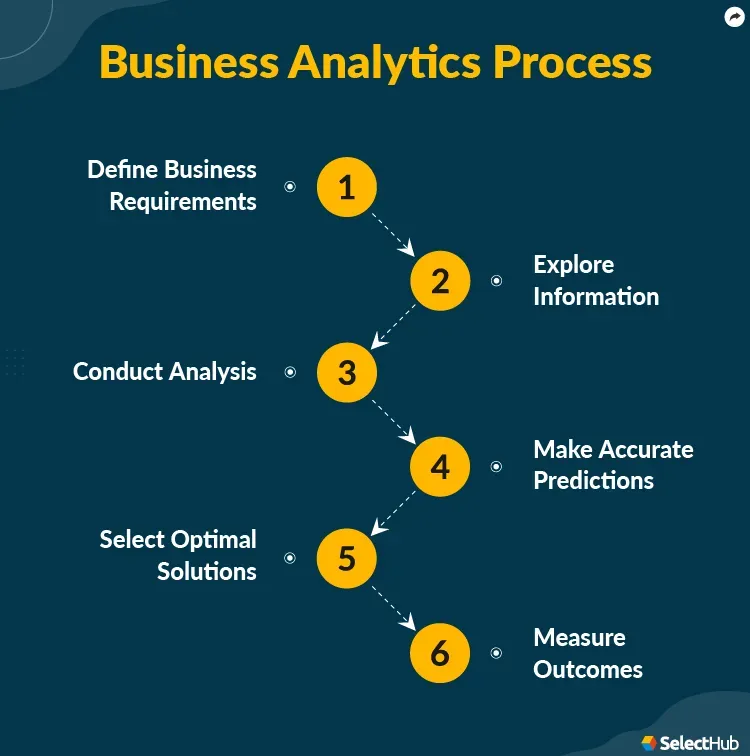
| Implementation Steps | 1. Define objectives. 2. Invest in tools. 3. Manage customer data. 4. Train staff. 5. Promote a data-driven culture. |
| Challenges | 1. Data overload. 2. Lack of expertise. 3. Tool integration issues. 4. Resistance to change. |
Summary
Business analytics is essential for modern organizations, helping them to convert vast amounts of data into strategic decisions. As the world becomes increasingly data-driven, companies that leverage business analytics can enhance their operational efficiency and customer satisfaction. In our discussion, we uncovered that effective decision-making requires clarity of objectives, the right tools, and a culture that embraces data. While challenges like data overload and skill shortages exist, the advantages of implementing business analytics far outweigh these obstacles. Ultimately, incorporating business analytics not only supports immediate business needs but also paves the way for future growth and adaptability.

