
Listen to this article
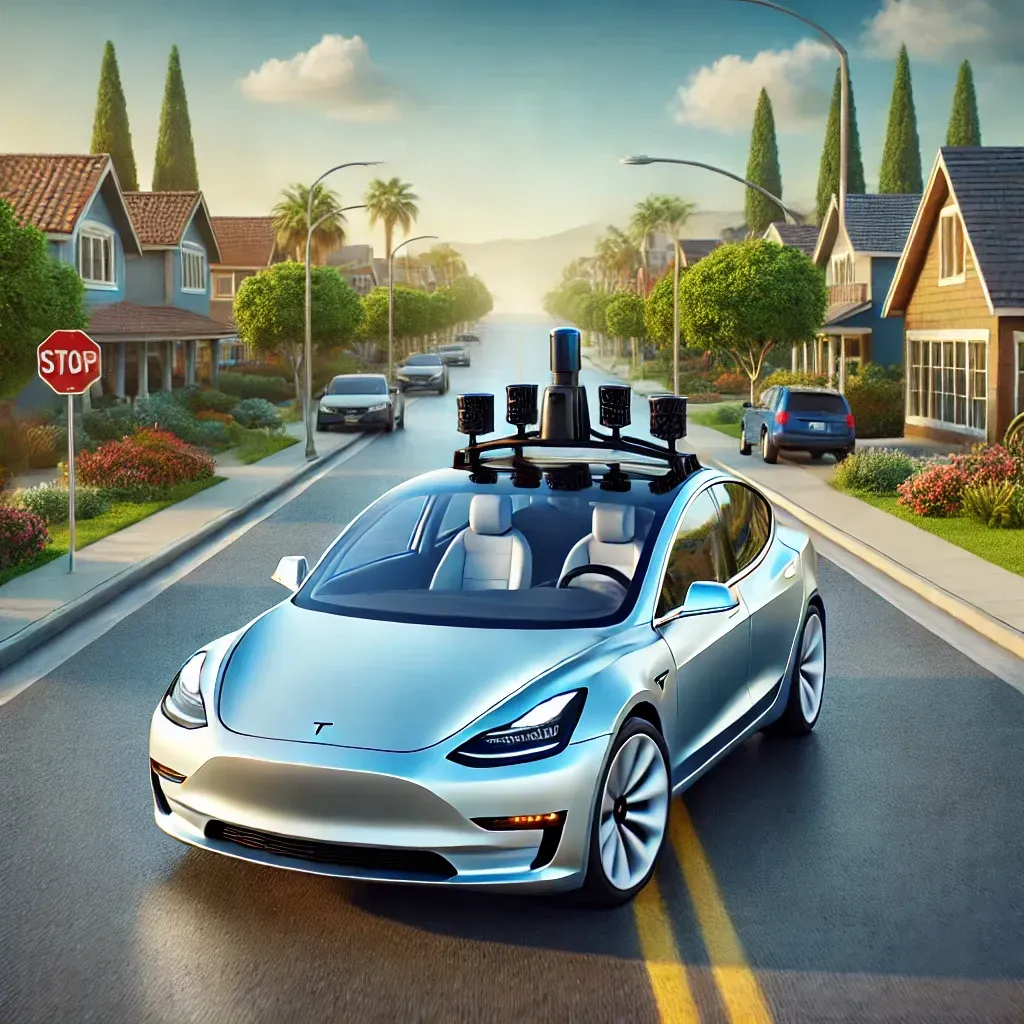
Autonomous vehicles, such as those being developed by the British startup Wayve, are set to revolutionize the way we navigate our roads. With the advent of AI driving technology, these self-driving cars aim to tackle challenges like the notoriously pothole-ridden roads of the UK. As Wayve prepares to launch its robotaxis in London in collaboration with Uber, the anticipation surrounding their technology grows. CEO Alex Kendall confidently asserts that the intelligence integrated into these vehicles allows them to adapt to various terrains, including the complex urban landscape of London. However, Wayve isn’t alone in the race; it faces stiff competition from established players like Waymo, highlighting the dynamic and rapidly evolving market of autonomous transport solutions.
Self-driving cars, or autonomous vehicles, represent a groundbreaking advancement in transportation technology. These innovative machines utilize sophisticated AI-driven systems to navigate environments independently, revolutionizing travel across urban and rural landscapes alike. As cities like London prepare to welcome robotaxis, the potential for enhanced travel efficiency and safety becomes tantalizingly close. The competition among firms, including rising stars like Wayve and larger entities like Waymo, ensures a vibrant ecosystem that continually pushes the boundaries of what’s possible in autonomous driving. The ongoing development of these vehicles promises to transform mobility, making it more adaptable and responsive to real-world factors such as the usual challenges posed by city infrastructure.
Wayve’s Ambitious Goal for Autonomous Vehicles
British self-driving startup Wayve is positioning itself at the forefront of autonomous vehicle innovation, with a bold claim that its technology will allow cars to drive anywhere, including on the notoriously challenging and pothole-riddled roads of the UK. This ambitious vision is underscored by their plans to launch robotaxis in London in collaboration with Uber, leveraging AI driving technology to navigate complex urban settings. The company emphasizes its capability to adapt to the dynamic driving environments that characterize major cities across the UK.
According to Wayve’s CEO Alex Kendall, the adaptive nature of their AI is what sets them apart from the competition, asserting that their vehicles can learn in real-time from the surroundings rather than relying on pre-mapped routes, which often become outdated. With extensive testing completed in various locations, including urban hubs and rural England, Wayve aims to overcome geographical barriers faced by traditional autonomous vehicle technologies.
Navigating the Challenges of London’s Roads
Navigating the streets of London presents unique challenges for autonomous vehicles, primarily due to the city’s intricate road layout, frequent potholes, and the busy urban environment. Wayve’s AI driving technology is designed specifically to tackle these challenges by interpreting sensor data and understanding the context of the driving environment. This capability allows it to avoid hazards like potholes more effectively than many existing systems, which often struggle without detailed geographic mapping.
As the founder of Wayve, Kendall acknowledges that driving in London requires a different skill set than what has been tested in the grid-like structures found in the United States. This approach may give Wayve a competitive edge over rivals like Waymo, who have dominated the American market but may not fully grasp the complexities of driving in places with less predictable street conditions, like those in London.
The Competitive Landscape of Autonomous Driving
As Wayve prepares to enter the London market with its innovative robotaxis, it finds itself in a competitive landscape populated by several key players in the autonomous vehicle sector. The presence of companies like Waymo and Lyft—which has plans to collaborate with the Chinese firm Baidu—means that Wayve must continually refine its AI driving technology to maintain an edge. The competition is fierce, but Wayve’s unique approach of real-time learning from the environment may allow it to scale effectively and respond to real-world challenges.
Waymo, which has garnered significant attention and investment for its self-driving initiatives, argues that its technology will soon be widely deployable across various locations. The rivalry between these companies pushes innovation forward, but it also raises questions about the overall maturity and regulation of autonomous driving technology. As these players vie for market leadership, regulatory frameworks will need to evolve to facilitate safe and widespread adoption.
Investing in the Future of Autonomous Vehicles
Recent investments have propelled Wayve’s valuation to around $8.6 billion, signaling a strong belief in the upcoming commercial viability of autonomous driving technology. This injection of capital highlights the significant market potential that investors see in companies like Wayve, particularly as they promise to revolutionize urban transport with AI-powered solutions. Such financial backing could facilitate rapid advancements not only in technology but also in the infrastructure needed to support autonomous vehicles in cities.
However, experts caution that the path to successful implementation is riddled with potential regulatory hurdles. Rachel Harris of Simmons & Simmons points out that while the UK is well-positioned to become a leader in autonomous vehicle innovation, it must also establish regulations that can keep pace with technological advancements. Investors and companies must navigate this complex landscape to ensure the answer to the question of regulation is addressed proactively.
Wayve’s Vision for the Future of Urban Mobility
Wayve’s outlook on urban mobility focuses on the transformative potential of autonomous vehicles to reshape not only transportation but also overall city dynamics. By integrating AI-driven robotaxis into daily commuting, they aim to reduce traffic congestion and improve accessibility. Kendall’s vision extends beyond mere transportation; he believes that autonomous vehicles can foster a more efficient urban ecosystem. As cities evolve, the need for intelligent transport solutions becomes increasingly urgent, positioning Wayve as a leader in this burgeoning market.
In addition to the operational advantages, Wayve intends to leverage the extensive data collected from its robotaxis to further enhance AI algorithms and training. The ongoing development of its technology aims to create a seamlessly integrated transportation network that benefits all city dwellers, promoting sustainability and widespread usage. Through strategic partnerships and innovation, Wayve aspires to lead the charge in making urban mobility more inclusive and efficient.
Wayve vs. Competitors: The Technological Edge
In the race for dominance in the autonomous vehicle industry, Wayve’s approach to using machine learning algorithms sets it apart from competitors like Waymo and Lyft. While Waymo’s method heavily relies on detailed pre-mapped routes, Wayve’s technology learns in real time. This could offer a significant advantage, especially in rapidly changing city environments like London, where road conditions can shift due to construction and wear. The flexibility of Wayve’s system allows it to adapt quickly to new challenges, giving it a potentially crucial edge over competitors.
The competition isn’t merely technical; it’s also about public acceptance and regulatory hurdles. Wayve’s emphasis on navigating challenging terrain—such as the infamous London potholes—addresses concerns about safety and reliability head-on. By demonstrating that its vehicles can maneuver complex urban environments, Wayve not only showcases its technology but also builds trust with consumers and regulators alike, setting the stage for broader acceptance of autonomous driving.
AI Driving Technology: The Heart of Wayve’s Innovations
At the core of Wayve’s ambitions lies its groundbreaking AI driving technology, which fundamentally transforms how vehicles operate on the streets. Rather than depending solely on pre-existing geographical maps, Wayve’s system utilizes real-time sensor data, enabling it to interpret surroundings and make informed driving decisions. This is particularly vital in densely populated urban areas where traditional systems may falter due to outdated information.
Wayve’s AI not only deals with basic navigation but also understands and reacts to a myriad of environmental factors, including road conditions, traffic patterns, and even abrupt changes caused by weather or accidents. This adaptability is crucial for ensuring the safety of passengers and pedestrians alike, which is fundamental for the successful deployment of autonomous vehicles in urban settings.
Expanding Beyond London: Future Prospects for Wayve
As Wayve approaches the initial launch phase of its robotaxis in London, the company is already eyeing potential expansion into other regions. The successful implementation of its technology in various settings, from the rural landscapes of Wales to the bustling streets of central London, paves the way for broad geographic scalability. Their ambition is driven by the belief that once the technology is proven, it can be replicated in urban centers worldwide, tailoring their service to fit different cities’ unique dynamics.
Given the competitive landscape and the increasing attention on autonomous vehicles globally, Wayve’s ability to quickly adapt and refine its offering will be key. With strategic partnerships and an established brand presence, Wayve is poised to capitalize on the growing demand for innovative transport solutions, potentially making a significant mark on the future of urban mobility far beyond the UK.
The Role of Regulation in Autonomous Vehicle Deployment
As companies like Wayve push forward with developments in autonomous driving technology, the question of regulation becomes increasingly crucial. Wayve’s progress and the success of its robotaxis depend not only on technological advancements but also on the legal framework that governs the operation of such vehicles. Harmonizing regulations across regions will be essential for ensuring safe and efficient deployment.
Experts highlight that limited regulatory clarity can stifle innovation and delay the rollout of autonomous vehicle solutions. As noted by Rachel Harris, the UK has the potential to lead in this space, but proactive measures must be taken to foster a conducive environment for development. Anticipating and addressing regulatory challenges early could play a vital role in shaping the landscape for autonomous vehicles in the UK and beyond.
Frequently Asked Questions
What advancements has Wayve made in autonomous vehicles for London pothole roads?
Wayve has developed AI driving technology that enables autonomous vehicles to adapt to challenging road conditions like London’s pothole-ridden streets. Their system learns from real-time data, allowing it to navigate effectively in various environments.
How does Wayve’s self-driving car technology differ from traditional mapping systems?
Unlike traditional autonomous vehicles that rely on pre-mapped routes, Wayve’s AI driving technology processes sensor data to learn from its surroundings. This approach allows their autonomous vehicles to navigate dynamically and handle complex situations, such as driving in central London.
What is the significance of robotaxis in London for Wayve and autonomous vehicles?
Wayve is set to launch robotaxis in London in partnership with Uber, marking a significant step for the deployment of autonomous vehicles in urban settings. This initiative showcases the potential for AI driving technology to transform transportation in densely populated areas.
How does Wayve’s technology compete with companies like Waymo in the autonomous vehicle space?
As one of the few British startups in AI driving technology, Wayve faces competition from major players like Waymo, which is backed by Google’s parent company, Alphabet. Both companies aim to advance autonomous vehicle capabilities, but Wayve distinguishes itself with its innovative learning algorithms that do not rely on pre-mapped routes.
What challenges does Wayve foresee for the future of autonomous vehicles in the UK?
While Wayve believes in the widespread adoption of autonomous vehicles, challenges such as regulatory hurdles may arise. Experts note that for the UK to lead in autonomous vehicle innovation, regulations must keep pace with technology improvements.
What is the potential future of autonomous vehicles according to Wayve’s CEO?
Wayve’s CEO, Alex Kendall, envisions a future where all cars are autonomous, emphasizing that with advancements in AI driving technology, vehicles will adapt to various driving environments globally.
How does Wayve’s AI technology adapt to the unique driving experience in London?
Wayve’s AI technology is designed to cater to London’s distinct driving challenges, such as narrow streets and complex junctions. The system learns continuously from its environment, ensuring safe navigation in one of the world’s busiest urban landscapes.
What investment has Wayve received, and what does it signify for autonomous vehicle development?
Wayve has been valued at approximately $8.6 billion (£6.4 billion), suggesting that investors are confident in the commercial maturity of autonomous driving technology and its future prospects in the transportation market.
What role do regulations play in the advancement of autonomous vehicles in the UK?
Regulations are critical for the successful deployment of autonomous vehicles in the UK. Experts believe that for the UK to become a leader in autonomous vehicle innovation, regulatory frameworks must evolve alongside technological advancements to address safety and operational standards.
What makes Wayve’s approach to autonomous vehicles unique in the context of AI driving technology?
Wayve’s approach is unique because it emphasizes real-world learning through sensor data, allowing its autonomous vehicles to navigate complex environments without the limitations of pre-mapped routes, setting a new standard in AI driving technology.
| Key Point | Details |
|---|---|
| Wayve’s Capability | Wayve believes its technology allows autonomous vehicles to drive anywhere, including challenging UK roads. |
| Robotaxi Launch | Wayve plans to launch robotaxis in London in partnership with Uber this year. |
| CEO Statement | CEO Alex Kendall is optimistic about the future, stating that autonomous vehicles will operate in many locations. |
| Adaptability of AI | Wayve’s AI can adapt while driving, effectively managing hazards like potholes. |
| Company Background | Founded in 2017, Wayve uses sensor data for its AI technology instead of pre-mapped routes. |
| Competitive Landscape | Wayve faces competition from companies like Waymo and Lyft, which are also expanding into the UK. |
| Global Adoption | Kendall believes that all cars will eventually become autonomous worldwide. |
| Investment Valuation | Wayve is valued at $8.6 billion, indicating investor confidence in the future of autonomous vehicle technology. |
| Regulatory Challenges | Experts warn that regulatory frameworks must evolve quickly to support autonomous vehicle deployment. |
Summary
Autonomous vehicles, especially those developed by companies like Wayve, are positioned to revolutionize transportation systems globally. The advancements in AI technology and adaptive driving capabilities make it possible for these vehicles to navigate even the most challenging road conditions, such as those found in the UK. As Wayve prepares to launch its robotaxi service in London, it symbolizes a significant step towards the widespread acceptance of autonomous vehicles. However, the industry must also navigate the regulatory landscape to ensure safety and efficiency as we move towards a future dominated by these innovative transport solutions.