Listen to this article
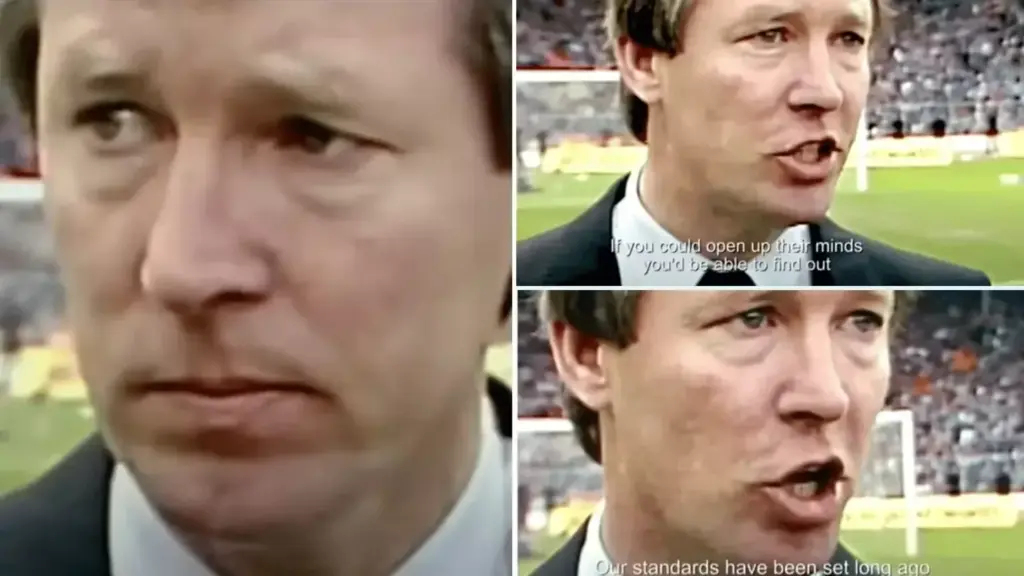
In his final interview, Sir Alex Ferguson encapsulated his remarkable legacy as Manchester United’s most successful manager. A defining moment of the interview came when he reflected on his last Premier League victory during the 2012/13 season, a triumph that secured the Red Devils’ status at the pinnacle of English football. Ferguson’s candid remarks about Wayne Rooney’s requested transfer showcased a rare honesty from a football manager, contrasting sharply with today’s often guarded coaching personalities. He admitted that Rooney’s reluctance to play was intertwined with his desire to leave, shedding light on the complex dynamics between player and manager. As the football world looked on, Ferguson’s reflections not only celebrated his unparalleled achievements but also raised important questions about the future of manager-player relationships in the Premier League.
In what can only be described as a pivotal last discussion, the retiring Scottish boss addressed key issues surrounding his tenure at Manchester United. This final interview not only highlighted his numerous triumphs, including numerous league championships, but also illuminated the nuances of player management that may have evolved since his departure. By candidly engaging with topics such as Wayne Rooney’s controversial transfer request, Ferguson provided a refreshing perspective on the expectations and challenges faced by modern football coaches. While acknowledging the impact of the Premier League’s shifting landscape, he remained steadfast in the values that defined his legendary career. Ferguson’s insights into the pressures of management and the realities of team dynamics will resonate with coaches and fans alike, ensuring that his influence endures in the footballing community.
Sir Alex Ferguson’s Final Interview: A Testament to Legacy
In his final interview, Sir Alex Ferguson showcased the same candidness and leadership that defined his tenure at Manchester United. As he reflected on his time at the helm, he emphasized not just the trophies won but the invaluable lessons learned throughout his nearly three-decade reign. This last public appearance allowed him to convey his insights on modern football, a landscape he believed had changed dramatically since his early days at the club. Fans and analysts alike were eager to hear Ferguson’s thoughts on the team’s future, especially after securing another Premier League title in the 2012/13 season, which reinforced his legacy as the most successful manager in the club’s history.
Ferguson’s legacy is characterized by not only his impressive trophy haul but also the integrity and honesty that he brought to the role of football manager. Unlike many contemporary figures in the game, Ferguson wasn’t afraid to address uncomfortable issues head-on. His comments about Wayne Rooney’s desire to leave the club reflect a level of transparency that is increasingly rare in the modern era, where managers often opt to keep internal matters private. By being open about Rooney’s situation, Ferguson reasserted the importance of player-manager relationships built on mutual understanding and respect.
The impact of Ferguson’s final interview goes beyond just one man’s experiences; it serves as an important reminder of the principles that should guide leadership in professional sports. Throughout his time at Manchester United, Ferguson’s ability to stand firmly in his beliefs while forging strong connections with players contributed to extraordinary successes on the pitch. His statements in this last talk illustrated a profound understanding of the game, showcasing that management is not solely about tactics or titles, but also about communication and honesty. As fans reminisce about his time in charge, it’s evident that his legacy remains intact, influencing not just current managers but the young players in the system as well.
The Wayne Rooney Transfer Saga: Insights from Ferguson
One of the most talked-about moments in Ferguson’s final interview was his candid discussion regarding Wayne Rooney’s potential transfer. Rooney, a key figure for Manchester United, had made headlines for expressing a desire to leave the club — a revelation that took many by surprise. Ferguson’s honest admission about Rooney’s situation highlighted the complexities of player dynamics within top-tier football. His decision to openly discuss these matters reflects a stark contrast to the secrecy that often clouds transfer negotiations within the sport today. By addressing Rooney’s frustrations and the request to leave, Ferguson brought a level of maturity and understanding to the discourse surrounding player movements, decluttering the often sensationalized narratives surrounding star athletes.
Critics and fans alike speculated on the implications of this transfer saga on the team’s overall performance and morale. Ferguson asserted that he respected Rooney’s wishes but firmly believed in the importance of loyalty and commitment to the club. His approach towards managing the situation revealed not only his tactical skills as a football manager but also a deep emotional intelligence in dealing with players like Rooney, who were navigating their own careers amidst high stakes. This insight into player management is a crucial learning point for upcoming coaches, illustrating that while winning is pivotal, fostering a healthy environment for athletes can lead to collective success.
Ferguson’s handling of the Rooney situation allows for a broader discussion on player transfer politics within football. A stark contrast can be drawn between Ferguson’s era and the current climate in the Premier League, where many managers tend to shroud player transfers in ambiguity. This practice often leads to misinformation and speculation, causing unrest within teams. Ferguson’s forthrightness serves as a reminder that open communication quickly resolves issues and builds trust within the squad. By allowing Rooney to express his feelings, Ferguson ensured that the player had clarity on his worth to the club, which undoubtedly contributed to his decision to remain at Manchester United for four additional years.
Overcoming Rumors: Ferguson’s Approach to Media Leaks
During his last interview, Ferguson addressed the ongoing issue of media leaks and the challenges they pose for clubs like Manchester United. He poignantly described his frustrations with rumors circulating prior to his retirement announcement, emphasizing how information can often escape and cause confusion within the club’s ranks. His remarks underscore a larger trend in football, where sensitive information about team strategy, player movements, and managerial changes can quickly find its way into the public domain. Ferguson’s experience reflects a reality many clubs face today, as they grapple with maintaining a level of confidentiality amidst the ever-watchful eyes of the media and fans alike.
Ferguson’s candidness regarding these leaks revealed his commitment not just to the game, but to the integrity of club communications. He viewed leaks as detrimental, noting that they undermine the unity and decorum that exist within a football team. His frank acknowledgment underscores the importance of establishing robust internal processes to protect sensitive information. Conversely, it also emphasizes the need for a shift in how modern managers approach the media and external communications — a vital adaptation necessary for success in an age dominated by social media and incessant news cycles.
Furthermore, the allegations of club “leaks” persist even years after Ferguson’s departure, proving that the issue is not just a relic of the past. In January 2026, an internal investigation was launched at Manchester United to deter current breaches, showcasing that the integrity of club operations remains a priority. Ferguson’s historical perspective on the importance of protecting sensitive information provides valuable insights for today’s managers, emphasizing that fostering a culture of secrecy and loyalty can cultivate a more cohesive and resilient squad. As teams strive for success, maintaining control over internal narratives can often make the difference in achieving their goals.
The End of an Era: Ferguson’s Legacy at Manchester United
Sir Alex Ferguson’s departure from Manchester United marked the end of a transformative era, one characterized by unparalleled success and lasting influence on the game of football. His efforts in reshaping the club into a powerhouse of English and European football cannot be understated, having led the squad to a historic 13 Premier League titles during his tenure. Beyond statistics, Ferguson’s legacy is symbolized by the values he instilled — resilience, determination, and unwavering commitment to excellence. These elements have been ingrained in the club’s culture and continue to inspire coaches and players who follow in his footsteps.
Moreover, Ferguson’s impact extends far beyond Manchester; he has set benchmarks that many clubs aspire to achieve. His stories of overcoming challenges, nurturing young talent, and making astute player movements serve as blueprints for future generations of managers. The principles he championed regarding player relationships, campaign management, and communication still resonate within the realms of football coaching, making him a timeless figure in sporting history. Ferguson’s farewell address not only acknowledged the past but also illuminated the path forward for Manchester United and its supporters.
While the trophy cabinet remains a testament to Ferguson’s achievements, it is the intangible qualities he imparted that have left a lasting mark on the organization and its community. His legacy is preserved through the numerous players who excelled under his guidance, many of whom have gone on to carve their own paths in the football world. Indeed, Ferguson’s influence will be felt for generations to come, as Manchester United continues to strive for greatness — not just by winning games, but by perpetuating the values and principles that were foundational during his remarkable tenure. As the club faces new challenges, one truth remains clear: Sir Alex Ferguson’s legacy is not merely about what he won, but how he shaped an entire culture at Manchester United.
Frequently Asked Questions
What key points did Sir Alex Ferguson discuss in his final interview with Sky Sports?
In his final interview, Sir Alex Ferguson touched on several critical topics, including the honesty surrounding Wayne Rooney’s transfer request and the challenges of leaking sensitive information within the club. His transparency highlighted the need for a different approach in today’s Premier League.
Why was Wayne Rooney absent from the starting XI in Sir Alex Ferguson’s last match?
Sir Alex Ferguson revealed that Wayne Rooney was absent from the starting XI because he had requested a transfer, expressing his uncertainty about his future at Manchester United. Ferguson emphasized that he believed this hesitation was understandable.
How did Sir Alex Ferguson secure his legacy at Manchester United during his last season?
In his final season, Sir Alex Ferguson secured another Premier League victory, leading Manchester United to finish 11 points ahead of rivals Manchester City, thereby solidifying his legacy as one of football’s greatest managers.
What did Sir Alex Ferguson say about leaks within Manchester United during his final interview?
Ferguson mentioned that Manchester United had issues with leaks, stating that the club resembled a sieve, where sensitive information often escaped before any official announcements were made, including details about his planned retirement.
How did Sir Alex Ferguson’s final interview reflect on the state of honesty among modern football managers?
In his final interview, Ferguson’s candidness about player transfers and internal matters stood out as a stark contrast to the typical secrecy maintained by modern football managers, reflecting a bygone era of more open communication.
What impact did Sir Alex Ferguson’s honesty during his final interview have on players like Wayne Rooney?
Ferguson’s honesty regarding Wayne Rooney’s transfer request helped highlight the complexities of player-manager relationships, leading to Rooney staying at Manchester United until 2017, four years after Ferguson’s departure.
How did Sir Alex Ferguson’s final interview signify a change in football management?
Ferguson’s final interview signified a shift towards transparency, with his candid remarks about player concerns and club leaks, suggesting that modern football could benefit from a more honest approach in manager-player relations.
What lasting contributions did Sir Alex Ferguson make to Manchester United following his final interview?
Following his final interview and retirement announcement, Sir Alex Ferguson’s contributions continued to influence Manchester United, as evidenced by the club’s ongoing legacy and successes in the Premier League that he helped establish.
| Key Points | Details |
|---|---|
| Legendary Status | Sealed with a final Premier League victory in the 2012/13 season. |
| Final Interview Insights | Ferguson addressed the transfer request by Rooney and criticism of club leaking information. |
| Rooney’s Situation | Ferguson explained Rooney’s request for transfer and the player’s frustration. |
| Leaked Information | Ferguson criticized the club’s handling of sensitive information leading to rumors. |
| Club’s Reputation | Maintained strong influence at the club; Rooney stayed until 2017 despite transfer request. |
Summary
In his final interview, Sir Alex Ferguson outlined the realities of football management, emphasizing transparency and club integrity. The interview served as a testament to his enduring legacy at Manchester United, touching on pivotal moments such as his last Premier League victory and the internal challenges faced by the club. His impactful statements remind us of the potent blend of honesty and authority that defined his remarkable journey as one of football’s greatest managers.