
Listen to this article
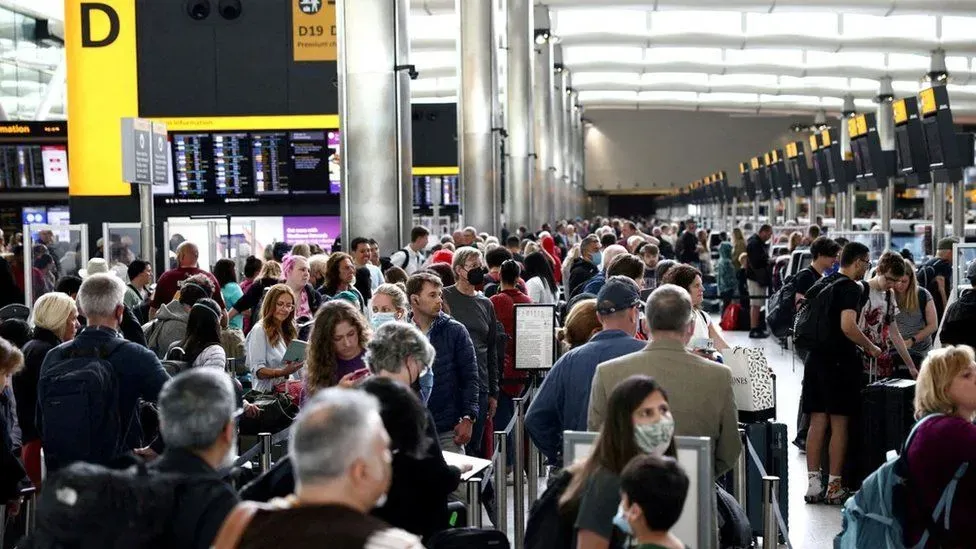
The Heathrow crowding problem has become a focal point for criticism as the airport continues to grapple with congestion issues in its arrivals hall, particularly in Terminal 5. As passengers from various countries juggle their travel routines, a peculiar quirk emerges: British travelers tend to walk on the left, while many international visitors prefer the right side. This directional divide has led to frequent collisions, creating an impression of overcrowding in what is one of the busiest airports in Europe. With plans for a third runway on the horizon, airport crowd management has become more crucial than ever to ensure a smooth travel experience for everyone. As Heathrow airport works on solutions, addressing these behavioral differences may prove essential in reducing congestion and improving flow within its bustling terminals.
Heathrow’s congestion issues have raised significant concern as travelers navigate the arrivals area, particularly within its famed Terminal 5. The continuous influx of passengers with differing walking habits creates a scenario ripe for collisions, complicating travel flow. The chief executive of Heathrow has pointed out that these directional discrepancies are not merely a logistical oversight but a cultural one. To mitigate this challenge, airport officials must consider strategic solutions for increasing efficiency and safety among diverse travelers. Enhancing airport crowd management practices could be key in transforming the Heathrow experience for millions who pass through its gates.
Understanding the Heathrow Crowding Problem
Heathrow airport has faced ongoing challenges with crowding, particularly in the arrivals hall of Terminal 5. The chief executive, Thomas Woldbye, has pointed out an interesting aspect contributing to this issue: the differing walking patterns of British and international travelers. UK residents tend to walk on the left side of the movement lanes, while many European travelers walk on the right. This confusion leads to unintentional collisions, which adds to the perception of congestion in the terminal. Understanding this behavioral aspect is crucial for creating effective airport crowd management strategies.
As air travel continues to rebound post-pandemic, the dynamics within Heathrow’s bustling environment are becoming increasingly apparent. Woldbye’s observations underscore the need for better signage and directional guidance to mitigate the crowding problem. By encouraging a cohesive flow of pedestrian movement—where travelers align their walking directions consistently—we can enhance not only the passenger experience but also optimize space utilization within the airport.
Addressing Terminal 5 Issues
Terminal 5 is primarily utilized by British Airways and has become synonymous with both efficient operations and significant foot traffic. However, it has also been the epicenter of the reported crowding issues at Heathrow. The crowded nature of the terminal arises not just from the volume of travelers but also from the confusing directional habits of passengers. As explained by Woldbye, addressing these issues could be as simple as implementing clearer wayfinding systems that guide travelers toward expected walking patterns.
Moreover, enhancing Terminal 5’s infrastructure and providing real-time information about flight arrivals and baggage claim advancements can help alleviate some of the pressure on this busy terminal. The introduction of streamlined passenger flows, perhaps through additional barriers or marked lanes for walking, will significantly improve the overall experience for travelers who are often overwhelmed in such congested spaces.
The Role of Direction in Airport Navigation
The fundamental travel behavior differences between British and continental European passengers can lead to navigational chaos in busy airport environments. At Heathrow, the lack of uniform walking patterns exacerbates the crowding problem, particularly in areas like the arrivals hall. By fostering awareness about these directional tendencies, airport management can implement solutions to help travelers navigate more smoothly. As Woldbye suggests, encouraging keeping to designated sides could profoundly change the dynamics within airport terminals.
Education and information are key elements in tackling this navigational issue. Heathrow airport could consider campaigns to inform travelers ahead of their journey about the best practices for navigating the terminal. Simple changes in passenger behavior could significantly ease congestion, leading to a more efficient experience for everyone involved.
Future Plans for Expansion and Passenger Flow Management
With plans for a third runway on the horizon, Heathrow’s ability to manage crowding will become even more critical. The anticipated rise in passenger numbers—potentially adding 40 million new travelers—will necessitate innovative airport crowd management solutions. As Woldbye noted, the challenge isn’t merely about accommodating more passengers but ensuring they can move efficiently through the airport without unnecessary collisions or delays.
Expansion also brings the opportunity to rethink and redesign spaces to foster better passenger flow. This could include revising how terminals are structured, improving queue management for check-ins, and enhancing the arrivals hall experience to prevent bottlenecks. As demand grows, these upgrades will be essential in maintaining Heathrow’s reputation as a leading international hub while addressing ongoing crowding problems.
The Impact of Air Traffic on Passenger Experience
As Heathrow implements its plans to introduce more flights with the addition of a third runway, it becomes even more essential to consider how air traffic impacts the passenger experience. With an expected 240,000 new flights per year, airport crowd management will play a pivotal role as passenger volumes increase. The current directional challenges could quickly multiply if proper systems are not put in place to manage both arrivals and departures effectively.
While the airport seeks to enhance its operations, ensuring that air traffic control systems can handle the influx of additional flights while minimizing disruptions will be key. The successful integration of new flights must be paired with proactive crowd management efforts to prevent overcrowding scenarios in terminals. Ensuring that travelers’ experiences remain front-of-mind as additional pressure is placed on the airport is essential for maintaining customer satisfaction.
Behavioral Insights on Traveler Navigation at Heathrow
The behavioral insights shared by Woldbye point to a broader phenomenon widely observed in high-volume travel environments: how different cultural norms influence pedestrian behavior. At Heathrow, the tendency for British travelers to favor the left contrasts sharply with the Euro-centric preference for the right, resulting in a ceaseless shuffle of collision-prone crowds. By identifying these patterns, airport authorities can tailor their crowd management efforts to account for these nuances.
Understanding the behaviors of international travelers allows for targeted strategies aimed at mitigating crowding issues. For instance, Heathrow could employ directional arrows or dynamic signage that aligns with common cultural practices. By fostering a more predictable environment, where everyone adheres to established paths, the airport can significantly reduce the incidence of collisions and enhance passenger flow.
Prioritizing Safety and Accessibility in Terminal Design
Safety and accessibility are paramount in airport design, especially in bustling environments like Heathrow. The current crowding problem, exacerbated by inconsistent walking behaviors, poses risks not just for passenger comfort but also for safety. There’s an urgent need for Heathrow to prioritize designs that accommodate a mix of directional habits while enhancing accessibility for all travelers, including those with mobility challenges.
From wide walkways to clearly marked crossing points, every design decision must factor in the diverse needs of passengers. By creating a terminal infrastructure that anticipates and facilitates smooth movement, Heathrow can significantly enhance its overall safety profile and create a more pleasant travel experience.
Enhancing Passenger Experience Through Technology
In an increasingly digital age, technology can play a crucial role in addressing Heathrow’s ongoing crowding issues. Utilizing apps and interactive kiosks that guide passengers through the terminal could alleviate the confusion resulting from the differing walking patterns of travelers. Real-time notifications about wait times in each area could inform better decisions, effectively managing crowds as they arrive at the airport.
Technology can enable Heathrow to transform the passenger experience, shifting it from just managing crowding to actively enhancing how travelers navigate through the airport. Innovations that streamline check-ins, automate baggage handling, and provide better communication regarding flight status help in alleviating congestion and ensuring smoother transitions for passengers throughout all phases of their journey.
Collaboration with Airlines for Streamlined Operations
A collaborative approach with airlines is essential in addressing the crowding challenges at Heathrow. By understanding the operation schedules and peak travel times for airlines, the airport can craft better flow management strategies tailored to the specific needs of passengers arriving at Terminal 5. This partnership can enhance planning efforts, ensuring that real-time data from airlines is utilized to optimize passenger processing.
As Heathrow seeks to expand its operations, working closely with airlines to synchronize departure and arrival times will be crucial in maintaining order amidst growing passenger volumes. By fostering an environment of collaboration, the airport can create a unified approach toward managing crowd dynamics while maintaining an efficient travel experience.
Frequently Asked Questions
What are the main factors contributing to the Heathrow crowding problem?
The Heathrow crowding problem is primarily due to the different walking habits of British and foreign travelers in the arrivals hall. British passengers tend to walk on the left, while many continental Europeans walk on the right. This discrepancy leads to collisions and congestion, particularly in busy areas like Terminal 5.
How does passenger behavior affect crowd management at Heathrow airport?
Passenger behavior significantly impacts crowd management at Heathrow airport. The differing directional preferences—British travelers walking left and European travelers walking right—creates confusion and collisions in the arrivals hall. Effective crowd management strategies must address these behaviors to enhance the passenger experience.
What solutions are being considered to address the Heathrow crowding issue?
To tackle the Heathrow crowding issue, airport management is considering solutions such as clearly marked pathways indicating which direction travelers should walk—to the left or right—based on their origin. Additionally, the expansion plans, including a potential third runway, aim to alleviate congestion by increasing capacity.
Are there plans to expand Heathrow airport to reduce crowding?
Yes, there are plans to expand Heathrow airport with the development of a third runway, which is expected to accommodate an additional 40 million passengers each year. However, the airport management acknowledges that simply expanding the physical space will not entirely solve the crowding problem, as traveler behavior also plays a crucial role.
Why do travelers collide in the arrivals hall at Heathrow?
Travelers collide in the arrivals hall at Heathrow due to the differing walking patterns of British and foreign passengers. This crowding problem arises as British travelers instinctively stick to the left side, whereas many continental Europeans tend to walk towards the right, leading to frequent near-misses and congestion.
What impact does crowding at Heathrow airport have on traveler experience?
Crowding at Heathrow airport negatively impacts the traveler experience by creating stressful situations in busy areas like Terminal 5. Collisions and confusion can lead to delays in navigating the airport, potentially affecting passengers’ overall travel satisfaction and efficiency.
How is Heathrow airport addressing sustainability amid crowding challenges?
Heathrow airport is working on sustainability initiatives alongside addressing crowding challenges. The airport has established a fund to promote the use of sustainable aviation fuels (SAF) among airlines, aiming to reduce emissions while developing infrastructure to cope with increased passenger flow as part of future expansion plans.
What role does Terminal 5 play in the Heathrow crowding problem?
As the main terminal used by British Airways, Terminal 5 plays a significant role in the Heathrow crowding problem. It experiences high passenger volumes that, when combined with the differing walking habits, exacerbate congestion in the arrivals hall, often leading to a perception of overcrowding.
| Key Issues | Details | |
|---|---|---|
| Heathrow Crowding Problem | Differing walking patterns of British and foreign travelers leading to collisions. | |
| Reason for Crowding | British travelers typically keep to the left, while many Europeans tend to walk on the right. | |
| CEO Statement | Thomas Woldbye emphasized a need for directional clarity to reduce collisions. | |
| Future Plans | Expansion plans include a third runway, increasing passenger capacity, and introducing more satellite terminals. | |
| Sustainable Aviation Fuel (SAF) Initiatives | Heathrow has launched an £80m fund to subsidize the use of more SAF as part of its sustainability efforts. | |
Summary
The Heathrow crowding problem underscores the challenges faced by one of the world’s busiest airports. Miscommunication in directional walking preferences between British and foreign travelers results in frequent collisions, which complicates passenger flow. As Heathrow anticipates increased passenger numbers with its proposed third runway, addressing these directional issues becomes crucial. The airport’s efforts to implement adequate traffic management and expansion plans, along with its commitment to using sustainable aviation fuel, will be key strategies in mitigating future challenges and enhancing the overall travel experience.