
Listen to this article
The UK economy is navigating a complex landscape as it seeks to strengthen its position in the global market. Chancellor Rachel Reeves has acknowledged the challenges ahead, emphasizing that after a modest GDP growth of only 0.1% in the last quarter of 2025, there is still much work to be done. Though the overall growth for the year reached 1.3%, this was below the Bank of England’s forecast, indicating a need for improvement in economic performance UK. As 2026 begins, the 2025 economic outlook remains cautious, with Labour’s economic policies aimed at revitalizing growth amidst ongoing uncertainties. With rising costs and varied outcomes across sectors, the attention turns to how Labour can stimulate the UK GDP growth needed to secure a more favorable economic future.
The economic climate in the United Kingdom is marked by fluctuations and a quest for recovery, particularly as policymakers respond to recent growth trends. As the economy grapples with the nuances of post-pandemic dynamics and inflation pressures, figures indicate that progress has been less than stellar. The Chancellor’s initiatives aim to bolster business confidence and drive forward with strategic economic measures, signaling a clear commitment to a thriving future. Economic indicators point to vital sectors undergoing shifts, reflecting the broader landscape of the British economic framework. As stakeholders assess the Labour administration’s strategies, the focus remains on achieving sustainable growth and navigating the complexities presented in the wake of 2025’s challenges.
Current State of the UK Economy
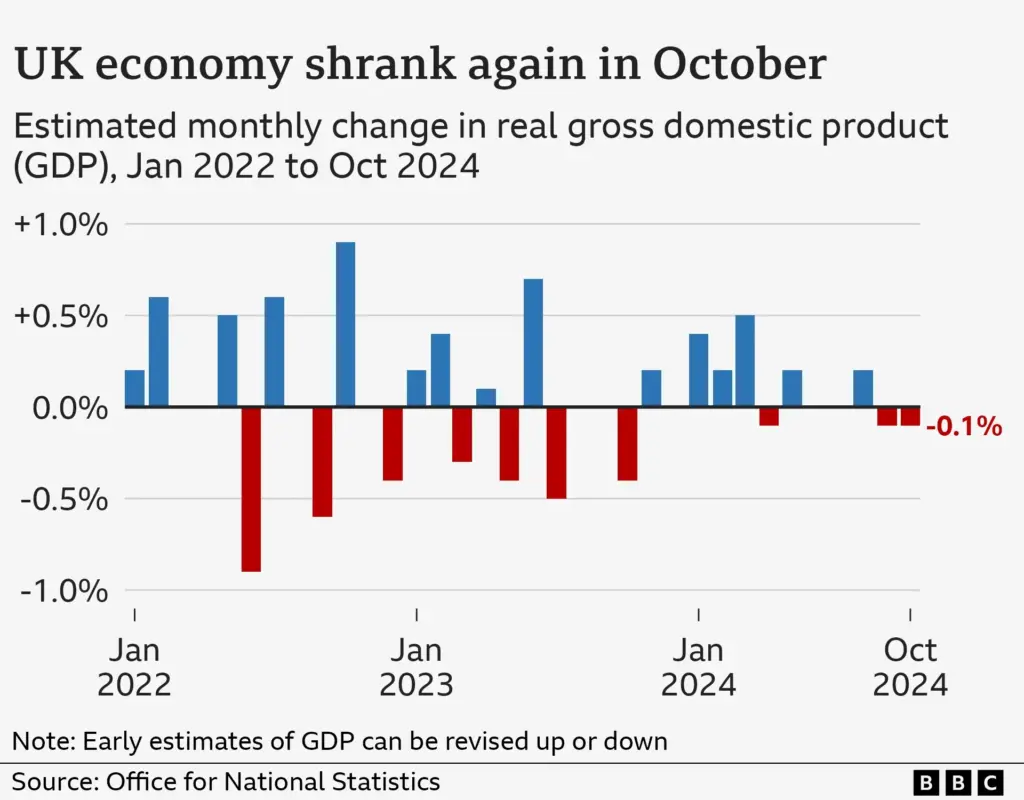
The UK economy has recently faced challenges as highlighted by Chancellor Rachel Reeves’ comments regarding sluggish GDP growth. In the final quarter of 2025, the economy managed a meager growth of just 0.1%, falling short of expectations from economists who had predicted a more robust performance. Despite these figures, the Office for National Statistics indicated that the UK’s overall economic growth for the year reached 1.3%, which is an improvement over the previous year’s 1.1%. However, this growth is still below the Bank of England’s forecasts, indicating a need for further economic stimulation.
Key sectors, particularly construction and services, showed concerning trends at the end of 2025. The construction sector recorded a significant 2.1% decline, the worst quarterly performance in four years, largely attributed to reduced new projects and maintenance work. In addition, the services sector, responsible for around 80% of the UK’s economic output, struggled with stagnation in crucial areas such as professional services and education. These developments underscore the mixed economic performance and the persistent issues that need addressing for the UK economy to regain momentum.
Impact of Labour Economic Policies
Chancellor Rachel Reeves has emphasized the Labour government’s commitment to revitalizing the UK economy through strategic economic policies. She stated that despite the current sluggish GDP growth, the conditions for future growth have been cultivated, suggesting confidence in the long-term impact of these measures. Labour’s focus on boosting economic performance has been characterized by initiatives aimed at innovation, investment in infrastructure, and support for key industries, all of which are crucial for improving productivity and driving economic growth.
Critics have argued that Labour’s economic policies have contributed to a weakened economy, as expressed by Conservative opponents who claim that the administration’s actions have stifled potential growth. This ongoing debate highlights the tension between the differing economic philosophies of the major political parties. As the Labour government works towards implementing its policies, including adjustments to taxation and investment incentives, the effectiveness of these measures in achieving sustainable growth will be closely observed in the coming years.
Frequently Asked Questions
What can we expect from the UK GDP growth in the coming years?
The UK GDP growth outlook shows cautious optimism, with projections suggesting a growth of 1.3% for 2025, slightly above some forecasts. Despite recent sluggish performance, Chancellor Rachel Reeves believes that the conditions created for growth will become more evident in 2026.
How has Chancellor Rachel Reeves influenced the UK economy?
Chancellor Rachel Reeves has prioritized economic growth in her policies, stating that while the UK economy showed a 1.3% growth in 2025, there is still ‘more to do’. Her approach contrasts with previous challenges, as Labour aims to strengthen the economic performance in the UK.
What are the Labour economy policies focusing on for the future of the UK economy?
Labour economy policies under Chancellor Rachel Reeves emphasize creating favorable conditions for economic growth, addressing the needs of the services sector, and increasing investment in the construction industry. Their goal is to rejuvenate the UK economy post-2025 by enhancing growth prospects.
What is the 2025 economic outlook for the UK?
The 2025 economic outlook for the UK appears subdued, with a reported GDP growth of 1.3% for the year. The economy faced challenges like no growth in essential services and a decline in the construction sector, but potential for recovery remains, especially with anticipated improving conditions in 2026.
What impact does sluggish GDP growth have on the UK economy?
Sluggish GDP growth, like the 0.1% increase observed in the last quarter of 2025, indicates limited economic momentum, which can affect investment decisions and overall confidence in the UK economy. It raises concerns about future employment opportunities and business expansion.
How does the performance of the UK economy compare with other European G7 economies?
In 2025, the UK economy was noted as the fastest growing among European G7 economies, achieving a GDP growth of 1.3%. This contrasts with the overall sluggish performance, highlighting specific sectors that contributed positively amid broader economic challenges.
What are the main challenges facing the UK economy in 2026?
Key challenges for the UK economy in 2026 include addressing sluggish growth in essential services, revitalizing the struggling construction sector, and managing businesses’ concerns over inflation and tax increases. The government will need to foster an environment for sustained economic performance.
What are the implications of the recent GDP growth figures for UK economic policy?
The recent GDP growth figures, which slightly surpassed expectations despite a slow growth in the last quarter, will likely influence UK economic policy to focus on stimulating growth in underperforming sectors and ensuring investment confidence remains high.
| Key Point | Details |
|---|---|
| Sluggish GDP Growth | UK economy grew by 0.1% in Q4 of 2025, below expectations. |
| Annual Economic Growth | Overall growth for 2025 was 1.3%, slightly exceeding forecasts. |
| Sector Performance | No growth in essential services sector; construction sector its worst performance in four years. |
| Government Confidence | Chancellor Reeves believes 2026 will show positive economic impacts from Labour’s policies. |
| Business Sentiment | Businesses hesitant to invest due to tax uncertainties and rising costs. |
| Use of Statistics | ONS suggested subdued growth and reports of increased concerns among businesses over taxes and inflation. |
| Interest Rates | Bank of England held interest rates; growth forecast reduced to 0.9%. |
| Employment Issues | Firms finding it difficult to employ young people due to increased minimum wage. |
Summary
The UK economy has exhibited sluggish growth, highlighted by a mere 0.1% increase in GDP for the last quarter of 2025. Despite this, annual growth reached 1.3%, surpassing initial forecasts. However, key sectors like construction and essential services have struggled, prompting concerns from businesses about rising costs and taxation. Chancellor Rachel Reeves maintains a positive outlook for 2026, asserting that the conditions for growth are established, and the government remains focused on bolstering the UK economy moving forward.

