
Listen to this article
In today’s fast-paced business environment, effective business analysis is paramount for any organization aiming for sustainable growth. By thoroughly assessing various elements such as market trends, operational efficiency, and customer needs, companies can develop robust growth strategies. Business analysis, leveraging tools such as SWOT analysis and comprehensive market research, identifies both opportunities and potential threats in the market landscape. This foundational approach not only enhances decision-making but also aligns business development initiatives with evolving market demands. Join us as we explore the essential steps for conducting a comprehensive business analysis that paves the way for future success.
When we delve into the realm of strategic organizational assessment, often described as business analysis, we uncover a vital process for enhancing operational effectiveness and market positioning. This examination not only involves identifying strengths and weaknesses but also revolves around developing tailored strategies to foster growth and navigate challenges. You might encounter terms like organizational evaluation, operational review, or strategic assessment, all pointing to the systematic study needed for informed decision-making. By employing methods such as SWOT evaluations or detailed market assessments, businesses can pinpoint new opportunities for expansion while managing inherent risks. Let’s discuss how this multifaceted approach can significantly impact your organization’s trajectory.
Understanding Business Analysis: The Foundation for Growth
Business analysis is a multifaceted process that involves dissecting various aspects of a business to evaluate its performance and strategic direction. At its core, it seeks to understand how a company operates and where improvements can be made to foster growth. By analyzing everything from customer feedback to operational workflows, businesses can identify strengths that can be leveraged and weaknesses that need addressing. This foundational understanding is crucial, as it lays the groundwork for developing informed strategies that align with the organization’s growth aspirations.
Furthermore, it’s essential for businesses to consider the competitive landscape when conducting a business analysis. Recognizing not just internal factors but also external influences such as market trends and competitor behavior gives a holistic view of where opportunities lie. Utilizing tools like SWOT analysis, organizations can effectively visualize their position relative to competitors, helping them carve out unique growth strategies that capitalize on their particular strengths while addressing weaknesses in a targeted manner.
The Role of Market Research in Effective Business Analysis
Market research plays a critical role in business analysis by providing valuable insights into customer preferences and market dynamics. By gathering data on consumer behavior, businesses can tailor their products and services to meet specific needs, thereby increasing customer satisfaction and loyalty. Additionally, market research helps organizations to identify emerging trends, enabling them to pivot their strategies and stay ahead of the competition. Conducting thorough market research is, therefore, an integral step in any business analysis geared towards growth.
Incorporating both primary and secondary market research methods can significantly enhance the quality of the analysis. Surveys, interviews, and focus groups gather first-hand data from customers, while secondary research sources like industry reports furnish broader context and benchmarks. Together, they create a comprehensive view of the market landscape, allowing businesses to make data-driven decisions. This dual approach not only uncovers what customers want but also informs businesses of viable growth strategies that align with market demand.
Leveraging SWOT Analysis for Strategic Growth
SWOT analysis is a powerful tool that enables organizations to assess their internal strengths and weaknesses alongside external opportunities and threats. By systematically evaluating these four components, businesses can develop strategies that capitalize on their strengths while addressing areas that need improvement. For instance, a firm may discover an unexploited market opportunity that aligns with its core competencies, leading to a robust growth strategy constructed from its SWOT analysis findings.
Moreover, utilizing SWOT analysis encourages a proactive approach to risk management. By identifying potential threats early on, companies can devise contingency plans to mitigate risks before they adversely impact the business. An effective business analysis integrating SWOT ensures that the strategic planning process not only focuses on expansion but also maintains organizational resilience against unforeseen challenges, fostering a balanced approach to sustainable growth.
Crafting a Business Development Strategy Based on Analysis
After evaluating strengths, weaknesses, opportunities, and threats through comprehensive business analysis, the next logical step is formulating a business development strategy. This strategy should align with the insights gathered, prioritizing initiatives that promise the greatest impact on growth. For example, if analysis reveals an emerging demographic interested in a company’s offerings, targeting marketing efforts toward that group can lead to significant business growth.
Furthermore, a well-crafted business development strategy utilizes the connections and networks established during the analysis phase. Engaging with current customers for referrals and seeking partnerships can facilitate entry into new markets. Thus, a strategic focus grounded in real data enhances the likelihood of success while enabling businesses to scale and adapt their offerings based on analytical insights.
Creating Action Plans: Turning Analysis into Results
Once the analysis and strategy formulation are complete, the next step is developing an actionable plan that details how to implement the recommended strategies. The action plan should clearly outline specific actions required, designate responsible individuals for each task, and set a timeline for completion. This structured approach not only fosters accountability within the organization but also ensures that everyone understands their role in achieving the growth objectives.
Additionally, it’s vital to incorporate measurable outcomes within the action plan. Establishing key performance indicators (KPIs) allows businesses to track the effectiveness of their strategies and make necessary adjustments along the way. Monitoring progress through these metrics ensures that the implemented plans remain aligned with the overarching business goals, driving continuous improvement and success in achieving growth.
The Importance of Continuous Monitoring in Business Analysis
Monitoring and reviewing the effectiveness of implemented strategies is a crucial component of any comprehensive business analysis. Even after a robust action plan has been established, continuous oversight is essential to ensure that the business remains flexible and responsive to changes in the market, customer preferences, and internal dynamics. This iterative process helps identify areas that may require adjustments or enhancements, ensuring that the business consistently moves toward its growth targets.
Furthermore, regular reviews provide opportunities for ongoing learning and adaptation. By analyzing performance metrics, businesses can glean insights into what is working and what isn’t. This data-driven approach to monitoring not only supports informed decision-making but also cultivates a culture of agility within the organization. Ultimately, continued vigilance in monitoring and adjusting strategies ensures that the business is not just growing, but doing so sustainably and efficiently.
Aligning Business Analysis with Growth Objectives
Aligning the outcomes of business analysis with growth objectives is a critical element for long-term success. Once data has been analyzed and actionable recommendations have been provided, it’s essential that all organizational strategies reflect these insights. Ideally, every department should embrace these findings and integrate them into their operational frameworks to create a cohesive approach towards achieving growth objectives.
In practical terms, this means that insights from the business analysis should drive initiatives across marketing, sales, product development, and customer service departments, ensuring that the entire organization works synergistically towards common goals. Additionally, engaging all levels of the organization in this alignment fosters a deeper understanding of the critical role each team plays in supporting growth strategies, cultivating a unified focus on achieving sustainable business success.
Frequently Asked Questions
What are the key components of Business Analysis for a successful Growth Strategy?
The key components of Business Analysis for a successful Growth Strategy include defining objectives, gathering relevant data, performing SWOT Analysis, identifying market trends through Market Research, and developing strategic action plans. These components help organizations assess their current position and opportunities for sustainable growth.
How can SWOT Analysis enhance Business Analysis effectiveness?
SWOT Analysis enhances Business Analysis effectiveness by providing a structured framework to evaluate a company’s Strengths, Weaknesses, Opportunities, and Threats. This comprehensive understanding enables businesses to identify internal capabilities and external market opportunities, guiding strategic planning for growth.
Why is Market Research essential in Business Analysis?
Market Research is essential in Business Analysis as it provides vital insights into customer preferences, market trends, and competitor strategies. By understanding these factors, businesses can make informed decisions that align their growth strategies with market demands and customer needs.
What role does Business Development play in Business Analysis?
Business Development plays a critical role in Business Analysis by focusing on strategic partnerships, market expansion, and revenue growth. It involves applying insights from Business Analysis to identify new markets and opportunities that align with the organization’s growth objectives.
How can data gathering improve Business Analysis outcomes?
Data gathering improves Business Analysis outcomes by providing accurate and relevant information necessary for informed decision-making. It allows businesses to analyze internal performance, market conditions, and customer behavior, ultimately leading to more effective strategies for growth.
What steps should be taken after completing a Business Analysis to ensure growth?
After completing a Business Analysis, businesses should develop strategic recommendations, create a detailed action plan, and establish monitoring mechanisms. This ensures that the insights gained lead to actionable steps, continuous evaluation, and adaptation in response to market dynamics for sustained growth.
How often should a Business Analysis be conducted to support ongoing growth?
A Business Analysis should be conducted regularly, at least annually, or whenever significant changes occur within the market or organization. Regular analysis supports ongoing growth by enabling businesses to stay aware of emerging opportunities and threats, ensuring they can adapt their strategies accordingly.
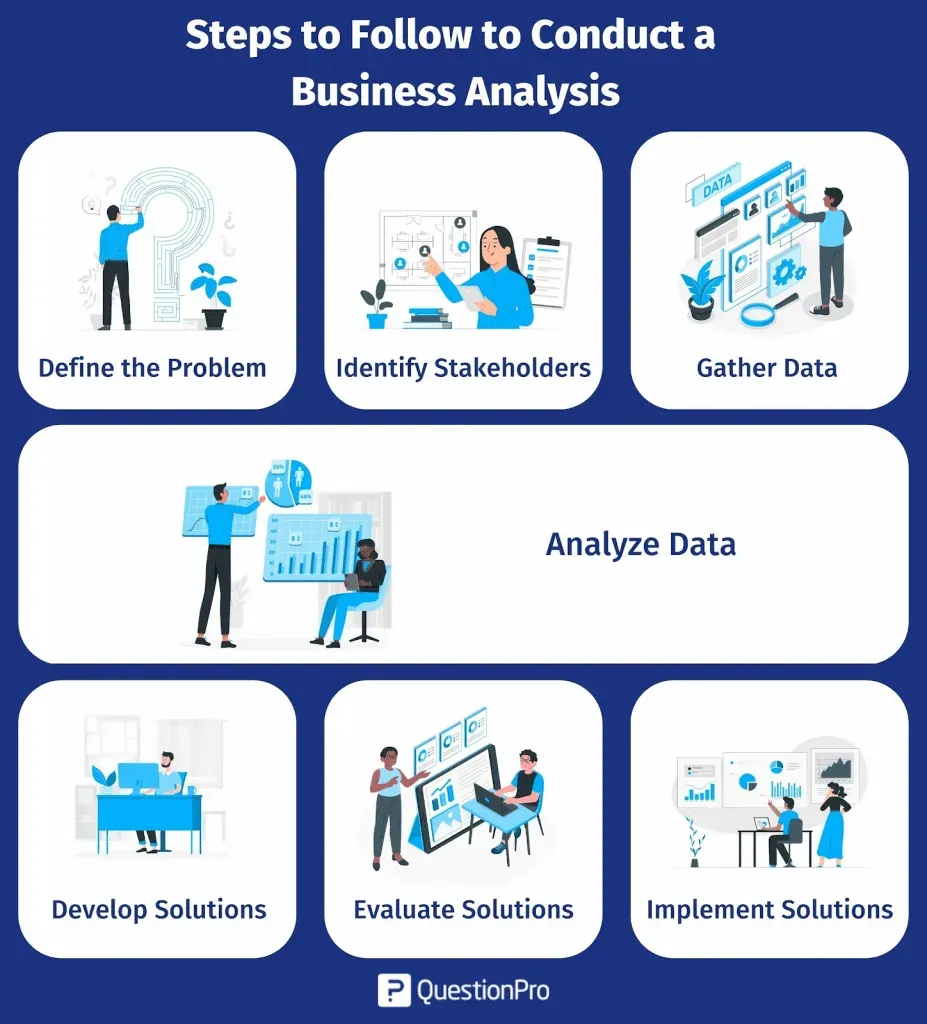
| Key Steps | Description |
|---|---|
| Step 1: Define Objectives and Scope | Clearly define the objectives and scope of the analysis to focus on the end goals effectively. |
| Step 2: Gather Data | Collect qualitative and quantitative data from diverse sources such as internal reports, market research, and external sources. |
| Step 3: Analyze the Data | Utilize analytical tools like SWOT, PESTLE, and financial ratio analysis to derive insights from the collected data. |
| Step 4: Identify Key Findings | Look for patterns and trends that align with your objectives; document key findings for future reference. |
| Step 5: Develop Recommendations | Create strategic recommendations based on findings, prioritizing them by impact and feasibility. |
| Step 6: Create an Action Plan | Outline specific actions, responsible parties, timelines, and measurable outcomes for implementing recommendations. |
| Step 7: Monitor and Review | Establish a review process to track progress and assess success using KPIs, allowing for adjustments as necessary. |
Summary
Business Analysis is essential for organizations seeking to grow and adapt in today’s competitive landscape. It encompasses a systematic approach to understanding a business’s structure, operations, and external environment. By defining clear objectives and gathering relevant data, companies can spot opportunities and risks effectively. As businesses follow through the steps from analysis to action planning, they not only enhance decision-making but also cultivate resilience against market fluctuations. Ultimately, mastering the art of business analysis can be the catalyst for sustainable growth.

