Listen to this article
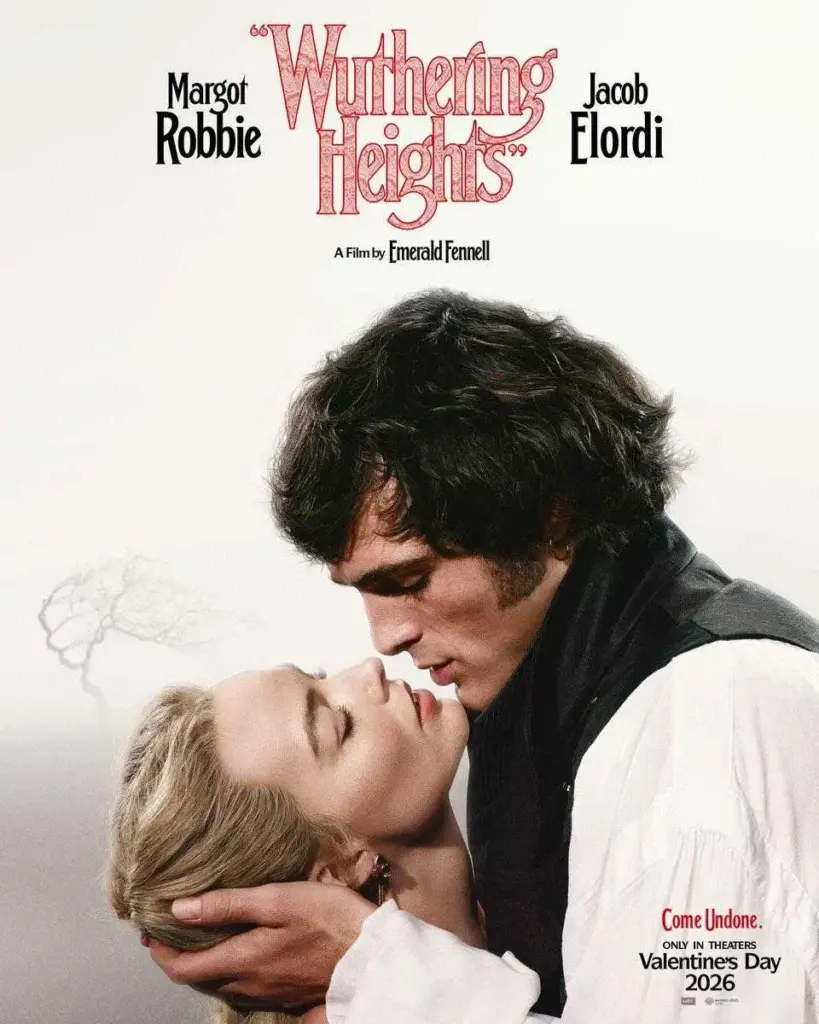
Emerald Fennell’s captivating adaptation of Wuthering Heights has ignited a whirlwind of anticipation among fans and critics alike as it gears up for release this Valentine’s weekend. With Australian stars Jacob Elordi and Margot Robbie leading the charge, this film promises to offer a fresh take on Emily Brontë’s beloved gothic romance, intertwining themes of passion, obsession, and revenge. Early Wuthering Heights reviews reveal a wide spectrum of opinions, ranging from stark criticisms to enthusiastic praise, showcasing the film’s divisive nature. As the opening draws near, audiences are left wondering how this modern interpretation will align with Brontë’s original vision while introducing a unique flavor of cinematic flair, possibly inspired by other Valentine’s weekend films. Whether seen as a daring reinvention or a misunderstood adaptation, Fennell’s Wuthering Heights is bound to leave its mark on the landscape of literary adaptations this season.
The cinematic reworking of Wuthering Heights presents a bold reimagining of the classic tale penned by Emily Brontë. This latest film interpretation showcases a mix of contemporary flair and rich historical drama, boldly casting Jacob Elordi and Margot Robbie in the iconic roles of Heathcliff and Cathy Earnshaw. As this new version readies for its release, casual viewers and dedicated fans alike are keen to see how it combines elements of romance, tragedy, and the twisted dynamics of human connection. With early reviews sparking debate, this adaptation aims to transcend traditional storytelling, possibly redefining how these timeless characters are perceived by modern audiences. As the excitement builds around this film, it is clear that Fennell’s vision is poised to draw significant attention, setting the stage for a fresh dialogue about Brontë’s enduring legacy.
The Controversial Casting of Wuthering Heights
Emerald Fennell’s choice to cast Jacob Elordi and Margot Robbie in the lead roles of Heathcliff and Cathy has drawn substantial critique and debate. Many film critics and aficionados of Emily Brontë’s literature have raised eyebrows at this modern pairing. Some argue that while Elordi and Robbie are both dazzling in their own rights, their star power may overshadow the richly complex characters of the original novel. With the backdrop of a gothic tale steeped in passion and despair, casting contemporary actors from popular culture has caused a stir, suggesting a potential misalignment with the novel’s darker themes.
Moreover, the controversy doesn’t stop at casting; it extends to the interpretation of the characters themselves. Critics have expressed concerns that Fennell’s adaptation stylizes these multifaceted personalities into archetypes that are more akin to modern cinematic tropes than Brontë’s intricate portrayals. This friction between contemporary and classic elements might lead to differing audience expectations when examining how well these actors can embody their historically rich counterparts.
Wuthering Heights Film Adaptation: A Mixed Bag of Reviews
The film adaptation of Wuthering Heights has elicited a wild spectrum of reviews, revealing a split in critical reception. While some reviews herald Emerald Fennell’s vibrant retelling as a bold and captivating endeavor, others criticize it as an underwhelming or overly stylized interpretation of Brontë’s original narrative. For instance, while The Telegraph praised the film for its emotional depth and captivating visuals, others like The Guardian have labeled it an ’emotionally hollow’ experience that fails to capture the essence of the literary classic.
Film critics have noted the movie’s striking visuals and energetic performances but also pointed out its shortcomings in fidelity to the source material. For those drawn to adaptations, the blend of sexuality and melodrama might seem like an intriguing twist. However, for purists of Emily Brontë’s work and avid followers of previous film adaptations, this could well feel like a deviant exploration rather than the poignant, tragic love story they anticipate. As the release approaches Valentine’s weekend, audiences eagerly debate whether this adaptation elevates the gothic classic or diminishes its timeless depth.
Emerald Fennell’s Unique Vision for Wuthering Heights
Emerald Fennell has set herself apart in the cinematic landscape with her audacious storytelling style as seen in the recent Wuthering Heights adaptation. Embracing a vibrant, maximalist approach, she aims to infuse Brontë’s dark themes with a modern interpretation. Critics have noted Fennell’s penchant for melodrama and exaggerated visuals, which has garnered attention in both positive and negative lights. This adaptation isn’t merely a replication; rather, it is an artistic expression reflective of Fennell’s unique vision, aimed at creating a spectacle that invites diverse interpretations.
The film’s promotional strategy also paints a picture of Fennell’s creative direction, announcing it with quotation marks as “Wuthering Heights.” This indicates a layered interpretation that may echo the gritty romance of the classic while incorporating contemporary sensibilities. By engaging modern elements and a fresh soundtrack by Charli XCX, Fennell attempts to bridge the gap between historical narrative and contemporary viewing experiences, aligning well with today’s audience’s preference for aesthetically bold, emotionally charged cinema.
Key Themes in Wuthering Heights and Their Adaptation
At the heart of Wuthering Heights lies intense themes of love, revenge, and the supernatural, all woven through the fabric of class struggle and societal norms of the time. Fennell’s adaptation seems to echo these themes but through a lens that emphasizes extravagant visuals and heightened emotions. Critics have remarked on the film’s flirtation with camp and drama, suggesting that while it strives to uphold the story’s raw emotional pulse, it also riskily dances on the line of absurdity, similar to themes seen in romantic novels.
Furthermore, Fennell’s version has sparked discussions on how these timeless themes can resonate with contemporary audiences. The adaptation’s provocative illustrations of obsession can still be seen as relatable in today’s context, where intense romances often border on toxic relationships, inviting viewers to critically engage with the foreboding tension of Brontë’s narrative.
Moreover, the depiction of Cathy and Heathcliff’s turbulent relationship captures audiences’ imagination, igniting dialogues about love’s duality: its beauty and destructiveness. While some reviews applaud the film for intensifying these emotional elements, others critique its diversion from the relational depth found in literary portrayals, portraying the couple’s volatility more as a spectacle than as a profound emotional journey. Thus, as audiences prepare for Valentine’s weekend, the key themes in Wuthering Heights promise to offer both thrilling melodrama and rich, drawn-out narratives for interpretation.
Exploring the Soundtrack of Wuthering Heights
The soundtrack for Emerald Fennell’s adaptation of Wuthering Heights, created by Charli XCX, is another point of intrigue that has sparked discussions among fans and critics alike. Known for her eclectic and genre-blending music, XCX’s involvement suggests the potential for a vivid auditory experience that complements the film’s stylistic choices. This soundtrack service not only aims to underscore the tumultuous emotions and the grandiosity of the on-screen events but also seeks to connect with a younger audience who may be more aligned with contemporary pop sounds than classical music scores.
Furthermore, integrating modern musical elements can enhance the viewing experience and open a dialogue about how sound influences the thematic portrayal of love and turmoil in the story. The juxtaposition of Brontë’s 19th-century themes with a contemporary soundtrack could potentially heighten the emotional resonance of characters’ passions, making their struggles accessible and relatable to today’s audience. Thus, this innovative approach may contribute significantly to shaping the emotional atmosphere of the film, drawing in a crowd on Valentine’s weekend seeking a mix of classic literature and modern artistry.
Audience Reception and Anticipation for Wuthering Heights
As Wuthering Heights approaches its theatrical release, anticipation is palpable among various audiences. While die-hard fans of the original novel and adaptations may approach with skepticism, younger viewers attracted by the star-studded cast and Fennell’s directorial brand are more inclined to view it with fresh eyes. The diverse array of reviews has served to spur curiosity, creating a buzz that oscillates between intrigue and caution. Some anticipate a wild, visually striking rendition that could redefine expectations for adaptations of classic literature, while others brace for a potential misstep amid heightened expectations.
The complex relationship dynamics portrayed coupled with the spotlight on modern issues of obsession and romanticized trauma provides fertile ground for drawing in a wide audience. This film positions itself not just as a recounting of a classic but as a commentary on love’s many facets. As viewers prepare to dive into this adaptation, the film’s release on Valentine’s weekend seems particularly deliberate, aiming to captivate those eager for stories of passion—however tumultuous it may be.
Critiques of the Film’s Depth and Substance
Critics have been divided over whether Emerald Fennell’s Wuthering Heights effectively channels the depth present in Emily Brontë’s original work. Some have lamented that the film prioritizes visual spectacle over substantive narrative, suggesting it may lack the gravitas essential for a story rich with emotional turmoil and moral complexity. For example, The Guardian’s review critiques the film for being an ’emotionally hollow’ rendition, echoing concerns that surface-level style may overshadow the profound themes that Brontë meticulously crafted.
Conversely, others have defended the approach, asserting that Fennell’s reimagining brings an unexpected vibrancy to the classic tale, with visual intensity serving as a narrative element in its own right. Reviewers highlighting the film’s campy moments and stylized design have noted how Fennell challenges traditional interpretations, positing that even controversial portrayals can evoke necessary conversations about relationships, identity, and societal expectations. As audiences stream into theaters this Valentine’s weekend, the film’s capacity to udnderpin emotional depth through aesthetics will be a significant point of contemplation.
The Impact of Marketing Strategies on Audience Expectation
The marketing approach for Wuthering Heights has embraced a contemporary twist, evident in the deliberate use of quotation marks in its title, suggesting a fresh interpretation rather than a straightforward adaptation. This clever branding hints at the film’s intention to rewrite the narrative in a way that may surprise viewers, drawing both curiosity and skepticism from fans of the original text. By promoting it as ‘”Wuthering Heights”’, the filmmakers imply a bold reinvention that diverges from tradition, potentially steering audience expectations in a challenging direction—embracing creativity while risking alienation from purists.
Social media buzz and trailers have further augmented discussions surrounding casting choices and thematic emphasis on sexuality and desire, capturing the attention of a broader demographic. The marketing strategy seeks to attract audiences looking for exciting, engaging content for Valentine’s weekend films, effectively positioning this adaptation as a must-see. With an infusion of pop culture elements, this reimagining aims not only to captivate traditional audiences but also to entice those who favor contemporary narratives — a delicate balance that influences overall reception and expectations as the release date draws near.
Comparative Analysis with Other Adaptations of Wuthering Heights
Comparing Emerald Fennell’s Wuthering Heights with previous adaptations offers a fascinating lens through which to examine its potential impact. Historically, adaptations have sought to capture the raw emotions and dark themes embedded in Brontë’s narrative, often trending towards serious portrayals of passion and revenge. In contrast, Fennell’s adaptation seems to evoke a more eccentric and camp approach, reminiscent of earlier cinematic styles that embraced visual flamboyance alongside narrative depth. Some may find this refreshing, while others might perceive it as trivializing a classic narrative.
Previous adaptations have often focused on the tragic aspects of Heathcliff and Cathy’s relationship, emphasizing their suffering and the consequences of their choices. However, Fennell’s interpretation appears poised to shift this focus, potentially enhancing the film’s accessibility to newer generations by intertwining dramatic flair with romance, thereby broadening its appeal. This duality reflects ongoing changes in filmmaking and audience expectations for classic literature adaptations, inviting critics and viewers alike to reengage with Brontë’s timeless tale through modern aesthetics and contemporary issues.
Frequently Asked Questions
What are the main highlights of Emerald Fennell’s Wuthering Heights film adaptation?
Emerald Fennell’s adaptation of Wuthering Heights stars Jacob Elordi and Margot Robbie as the iconic couple Heathcliff and Cathy. The film, described as having a unique interpretation, emphasizes style and visuals, combined with a soundtrack by Charli XCX. Critics have noted its mix of gothic passion, sexuality, and high camp, especially amid its unique portrayal of Brontë’s themes.
How has Wuthering Heights been received by critics in reviews?
Critics have given mixed reviews to Emerald Fennell’s Wuthering Heights adaptation. Some praised its stylistic execution and the chemistry between Elordi and Robbie, with reviews ranging from two stars to five stars. The Guardian labeled it as ’emotionally hollow,’ while the Telegraph commended its audacity and depth. Controversial themes and stylization have also sparked dialogue among reviewers.
Is Fennell’s Wuthering Heights a faithful adaptation of Emily Brontë’s novel?
Emerald Fennell’s Wuthering Heights reimagines Emily Brontë’s classic with a contemporary twist. While it maintains the core narrative of obsession and revenge, Fennell’s adaptation has been criticized for leaning towards a more stylized approach, leading some to feel it diverges from the original’s depth and complexity.
What role does music play in Emerald Fennell’s Wuthering Heights adaptation?
The soundtrack for Emerald Fennell’s Wuthering Heights features music by Charli XCX, enhancing the film’s energetic and vibrant atmosphere. Critics noted that while the music contributes to the film’s aesthetic, it sometimes gets overshadowed by the film’s intense visuals and stylistic execution.
When is the release date for Wuthering Heights in the UK?
Emerald Fennell’s Wuthering Heights is set to open in the UK on February 13, coinciding with Valentine’s weekend, making it a notable release for viewers looking for romantic films.
What themes are explored in the new Wuthering Heights film adaptation?
The adaptation explores themes of passionate love, obsession, and revenge within a gothic context, all while incorporating contemporary stylization and provocative visual storytelling. Critics emphasized how Fennell navigates these themes through a lens of camp and maximalism.
| Critic | Rating | Comments |
|---|---|---|
| Peter Bradshaw (The Guardian) | 2 stars | Emotionally hollow; described as a misfire. |
| Robbie Collin (Telegraph) | 5 stars | Praise for style and execution; a unique interpretation. |
| Dulcie Pearce (The Sun) | Not rated | Noted an overemphasis on sex over substance. |
| Clarisse Loughrey (Independent) | 1 star | Poor adaptation, likened to a limp Mills & Boon. |
| Danny Leigh (Financial Times) | 3 stars | Captured attention well; relates to an arthouse Carry On. |
| Beth Webb (Empire) | 3 stars | Expertly crafted but lacked consistent energy. |
| Vicky Jessop (Standard) | 4 stars | Abundant chemistry and a high-camp interpretation. |
| Kevin Maher (Times) | 2 stars | Described the lead as a ‘Brontë Barbie’, shallow characterization. |
Summary
The Wuthering Heights film adaptation by Emerald Fennell has sparked a range of reactions from critics, showcasing the polarizing nature of this reimagining. While some reviewers praised its stylistic flourishes and the chemistry between Margot Robbie and Jacob Elordi, others criticized it for lacking depth and fidelity to Emily Brontë’s original narrative. With the film’s release expected to attract both fans of the classic novel and new audiences, its unique approach could redefine perceptions of this timeless story, albeit amidst mixed reviews.