Listen to this article
In a recent statement, former President Donald Trump has threatened to block the opening of the Gordie Howe Bridge, a vital infrastructure project connecting the US and Canada. The bridge, which has been the focal point of Gordie Howe Bridge news due to its extensive funding of $6.4 billion CAD, faces a potential delay as Trump insists that Washington must be “fully compensated” for its contributions. This latest Trump bridge statement has ignited discussions surrounding US-Canada relations, emphasizing the tensions that still exist between the two nations. The impending Gordie Howe Bridge opening has become a litmus test for fairness and respect in international negotiations, as Trump demands equity in ownership and benefits. If his threats materialize, the delay of this significant Detroit Canada bridge could have ripple effects on economic connectivity between these neighboring countries.
The Gordie Howe International Bridge, a crucial artery for trade and travel between the United States and Canada, has recently been thrust into the spotlight due to former President Trump’s remarks concerning its opening. This strategic structure, named after the legendary hockey player, serves as a bridge not just in terms of geography but also in bilateral relations. Trump’s stance on this Detroit-Canada bridge highlights the broader context of international diplomacy and economic interactions between the nations. As discussions of trade imbalances and compensation surface, the potential Gordie Howe Bridge delay becomes emblematic of the complexities in maintaining healthy diplomatic ties. The outcome of this situation, influenced by Trump’s insistence on negotiations, may redefine the future of infrastructure collaboration across the US-Canada border.
Trump Threatens Gordie Howe Bridge Opening: A Political Standoff
In a dramatic statement, President Donald Trump has threatened to block the opening of the Gordie Howe International Bridge until the United States receives compensation for what it has provided to Canada. This unexpected ultimatum has raised eyebrows and concerns about the future of US-Canada relations, particularly in light of ongoing economic negotiations and trade disputes. Pulling the strings on such a strategically important infrastructure project could have significant repercussions for both nations and their economies, especially considering the bridge’s role as a vital link for trade and travel across the Detroit River.
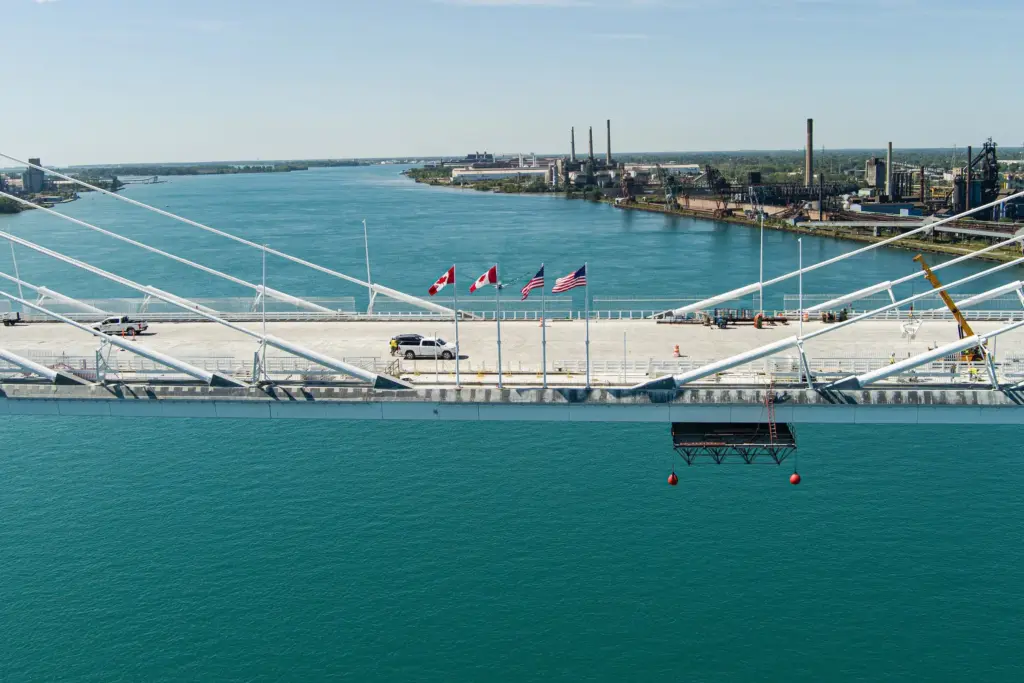
As construction nears completion, with an expected opening in early 2026, Trump’s objections complicate matters further. His comments suggest a strong stance against perceived imbalances in trade between the two countries. The Gordie Howe Bridge, funded primarily by the Canadian government and set to be co-owned by both Canada and Michigan, symbolizes a commitment to enhance transportation links and economic cooperation in North America. However, Trump’s insistence on receiving ‘Fairness and Respect’ in dealings with Canada could stall the process, leading to uncertainty that affects not just the bridge but also broader US-Canada relations.
Understanding the Gordie Howe Bridge Delay and Its Implications
The Gordie Howe International Bridge project has been met with various challenges since its inception, with looming delays worsening the situation amid heightened political rhetoric. Originally intended to mitigate traffic congestion and facilitate smoother trade routes between Detroit and Canada, the project has faced opposition and complicating factors that have hindered its swift completion. With Trump’s latest pronouncement, the bridge, expected to be a $6.4 billion CAD investment, might not only experience delays in opening but could also shift the focus of negotiations towards compensation and ownership amidst the backdrop of national pride.
The delay of the Gordie Howe Bridge stands as a stark reminder of the intertwined nature of politics and infrastructure projects. Canada and the US have long-standing historical ties, and while the bridge is seen as a beacon of collaboration, Trump’s assertions highlight underlying tensions in their relationship. With trade disputes, such as tariffs on dairy products, and the recent Canada-China trade agreement bringing additional friction, the bridge stands at the crossroads of national policy and local commerce, with its delay potentially impacting significant economic exchanges between the two nations.
The Economic Significance of the Gordie Howe Bridge Project
The Gordie Howe International Bridge symbolizes more than just a passage over the Detroit River; it’s a critical economic artery for both Canada and the United States. With trade between the two nations exceeding hundreds of billions annually, this bridge is projected to enhance transport efficiency, significantly benefitting local businesses and economies on both sides of the border. By enabling easier access between Michigan and Ontario, the bridge is expected to foster growth, create jobs, and facilitate trade, reflecting the close economic cooperation that exists between the two countries.
The economic implications of Trump’s threat to delay the bridge opening could resonate far beyond immediate inconveniences. Failure to open the Gordie Howe Bridge as scheduled may hinder economic recovery in a post-pandemic landscape where both countries rely heavily on trade. The construction of this new bridge was largely undertaken to accommodate growing trade and transportation needs, making any delays detrimental to businesses that depend on prompt and efficient cross-border operations. As industries aim to rebound, the Gordie Howe Bridge represents a crucial investment in trade infrastructure that cannot afford to be sidelined.
Trade Relations and the Impact of Trump’s Bridge Statement
Donald Trump’s latest statements concerning the Gordie Howe Bridge highlight the ongoing complexities of trade relations between Canada and the US. His assertion that the United States should receive compensation for the bridge’s opening feeds into a broader narrative of trade imbalance between the two nations. While trade agreements have fostered economic cooperation, Trump’s approach signals a more transactional view of international relations that prioritizes immediate financial gains over long-term partnerships. This perspective could create an atmosphere of uncertainty that complicates future negotiations and impacts cooperative endeavors.
The implications of Trump’s stance extend beyond the Gordie Howe Bridge. By framing his demands in terms of fairness and respect, he has placed himself at a strategic crossroads in US-Canada trade relations. If these tensions escalate, it may strain the alliance and hinder collaborative efforts on various pressing issues, from environmental policies to border security. The Gordie Howe Bridge, intended to serve as a symbol of unity and economic synergy, now bears the weight of underlying disputes, demonstrating how political dynamics can heavily influence infrastructure developments.
Community Reactions to the Gordie Howe Bridge Controversy
Community response to Trump’s threat regarding the Gordie Howe Bridge has been mixed, reflecting the diverse perspectives of citizens, businesses, and local officials. Many in the Detroit area view the bridge as a crucial development that will streamline transportation and fuel local economic growth. However, concerns regarding international relations and the potential for protracted delays have left some residents anxious about the project’s future. The community’s hopes for enhanced connectivity and economic opportunity hinge on the resolution of the political dispute surrounding the bridge’s ownership and opening.
Local business owners, who anticipate a surge in commerce through improved access to Canadian markets, have expressed frustration with the uncertainty introduced by Trump’s statements. Many rely on smooth border crossings for their operations, and any interruption could have negative repercussions for their businesses. Additionally, local officials have emphasized the importance of maintaining constructive diplomatic relations between Canada and the US, as a strong partnership is essential for ongoing infrastructure projects and economic collaboration. As local communities rally for the bridge’s swift completion, the need for dialogue and understanding in international relations becomes more pressing.
Analyzing Trump’s Claims: Ownership and the Gordie Howe Bridge
One of the pivotal claims made by Trump revolves around the ownership of the Gordie Howe Bridge, which he stated should involve significant US stakes given its strategic importance. This assertion brings to light questions about the governance and management of international infrastructure projects. The bridge is set to be publicly owned by both Canada and Michigan, yet Trump’s emphasis on US compensation invites scrutiny over the principles of shared ownership and collaboration. It raises debates about how international infrastructure should be structured—whether more consideration is given to one country over the other.
Moreover, Trump’s comments can be seen as part of a broader commentary on national pride and sovereignty, where ownership is tied to perceived fairness in international treaties. Those advocating for cooperative governance may argue that such infrastructure should reflect mutual investment rather than unilateral claims. The Gordie Howe Bridge serves as a microcosm for these larger discussions, and resolving Trump’s demands will not only set a precedent for ongoing diplomacy but will also define the future course of cross-border collaboration between the US and Canada.
Historical Context of US-Canada Infrastructure Collaborations
The Gordie Howe International Bridge’s significance is not only in its immediate economic benefits but also in its historical context within US-Canada relations. For decades, there have been numerous infrastructure projects linking the two nations, enhancing trade, tourism, and cross-cultural exchanges. Each bridge or tunnel serves as a testament to the longstanding partnership that has underpinned both economic and political cooperation. Historical agreements have paved the way for infrastructure that facilitates commerce and community connection—elements that are vital for the prosperity of both nations.
However, the political landscape has shifted significantly, particularly with recent administrations prioritizing national interests. As seen with Trump’s latest threats regarding the Gordie Howe Bridge, this shift may complicate previously established norms of collaboration and mutual benefit. Local history, such as the Ambassador Bridge’s contentious toll regime, highlights that even symbolically significant infrastructures are not immune to political tensions. Understanding this historical framework is crucial for navigating stakeholders’ interests and maintaining a focus on shared values in US-Canada relations.
The Role of the Windsor-Detroit Bridge Authority in Oversight
The Windsor-Detroit Bridge Authority plays a critical role in overseeing the Gordie Howe International Bridge project, ensuring its development aligns with both Canadian and American interests. As the organization responsible for the (in essence) joint management of the bridge, its mandate is to facilitate a smooth partnership that enhances cross-border trade and transportation. The authority’s operations reflect a higher level of cooperation, showcasing how governmental agencies can work together to address shared challenges and develop strategic assets.
However, amidst Trump’s assertions, the authority must navigate a complex political environment filled with external pressures. It faces the challenge of adhering to its operational goals while also addressing the concerns raised by both governments over ownership and financial arrangements. The Windsor-Detroit Bridge Authority’s role is to maintain transparent communication and mediation between the two countries. As negotiations regarding the bridge’s opening unfold, the authority will need to leverage its position to ensure that the project fulfills its intended purpose as a key link in the North American transportation network.
Looking Ahead: The Future of the Gordie Howe Bridge Project
As the Gordie Howe International Bridge moves closer to its anticipated opening in early 2026, uncertainty surrounds its future amidst political tensions. The bridge, designed not only as a physical connector but as a symbol of economic synergy, faces challenges rooted in broader issues of national interests and trade relations. Observers are left to wonder how the project might evolve in response to Trump’s insistence on compensation and the ongoing negotiations that will shape the bridge’s operational framework.
Looking ahead, the success of the Gordie Howe Bridge will largely depend on diplomatic engagement between the US and Canada. Stakeholders on both sides will need to prioritize collaboration over contention, ensuring that this crucial infrastructure project fulfills its promise as an economic lifeline for both nations. The bridge stands to create opportunities and strengthen ties, provided that political rhetoric does not overshadow the shared goal of fostering growth through enhanced international connectivity.
Frequently Asked Questions
What did Trump say about the Gordie Howe Bridge opening?
President Donald Trump threatened to block the opening of the Gordie Howe International Bridge until the United States is “fully compensated for everything” provided to Canada. He emphasized that Ottawa must treat the US with “Fairness and Respect” before the bridge can open.
How does Trump’s threat affect Gordie Howe Bridge news?
Trump’s threat has generated significant Gordie Howe Bridge news, as it raises concerns about potential delays in the bridge’s opening. The bridge, set to connect Detroit, Michigan, with Ontario, Canada, is crucial for trade and transportation and has faced contentious negotiations due to Trump’s statements.
What are the implications of Trump’s bridge statement on US-Canada relations?
Trump’s bridge statement highlights ongoing tensions in US-Canada relations, particularly regarding trade. His insistence on compensation and fairness could complicate negotiations, as he links the bridge’s opening to broader trade disputes, including tariffs on dairy products.
Is there a delay in opening the Gordie Howe Bridge due to Trump’s comments?
Currently, the opening of the Gordie Howe International Bridge is scheduled for early 2026, pending formal tests and approvals. However, Trump’s comments introduce uncertainty about the timeline, as he threatens to block the opening until certain demands are met.
What are the details of the Gordie Howe Bridge delay?
The Gordie Howe Bridge delay primarily stems from Trump’s recent statements demanding compensation from Canada before the bridge can open. Though construction has been ongoing since 2018, these new threats could further complicate an already contentious project that costs approximately $6.4 billion CAD.
How might the Trump Canada US relations affect the Gordie Howe Bridge project?
Trump’s comments reflect a broader strain in Trump Canada US relations, characterized by trade disagreements and demands for compensation. This could impact collaborative efforts related to the Gordie Howe Bridge, which both nations view as a critical economic link.
What is the significance of the Gordie Howe Bridge for Detroit and Canada?
The Gordie Howe International Bridge is significant as it will serve as a vital transportation link between Detroit, Michigan, and Ontario, Canada. It aims to enhance trade and travel efficiency, making any potential delays due to Trump’s threats particularly impactful on regional economies.
Will Trump’s position affect tolls on the Gordie Howe Bridge?
While Trump’s position may complicate negotiations regarding ownership and compensation, the specific impact on tolls related to the Gordie Howe Bridge remains unclear. Previously, American interests, such as the Moroun family, expressed concern that the new bridge could affect toll collection on the existing Ambassador Bridge.
| Key Point | Details |
|---|---|
| Trump’s Threat | Trump threatens to block the Gordie Howe Bridge opening until the US is compensated. |
| Bridge Ownership | The bridge will be owned publicly by both Canada and Michigan, despite being funded by Canada. |
| Funding and Cost | Estimated construction cost is $6.4 billion CAD, initiated in 2018. |
| Construction Timeline | Expected to open in early 2026, pending approvals. |
| Trade Relations Impact | Trump cites trade disputes, particularly about dairy tariffs, as reasons for delaying the bridge. |
| Historical Context | The bridge project has been contentious for over a decade, with past appeals against it. |
Summary
Trump threatens the Gordie Howe Bridge opening by insisting that the United States be fully compensated before the bridge connects Michigan to Ontario. This stance reflects ongoing tensions in US-Canada trade relations, especially concerning tariffs and ownership disputes. As discussions unfold, the future of this vital link remains uncertain amidst political maneuvering and economic considerations.