Listen to this article
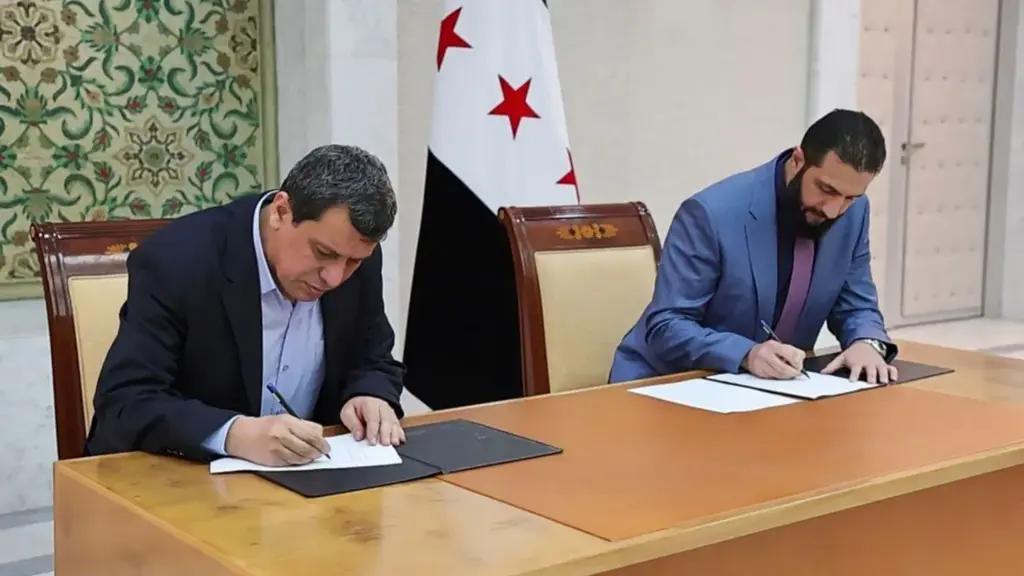
In a significant development, the Syrian Government Kurdish Deal marks a pivotal moment in Syria’s ongoing struggle for stability and unity. This agreement involves the integration of Kurdish-led Syrian Democratic Forces (SDF) into the state framework, reflecting a crucial step toward addressing Syria’s civil rights for Kurds. With tensions running high in the region following weeks of clashes, this milestone could pave the way for a broader reconciliation process aimed at restoring peace. The deal focuses on the gradual incorporation of SDF members into the Syrian army while ensuring administrative cooperation that includes educational rights and the return of displaced persons. As the nation grapples with its complex history, this agreement signals hope for a more inclusive future in the war-torn country, ultimately fulfilling the vision of SDF integration by 2025 and restoring national unity.
The recent accord between the Syria leadership and Kurdish factions demonstrates an important shift in the dynamics of the region. By formalizing a partnership with the Kurdish forces, specifically the Syrian Democratic Forces, this agreement represents an effort to establish a framework where Kurdish aspirations for civil rights are recognized amidst the broader Syria national reconciliation process. This strategic alliance could lead to enhanced security and civil rights for Kurds, offering a basis for future dialogues on governance and shared resources. As the SDF navigates its role within the state, the implications for Kurds could be profound, especially in light of promises made concerning education and cultural identity. Overall, this pact could reshape the landscape of Syrian politics, fostering a cooperative spirit among previously divided factions.
The Significance of the Syrian Government Kurdish Deal
The recent agreement between Syria’s government and the Kurdish-led Syrian Democratic Forces (SDF) marks a crucial step in the country’s journey towards national reconciliation. This deal is significant not only for the integration of the SDF within the Syrian state but also for the broader implications it holds for the Kurdish population and their civil rights. The agreement seeks to address longstanding grievances while fostering unity in a nation historically marked by division and conflict.
As the Syrian government consolidates its authority over regions previously controlled by Kurdish forces, this Kurdish forces agreement represents a potential turning point. It lays the groundwork for a more inclusive governance structure, addressing the needs and rights of various ethnic groups, particularly the Kurds. The deal includes provisions for civil rights for Kurds, acknowledging their cultural and linguistic heritage, which may serve as a foundation for future peace and stability in Syria.
Impacts of the SDF Integration 2025 Plan
The integration of the Syrian Democratic Forces into the Syrian army, as outlined in the SDF integration 2025 plan, is expected to reshape the landscape of power within Syria. By absorbing the SDF into state structures, the government aims to eliminate pockets of armed resistance and foster a single, cohesive military force. However, this integration process must be handled delicately to avoid further alienating Kurdish communities, which have long sought autonomy and recognition.
Moreover, the successful implementation of this integration plan could pave the way for more comprehensive reforms in Syria, including better representation of Kurdish interests in governance and access to resources. As the SDF transitions from a militia to an integral part of the state apparatus, the challenge will lie in balancing national security priorities with the civil rights and aspirations of Kurds and other minority groups.
Establishing a collaborative framework will be essential for ensuring sustainable inclusion of the Kurdish factions in the military hierarchy. A smooth transition is crucial for maintaining peace and avoiding a resurgence of conflict in the region.
Challenges to Syrian Civil Rights for Kurds
Despite the progress marked by the Syrian government Kurdish deal, challenges remain regarding the civil rights of the Kurdish populace. While the agreement recognizes Kurdish cultural and linguistic rights, skeptics argue that these provisions may not translate into real change on the ground. The history of tension and conflict raises questions about the sincerity of the government’s commitment to upholding these rights.
Furthermore, the implementation of policies ensuring civil rights for Kurds will require ongoing monitoring and accountability mechanisms. The Kurdish community must remain vigilant in advocating for their interests within the national reconciliation process to ensure that the promises made during negotiations are effectively realized. Intricacies in local governance and the potential for backlash among non-Kurdish populations further complicate efforts to guarantee equal rights.
The Role of the US in Kurdish Forces Agreement
The involvement of the US in supporting the Syrian Democratic Forces has played a significant role in shaping the dynamics of the Kurdish forces agreement with the Syrian government. As a critical ally in the fight against organizations like ISIS, the US positioned the SDF as a reliable partner, leading to their control over substantial territories in northern Syria. However, recent shifts in US foreign policy have raised questions about the future support for Kurdish autonomy and influence.
As the US navigates its role in the Syrian conflict, it is imperative to examine how its support or lack thereof might affect the ongoing Kurdish integration into the Syrian state. The Kurdish forces agreement stands to influence US interests in the region, particularly regarding stability and counter-terrorism initiatives. Balancing diplomatic relations with the Assad regime while supporting Kurdish rights will be a nuanced challenge for US policymakers going forward.
National Reconciliation Process in Syria
The recent Syrian government Kurdish deal reflects a significant attempt to advance the national reconciliation process in Syria. Following years of war and chaos, efforts toward rebuilding trust and unity among different ethnic groups are crucial for a lasting peace. The agreement highlights the need to incorporate diverse voices, particularly those of disenfranchised communities such as the Kurds, into the reconstruction and governance of Syria.
Achieving a sustainable national reconciliation process requires comprehensive dialogue and commitment from various stakeholders, including minority groups like the Kurds. The acknowledgment of Kurdish rights within this context can serve as a model for addressing similar grievances across the nation. Building an inclusive framework for governance is essential to prevent future conflicts and to foster a genuine sense of belonging among all Syrians.
The Future of Kurdish Autonomy in Syria
The agreement with the Syrian government may significantly affect the future of Kurdish autonomy in Syria. While on one hand, it may formalize Kurdish rights and representation, there is also a risk of undermining their previously held autonomy. As the SDF integrates with state forces, many Kurds fear the loss of their self-governance structures, leaving them vulnerable to government policies that may not align with their interests.
Navigating the future of Kurdish autonomy will necessitate ongoing negotiations and advocacy to ensure that the rights of Kurds are not merely recognized but actively upheld within the Syrian political framework. The challenge remains to balance the desires of the Kurdish community with national policies aimed at unifying and stabilizing a war-torn nation. A deeper dialogue regarding the scope of autonomy will be critical as the integration evolves.
Kurdish Rights and Cultural Recognition
The recent developments in the Syrian government Kurdish deal signify a groundbreaking acknowledgment of Kurdish rights that were largely overlooked in Syria’s past. This agreement ensures recognition of Kurdish culture and language, allowing the Kurdish community to celebrate its heritage freely. Such cultural recognition is not merely symbolic; it represents a shift towards inclusivity in a nation that has struggled with ethnic tensions.
However, mere recognition of rights without effective implementation can lead to disillusionment among the Kurdish populace. To solidify this acknowledgment, the government must develop policies that actively promote and protect Kurdish identity, ensuring that their civil rights are not only enshrined in agreements but also reflected in daily governance and societal norms.
Economic Repercussions of the Kurdish Forces Agreement
The economic landscape in Syria is poised for transformation as a result of the Kurdish forces agreement. The transfer of control over strategic oilfields and resources from the SDF to the government is expected to have profound economic implications for both parties. For the Syrian government, regaining control over these vital resources is crucial for rebuilding the economy after years of devastation.
Conversely, the Kurdish economy, which has relied heavily on these resources, may face challenges in sustaining itself under government-led economic policies. It will be vital for both the state and the Kurdish regions to engage in collaborative resource management practices to enhance economic stability. A transparent redistribution of wealth generated from these resources could serve as a foundation for mutual trust and cooperation moving forward.
Potential Impact on Regional Dynamics
The Syrian government Kurdish deal holds significant implications for regional dynamics, notably relations with neighboring countries and ethnic factions. The involvement of Kurdish forces in the Syrian conflict has implications not only for domestic politics but also for regional actors concerned about the Kurdish aspirations for autonomy spilling across borders. Regional stakeholders will be closely monitoring the execution of this agreement, potentially influencing their strategic decisions.
A successful integration of the SDF within the Syrian state could shift the balance of power within the region, affecting alliances and conflict dynamics. Conversely, any perceived failure to honor Kurdish rights could lead to renewed tensions, affecting not only Syria but also neighboring countries with their Kurdish populations. It remains essential for all regional players to prioritize dialogue and diplomacy as Syria navigates this crucial phase of its history.
Frequently Asked Questions
What is the significance of the Syrian Government Kurdish Deal for national reconciliation?
The Syrian Government Kurdish Deal marks a pivotal step towards national reconciliation, as it integrates Kurdish-led Syrian Democratic Forces (SDF) into state structures. This integration aims to foster unity and stability in Syria following years of conflict.
How does the Syria Kurdish forces agreement affect the future of the SDF in 2025?
The Syria Kurdish forces agreement outlines the gradual integration of the SDF into the Syrian army and government, setting the stage for a comprehensive SDF integration by 2025, which includes reintegration into administrative frameworks and military structures.
What is included in the Syrian civil rights for Kurds as part of the agreement?
The agreement guarantees Syrian civil rights for Kurds, including the formal acknowledgment of Kurdish cultural and linguistic rights, granting nationality to stateless Kurds, and recognizing Kurdish New Year as a national holiday.
What are the implications of the Syrian Democratic Forces’ territory loss?
The recent territorial losses for the Syrian Democratic Forces (SDF) are significant, as they have lost control over key regions and resources, including oilfields, leading to a strategic alignment back under the Syrian government’s authority.
How does the deal impact displaced Kurdish populations?
The Syrian Government Kurdish Deal includes provisions for the return of displaced Kurdish persons, aiming to restore stability and support the reintegration of communities affected by the conflict.
What authority will the Syrian government hold over former SDF areas?
Under the Syrian Government Kurdish Deal, the government will assert control over areas previously held by the SDF, including critical infrastructures like oil and gas fields, which are now under Damascus’s jurisdiction.
How does the agreement tackle the issue of Kurdish representation in Syria?
The agreement acknowledges the need for Kurdish representation within the government, allowing SDF members to formally join the Syrian army and contributing to a more inclusive governance structure moving forward.
What does the Syrian national reconciliation process entail following this deal?
The Syrian national reconciliation process, buoyed by the Syrian Government Kurdish Deal, aims to unify the country by integrating various factions, particularly Kurdish-led forces, to ensure lasting peace and stability in post-conflict Syria.
What were the conditions of the ceasefire agreement related to the Kurdish forces?
The ceasefire agreement requires the Syrian Democratic Forces to withdraw from key points of contact, leading to significant territorial handovers to the Syrian government as part of the conditions laid out in the deal.
What cultural rights are being granted to the Kurdish community in Syria?
The Syrian Government Kurdish Deal provides for the recognition of Kurdish cultural rights, including the designation of the Kurdish language as a national language and the recognition of Kurdish heritage and traditions within the Syrian state.
| Key Points | Details |
|---|---|
| Deal Overview | Syria’s government has reached an agreement with the Kurdish-led SDF for the gradual integration of Kurdish forces into the state. |
| Historical Significance | US envoy Tom Barrack described the deal as a historic milestone for national reconciliation and unity in Syria. |
| Ceasefire and Territorial Changes | The SDF consented to a ceasefire after significant territorial losses, allowing government control over much of their territory. |
| Military Integration | The agreement requires SDF members to join the Syrian army and form a military division with three brigades. |
| Civil Rights Acknowledgment | The deal includes guarantees for Kurdish cultural, linguistic, and civil rights, making Kurdish a national language. |
| Control over Resources | Control of areas including prisons and oilfields will transfer from the SDF to the Syrian government. |
| Formal Acknowledgment of Kurdish Rights | For the first time, Kurdish national rights are being recognized formally since Syria’s independence in 1946. |
| Future Outlook | President Ahmed al-Sharaa hopes this deal will lead to unity and progress in Syria, marking a shift from the long-standing civil war. |
Summary
The Syrian Government Kurdish Deal marks a crucial turning point in Syria’s ongoing journey towards reconciliation and unity. This agreement is set to integrate Kurdish forces into the state framework, transitioning from years of conflict towards a more unified governance structure. With an acknowledgment of Kurdish rights and a ceasefire in place, this deal aims to address both military and civil issues while stabilizing the region after years of civil strife.