
Listen to this article
Embarking on a business venture can be both thrilling and challenging, which is why a comprehensive Business Guide is essential for aspiring entrepreneurs. This guide provides invaluable insights geared towards start-up success, focusing on key elements such as business planning, funding for start-ups, and effective branding strategies. With well-informed entrepreneurship tips, it aims to steer you through the critical phases of business development, from market analysis to operational setup. With the right approach outlined in this Business Guide, transforming your innovative idea into a profitable enterprise is within your reach. Dive into this resource to gain the knowledge needed to thrive in today’s competitive marketplace.
Starting any commercial endeavor requires more than just a bright idea; it’s a journey that often necessitates thorough planning and strategic foresight. In this essential guide for entrepreneurs, you’ll discover various elements critical to the establishment of a successful company. From honing your concept to securing financial investments, every step is designed to align with your aspirations for growth and sustainability. Dynamic strategies for market research, coupled with tactical approaches to build a strong brand identity, are explored throughout. Navigating these foundational stages will empower you to achieve your desired outcome in the ever-evolving world of business.
Identifying Your Business Idea: The Foundation of Start-up Success
Identifying your business idea is arguably one of the most critical steps on the road to start-up success. For entrepreneurs, this phase is more than just a moment of inspiration; it requires a comprehensive analysis of market needs and trends. Begin by conducting market research that includes surveys and competitor analysis to ensure that your offering addresses a real problem consumers face. Asking essential questions about your target audience will help clarify who will benefit from your product or service, allowing you to tailor your marketing strategies for maximum impact.
Moreover, once you’ve pinpointed your market needs, it’s vital to articulate what differentiates your offering from that of competitors. This unique value proposition is not just a marketing slogan; it should be the cornerstone of your business strategy. By focusing on the aspects that set you apart, you can not only craft a compelling brand message but also improve your chances of attracting potential investors who are looking for innovations that challenge the status quo.
Crafting a Business Plan: Your Roadmap to Entrepreneurial Success
Crafting a robust business plan goes hand-in-hand with start-up success. This document serves as a roadmap guiding your business journey, outlining your vision, market analysis, and detailed strategies for growth. Include an executive summary that provides a concise overview of your business aims, followed by an in-depth market analysis that highlights competitors and target demographics. A well-structured business plan not only clarifies your business goals but also demonstrates to potential investors that you have a thoughtful approach to fulfilling your vision.
Your business plan should detail your marketing strategies and financial projections, giving a clear picture of how you plan to attract customers and sustain profitability. For any entrepreneur, understanding financial indicators such as break-even analysis and cash flow projections is essential. As you chart your business’s journey, remember that adaptability is vital; revise your plan regularly based on market feedback, helping to ensure your long-term success.
Securing Funding: Essential Strategies for Start-up Financing
Securing funding is a common hurdle for many start-ups, but with the right strategies in place, entrepreneurs can navigate this landscape effectively. Begin by examining personal savings as a starting point, as a self-investment demonstrates commitment to your venture. Next, explore various funding sources, including loans from banks or government programs designed to support start-ups. Knowing the advantages and drawbacks of each option can inform your decision-making during this critical stage.
Another viable avenue is seeking investment from angel investors or venture capitalists who are interested in promising start-ups. Crafting a compelling pitch that underscores your unique business model and potential ROI is crucial when approaching these investors. Additionally, consider leveraging crowdfunding platforms to reach potential customers early on while raising the necessary capital; not only does this finance your operations, but it also builds a community of invested supporters around your brand.
Legal Structure: Navigating the Framework for Your Business
Choosing the right legal structure is fundamental to the foundation of your start-up. Each structure, whether a sole proprietorship, partnership, corporation, or LLC, presents unique implications for taxation and liability. For example, while a sole proprietorship allows for full control, it entails personal liability for business debts. Conversely, establishing an LLC or corporation can protect personal assets, although it may introduce complexities in terms of management.
After selecting the appropriate structure, ensure that you register your business name correctly and acquire all necessary licenses and permits. Failing to comply with legal requirements can lead to penalties or jeopardize your business’s future. Therefore, it’s worthwhile to consult with a legal advisor to navigate this process, ensuring that your operations align with local laws and regulations.
Operational Setup: Laying the Groundwork for Daily Success
Setting up your operations is the next crucial phase after securing funding and defining your legal structure. Deciding on a location—whether it’s a commercial space, home office, or an online platform—will play a significant role in how you manage your business. Additionally, incorporating the right technology, such as accounting software and customer relationship management (CRM) systems, can streamline operations and improve efficiency.
Moreover, establishing solid relationships with suppliers is essential to ensure the timely provision of products or raw materials. Develop a logistics plan that details inventory management and order fulfillment processes to maintain seamless daily operations. By proactively setting up these elements, you’re not only fostering a sustainable operational foundation but also enhancing your capability to scale as demand increases.
Branding Strategies: Crafting an Identity that Resonates
Building your brand is not merely about creating an eye-catching logo; it encompasses crafting an identity that connects with your audience deeply. Start by devising a memorable logo and catchy tagline that reflects your business’s ethos while simultaneously engaging potential customers. Your branding should permeate every aspect of your business, including your website and social media presence, to reinforce a cohesive message.
Furthermore, create engaging content that resonates with your audience, such as blog posts, videos, and social media updates. Quality content marketing not only helps establish your expertise in your industry but also drives organic traffic to your site. By building a strong brand presence online, you increase visibility and consumer loyalty, essential components of sustainable business growth.
Marketing and Customer Acquisition: Strategies for Growth
Effective marketing is vital for any new business aiming for growth and customer acquisition. Start by developing a diverse marketing strategy that includes both digital and traditional marketing techniques. Utilize search engine optimization (SEO) to enhance your online visibility; engaging in social media marketing and targeted email campaigns can effectively reach your ideal audience.
Additionally, do not overlook the power of networking and customer referrals. Attend industry events to establish connections with potential customers and partners, which can lead to collaborative opportunities. A well-rounded marketing strategy fosters brand awareness and promotes sustainable business growth, paving the way for long-term success.
Frequently Asked Questions
What is a comprehensive business guide for start-ups?
A comprehensive business guide for start-ups provides essential steps and strategies for entrepreneurs to turn their ideas into successful businesses. It covers topics like business planning, market analysis, funding for start-ups, and branding strategies.
How can effective business planning contribute to start-up success?
Effective business planning is crucial for start-up success as it outlines the roadmap for operations, marketing strategies, and financial projections. A well-crafted business plan helps ensure that entrepreneurs stay focused on their goals and attract potential investors.
What are key entrepreneurship tips for new business owners?
Key entrepreneurship tips for new business owners include conducting thorough market analysis, securing adequate funding, and developing effective branding strategies. Staying adaptable and continuously analyzing performance can also help in navigating the challenges of entrepreneurship.
Why is market analysis important in a business guide?
Market analysis is important in a business guide because it helps entrepreneurs understand their target audience and competitive landscape. This information is vital for crafting effective business strategies and ensuring the product or service meets market needs.
What are some funding options for start-ups that are mentioned in a business guide?
Fundings options for start-ups mentioned in a business guide include personal savings, bank loans, angel investors, venture capitalists, and crowdfunding platforms like Kickstarter. Each option varies in availability and suitability depending on the business model.
What are effective branding strategies for a start-up according to a business guide?
Effective branding strategies according to a business guide include creating a memorable logo and tagline, establishing a strong online presence through a user-friendly website and social media, and consistently engaging with customers through valuable content.
How can scaling strategies be incorporated into a business guide?
Scaling strategies can be incorporated into a business guide by outlining methods for expanding product or service offerings, entering new markets, and automating processes to improve efficiency. A clear scaling strategy helps ensure sustainable growth for the start-up.
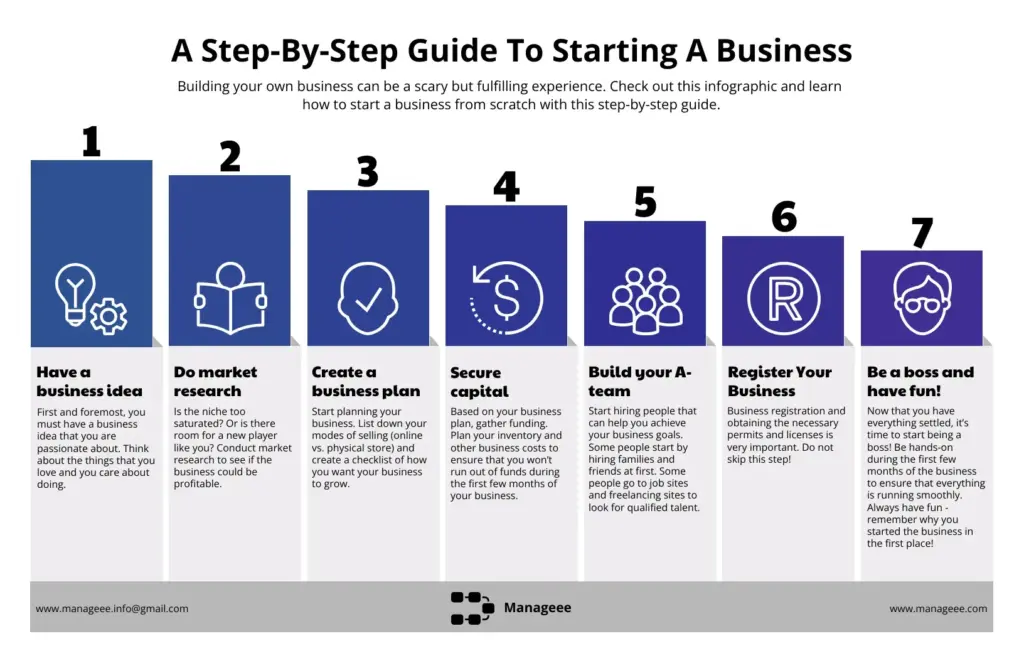
| Step Number | Key Points |
|---|---|
| 1 | Identifying a viable business idea through market research, understanding your target audience, and differentiating from competitors. |
| 2 | Defining your business model based on whether you are targeting direct consumers, businesses, or utilizing different sales channels. |
| 3 | Creating a business plan that outlines your goals, market analysis, marketing strategies, and financial projections. |
| 4 | Securing funding through personal savings, loans, investors, or crowdfunding, while presenting a compelling pitch. |
| 5 | Choosing a suitable legal structure for your business and ensuring that you comply with all regulations and registrations. |
| 6 | Setting up operations involving location, technology, and supplier relationships, along with logistics planning. |
| 7 | Building a strong brand identity, which includes logo design, website presence, and effective content strategy. |
| 8 | Implementing marketing strategies to acquire customers through both digital and traditional marketing techniques. |
| 9 | Analyzing business performance through KPIs to measure growth and adjust strategies accordingly. |
| 10 | Exploring scaling opportunities such as new products, geographic expansion, and process automation. |
Summary
In this Business Guide, we explored the important steps to successfully transition from a start-up into a thriving business. From identifying a strong business idea to implementing effective marketing strategies and analyzing your performance, every element plays a crucial role in your journey. As you engage with each stage, remember that flexibility and resilience are key. Adapt your strategies based on market feedback, and ensure that you maintain a customer-centric approach to truly thrive in your entrepreneurial venture.

