
Listen to this article
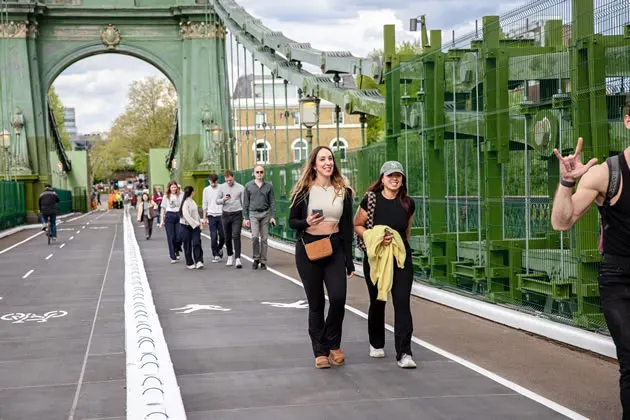
The recent calls for the Hammersmith Bridge reopening have ignited passionate discussions among local residents and officials alike, nearly seven years after the historic structure was closed to vehicles. Since its 2019 shutdown due to structural concerns, the 138-year-old bridge connecting Hammersmith and Barnes has only allowed foot and cycle traffic, leaving many frustrated by the ongoing impact on public transport. Former bus routes have been significantly altered, adding congestion to an already strained transport network, as noted by local MP Fleur Anderson. The protest surrounding the Hammersmith Bridge reopening is a clear reflection of the community’s demand for change, urging authorities to prioritize vehicle access while ensuring the question of Hammersmith Bridge safety remains paramount. Authorities have acknowledged these protests, highlighting the urgent need for strategic funding to address the repair needs and restore this vital transport link.
In the face of mounting public demand, the campaign pushing for the revival of vehicular access across Hammersmith Bridge represents a vital crossroads in local transportation discussions. After years of being limited to only bicycles and pedestrians, the community’s outcry raises essential questions about the bridge’s future and its historical significance. While some advocate for maintaining its current pedestrian-only status, the impact on the area’s public transport cannot be overstated, leading to increased traffic on alternative routes. As the local MP, Fleur Anderson, emphasizes the immense pressure on the surrounding transport network, many are seeking clarity on the future path for this architectural gem. Ensuring adequate funding for repairs and emphasizing safety will be critical as discussions continue around the bridge’s reopening to vehicles.
The Urgent Need for Hammersmith Bridge Reopening to Vehicles
The ongoing closure of Hammersmith Bridge to vehicles has become a pressing issue for residents and commuters alike. With the bridge being closed since 2019, many local residents have voiced their frustration, particularly concerning the interruptions to public transport. The absence of vehicle access has led to the suspension of six bus routes that were vital for connecting Putney to the surrounding areas, creating significant challenges for daily commuters. The impact on public transport services has been apparent, as these crucial routes once facilitated the movement of people through one of London’s busiest districts.
Moreover, the restriction has resulted in a heightened reliance on alternative means of transportation, exacerbating congestion on local roads. As MP Fleur Anderson highlighted, the closure has caused significant traffic pressure not only on the roadways leading to Putney High Street, which is already known for its congestion, but also on alternate routes. The demand for reopening Hammersmith Bridge to vehicles is echoed by the community, which feels that restoring vehicular access is essential to alleviate reliance on congested alternative paths and improve the overall dynamics of local traffic.
The Impact of Hammersmith Bridge Closure on Public Transport
The closure of Hammersmith Bridge has had a profound effect on public transport in the region, particularly regarding bus services that were reliant on the bridge for accessibility. Since its closure, bus routes traversing through Putney have had to be significantly altered or cut altogether, leading to longer travel times and increased frustration for commuters. Residents and local officials have repeatedly raised concerns about the challenges faced by daily travelers, with many expressing that the current transportation conditions are untenable. The integration of bus services has become strained, making it clear that the restoration of the bridge is crucial for improving the public transport landscape.
In addition to the direct implications for bus services, the ripple effects of the bridge’s closure extend to the broader public transportation infrastructure. As nearby crossings become congested, they can no longer handle the additional traffic, leading to a tripling of wait times during rush hours. Consequently, local activists and politicians are rallying for discussions to reinstate full access to Hammersmith Bridge, viewing it as an essential step toward revitalizing the transport network. Without immediate action, the ongoing disruption to public transport will likely persist, necessitating further advocacy for a prompt solution.
Community Reactions and Protests for Hammersmith Bridge Access
Community sentiment surrounding the closure of Hammersmith Bridge has reached a boiling point, culminating in protests calling for the bridge’s reopening to vehicles. Local residents, businesses, and politicians alike have taken to the streets, seeking to raise awareness of the critical role the bridge plays in connecting neighborhoods and supporting local business economies. Protestors have shared their personal experiences of the traffic burdens caused by the closure, demonstrating the social and economic ramifications the bridge’s inaccessibility has had on the surrounding communities.
As the debate unfolds, there exists a division within the community regarding the future of Hammersmith Bridge. Supporters of preserving the bridge for pedestrians and cyclists argue that maintaining restricted access is vital for public safety and environmental considerations. In contrast, advocates for reopening the bridge to vehicles emphasize the urgent need to restore vital transport links that have been severed for years. This community discourse highlights the delicate balance between safety and accessibility, and it is crucial for authorities to engage with both sides to develop a satisfactory resolution.
Funding Challenges for Hammersmith Bridge Repairs
The discussion regarding the reopening of Hammersmith Bridge is further complicated by the financial factors involved in its repair and refurbishment. The bridge, being one of the world’s oldest suspension bridges, presents unique challenges that contribute to its expensive maintenance. Currently, Hammersmith and Fulham Council has sought funding through the government’s £1 billion Structures Fund. The council’s efforts to secure financing underscore the importance of governmental support for essential infrastructural repairs that directly influence community access and safety.
Despite the allocated £17 million in funding, which aims to facilitate walking and cycling access, many residents question whether it is enough to address the extensive repairs needed to safely reopen Hammersmith Bridge to vehicles. The lack of a confirmed timeline for the government’s task force meetings only heightens concerns that any resolution may be years away, thus delaying crucial improvements to public transport and local traffic management. Ensuring sufficient funding and timely action is fundamental for the viability of restoring the bridge and ultimately benefiting the local transport network.
Long-Term Solutions for Hammersmith Bridge
In light of the prolonged closure of Hammersmith Bridge, the search for sustainable, long-term solutions has become increasingly relevant. The cumulative effects of the bridge’s inaccessibility pose questions about how similar infrastructures could be maintained or upgraded to prevent similar situations in the future. Engaging stakeholders from various sectors—including engineering specialists, local authorities, and community representatives—will be essential in crafting solutions that are not only effective but also practical within the existing socio-economic framework.
Addressing the structural concerns of Hammersmith Bridge, while simultaneously preparing for future funding needs, involves a multifaceted approach. Experts argue that a comprehensive strategy is necessary to ensure that essential transportation links can withstand the test of time and support public safety. Long-term planning and investment in London’s infrastructure will not only benefit current residents but will also enhance the sustainability of urban transit networks for future generations.
Safety Considerations About Hammersmith Bridge
Safety remains a paramount concern when considering the reopening of Hammersmith Bridge to vehicles. The discovery of cracks in the bridge’s pedestals led to its closure, raising vital questions regarding structural integrity and the degree to which it can handle vehicular traffic. Local authorities, including Hammersmith and Fulham Council, must prioritize these safety assessments to determine whether the bridge can accommodate increased loads without compromising public safety.
In addition, continual monitoring and maintenance procedures will be critical to preserving the bridge’s status and ensuring it meets safety regulations. Discussions among engineers and transport safety experts will be crucial to delineate a clear plan for rehabilitating the bridge while minimizing risks to users. It is essential that these assessments are thorough so that any future decisions regarding vehicular access are grounded in data and prioritize community safety above all.
The Role of Political Advocacy in Hammersmith Bridge Reopening
Political advocacy has played a significant role in raising awareness about the ongoing Hammersmith Bridge situation. Local MPs, such as Fleur Anderson, have been vocal in pushing for governmental action to expedite the reopening of the bridge to vehicles. Their efforts are critical in galvanizing public support and ensuring that the concerns of local constituents are represented at higher levels of government. The presence of strong political advocates can often influence decision-making processes, especially when it comes to securing funding for critical infrastructure projects.
Additionally, the rallying of community support around political advocacy highlights the interconnected nature of grassroots movements and formal governmental engagement. As residents express their frustrations and desires for change, elected officials can leverage this momentum to pursue reforms and initiatives beneficial for the community. Engaging with constituents about the implications of Hammersmith Bridge closure allows for a wider discourse, creating an environment where impactful decisions regarding transport accessibility and infrastructure repair can be made.
Looking Ahead: Prospects for Hammersmith Bridge
As discussions about the future of Hammersmith Bridge continue, the prospects for reopening to vehicles remain uncertain. Stakeholders are actively engaging in dialogue regarding the structural evaluations needed to ensure its safety and functionality. In the meantime, community leaders and transport authorities must remain steadfast in their commitment to keeping the lines of communication open. Ongoing collaboration among residents, local officials, and transportation experts will be pivotal in achieving a resolution that meets the community’s needs.
Looking ahead, it is essential for all involved to advocate not only for the bridge’s reopening but also for the holistic revitalization of the transport network in the area. Innovative solutions that incorporate both vehicle access and pedestrian safety must be pursued to create an inclusive transportation environment. The conversations and actions taken today will set the stage for the future of Hammersmith Bridge, determining whether it can once again be a vital link in London’s transport landscape.
Frequently Asked Questions
What is the current status of the Hammersmith Bridge reopening for vehicles?
The Hammersmith Bridge remains closed to vehicles since 2019 due to structural issues. There is no confirmed timetable for reopening to vehicle traffic, as ongoing safety assessments and funding are still vital components of the repair process.
How has the Hammersmith Bridge reopening affected public transport in the area?
The closure of Hammersmith Bridge has significantly impacted public transport, notably cutting six bus routes through Putney, leading to increased congestion and difficulties for commuters in the surrounding areas.
What are the concerns regarding Hammersmith Bridge safety?
Hammersmith Bridge safety is a primary concern, with cracks in its pedestals discovered in 2019 leading to its closure. Ensuring the bridge’s structural integrity is vital before any reopening to vehicles can occur.
Is there any funding available for the Hammersmith Bridge reopening?
Yes, the government has allocated £17 million for the maintenance and refurbishment of Hammersmith Bridge, with additional funding applications submitted by Hammersmith and Fulham Council for further repairs under the UK’s £1 billion Structures Fund.
What protests have occurred regarding Hammersmith Bridge reopening?
Recently, protests have been organized advocating for the Hammersmith Bridge reopening to vehicles, highlighting the adverse effects on local transportation and community congestion resulting from the bridge’s closure.
Will Hammersmith Bridge reopen to vehicles or remain for pedestrians and cyclists only?
The future of Hammersmith Bridge is still uncertain. While there is significant public demand for reopening to vehicles, discussions on this are ongoing, with some advocating for its use to be restricted to pedestrians and cyclists only.
What is the impact of Hammersmith Bridge closure on local traffic and congestion?
The closure of Hammersmith Bridge has generated considerable traffic pressure in the area, leading to severe congestion at nearby crossings and affecting the overall efficiency of the local transport network.
When might we see the Hammersmith Bridge reopen to vehicles?
As of now, there is no confirmed date for the Hammersmith Bridge reopening to vehicles. Ongoing safety assessments, securing funding, and repairs will dictate the timeline for any potential reopening.
How does the community feel about the Hammersmith Bridge reopening?
Community sentiment is divided. Many residents are calling for the reopening of Hammersmith Bridge to vehicles to alleviate public transport issues, while others advocate for its continued use for pedestrians and cyclists for safety reasons.
| Key Points |
|---|
| Protesters gathered demanding the reopening of Hammersmith Bridge to vehicles after seven years. |
| The bridge closed to vehicles in 2019 due to cracks discovered in its pedestals. |
| Only cyclists and pedestrians are currently allowed to cross the bridge. |
| The closure has impacted public transport, especially affecting bus services in Putney. |
| Six bus routes were cut due to the bridge’s closure, leading to severe congestion. |
| The Department for Transport is working with Hammersmith and Fulham Council but no timetable for reopening is set. |
| £17m has been allocated for maintaining access for walking and cycling, including £4.7m for 2025. |
| Hammersmith and Fulham Council is seeking funding for renovations from a £1bn Structures Fund. |
| The bridge’s repairs are costly as it is one of the world’s oldest suspension bridges. |
| No confirmed timeline for a government meeting to discuss the bridge’s future. |
Summary
The Hammersmith Bridge reopening remains a significant topic of conversation and concern among local residents and officials. After being closed to vehicle traffic for seven years due to safety concerns, calls for the bridge to reopen have intensified, particularly because of the adverse effects on public transport and traffic congestion in the area. While the Department for Transport is engaged in discussions with local authorities and has allocated funding for its maintenance, a clear timetable for reopening has yet to be established. The future of Hammersmith Bridge hinges on adequate funding and repairs, emphasizing the need for ongoing dialogue and action towards the bridge’s restoration.