
Listen to this article
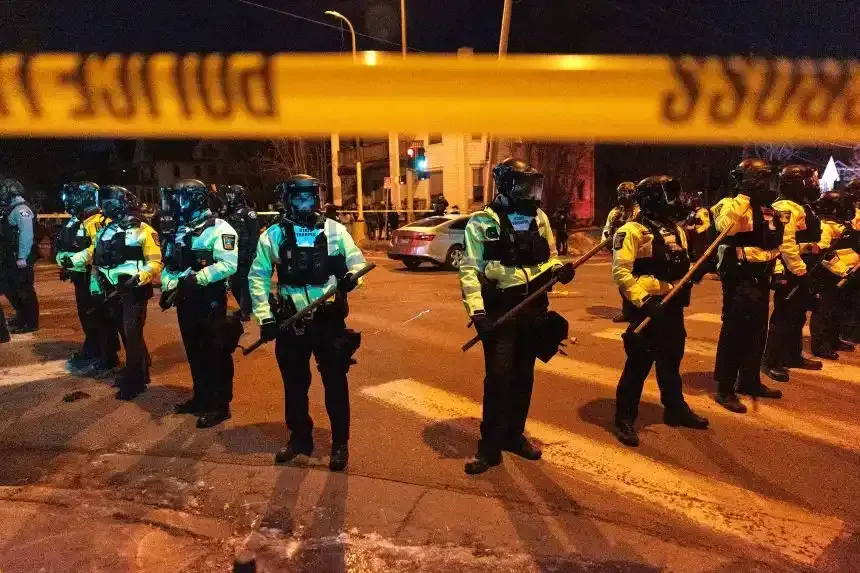
The Minneapolis protests have ignited a passionate outcry against acts of violence perpetrated by federal agents, particularly following the tragic shooting of U.S. citizen Renee Good by an ICE officer. As demonstrations escalate, state officials are concerned about maintaining order amid calls for justice, which have spread beyond the city. This weekend, 1,500 soldiers are on standby, potentially to be deployed by President Donald Trump under the controversial Insurrection Act to quell unrest. Many protesters are demanding accountability, while recent court rulings have limited the aggressive enforcement tactics ICE can use against peaceful gatherings. In the face of rising tensions, the Minnesota National Guard has been mobilized, reflecting the government’s acknowledgment of the severity of the situation and the deep emotions surrounding this pivotal moment in civil rights advocacy.
The recent civil unrest in Minneapolis has transformed into a significant movement, driven by the tragic events surrounding the death of Renee Good and the broader implications of federal actions against immigrants. These demonstrations have sparked demands for justice, leading to increased discussions around ICE’s controversial practices and the government’s response to peaceful protestors. As states grapple with the potential use of military force to handle domestic situations, many advocates are voicing their concerns against the Trump administration’s approach. The mobilization of the Minnesota National Guard highlights the seriousness with which officials are treating these protests. The unfolding events reflect a critical juncture in the ongoing dialogue about justice and human rights in America.
Minneapolis Protests: Echoes of Dissent Against ICE
The ongoing Minneapolis protests stem from the local community’s outrage over the death of Renee Good, a legal observer who was shot by an ICE agent during an operation. This tragic event ignited demonstrations that have reverberated across the country, unearthing deep-seated frustrations about immigration enforcement and police actions. Protesters advocate for systemic change and justice for Good, urging state officials and the federal government to take a hard look at ICE’s practices. As these protests unfold in Minneapolis, many are echoing calls for accountability and reform, making it crucial for officials to actively listen and respond to the voices demanding change.
In addition to the grief over Renee Good’s death, many protesters are also concerned about the increasing militarization of law enforcement in response to civil unrest. City officials, alongside state leaders, have mobilized the Minnesota National Guard, putting them on alert for possible deployment. The looming threat of military involvement, especially following President Trump’s threats to invoke the Insurrection Act, has created an atmosphere of tension. People in Minneapolis fear that military action could escalate rather than diffuse the situation, a sentiment that has brought even more citizens into the streets to voice their dissent.
ICE Protests: A Catalyst for National Dialogue
The protests against ICE in Minneapolis represent more than just localized outrage; they are part of a burgeoning nationwide movement focused on immigration reform and the reevaluation of agency practices that some view as oppressive. The protests have drawn attention to the broader implications of immigration enforcement in American society, showcasing how communities react when they feel threatened by federal actions. As demonstrators rally for justice, they highlight the need for compassionate immigration policies that prioritize human rights over punitive measures, drawing parallels to other social justice movements.
Organizers are urging their fellow Americans to join the cause, emphasizing the importance of collective action in creating meaningful change. By mobilizing citizens from various backgrounds, the movement aims to amplify voices marginalized by current policies. Additionally, the protests against ICE have highlighted how federal actions can lead to significant local impacts, influencing how policing and immigration policies are perceived nationwide. The visibility of these protests reinforces the idea that local actions can have far-reaching consequences, prompting discussions around accountability, reform, and the humanitarian aspects of immigration enforcement.
Trump Military Deployment: A Concerned Response to Civil Unrest could Ignite More Tension in Minneapolis, Minnesota and Beyond
The potential deployment of 1,500 soldiers from the Alaska-based 11th Airborne Division as an immediate reaction to the Minneapolis protests has raised significant concerns regarding federal military involvement in local matters. President Trump has indicated a willingness to use military force under the Insurrection Act, stirring fears among protesters and residents alike. Many view this as an escalation of tension rather than a solution, especially considering the already volatile nature of the protests against ICE.
Historically, the use of military force to manage civilian demonstrations has proved controversial, often resulting in increased hostility between law enforcement and community members. The threat of military deployment could lead to further unrest, making it imperative for city and state leaders to encourage peaceful dialogues and resolutions instead of escalating confrontations. With the Minnesota National Guard already on alert and additional law enforcement dispatched, an alternative approach focused on de-escalation and communication is essential to ensure the safety and rights of all citizens involved.
The Insurrection Act: A Double-Edged Sword during Minneapolis Protests
The Insurrection Act allows the president to deploy military troops within the United States to quell civil unrest, a legal measure that has garnered heightened scrutiny in recent weeks. As President Trump considers this option in response to the Minneapolis protests, critics warn that invoking the Insurrection Act could further polarize an already divided nation. There is an increasing concern that utilizing military force against demonstrators protests the societal underpinning of civil rights and freedoms, ultimately undermining public confidence in law enforcement.
Moreover, the application of the Insurrection Act during these protests may lead to significant backlash, with many citizens viewing such a move as an overreach of power. Demonstrators in Minneapolis are not only protesting the actions of one agency but are also rallying against a broader system of governance that many believe fails to protect its citizens. Using military personnel against those who are peacefully assembling to express their concerns about systemic issues calculates to reinforce the narrative surrounding oppression and authoritarianism within U.S. law enforcement.
Renee Good: A Symbol of Resistance Against ICE
The tragic death of Renee Good at the hands of an ICE agent serves as a significant catalyst for the current wave of protests in Minneapolis. As a legal observer, Good was dedicated to monitoring law enforcement activities, ensuring accountability and transparency. Her untimely passing resonated deeply within the community as a stark reminder of the risks associated with ICE’s aggressive tactics. Protesters are rallying under her name, highlighting the urgent need for reforms within the agency to prevent such incidents from happening again.
Good’s situation also emphasizes the vital role of legal observers and human rights advocates in challenging unjust policies and actions. This growing awareness encourages citizens to take a stand against what they perceive as governmental overreach. Advocacy groups are leveraging Good’s legacy to rally support for broader immigration reform while addressing the systemic issues linked to ICE and its operational methods. As the protests continue, her name is becoming synonymous with the fight for justice and the need for urgent change in how immigration laws are enacted and enforced.
State Response to Minneapolis Protests: Mobilization of the Minnesota National Guard
In direct response to the Minneapolis protests, Governor Tim Walz’s decision to mobilize the Minnesota National Guard is indicative of state officials’ commitment to maintaining order during a critical juncture in local governance. By placing the National Guard on standby, it appears that the state is preparing to manage potential unrest stemming from the protests against ICE, particularly in light of the aggressive stance taken by protesters advocating for justice and reform. This preemptive move has sparked discussions concerning the balance between necessary law enforcement and the protection of civil liberties.
While the mobilization of the National Guard can be viewed as a necessary step to ensure public safety, critics argue that it could potentially escalate tensions between protesters and law enforcement. Many citizens fear that the presence of military personnel may lead to more confrontations and violence rather than fostering an environment for peaceful dialogue. As the protests evolve, state leaders must work to create strategies that prioritize de-escalation, encouraging communication between citizens and law officials, ensuring that grievances are addressed without the looming threat of military intervention.
Law Enforcement and ICE: The Changing Landscape of Public Trust
The relationship between the community and law enforcement is being heavily scrutinized in the wake of the protests against ICE and the recent tragic events surrounding Renee Good’s death. Many community members feel a growing sense of mistrust towards local law enforcement, particularly when actions are perceived as supporting ICE regulations that contradict principles of justice and humanitarianism. The protests are a response to this diminishing trust, demanding changes in how immigration policies are enforced at local levels and challenging the narrative surrounding the role of law enforcement.
As public sentiment shifts, it is essential for law enforcement agencies to actively engage with communities, embracing transparency and accountability to restore faith in their work. Building trust requires listening to the concerns of citizens and adapting practices that prioritize the safety and rights of all individuals, irrespective of immigration status. By facilitating constructive conversations and acknowledging past grievances, law enforcement can pave the way for a more cooperative relationship that fosters public safety without compromising civil rights.
Nationwide Reactions: Impact of Renee Good’s Death on the Immigration Debate
Renee Good’s tragic death has resonated far beyond Minneapolis, serving as a wake-up call for nationwide discussions surrounding immigration enforcement and the systemic issues associated with ICE. Protests inspired by her death have spread across the country, highlighting the need for reform and igniting a wider debate about the role of ICE in communities. Advocacy groups are channeling the energy from the protests to call for legislative changes that address the underlying challenges posed by current immigration policies, emphasizing the humanitarian aspects often overlooked in political conversations.
The widespread protests illustrate how local tragedies can serve as catalysts for national movements, prompting ordinary citizens to take a stand against perceived injustices. Calls for justice in the wake of Good’s passing resonate on multiple levels, urging policymakers to reconsider the implications of aggressive immigration enforcement. This growing national dialogue underscores a collective desire for a more just and equitable immigration system, moving towards policies that prioritize compassion over enforcement.
A Call to Action: The Future of Immigration Rights in America
The ongoing protests against ICE highlight an urgent call to action for all Americans to advocate for immigration rights and justice. As protesters gather under the banner of ‘Justice for Renee,’ the momentum of this movement becomes a powerful force for change. Engaging citizens to understand the complexities of immigration enforcement and encouraging them to participate in advocacy can yield substantial progress. Activists emphasize that a unified front is essential in compelling lawmakers to reevaluate and reform ICE policies that disproportionately affect vulnerable populations.
The recent events in Minneapolis and the nationwide protests should serve as a clarion call for individuals to participate in shaping immigration policy at all levels. Community engagement, education, and ongoing dialogues among citizens, lawmakers, and law enforcement can foster a more inclusive atmosphere where rights are protected, and voices are heard. By invoking the spirit of solidarity and action seen in recent demonstrations, Americans have the opportunity not just to advocate for change but to create a new narrative around immigration enforcement in the country.
Frequently Asked Questions
What are the Minneapolis protests related to ICE actions?
The Minneapolis protests are demonstrations against the Immigration and Customs Enforcement (ICE) following the fatal shooting of Renee Good by an ICE agent. These protests aim to address concerns about police brutality and immigration enforcement, demanding justice for Renee and reform in ICE practices.
How has the shooting of Renee Good influenced the Minneapolis protests?
The shooting of Renee Good by an ICE agent has been a catalyst for the Minneapolis protests, as activists express outrage over her death. Good was observing ICE operations legally when the incident occurred, prompting calls for accountability and justice, which are central themes of the protests.
What role did the Minnesota National Guard play during the Minneapolis protests?
The Minnesota National Guard has been mobilized and placed on standby to support local law enforcement during the Minneapolis protests against ICE. Their deployment is aimed at ensuring public safety and order amid the demonstrations, which have seen significant participation and tensions.
Was President Trump considering the Insurrection Act in relation to the Minneapolis protests?
Yes, President Trump indicated he might invoke the Insurrection Act in response to the Minneapolis protests amid escalating tensions. This rarely used law would allow for the deployment of active-duty military personnel to assist in law enforcement roles if needed.
What measures have been taken to control the Minneapolis protests against ICE?
Following the protests against ICE, state officials in Minnesota, including Governor Tim Walz, have emphasized the need for order and have mobilized the National Guard while restricting aggressive crowd control measures by federal agents to protect peaceful protesters.
What are some of the signs carried by protesters at the Minneapolis demonstrations?
At the Minneapolis protests, many demonstrators have been seen carrying signs calling for ‘Justice for Renee,’ highlighting the demand for accountability following Renee Good’s tragic death at the hands of an ICE agent.
What recent actions have sparked nationwide protests similar to those in Minneapolis?
The recent protests in Minneapolis, sparked by the shooting of Renee Good and actions taken by ICE, have resonated nationwide, as many cities have seen similar demonstrations focused on immigration enforcement and police accountability.
How has the federal judiciary influenced the response to the Minneapolis protests?
A federal judge issued an order limiting the use of aggressive crowd control measures by ICE agents against peaceful protesters in Minneapolis, shaping the legal and tactical response to the demonstrations surrounding Renee Good’s death.
What preparations are local law enforcement making for the Minneapolis protests?
In anticipation of the Minneapolis protests against ICE, local law enforcement officials have increased their presence in the city, and the Minnesota National Guard has been placed on alert to ensure a rapid response if the situation escalates.
What might the potential deployment of soldiers from the 11th Airborne Division mean for the Minneapolis protests?
The potential deployment of approximately 1,500 soldiers from the 11th Airborne Division, stationed in Alaska, could signify a federal escalation in response to the Minneapolis protests, altering the dynamics of how law enforcement addresses the ongoing demonstrations against ICE.
| Key Points | |||||||
|---|---|---|---|---|---|---|---|
| 1,500 soldiers on standby for possible deployment to Minneapolis due to ongoing protests. | Soldiers are currently stationed in Alaska as part of the 11th Airborne Division. | Deployment decision not finalized; local officials calling for peaceful demonstrations. | Protests follow the fatal shooting of U.S. citizen Renee Good by an ICE agent. | President Trump may invoke the Insurrection Act for deployment of military for law enforcement. | A federal judge limits ICE’s crowd control measures against peaceful protests. | Governor Tim Walz has mobilized the National Guard in anticipation of protests. | Good was a legal observer; her death spurred nationwide protests demanding justice. |
Summary
The Minneapolis protests have garnered significant attention as officials prepare for potential unrest. The recent demonstrations have been prompted by the tragic shooting of Renee Good, sparking outrage and calls for justice. With state and federal officials considering military deployment and enacting measures to safeguard protestors, the situation remains tense. The broader implications of these protests reflect deep-seated issues surrounding immigration enforcement and civil rights in the United States.

