
Listen to this article
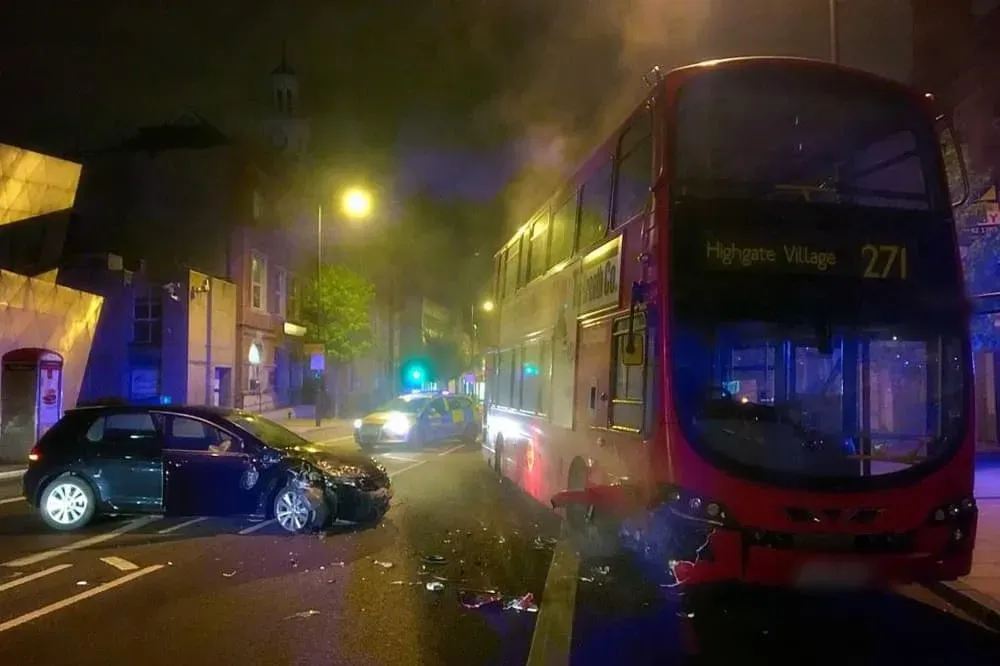
The Islington bus crash occurred on January 17, 2023, when a driver being pursued by police collided with a London bus on City Road. This police chase was initiated after reports of an armed robbery in Whitechapel, which led to a dramatic conclusion near Angel Tube station. Both the driver of the car and the bus driver suffered minor injuries in the collision, while a passenger in the fleeing vehicle faced charges for possessing an offensive weapon. Authorities, including the Metropolitan Police and the London Ambulance Service, promptly responded to the scene, ensuring that the injured received necessary medical attention. This incident not only stunned witnesses but also prompted a TfL response to crash, demonstrating the challenges that arise during such urgent police operations in urban environments.
In an alarming incident in Islington, a dramatic collision unfolded involving a public transport bus and a car under police pursuit. This altercation stemmed from an earlier armed robbery, drawing significant attention from law enforcement agencies as they scrambled to apprehend the suspect. The unfortunate crash, located on City Road, not only raised questions about public safety during high-speed police chases but also sparked conversations about the effectiveness of response strategies in emergencies. Eyewitness accounts portrayed a scene of chaos as emergency services made their way to the crash site to assist the injured parties, including both drivers. Following this unsettling event, local authorities have commenced investigations into the sequences of actions leading to this unsettling bus accident.
Overview of the Islington Bus Crash
On January 17, a police chase led to a significant incident in Islington, when a driver fleeing from authorities crashed into a route 38 London bus. The Metropolitan Police had initiated the chase in response to reports of an armed robbery that occurred earlier in Whitechapel. The ensuing collision took place on City Road, close to Angel Tube Station, highlighting the dangers associated with high-speed pursuits in urban areas.
This accident serves as a reminder of the dangers that can arise during police chases, particularly in bustling city environments like London. The outcome, fortunately, resulted in only minor injuries to both the car’s driver and the bus driver, though the pursuit indicates a troubling trend of violent crime leading to dangerous outcomes. The ongoing investigation aims to shed more light on the events leading up to this crash, with authorities taking public safety into account as they review police protocols.
The Role of Police Pursuits in Urban Safety
The incident involving the Islington bus crash raises important questions about the safety of police pursuits in densely populated areas. High-speed chases, while often necessary to apprehend suspects involved in serious crimes like armed robbery, can pose significant risks to the public and other motorists. Each incident, including the recent case following the armed robbery on Mile End Road, necessitates careful consideration of police tactics to prevent dangerous situations.
In response to the Islington bus crash, city officials and police departments must work together to establish clearer guidelines and protocols for how pursuits are conducted. This might involve evaluating the appropriateness of engaging in high-speed chases, especially in areas with a high volume of pedestrian and vehicular traffic. Ultimately, striking a balance between effective law enforcement and community safety should always be at the forefront of discussions regarding police chases.
Injuries and Response to the Incident
Following the collision on City Road, emergency services reacted promptly to ensure the well-being of all involved. The London Ambulance Service arrived minutes after the accident, with teams assessing injuries and transporting those in need to local hospitals. Their thorough response highlighted the importance of preparedness in handling such unforeseen events within the city.
Both the driver of the fleeing vehicle and the bus driver were reported to have sustained minor injuries, which is a relief considering the potential severity of the incident. Additionally, the police confirmed the arrest of the car’s passenger for possession of an offensive weapon, showcasing the complexity of the situation surrounding the Islington crash. Investigations continue, emphasizing the commitment of emergency responders and law enforcement to uphold public safety.
Transport for London and the Aftermath of the Crash
Transport for London (TfL) played a crucial role after the Islington bus crash, coordinating with Arriva London to manage the aftermath of the incident. Their swift action in recovering the damaged route 38 bus underscores the operational challenges faced by public transport systems following accidents. This collaboration is vital in quickly resuming services and ensuring that public transport remains reliable for the citizens of London.
Furthermore, TfL’s response included an investigation into the accident to ascertain the details surrounding the crash. This inquiry not only aims to clarify the circumstances of the police chase and ensuing collision but also to improve future safety protocols. By working closely with the Metropolitan Police, TfL demonstrates a proactive approach to preventing similar incidents, understanding the importance of public trust in their operations.
Implications of Crime in Urban Areas
The Islington bus crash highlights a broader issue concerning the implications of crime in urban areas, specifically the impact of armed robberies. The initial police pursuit was triggered by a robbery reported on Mile End Road, emphasizing how criminal activities can have far-reaching consequences beyond the immediate location of the crime. High-profile incidents like this often spark discussions about crime rates and public safety measures.
Increasing instances of violent crime necessitate a multifaceted response from law enforcement, community leaders, and city planners. Strategies could include enhanced surveillance, community engagement programs, and focused police initiatives aimed at crime prevention. It is vital that authorities consider the underlying factors contributing to crime while simultaneously ensuring that the safety and wellbeing of residents and commuters are prioritized.
Legal Consequences of Fleeing from Police
The legal ramifications for individuals involved in cases like the Islington bus crash are significant. The driver of the vehicle that led to the accident has been arrested on suspicion of dangerous driving and robbery, both of which carry severe legal penalties. Such actions not only jeopardize public safety but can result in substantial jail time upon conviction.
In addition to criminal charges, individuals who flee from police can face civil liabilities for damages incurred during the pursuit. The Islington incident serves as a cautionary tale, emphasizing the personal and legal risks that accompany attempts to evade law enforcement. As investigations continue, those involved will have to navigate the legal system to answer for their actions.
Community Impact and Concerns
The impact of the Islington bus crash extends beyond the immediate parties involved, affecting the wider community. Local residents often express concerns over safety in their neighborhoods, especially when incidents like high-speed police chases disrupt daily life. The apprehension surrounding crime and public safety can linger, prompting citizens to seek reassurances from local authorities regarding their safety.
Community response often results in calls for improved law enforcement strategies and safety initiatives that prioritize the well-being of residents. Measures may include increased police presence, community engagement programs, and more robust crime prevention strategies to foster a sense of security. Therefore, collaborations between community members and police can play a critical role in mitigating fears related to crime and promoting public safety.
Lessons Learned from the Islington Incident
The Islington bus crash serves as a salient case study from which several lessons can be derived concerning police chases and urban safety. It has prompted discussions about the ethics and effectiveness of police pursuits, particularly in busy urban environments. Authorities must continually assess the best practices for engaging in high-speed chases and evaluate outcomes to prevent similar occurrences in the future.
Moreover, the incident opens up a dialogue on the need for better coordination between police forces and public transport systems. Enhanced communication can lead to more effective responses during emergencies, ensuring that all parties are well-informed and prepared to act in the interest of public safety. Going forward, these discussions are paramount in shaping safe urban environments for all Londoners.
TfL’s Commitment to Safety Post-Crash
In the wake of the Islington bus crash, Transport for London (TfL) has reiterated its commitment to enhancing safety measures in public transportation. Collaborating with various stakeholders, including local authorities and transport operators, TfL is dedicated to reviewing its policies and ensuring that buses operate securely within the city. These efforts underscore the importance of analyzing incidents and drawing actionable insights to improve overall safety.
Furthermore, TfL’s proactive approach includes engaging with the public to address their concerns and gather feedback on safety protocols. By fostering an open dialogue with Londoners, TfL can better tailor its initiatives to meet community needs and expectations, ultimately promoting a safe environment for commuters and residents alike. The measures taken in response to this incident will help bolster public confidence in the safety of London’s transportation networks.
Frequently Asked Questions
What happened during the Islington bus crash involving a police chase?
The Islington bus crash occurred when a driver being pursued by police collided with a London bus on City Road near Angel Tube station. This incident was linked to earlier reports of an armed robbery in Whitechapel.
What was the cause of the City Road incident in Islington?
The City Road incident in Islington was caused by a police chase initiated after a driver was suspected of committing an armed robbery on Mile End Road in Whitechapel. The chase ended when the driver crashed into a route 38 bus.
What were the consequences of the Islington bus crash for the driver?
The driver involved in the Islington bus crash was arrested at the scene on suspicion of dangerous driving and robbery. He sustained minor injuries, while the bus driver also reported minor injuries.
How did the Metropolitan Police respond to the Islington bus crash?
The Metropolitan Police responded promptly to the Islington bus crash, deploying officers, the London Ambulance Service, and a police helicopter to the scene following the collision.
What is Transport for London’s response to the Islington bus crash?
Transport for London (TfL) is actively collaborating with Arriva London to recover the damaged route 38 bus involved in the Islington bus crash and will assist the Metropolitan Police in investigating the incident.
Were there any injuries reported from the Islington bus crash?
In the Islington bus crash, both the driver of the fleeing car and the bus driver suffered minor injuries. Additionally, a passenger in the fleeing vehicle was arrested for possessing an offensive weapon and was taken to the hospital.
How can witnesses provide information about the Islington bus crash?
Witnesses to the Islington bus crash are encouraged to contact the Metropolitan Police at 101, quoting CAD 3630/17JAN, to provide any relevant information regarding the incident.
What time did the Islington bus crash occur?
The Islington bus crash occurred around 2:15 PM on Saturday, January 17, when a car being chased by police collided with a route 38 bus on City Road.
What agencies were involved in the response to the Islington bus crash?
The response to the Islington bus crash involved multiple agencies, including the Metropolitan Police, London Ambulance Service, and the London Fire Brigade, demonstrating a coordinated emergency response.
Is there an update on the condition of the passenger from the car in the Islington bus crash?
As of now, the condition of the passenger from the fleeing car involved in the Islington bus crash is awaiting an update, as he was transported to the hospital for treatment after being arrested.
| Key Points |
|---|
| A police chase ended with a car crashing into a London bus in Islington. |
| The incident occurred on January 17 following an armed robbery report in Whitechapel. |
| The collision involved a route 38 bus on City Road, near Angel Tube station. |
| Both the car driver and bus driver sustained minor injuries. |
| A passenger in the fleeing vehicle was arrested for possessing an offensive weapon. |
| Emergency services included the Metropolitan Police, London Ambulance Service, and London Fire Brigade. |
| Investigations into the crash are ongoing, with appeals for witnesses to come forward. |
| Transport for London is collaborating with bus operators to manage the aftermath of the incident. |
Summary
The Islington bus crash occurred when a driver fleeing from police collided with a bus in Islington on January 17. This dangerous situation arose following an armed robbery in Whitechapel, prompting a police chase. Thankfully, the injuries were minor, but the incident highlights the seriousness of such pursuits and the potential risks they pose to the public. As investigations continue, authorities encourage anyone with information related to the crash to step forward.