
Listen to this article
London homicide rates have recently captured significant attention as they indicate a noteworthy decline, marking the lowest levels in over a decade. According to the Metropolitan Police London, the total number of recorded murders in 2025 stands at just 97, a stark contrast to previous years and a hopeful sign for the city’s safety. With Mayor Sadiq Khan’s crime policies being credited for this positive trend, many are questioning the effectiveness of their strategic approaches in combating serious violence. This critical analysis of London crime statistics not only sheds light on the present situation but also highlights the evolving nature of urban safety as the city continues to grow. As debates surrounding the homicide figures in London unfold, the implications for community safety and law enforcement practices will undoubtedly remain central to public discourse.
The striking drop in violent deaths throughout the capital has prompted discussions regarding the overall safety of urban life in London. Often referred to as murder rates or violence statistics, these figures have profound implications on public perception and policy-making. Following the establishment of various initiatives by local officials, particularly those addressing youth violence and contributing factors, there is a renewed focus on community engagement as a means to reduce crime. The current homicide figures for London are serving as a pivotal reference point for assessing the effectiveness of law enforcement strategies and social interventions alike. As the fight against crime continues, understanding the broader context of these numbers becomes essential for stakeholders in public safety.
Understanding London Homicide Rates
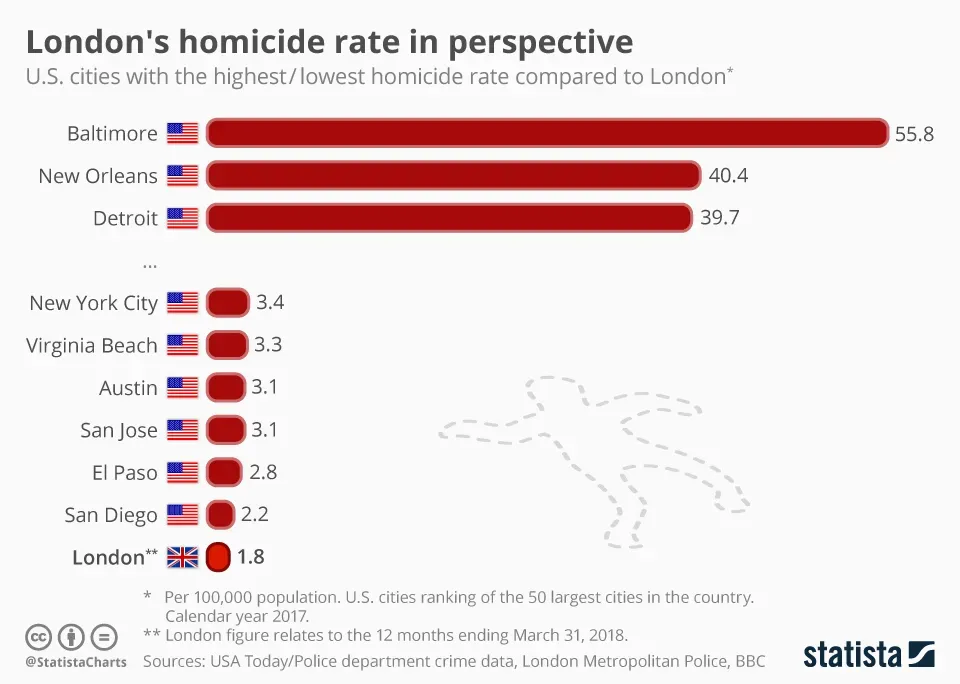
The homicide rates in London for 2025 have marked a historical low, capturing the attention of city officials and residents alike. With the total number of murders dropping to just 97, London now boasts a homicide rate of 1.07 per 100,000 people, which is certainly impressive when compared to previous years. In fact, this is the second lowest figure recorded since the Met began keeping detailed statistics, particularly notable given the city’s growing population, now estimated at 9.09 million. The decline from the previous high of 95 homicides in 2014 highlights the effectiveness of the strategies implemented by the government and law enforcement agencies since that time.
Examining these homicide figures within the context of police efforts and community programs, it becomes clear that there has been a concerted attempt to reduce violence through comprehensive policies. Initiatives set forth by Mayor Sadiq Khan, such as the establishment of a violence reduction unit, emphasize understanding the root causes of violence rather than relying solely on punitive actions. This makes the declining homicide rates a significant indicator of progress in maintaining public safety and addressing the complex nature of crime in the capital.
Furthermore, it’s critical to contextualize these figures with respect to the demographics of those involved in violent crime. Notably, the number of murders among individuals aged 25 or under has dramatically dropped from 54 in 2019 to just 18 in 2025. Teen-related homicides have similarly decreased, from 30 in 2021 to a mere eight last year. Such reductions are not simply statistical wins; they reflect real-life situations where families and communities have been spared the trauma of violence.
These statistics provide a counter-narrative to the perceptions of lawlessness that are often espoused in the media and by some public commentators. Instead of a city spiraling downward into chaos, the trends indicate a more positive landscape governed by targeted intervention strategies designed to disrupt cycles of violence. With a closer examination of London crime statistics, it is evident that the concerted efforts of the Metropolitan Police and local government in collaboration with community initiatives have forged a path to safety that many had previously thought unattainable.
The Role of Metropolitan Police in Reducing Crime
The Metropolitan Police’s role in managing London’s homicide rates cannot be overstated. Under the leadership of Commissioner Mark Rowley, there has been a focused effort on both tactics and strategies aimed at curbing violent crimes. Commander Paul Brogden has emphasized that the police have significantly enhanced their use of intelligence, leveraging technology such as mobile phone data to better understand the dynamics of crime within the city. This method facilitates a more targeted approach to crime prevention, particularly against drug-related violence which has historically plagued London. By improving their strategies, the Met can effectively identify and dismantle dangerous networks that contribute to increased violence.
Moreover, as the homicide figures illustrate, the effectiveness of these policing strategies has had tangible results. The visible decline in murder rates has led to a renewed focus on intelligence-led policing, which has allowed officers to prioritize resource allocation effectively. However, it’s essential to recognize that while enforcement is vital, the Met acknowledges that arresting individuals alone will not solve the city’s crime challenges.
In conjunction with traditional policing methods, there has also been a push towards preventative measures. The establishment of the violence reduction unit under Mayor Sadiq Khan was a critical move in this direction. By focusing on community engagement and addressing the socio-economic factors that contribute to crime, the Met aims to forge stronger ties with local neighborhoods. The success of initiatives such as placing youth workers in police custody centers showcases how holistic approaches are being utilized to deter youths away from crime. Statistics suggest that such programs have a remarkable 90% success rate in preventing further offenses, highlighting that collaborative efforts can enhance the efficacy of police work while building community trust.
While challenges remain and the road to maintaining low homicide rates is ongoing, the Metropolitan Police’s evolving strategies represent a deliberate and positive shift towards creating a safer London for all its residents.
Sadiq Khan’s Policies and Their Impact on Crime Rates
Sadiq Khan’s tenure as Mayor of London has been closely examined for its implications on crime and public safety in the capital. His approach has often been characterized by a balance between enforcing law and order while also addressing the underlying social issues that drive crime. Initiating programs like the London Violence Reduction Unit, Khan has sought to mitigate crime rates by focusing on prevention rather than just punishment. This strategy aligns with the growing recognition that factors such as poverty, lack of opportunity, and social alienation significantly contribute to violence, and by addressing these issues, a more sustainable solution can be achieved.
In light of 2025’s homicide figures, Khan’s policies appear to hold merit. With the significant drop in murders, it seems that the combined efforts of both the Metropolitan Police and city-led initiatives have positively influenced public safety. The Mayor’s approach of working collaboratively with community organizations to foster understanding and engagement among vulnerable populations is a deliberate strategy aimed at reducing the cycle of violence and supporting at-risk individuals.
However, Khan’s policies have faced scrutiny, particularly from political opponents who argue that leniency in law enforcement ultimately leads to an increase in crime. Critics often label his administration as ‘soft on crime,’ citing various forms of crime that still affect Londoners, including robberies and thefts. Yet, despite these challenges, the positive indicators associated with homicide rates suggest that Khan’s comprehensive strategies are making an impact. By emphasizing prevention and community engagement, the Mayor believes he is steering London towards a more secure future, while simultaneously addressing the concerns that deeply affect its diverse communities.
Historically, such a nuanced approach has not been the norm in urban policing; however, as cities around the world grapple with rising violence, Khan’s policies may serve as a model for balancing enforcement with community support. The sustained decline in homicide figures could very well be indicative of a transformational period for London, reshaping the narrative of urban crime and resilience.
Analyzing London Crime Statistics
When discussing London’s crime statistics, it is important to note the complexities and multifaceted nature of such data. The Metropolitan Police have diligently compiled records since 1997, enabling analysts to pinpoint trends over the years. The homicide figures released for 2025 signify not only a reduction in murders but also reflect a broader trend of declining serious violence across the city. Analysts have pointed out that while the homicide rate is a critical indicator, it is equally vital to consider other categories of crime, such as robbery and burglary, to fully understand the safety landscape within London.
Moreover, crime statistics can often tell contradictory stories depending on public perception and the media portrayal of crime. While the overall trend shows a decline in serious violence, the lived experiences of many Londoners can differ dramatically. For some residents, the fear of crime remains potent, fueling narratives of lawlessness in certain boroughs, even when official figures suggest improvement. Understanding these dynamics is essential for politicians and law enforcement to address public concerns effectively and ensure community confidence in safety measures.
Additionally, it is critical to analyze the statistics through the lens of demographic and socioeconomic factors. The need for a more comprehensive understanding is evident in how homicides affect specific groups, particularly young people. With recent data revealing a substantial decrease in youth-related homicides, it highlights the importance of continuous investment in community-led programs. The statistics reveal not just numbers, but they tell the stories of lives saved and futures redirected, pushing policymakers to consider how data-driven decision-making can both inform and transform public safety policies.
For stakeholders in London’s crime prevention initiatives, recognizing the intricacies of these crime statistics is crucial. By interpreting these figures in an informed manner, it becomes possible to create more impactful strategies that genuinely address the roots of crime in various communities. This analytic approach can help bridge the gap between public perception and statistical reality, fostering a better dialogue on crime and safety in London.
Public Perception of Crime in London
Despite the positive trends indicated by the crime statistics, public perception of crime in London remains a contentious topic. Many Londoners express a sense of insecurity, leading some to believe that the city is in the grip of lawlessness. This perception is further fueled by sensational media narratives and the experiences of individuals who may have encountered petty crime or anti-social behavior. The public discourse often disproportionately amplifies these experiences, overshadowing the fact that crime, particularly homicide, has seen a significant decline.
Understanding how public perception shapes crime narratives is essential for both the Metropolitan Police and city officials. The gap between statistical evidence showing a decrease in violence and the lived experiences of citizens creates challenges for fostering community trust in law enforcement. It emphasizes the necessity for effective communication strategies that can reframe the narrative surrounding crime, highlighting not just statistics, but also the collaborative efforts being made to enhance public safety.
Moreover, the intersection of ethnicity and immigration with crime is a growing factor in shaping public perceptions. Numerous commentators have linked the increase in crime to London’s multicultural identity, often leading to harmful stereotypes being perpetuated. This adds another layer of complexity to the conversation about crime and safety in London. The 2021 census revealed that over 40% of London’s residents belong to minority ethnic backgrounds, illustrating the city’s diversity. However, the political landscape is often punctuated by narratives that exploit these divisions, sowing fear and distrust among communities.
For London’s leadership, addressing these perceptions requires a multifaceted approach that engages with all communities within the city. By fostering inclusion and dialogue, officials can work towards reshaping the crime narrative in London, ensuring it reflects not only the decline in homicide rates but also the collaborative efforts to build safer neighborhoods. Addressing public perceptions head-on can lead to a more unified approach towards tackling crime, ultimately contributing to a greater sense of safety across the capital.
Future of Policing in London
Looking ahead, the future of policing in London will likely hinge on the continued collaborative efforts among community organizations, local government, and the Metropolitan Police. The recent homicide figures provide a glimpse of hope, indicating that innovative strategies focused on prevention rather than just enforcement can yield positive results. With the rising adoption of technology within policing, such as utilizing data analytics to identify crime hotspots, law enforcement agencies can enhance their operational effectiveness and community trust.
Moreover, as the importance of addressing mental health and socio-economic factors becomes increasingly recognized, collaboration between different sectors—social services, healthcare, and law enforcement—will be vital to achieving long-term safety goals. This approach aligns with the current public discourse surrounding crime reduction which favors sustainable solutions over punitive measures, offering a blueprint for other urban areas struggling with similar challenges.
It is equally important to ensure that policing strategies remain adaptable to the ever-evolving landscape of crime in London. The shift in focus toward community engagement and understanding the underlying causes of violence is not just a temporary fix, but rather a necessary evolution in policing tactics. As Mayor Sadiq Khan has highlighted, addressing the complex social causes tied to crime can yield lasting benefits that improve safety without alienating community relations.
Ultimately, the future of policing in London will depend on responsiveness to community needs and the continued ability of law enforcement to maintain public safety while fostering a trustworthy relationship with the diverse populations they serve. By learning from past successes, the Metropolitan Police can reinstate confidence in their capabilities, ensuring that London continues to progress towards becoming one of the safest major cities in the world.
Frequently Asked Questions
What are the current London homicide rates and how do they compare to previous years?
As of 2025, London has recorded its lowest homicide rates in over a decade, with only 97 murders reported. This contrasts sharply with previous years, as there were 95 homicides in 2014, despite London’s population increase of around half a million. The current homicide rate stands at 1.07 per 100,000 people, slightly down from 1.11 in 2014.
How have Sadiq Khan’s crime policies impacted London homicide rates?
Sadiq Khan’s implementation of crime policies, particularly establishing a violence reduction unit in 2019, has significantly influenced the decline in London homicide rates. These policies focus on understanding the social causes of violence and provide youth engagement opportunities, contributing to a substantial drop in murders, especially among young individuals.
What factors have contributed to the decline in murders in London?
The decline in London homicide figures can be attributed to improved policing strategies, data utilization, and community engagement initiatives led by Sadiq Khan’s violence reduction unit. Additionally, a decrease in violent hospital admissions and targeted efforts against drug-related crimes have also played a crucial role.
How does the Metropolitan Police view the decline in London homicide rates?
The Metropolitan Police, particularly through comments from Commissioner Mark Rowley and Commander Paul Brogden, view the decline in London homicide rates as a sign of successful implementation of effective strategies. They emphasize that improved intelligence and preventive approaches, not just enforcement, have been vital in achieving these results.
What do current London crime statistics say about youth violence?
Current London crime statistics indicate a significant reduction in youth violence, with murders among individuals aged 25 or under decreasing from 54 in 2019 to just 18 in 2025. This highlights the effectiveness of targeted interventions aimed at reducing violence among younger demographics.
Are there any concerns about the perception of London as a crime-ridden city despite declining homicide rates?
Despite declining homicide rates, perceptions of London as lawless persist, often fueled by political narratives. Critics argue that Sadiq Khan’s leadership has not sufficiently addressed other forms of crime, leading to the belief that crime is unmanageable in the city. Personal experiences and media portrayals also contribute to this perception.
How does the crime rate in London compare to other major cities in the UK?
The homicide rate in London, currently at 1.07 per 100,000, is relatively lower compared to some other major cities in the UK, particularly when considering the overall population. Nonetheless, crime statistics can vary widely, and perceptions are subjective based on personal experiences and broader social factors.
What future trends can we expect for London homicide rates based on current data?
Given the current data showing a record low in London homicide rates, future trends may indicate a continued decline if effective policies and community engagement strategies remain in place. However, fluctuations are expected as crime dynamics and societal conditions evolve.
| Key Points |
|---|
| London recorded its lowest murder rate in 2025 in over a decade, with 97 murders. |
| The homicide rate in London is 1.07 per 100,000 people in 2025, a reduction from 1.11 in 2014. |
| Murders of individuals aged 25 or under decreased significantly, from 54 in 2019 to 18 in 2025. |
| The Met police attribute improvements to better data utilization and targeting violent crime, especially from drugs. |
| A violence reduction unit established in 2019 seeks to address underlying social issues contributing to violence. |
| Critics argue that current political leadership, particularly Sadiq Khan’s, appears lenient towards crime. |
| The perception of crime is influenced by personal experiences, despite the decline in serious violence statistics. |
Summary
London homicide rates in 2025 have sparked interest as they hit the lowest point in over ten years, signaling effective action from both the Metropolitan Police and local government. While statistics show significant reductions, various perceptions about crime’s prevalence reflect the complex social dynamics at play. With a focus on preventive measures and community engagement, authorities aim to maintain this decline, but challenges remain amid political scrutiny and public debates.