Listen to this article
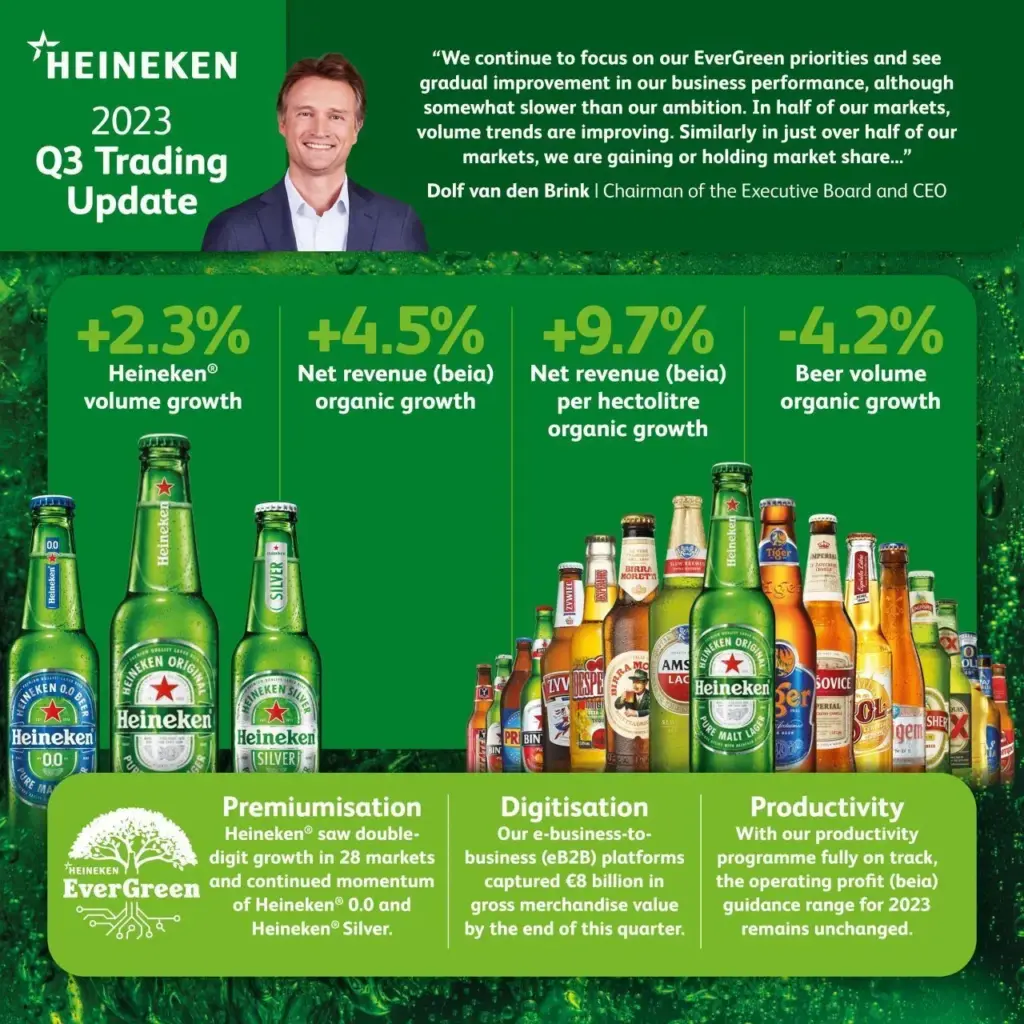
Heineken sales decline has become a pressing issue for the iconic brewery, especially following the resignation of Dolf van den Brink after six years at the helm. As the company grapples with evolving beer industry trends, it faces an alarming shift in consumer preferences towards non-alcoholic options. Recent reports indicate a 2.3% drop in beer volumes, affecting major markets, including Europe and the US, as customers tighten their budgets against rising prices. This decline is further exacerbated by disappointing performance from the company’s own non-alcoholic variant, Heineken 0.0, which has not gained the traction anticipated. Analysts suggest that without a robust market strategy to bolster its traditional beer lines, Heineken’s long-term growth may be at risk, especially among the younger Gen Z demographic.
The downturn in sales for Heineken, one of the largest names in the brewing world, underscores critical changes in consumer behavior and preferences. With a substantial pivot towards low-alcohol and no-alcohol beverages, the company is feeling pressure to adapt or risk falling behind. Following a lukewarm reception for its non-alcoholic brand, Heineken 0.0, and a noticeable dip in alcoholic beverage consumption, particularly in traditional markets like Germany, Heineken’s leadership is under scrutiny. The resignation of the CEO, Dolf van den Brink, amidst these challenges signals a possible turning point for the company as it seeks to realign its market strategy with current beer industry dynamics. Observers are noting that the shift towards healthier options may dictate the future direction of iconic brands like Heineken.
Heineken Sales Decline: Understanding the Impact
Heineken’s recent sales decline reflects broader changes in consumer preferences within the beer industry, particularly the growing trend towards non-alcoholic and low-alcohol alternatives. The renowned beer brand experienced a notable 2.3% decrease in beer volumes this year, significantly impacting its financial outlook. Analysts are pointing to shifting consumer habits, with many opting for healthier lifestyles or non-alcoholic beer options, such as Heineken 0.0, which despite being a flagship product for the company, has also seen its sales falter. Furthermore, this decline isn’t just limited to Heineken; the entire beer industry is grappling with a similar challenge as consumers become more discerning with their alcohol consumption.
In the light of these changes, Heineken is at a crossroads, needing to reevaluate its strategy in order to remain relevant in a rapidly evolving market. The revelation of a profit warning serves as a stark reminder of the company’s struggle to adapt to these new consumer preferences. This downturn in sales, particularly in the traditionally strong markets of Europe and the US, underscores the urgent necessity for Heineken to pivot towards innovative solutions that cater to modern drinking habits, ensuring their future sustainability in the competitive beverage landscape.
Dolf van den Brink’s Resignation and Its Consequences
The resignation of Heineken’s CEO Dolf van den Brink marks a significant shift for the company, as it faces a pivotal moment amidst declining sales. Van den Brink’s exit comes after a tenure filled with mixed results; while efforts were made to adapt to changing market dynamics, the company’s performance has not met expectations. Industry analysts link his departure to the pressing need for fresh leadership that can navigate the complexities of the modern beer market, particularly as younger consumers exhibit varying preferences for alcoholic beverages. This transition could be crucial for Heineken, offering a chance to realign its market strategy effectively.
Moreover, van den Brink’s resignation is emblematic of larger challenges facing the beer industry as it adapts to trends like non-alcoholic beer growth and an overall decrease in alcohol consumption. As highlighted by consumer experts, the leadership change could be the catalyst needed for Heineken to regain its competitive edge. A new CEO may enable the brand to reinvigorate its approach to the market, perhaps by investing in the more lucrative non-alcoholic segment while simultaneously working to rejuvenate its flagship beer lines.
Navigating Industry Trends: The Future of Heineken
As Heineken grapples with the notable decline in beer sales, it becomes imperative for the company to understand and adapt to the prevailing beer industry trends. The rise of non-alcoholic beverages signifies a shift that cannot be ignored, and Heineken’s lackluster sales performance of its non-alcoholic line could suggest a disconnect with consumers. In light of rising health consciousness and demographic shifts, especially among Generation Z, Heineken must tailor its marketing strategies to appeal to a younger, health-focused market while preserving the allure of their traditional alcoholic options.
To navigate these changes effectively, Heineken could benefit from adopting a dual strategy that leverages both its heritage and the growing non-alcoholic segment. This approach would entail not only enhancing the visibility and appeal of Heineken 0.0 but also investing heavily in innovative advertising that establishes a clear brand identity. The beer giant must ensure that it resonates with its target audience’s evolving preferences, positioning itself as both a leader in the non-alcoholic space and a commendable player in the traditional beer segment.
The Non-Alcoholic Beer Growth Phenomenon
The surge in non-alcoholic beer consumption is a remarkable trend within the global beverage industry, driven by changing consumer preferences towards healthier choices. Heineken has attempted to capitalize on this trend with its Heineken 0.0 product; however, sales reports indicate a decline, prompting questions about the brand’s market approach. Experts argue that the non-alcoholic beer segment continues to thrive, fueled by an increasing number of consumers prioritizing wellness and mindful drinking habits, and it becomes essential for Heineken to reevaluate its current offerings to align with such evolving demands.
To harness the potential of non-alcoholic beer growth, Heineken should focus on enhancing product visibility and establishing strong brand narratives that connect with health-conscious consumers. With innovative advertising strategies that highlight the benefits of Heineken 0.0, including taste and lifestyle orientation, the company can drive engagement within this segment. Additionally, exploring partnerships with wellness influencers could amplify the brand’s presence in the non-alcoholic space, vital for rebuilding its reputation and ensuring long-term relevance in a competitive market.
Heineken’s Market Strategy: Challenges Ahead
As Heineken confronts external market pressures, a comprehensive overhaul of its market strategy appears necessary to secure a prosperous future. With declining beer sales highlighting the need for transformation, the company must pivot beyond its traditional offerings. Analysts emphasize the importance of developing a robust presence in the non-alcoholic segment while simultaneously invigorating the flagship alcoholic brand. A strategy focused on innovation and customer engagement could stimulate interest and improve overall performance across multiple consumer demographics.
However, the challenge remains formidable; competition within the beer industry is intensifying, with numerous brands vying for consumer attention. Heineken’s approach must differentiate it from competitors, especially those who have established a stronghold in the non-alcoholic sector. Crafting a unique value proposition that resonates with today’s consumers may involve creative collaborations, enhanced product lines, or even rebranding efforts to better reflect the evolving preferences seen throughout the market.
Understanding Beer Industry Trends Through Analysis
To effectively navigate the contemporary beer landscape, understanding key trends within the beer industry is crucial for leaders like Heineken. Changes driven by consumer behavior, such as the shift toward non-alcoholic options and overall reduced alcohol consumption, reveal the need for companies to adapt in order to maintain market relevance. Analysts have spotlighted the importance of analyzing demographic shifts and consumer habits to make informed strategic decisions moving forward; thus, Heineken must take heed of these important insights in shaping its future plans.
Moreover, as companies like Heineken evaluate the impact of these trends, a focus on developing innovative marketing strategies will be essential. This means identifying what draws modern consumers, particularly Millennials and Gen Z, to non-alcoholic products and what could revive interest in traditional beers. Leveraging consumer research, Heineken should refine and promote its product line to resonate with the expectations of today’s drinkers, a strategy that could potentially halt any further declines and set them on a path toward sustainable growth.
Strategies to Boost Heineken 0.0 Sales
In light of Heineken 0.0’s recent sales decline, the focus must shift towards revitalizing this particular non-alcoholic beverage. Given the increasing trend towards healthy choices, Heineken has a significant opportunity to elevate its non-alcoholic offerings. To effectively boost sales, strategies could include targeted marketing campaigns that resonate with health-conscious individuals and demonstrate the lifestyle benefits associated with non-alcoholic beer consumption. Collaborating with wellness influencers and leveraging social media platforms can provide powerful avenues for reaching a wider audience and creating buzz around Heineken 0.0.
Furthermore, enhancing the product experience through engaging promotions, tastings, and partnerships with restaurants and fitness centers may also draw new customers. Additionally, Heineken can think about expanding its non-alcoholic line by introducing unique flavors or limited editions that appeal to adventurous consumers. By focusing on both quality and marketing, Heineken 0.0 can reclaim its status and compete more effectively within the burgeoning non-alcoholic beer segment.
The Importance of Brand Identity in Beer Marketing
A distinct and compelling brand identity is crucial for success within the competitive beer market, particularly for a historical brand like Heineken. As the beer landscape evolves, it’s essential for Heineken to not only reminisce on its long-standing heritage but also embrace modern branding strategies that resonate with contemporary consumers. Currently, critiques point out that Heineken lacks a clear premium identity comparable to competitors, such as Guinness, which has positioned itself as an aspirational brand in the alcoholic beverage space.
Creating a strong, consistent brand identity that aligns with consumers’ values will be fundamental for sustaining market share. For Heineken, this could mean redefining its mission statements and engaging narratives that reflect the lifestyles and preferences of today’s drinkers. By ensuring the brand effectively communicates its unique selling points throughout marketing channels, Heineken can bolster its image and attract a diverse audience looking for both traditional and non-alcoholic options.
Consumer Preferences: The Key to Heineken’s Recovery
To chart a path to recovery, Heineken must earnestly consider consumer preferences that dictate the behaviors of today’s beer drinkers. As sales of traditional beers decline, understanding what drives young adults, especially Gen Z, towards healthier, low-alcohol options can be influential in shaping the brand’s future strategies. Engaging consumers through surveys and interactive platforms will provide essential insights into their drinking choices and preferences, allowing Heineken to tailor its offerings accordingly and realize sustainable growth.
Additionally, Heineken must embrace a proactive approach to gathering data on market trends, consumer sentiments, and competitive strategies to stay ahead. By fostering a responsive organizational culture that prioritizes consumer feedback, the brand can pivot quickly in the face of changing demands. This commitment to understanding consumer preferences could form the foundation for Heineken’s revitalization strategy, ultimately addressing sales declines and ensuring a healthier brand trajectory in the years to come.
Frequently Asked Questions
What factors contributed to the recent Heineken sales decline?
The recent Heineken sales decline can be attributed to multiple factors, including a shift in consumer preferences towards non-alcoholic and low-alcohol options, increased competition in the market, and rising prices which have tightened consumer budgets. Heineken also reported a 2.3% decrease in beer volumes for the year to date, significantly affecting its major markets like Europe and the US.
How has the resignation of Dolf van den Brink affected Heineken’s sales decline?
Dolf van den Brink’s resignation comes at a time when Heineken is facing significant challenges, including declining beer sales and a drop in the performance of Heineken 0.0. Analysts believe that this leadership change might revitalise the company’s approach, as van den Brink had not adequately addressed the shifting trends in the beer industry and the decline in alcohol consumption among younger demographics.
Is Heineken 0.0 experiencing a sales decline despite the non-alcoholic beer growth trend?
Yes, Heineken 0.0 has indeed experienced a sales decline, which is surprising given the overall growth trend of non-alcoholic beers. While the non-alcoholic beer market is gaining traction globally, Heineken 0.0’s poor performance in major regions like Europe has undermined its ability to capitalize on this trend.
What does the decline in Heineken’s sales indicate about beer industry trends?
The decline in Heineken’s sales underscores broader beer industry trends where traditional alcoholic consumption is decreasing, particularly among younger consumers like Gen Z. There is a noticeable shift towards healthier drinking habits, leading consumers to seek non-alcoholic or low-alcohol options, which poses risks to brands still heavily reliant on traditional beer sales.
How can Heineken adapt its market strategy to address the sales decline?
To address its sales decline, Heineken can adapt its market strategy by investing more in advertising and innovation, particularly in its alcoholic brands. Establishing a clearer premium identity, like that of Guinness, could also help attract consumers. Furthermore, enhancing the appeal of Heineken 0.0 and aligning with the non-alcoholic beer growth trend may capture a more health-conscious audience.
What are analysts saying about the future of Heineken amidst the sales decline?
Analysts are expressing concern about Heineken’s future amid the sales decline, noting that the company must find a way to reignite growth in its flagship alcoholic beer brand. With decreasing alcohol consumption among key demographics and the need for a robust marketing strategy, there are doubts about Heineken’s ability to recover unless significant changes are made.
What impact has Heineken’s declining sales had on its stock prices?
Heineken’s declining sales have impacted its stock prices negatively. Following the announcement of Dolf van den Brink’s resignation, the company’s share price fell by about 3%, reflecting investor concerns over the continuing challenges the company faces in the beer industry and the need for a strategic shift to address the sales decline.
What brands does Heineken own that might also be affected by the sales decline?
Heineken owns several significant brands, including Murphy’s Irish Stout, Sol, Desperados, Amstel, as well as ciders like Strongbow and Red Stripe. The decline in Heineken’s sales could extend to these brands, especially as consumer preferences shift towards non-alcoholic options and healthier choices.
| Key Point | Details |
|---|---|
| CEO Resignation | Heineken’s CEO, Dolf van den Brink, is resigning after six years due to declining sales. |
| Sales Decline | Heineken reported a 2.3% decrease in beer volumes, particularly in Europe and the US. |
| Market Trends | Consumers are shifting to non-alcoholic or low-alcohol options, impacting traditional beer sales. |
| Profit Warning | The company has issued a profit warning, expecting sales to decline further by 2026. |
| Low-Alcohol Segment | Despite the growth of the low and non-alcoholic segment, Heineken 0.0 sales have dropped. |
| Analyst Opinions | Consumer analysts suggest that leadership change may be needed for Heineken’s revival amid falling sales. |
| Need for Investment | Experts recommend increased investment in advertising and brand identity to compete with brands like Guinness. |
Summary
Heineken sales decline is a pressing issue that has triggered significant leadership changes within the company. The departure of CEO Dolf van den Brink underscores the serious challenges the company faces, particularly amidst shifting consumer preferences towards low and no-alcohol options. With a noted drop in beer volumes and a profit warning for the coming years, Heineken’s ability to adapt to these market trends will be crucial for its recovery. Analyst insights indicate that without a clear strategy and robust investment in marketing, Heineken may struggle to reclaim its position as a leader in the beer industry.