Listen to this article
The recent Roman villa discovery in Wales at Margam Country Park has captivated archaeologists and history enthusiasts alike, potentially positioning the area as “Port Talbot’s Pompeii.” Unveiled through advanced geophysical surveys that detected buried structures, this remarkable site promises to redefine our understanding of Roman history in Wales. The villa, estimated to span 572 square meters and nestled within a protective enclosure, offers a rare glimpse into the opulent lifestyle of its ancient inhabitants, possibly a local dignitary. As the largest Roman villa found in Wales to date, this archaeological finding not only highlights the importance of Margam but also sheds light on the broader context of Roman occupation in the region. This groundbreaking discovery emphasizes the significance of Port Talbot archaeology in piecing together the vibrant narrative of Wales’ past.
In an astonishing turn of events, researchers have uncovered an expansive Roman estate near Port Talbot, specifically within Margam Country Park, which was previously uncharted. Utilizing cutting-edge technology, the team conducted a series of geophysical investigations that led to the revelation of this impressive villa, which dates back to the Roman era. This site not only provides essential insights into the everyday life of its ancient occupants but also underscores Margam’s historical significance in the context of Roman settlements across Wales. The findings suggest that Margam was a hub of activity, challenging the perception that this region was merely a peripheral area of the Roman Empire. As such, the discovery of this villa opens new avenues for exploration within Roman history in Wales.
The Discovery of the Largest Roman Villa in Wales
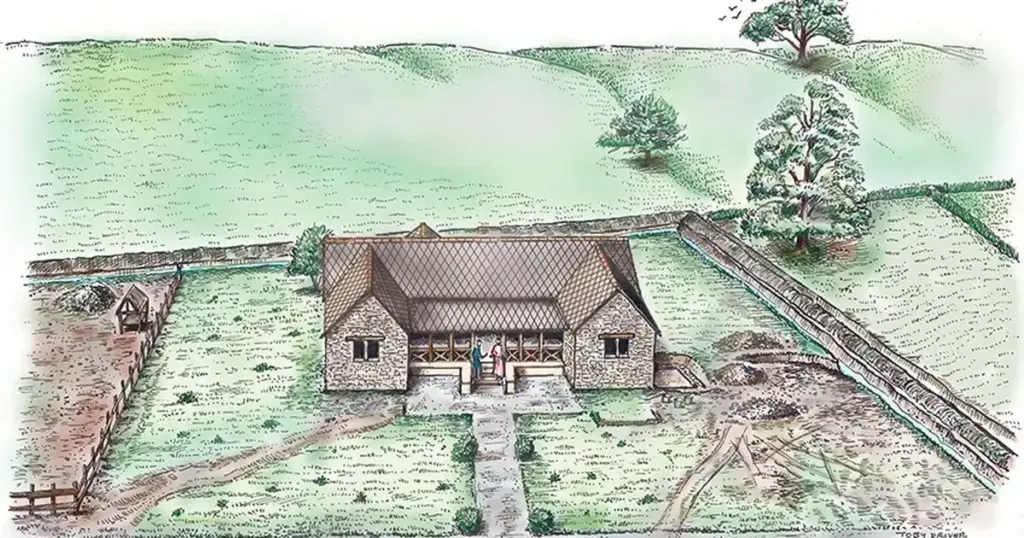
In a groundbreaking archaeological reveal, a team led by Swansea University has discovered the largest Roman villa ever found in Wales, nestled beneath the verdant landscape of Margam Country Park. This remarkable finding is a significant leap forward in understanding Roman history in Wales, showcasing an impressive architectural structure that boasts a defensive enclosure and an expansive aisled building. With an area of around 572 square meters, it offers a glimpse into the sophisticated domestic architecture of the time and may even be comparable to grand Roman estates found in southern England.
The discovery has been likened to Port Talbot’s own Pompeii, suggesting a level of preservation in the remains that has rarely been documented. Ground-penetrating radar scans highlighted the villa’s footprint, revealing the uncertainties of what else lies beneath the soil, undisturbed by modern agricultural practices. Archaeologists are excited about the potential insights these remains will offer into the social and agricultural practices of the area during the Roman era.
Margam Country Park: A Treasure Trove of History
Margam Country Park is not only renowned for its picturesque scenery and recreational spaces but also for its rich archaeological significance. The recent findings have positioned it as a crucial site for understanding the Roman influence in Wales. Prior to this discovery, Margam hosted various historical landmarks, including an Iron Age hill fort and remnants of a 12th-century abbey, making the addition of the Roman villa a monumental step in the uncovering of Port Talbot’s historical narrative.
The integration of archaeological projects with community engagement has transformed Margam Country Park into an educational hotspot. Local school pupils, involved in the ArchaeoMargam initiative, have had the opportunity to participate directly in the excavation processes. Their involvement not only instills a sense of connection to their local history but also enhances public awareness of the area’s archaeological depth, contributing to a broader understanding of Roman history in Wales.
Geophysical Surveys Unleash Hidden Archaeology
The technology behind the discovery stems from sophisticated geophysical surveys carried out by TerraDat, which provided an innovative approach to uncovering the hidden layers of history buried under Margam Country Park. Utilizing advanced ground-penetrating radar, archaeologists were able to visualize subsurface features that are otherwise invisible. This approach sets a precedent for future archaeological endeavors in the region, potentially leading to more discoveries that will shed light on the Romano-British period.
These surveys have illuminated not just the villa but also surrounding structures that may have played significant roles in the daily lives of ancient inhabitants. The clarity of the images produced by the geophysical data offers a detailed plan of the building layouts and their context within the broader site, allowing researchers to piece together the historical narrative of Margam’s settlement during Roman rule.
Understanding Roman History in Wales
The discovery of the Roman villa in Margam is set to reshape our understanding of Roman history in Wales. Traditionally, historical evidence has leaned heavily on military fortifications and camps, leaving a gap in knowledge regarding the civilian and agricultural aspects of life during that era. This villa represents a major residential and administrative establishment, suggesting the area was not merely a borderland of the empire but a vibrant hub of activity and culture.
Experts believe that this find offers new perspectives on socio-economic dynamics in Welsh history. The complexities of life in a Roman villa, possibly serving as a center for agricultural operations and local governance, indicate that Wales had a significant role in the Roman Empire’s provincial structure, challenging existing notions of regional development during this epoch.
The Impact of Archaeological Findings on Local Communities
The impact of the villa’s discovery extends beyond academic circles, touching the lives of local residents and the cultural fabric of Port Talbot. Community members, such as retired teacher Margaret Jones, have expressed excitement at the prospect of a rich archaeological narrative lying beneath their feet. For many, the revelation of such a historical treasure serves as a source of pride and a means to reconnect with their heritage. This is particularly significant for a town that has faced economic challenges, offering a new avenue for tourism and local engagement.
As plans for excavation and conservation progress, there is potential for establishing educational programs aimed at fostering local interest in history and archaeology. Programs such as the Young Archaeologist Club, which engages schoolchildren in hands-on educational experiences, create a bridge between the past and the present, inviting the community to participate in the unfolding story of Margam and its connection to Roman history.
Preservation Efforts for the Roman Villa
Given the historical significance of the Roman villa, the preservation of the site is paramount. Archaeologists are prioritizing conservation efforts to protect the villa’s remains from potential threats, such as looting or damage. The decision to keep the villa’s exact location confidential underscores the importance of safeguarding this treasure while allowing further archaeological inquiry to take place.
The expectation is that with careful management, the site can be excavated responsibly without compromising its integrity. The echoes of the past preserved in Margam Country Park could soon transform into a well-documented historical site, ripe for educational opportunities, community involvement, and international interest in Wales’ rich Roman heritage.
Community Engagement in Archaeological Research
The discovery at Margam has sparked renewed interest in archaeology among local residents and schoolchildren alike. The involvement of young learners in the ArchaeoMargam project exemplifies how engaging the community in archaeological pursuits can foster a deeper appreciation for local history. These hands-on experiences not only fuel enthusiasm for the arts and sciences but also empower individuals to reclaim their historical narratives.
Harriet Eaton, the Heritage Education Officer for Neath Port Talbot, highlights the transformative power of community excavation events. Such initiatives aim to provide inclusive experiences that connect today’s generation with their ancestors, thereby enriching their understanding of the past. The hope is to develop a community that is not just passive observers of history but active participants in its exploration and preservation.
The Significance of Roman Villas in Archaeological Studies
Roman villas hold a profound significance in archaeological studies as they serve as microcosms of Roman life, reflecting agricultural practices, social dynamics, and architectural advancements. The villa discovered in Margam, with its elaborate layout and presumed grandeur, demonstrates how architecture can convey the status and lifestyle of the inhabitants. Understanding such structures is crucial for historians aiming to reconstruct the daily lives of people in the Roman era.
The inclusion of monumental villas in archaeological discourse enriches our comprehension of societal structures during the Romano-British period. As researchers delve deeper into the archaeological findings surrounding Margam, they have the opportunity to rewrite narratives about Roman influence in Wales, revealing that it was not just a periphery of the empire but a vital area of cultural integration and development.
Future Prospects for Archaeological Work in Wales
The recent Roman villa discovery in Margam opens the door to numerous future archaeological prospects in Wales. As methods improve and interest in historical research grows, there is a burgeoning opportunity to uncover even more significant sites, enriching the collective understanding of Wales’ place in ancient history. Collaborations among universities, local councils, and community members will be critical in driving these initiatives forward.
With the potential for new archaeological finds emerging from the expansive landscapes of Wales, the excitement surrounding the Margam villa could catalyze further research expeditions and educational programs. This increased activity not only aims to bring more historical context to urban and rural areas alike but also to enhance tourism, economic growth, and a deeper appreciation for Wales’ complex past.
Frequently Asked Questions
What is the significance of the Roman villa discovery in Wales at Margam Country Park?
The Roman villa discovery in Margam Country Park is significant as it is the largest Roman villa found in Wales, providing valuable insights into Roman history in Wales. This find could reshape our understanding of the region during the Romano-British period, highlighting Margam as a center of power rather than a borderland. The villa’s exceptional preservation due to the park’s historical use as a deer park enhances its importance.
How was the Roman villa discovered in Margam Country Park?
The Roman villa was discovered through advanced geophysical surveys conducted by Swansea University. Using ground-penetrating radar, archaeologists mapped the site, revealing a large villa structure within a defensive enclosure and an aisled building, which may have served as a barn or meeting hall.
What archaeological features were found at the Margam Country Park villa site?
The archaeological features of the Margam Country Park villa include a substantial 572 sq m Roman villa with a corridor layout, six main rooms, and an aisled building nearby. Additionally, the site is surrounded by fortifications, suggesting it was a significant estate.
How does this discovery impact the understanding of Roman history in Wales?
This discovery challenges previous perceptions of Roman history in Wales, which typically focused on military camps and forts. The villa’s existence indicates a sophisticated local society, suggesting that Wales had prominent agricultural estates similar to those in southern England, enriching our understanding of the Roman influence and settlement patterns in the region.
What can we learn about daily life from the Roman villa at Margam Country Park?
The Roman villa at Margam Country Park offers insights into daily life in Roman Wales, with its layout suggesting it was a lively center of community activity. The presence of multiple rooms and sophisticated design indicates it was likely home to a local dignitary, providing a glimpse into the social and economic structures of the time.
When will more information about the Roman villa discovery in Margam be available?
Further details about the Roman villa discovery will be shared at an open day at Margam Abbey Church on January 17, providing the public with additional insights into this remarkable archaeological find.
Why is the discovery at Margam referred to as Port Talbot’s ‘Pompeii’?
The discovery at Margam is referred to as Port Talbot’s ‘Pompeii’ due to the exceptional preservation of its archaeological features. Like Pompeii, which was preserved by a volcanic eruption, the villa’s remains in Margam are well-preserved beneath the ground, offering a unique opportunity to understand life in Roman times.
What role did the local community play in the Margam Roman villa project?
The local community, including school pupils, participated actively in the ArchaeoMargam project, which involved excavating areas near Margam Abbey Church. This engagement fostered a greater connection to local heritage and encouraged educational opportunities in archaeology.
What prior historical significance does Margam Country Park hold?
Margam Country Park has historical significance beyond the Roman villa, featuring an Iron Age hill fort, remnants of a 12th Century abbey, and a Victorian castle. The park’s rich history makes the Roman villa discovery an exciting addition to its historical narrative.
How might the discovery of the Roman villa influence tourism in Port Talbot and Wales?
The discovery of the Roman villa at Margam Country Park is expected to boost tourism in Port Talbot and Wales by drawing visitors interested in Roman history and archaeology. This find not only enhances the area’s historical profile but also has the potential to revitalize local interest and pride.
| Key Point | Details |
|---|---|
| Discovery Location | Margam Country Park, Wales |
| Significance | Largest Roman villa found in Wales; potential to rewrite history of Roman settlement in South Wales |
| Structure Details | Villa measures approximately 572 square meters; includes an aisled building and defensive enclosure |
| Preservation | Well-preserved due to the land not being ploughed or built on; remains less than a meter below the surface |
| Community Involvement | Local school pupils and the community engaged in archaeological projects in the region |
| Future Prospects | Further excavation planned; potential for significant archaeological evidence to illuminate Roman life |
Summary
The recent Roman villa discovery in Wales has captivated archaeologists and history enthusiasts alike, earning the moniker “Port Talbot’s Pompeii”. This remarkable site, discovered in Margam Country Park, offers a glimpse into the sophisticated life of Roman Britain, showcasing a well-preserved villa that challenges previous notions of South Wales as a frontier land. The involvement of local communities in uncovering this treasure highlights the importance of heritage education and the continuing allure of archaeology in understanding our past. With further excavation and research, the Roman villa discovery in Wales promises to enhance our comprehension of this pivotal historical period.