
Listen to this article
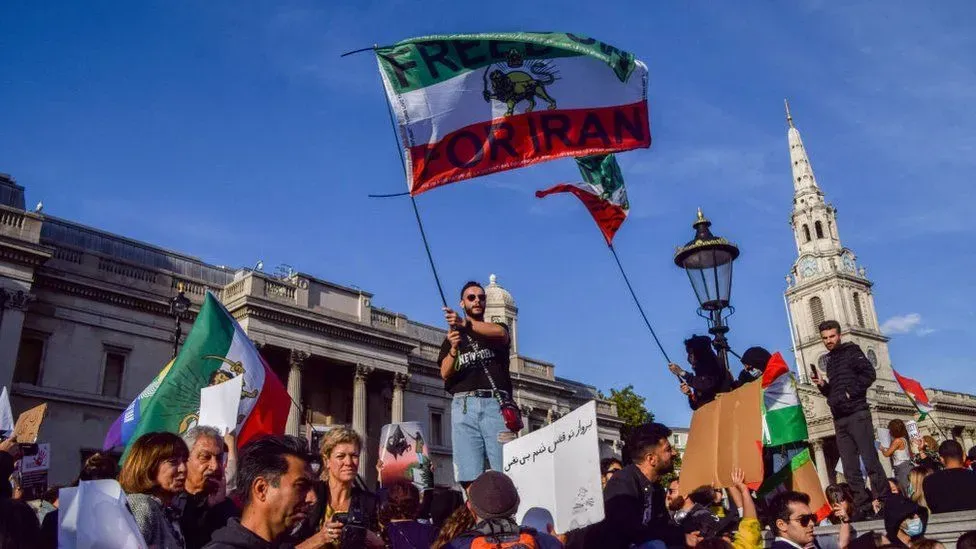
The recent Iranian embassy protest in London has captured global attention, highlighting the rising tensions surrounding the Iranian regime. A protester boldly climbed the embassy balcony, symbolically replacing the Islamic Republic’s flag with the historic Lion and Sun banner that once represented Iran prior to the 1979 revolution. This act of defiance against the Iranian regime follows a wave of unrest seen in protests in Iran in January 2024, which have intensified over economic frustrations and calls for reform. The Iranian flag’s significance as a symbol of opposition cannot be understated, especially against the backdrop of ongoing demonstrations, including the Kensington protest in January 2024, where activists have rallied against government actions. As international outcry mounts, the protest at the Iranian embassy underscores the urgent need for change and reflects the fierce determination of those opposing the regime.
In a striking display of dissent, an unprecedented demonstration unfolded at the Iranian diplomatic mission in London. Protesters have gathered to voice their discontent with the current Islamic leadership while showcasing historical symbols like the Lion and Sun flag, which evokes a rich pre-revolutionary heritage. This event is among the numerous demonstrations that have surged in recent weeks, particularly following outrage over state violence against citizens. With the unrest escalating globally, many view these actions, including the Kensington protest in January 2024, as pivotal moments in the fight against an oppressive regime. Such gatherings not only draw attention to domestic turmoil within Iran but also amplify the voices of those yearning for freedom and reform.
The Iranian Embassy Protest: A Symbol of Resistance
On January 10, 2024, a bold protest took place at the Iranian embassy in Kensington, where a protester ascended to the balcony and displayed the historic Lion and Sun flag. This act not only challenged the current Iranian regime but also reignited the symbolism associated with the flag, which represents a pre-revolutionary Iran. The Lion and Sun symbol has become increasingly significant as it embodies a call for freedom and democracy in opposition to the oppressive regime that has ruled since the 1979 revolution.
This protest is part of a broader wave of dissent that has gripped Iran since late December 2023. Demonstrators are voicing their anger over economic hardships, state repression, and the regime’s handling of public grievances. The display of the Lion and Sun flag by the protester outside the embassy is emblematic of a desire for change—a sentiment shared by many who have taken to the streets amid ongoing protests in Iran, which have reportedly resulted in over 60 deaths and thousands of arrests.
Kensington Protest: Backbone of Iranian Opposition
The Kensington protest is a crucial part of the larger anti-regime movement that has gained momentum since the start of 2024. With protesters calling for an end to the oppressive tactics employed by the Iranian government, these demonstrations have galvanized international attention. Activists in London stand shoulder to shoulder with their counterparts in Iran, expressing solidarity not only for those who have lost their lives but also for the millions longing for democratic reforms. This solidarity highlights the importance of global awareness and intervention in the fight against tyranny.
Protests in Iran throughout January have seen significant mobilization, with demonstrators demanding accountability from their government. The Kensington protest exemplifies how expatriates and activists abroad can mobilize and advocate for their countrymen facing violent repression. As Sir Keir Starmer has publicly denounced the regime’s actions, international pressure may play a pivotal role in supporting Iranian voices calling for justice and reform.
Understanding the Iranian Flag’s Significance
The Lion and Sun flag, used prior to the 1979 revolution, serves not only as a piece of national heritage but also as a poignant reminder of Iran’s tumultuous history. Its reinstatement in protests serves a dual purpose: it is a rejection of the current regime’s ideologies and a yearning for a return to a more prosperous and proud Iran. By hoisting this flag during demonstrations, protestors are not just expressing dissent; they are also reclaiming their identity and history.
The significance of the flag extends beyond mere symbolism; it has become a rallying point for those opposing the regime’s oppressive policies. The use of the Lion and Sun flag highlights a strategy where cultural and historical symbols are wielded in the fight for human rights and freedoms. Especially in an era marked by chaotic protests and violent crackdowns, such symbols can unify people around a shared vision of a future free from tyranny.
Protests in Iran: A Turning Point for Activism
The series of protests that erupted in Iran at the end of 2023 marks a profound moment in the nation’s history, where citizens have risen to voice their grievances against an increasingly authoritarian regime. Triggered by economic distress and political repression, these protests have sparked a significant movement against the ruling forces, reflecting a collective desire for change. Reports indicate that the protests have intensified, becoming a watershed moment for activists who have faced years of intimidation and violence.
As the protests have evolved, they have drawn participation from diverse segments of Iranian society, signaling a widespread discontent that transcends age, gender, and social status. Activists within Iran have adapted their strategies to circumvent government crackdowns, employing online platforms and peaceful protests to spread their message. As the situation continues to develop, the world watches closely, ready to support the voices of a populace demanding justice and dignity.
The Response of the Iranian Regime to Protests
In response to the growing protests that began in late December, the Iranian regime has resorted to severe crackdowns, including internet blackouts and mass arrests. The infrastructure to control the flow of information has been heightened, with state media emphasizing a narrative of stability to counteract the unrest. However, these measures appear to have only exacerbated public anger, leading to calls for more significant demonstrations against the regime’s actions.
The brutal response to demonstrators underscores a persistent pattern of repression that has characterized the Iranian government since the revolution. Many commentators believe that this heavy-handed approach may ultimately backfire, alienating the regime’s supporters and encouraging more individuals to join the ranks of opposition. As protests continue, the resilience of the Iranian people shines through, suggesting that despite the regime’s measures, the cry for freedom will not be easily silenced.
International Solidarity with Iranian Protesters
In times of unrest, international solidarity plays a crucial role in amplifying the voices of oppressed populations. The protests in Iran have not only resonated within the country but have also sparked global reactions, as activists abroad rally to support their counterparts. The sight of protesters gathering outside embassies like the one in Kensington signifies that the struggle for human rights in Iran is a shared concern that transcends borders. This collective advocacy serves as a powerful reminder that many around the world stand in solidarity with the Iranian people’s quest for justice.
International organizations and human rights champions are closely monitoring the situation in Iran and advocating for transparency and accountability from the regime. Such efforts to apply pressure can lead to significant changes in global policies regarding Iran, fostering greater support for ongoing protests. By raising awareness and keeping the plight of Iranian activists in the public eye, the global community plays an essential role in fostering hope for a brighter future in Iran.
History of the Iranian Embassy: Key Events
The Iranian embassy has been a focal point of political tensions for decades, most famously during the 1980 hostage crisis that captured global attention. Six armed men took hostages to demand the autonomy of Khuzestan, fuelling the long-standing conflict over regional sovereignty. The swift action by the SAS to rescue the hostages was a pivotal moment in British-Iranian relations and underscored the complex dynamics surrounding Iranian politics.”},{
Frequently Asked Questions
What happened during the Iranian embassy protest in London on January 10, 2024?
On January 10, 2024, a protester scaled the Iranian embassy in London, replacing the current regime’s flag with the historical Lion and Sun flag, symbolizing opposition to the Iranian regime. This protest was part of ongoing demonstrations against the Iranian government, which have intensified since December 28, 2023.
How does the Iranian embassy flag protest relate to protests in Iran in January 2024?
The Iranian embassy flag protest is directly connected to the broader protests in Iran that began in late December 2023. Both movements express discontent with the Iranian regime and support for a change in leadership, showcasing solidarity with those demonstrating within Iran.
What is the significance of the Iranian flag used in the embassy protest?
The Lion and Sun flag, displayed during the Iranian embassy protest, represents a pre-1979 Iran and has become a symbol of opposition to the current regime. It evokes national pride and nostalgia for a different political era, resonating deeply with those advocating for change.
Were there any notable political reactions to the Kensington protest in January 2024?
Yes, Sir Keir Starmer publicly condemned the violent crackdown on protesters in Iran and called for restraint from Tehran. The Kensington protest, along with the ongoing unrest in Iran, prompted significant political discourse in the UK regarding the Iranian regime and its actions.
What historical event occurred at the Iranian embassy in London?
The Iranian embassy in London was the site of a significant hostage crisis in 1980, when armed individuals took 26 people hostage. This incident is well-remembered, especially in the context of recent protests, highlighting ongoing tensions surrounding the Iranian regime.
What led to the recent surge in protests in Iran as of January 2024?
The protests in Iran escalated due to widespread dissatisfaction with the regime, stemming from severe economic issues and government repression. Initial protests ignited by economic grievances have evolved into a major challenge to the Iranian regime.
| Key Points | Details |
|---|---|
| Protester Scales Embassy | A protester climbed the Iranian embassy in London, replacing the current flag with the historical Lion and Sun flag. |
| Location | The incident occurred at the Iranian Embassy located in Kensington, London. |
| Timing of the Protest | The protest took place around 3:20 PM on January 10. |
| Government Response | The Metropolitan Police acknowledged the protest, stating they were on site and deploying additional officers to maintain order. |
| Broader context | The protests in Iran began on December 28 in response to the country’s economic problems and have escalated significantly. |
| Casualties | At least 62 individuals have been killed, and about 2,300 detained amid ongoing unrest. |
| Historical Significance | The embassy is historically significant due to a famous siege in 1980. |
Summary
The Iranian embassy protest highlights escalating tensions both within Iran and abroad, as a protester made a bold statement by scaling the embassy and hoisting the Lion and Sun flag. This act symbolizes a growing movement against the current regime, amid significant unrest that has already led to numerous casualties. As protests fueled by economic discontent continue to shake Iran, the international community is closely watching for further developments, especially with heightened scrutiny on the Iranian government’s response to dissent.