Listen to this article
Mental toughness is a crucial attribute for anyone seeking success in the competitive world of sports, where the stakes can often feel insurmountable. It refers to an athlete’s ability to remain resilient and focused even when faced with high-pressure situations, which can be pivotal in determining outcomes. Not only does mental toughness enhance an athlete’s performance by fostering mental resilience, but it also offers numerous benefits for mental health that extend beyond the playing field. As we explore the psychology of sports performance, we will discover how participating in competitive sports can cultivate greater mental strength, allowing individuals to harness their full potential. In this article, we will delve into how sport enhances mental toughness and the various ways athletes can develop this vital skill.
The concept of mental resilience is more than just a buzzword in athletics; it embodies the psychological fortitude necessary for overcoming obstacles in sports and life alike. This resilience manifests itself in the capacity of athletes to endure through setbacks, think critically under pressure, and maintain a level of commitment to their goals. In examining how engagement with competitive sports can bolster this kind of inner strength, we gain insight into the myriad benefits that physical challenges provide for mental health. By fostering qualities such as confidence and perseverance, the psychology behind sports performance serves as a powerful tool in cultivating overall fortitude. In the following sections, we will explore the intricate relationship between sports participation and the development of mental toughness.
Exploring the Connection Between Sports and Mental Health
The connection between sports and mental health is a growing area of interest for researchers and psychologists alike. Engaging in sports provides an excellent outlet for stress relief, which is essential for maintaining a positive mental state. Physical activity during sports releases endorphins, often referred to as ‘feel-good’ hormones, which can naturally enhance mood and alleviate feelings of anxiety or depression. This biological response not only uplifts spirits during periods of stress but also foster resilience, enabling athletes to cope more effectively with life’s challenges.
Furthermore, the communal aspect of sports also plays a significant role in improving mental health. Team sports especially cultivate social interactions and networks that can provide emotional support. When individuals engage in cooperative play, they build a sense of belonging and community. This connection can serve as a crucial buffer against isolation and loneliness, which are common contributors to mental health issues. Therefore, the benefits of sports on mental health extend beyond just physical improvements; they significantly enhance emotional and psychological well-being.
The Psychology of Sports Performance: Building Mental Resilience
The psychology of sports performance is inherently tied to the development of mental resilience among athletes. Psychological preparedness is as critical as physical training when it comes to achieving competitive success. Mental resilience is the ability to recover quickly from setbacks and maintain a focused, determined mindset despite adversity. Athletes like Serena Williams exemplify this resilience, showing how a positive psychological framework can lead to peak performance, even under immense pressure. This psychological conditioning trains athletes to respond proactively to challenging situations, amplifying their mental strength.
Additionally, understanding the psychological elements can help athletes develop techniques that enhance their focus and emotional control during competitions. Techniques such as visualization and self-talk are integral tools that many elite athletes use to cultivate mental resilience. Visualization involves picturing oneself succeeding in competitive scenarios, which can instill confidence and improve performance. Meanwhile, positive self-talk can help mitigate negative thoughts and boost self-esteem. Therefore, the psychology of sports performance is not just about winning games; it’s about nurturing an athlete’s mental framework to promote overall resilience.
Building Mental Toughness Through Competitive Experiences
Engagement in competitive sports inherently presents athletes with various challenges that are pivotal for cultivating mental toughness. Each competition is an opportunity for athletes to stretch their limits, confront fears, and learn valuable lessons about perseverance. By participating in high-stakes environments—whether it’s a local tournament or a national championship—athletes encounter pressures that force them to develop coping strategies. The ability to perform under pressure, thereby enhancing mental resilience, is a key outcome of this competitive experience.
Moreover, overcoming failure in competitions plays a crucial role in building mental toughness. Each defeat offers a learning experience, allowing athletes to analyze their performance, identify weaknesses, and implement strategies for improvement. This kind of reflective practice builds a warrior-like mentality, where champions emerge not merely by their victories but by how they rise after their falls. Such resilience fosters a tenacity that is essential not just in sports but in every facet of life, empowering individuals to navigate personal and professional challenges with greater ease.
The Role of Coaching in Developing Athlete Mental Strength
Coaches are instrumental in shaping the mental strength of athletes through their influence on training, strategy, and emotional support. A strong coach helps athletes navigate the psychological demands of competition by instilling confidence and a growth mindset. Coaches who emphasize the importance of mental toughness encourage athletes to view challenges as opportunities for growth and to embrace the processes of learning and improvement. This mindset shift is essential in developing the resilience needed for success both on and off the field.
Beyond mere technical guidance, great coaching involves mentoring athletes in stress management techniques and positive cognitive strategies. This could include methods for visualizing success, managing anxiety before competitions, and employing relaxation techniques post-game. As a result, athletes not only enhance their performance through physical conditioning but also through psychological preparedness. The comprehensive support from coaches fosters a deeper understanding of mental fortitude, crucial for navigating the ups and downs of sports.
Harnessing Mental Toughness for Career Success Beyond Sports
The skills and mental toughness developed through sports can translate into significant advantages in the professional world. Athletes often exhibit high levels of discipline, goal orientation, and resilience, making them attractive candidates in competitive job markets. Employers value individuals who can work under pressure, navigate challenges, and remain focused on objectives—qualities inherently developed through engaging in sports. Therefore, athletes often find seamless transitions into business environments where these traits are pivotal for success.
Additionally, the leadership skills learned on the playing field often play a vital role in career advancement. Athletes understand team dynamics, communication, and collaboration, essential skills in the corporate sector. They learn to inspire others, mediate conflicts, and cultivate teamwork through their sports experiences. By leveraging mental toughness and the associated advantages, former athletes can navigate corporate challenges with an edge that comes from a background of competitive achievement.
The Impact of Team Dynamics on Mental Resilience
Team sports provide an invaluable framework for developing mental resilience through shared experiences and collective challenge. The dynamics within a sports team can significantly influence an athlete’s mental toughness, as members learn to rely on and support each other. A solid team fosters an environment where individuals feel safe to take risks, push their limits, and learn from one another’s experiences. The collaborative spirit cultivated in teams encourages athletes to share burdens, making the journey of competition less daunting and more fulfilling.
Furthermore, teams that prioritize constructive feedback can create a culture of continuous improvement. When athletes learn to view mistakes as learning opportunities rather than failures, they strengthen their mental resilience. This growth mindset fosters camaraderie and invites healthy competition, leading to improved performance. In essence, the impact of team dynamics extends beyond strategies to cultivate strong individual athletes; it shapes the collective mental toughness that drives teams toward success.
Mindfulness Practices for Athletes: Enhancing Mental Toughness
Incorporating mindfulness practices into an athlete’s routine can significantly bolster mental toughness. Mindfulness involves focusing on the present moment, which helps in reducing anxiety and enhancing concentration. Athletes who practice mindfulness learn to become more aware of their thoughts and emotions, enabling them to manage stress during competitions effectively. This mental clarity contributes to better decision-making on the field and equips athletes to cope with pressure in high-stakes situations, ultimately fostering resilience.
Moreover, mindfulness can enhance recovery processes for athletes. Practicing mindfulness techniques such as deep breathing or meditation can lower cortisol levels, promoting relaxation and recovery after intense training sessions or competitions. This recovery aspect is crucial in preventing burnout and sustaining long-term performance. As athletes integrate mindfulness into their training regimens, they not only enhance their mental toughness but also contribute to a holistic approach to their overall well-being and longevity in the sport.
Setting Goals: The Foundation of Mental Toughness in Sports
Goal setting is a foundational element in the journey to enhancing mental toughness in athletes. Clear and achievable goals serve as both a motivational tool and a blueprint for success. When athletes set specific, measurable, attainable, relevant, and time-bound (SMART) goals, they create a path toward improvement that keeps them focused and accountable. This structure helps athletes maintain motivation even during tough training periods, developing a mindset geared towards overcoming challenges.
Additionally, the process of achieving these goals strengthens mental resilience. Every milestone reached reinforces self-esteem and fosters a sense of accomplishment, which is vital for mental toughness. Setbacks can be viewed as opportunities to pivot and adjust strategies rather than reasons to lose motivation. As athletes frequently revisit and revise their goals, they cultivate persistence, an essential characteristic that exemplifies true mental toughness both in sports and in everyday life.
Resilience Training: Techniques to Fortify Mental Toughness
Resilience training encompasses various techniques designed to fortify mental toughness in athletes. These methods aim to strengthen an athlete’s ability to bounce back from adversity and maintain focus under pressure. Techniques such as cognitive-behavioral training, where athletes learn to challenge negative thought patterns, can significantly enhance an athlete’s mental resilience. Such training empowers athletes to adopt a more positive outlook towards setbacks, reworking their narratives to stress the importance of growth and learning.
Additionally, incorporating resilience training into an athlete’s routine may include scenario-based practices that simulate high-stress competitive environments. By facing mock challenges, athletes can practice their responses, learning to manage their reactions and emotions effectively. This preparation not only builds confidence but also creates a mental playbook for navigating real-world competition. Overall, resilience training becomes a crucial aspect of cultivating the mental toughness necessary for sustained athletic performance.
Frequently Asked Questions
How does sports participation enhance mental toughness in athletes?
Engaging in sports enhances mental toughness by requiring athletes to face and manage stress, make quick decisions under pressure, and persist through challenges. The experiences gained from competition help build resilience and mental agility.
What are the key benefits of sports on mental health?
Sports provide numerous benefits for mental health, including improved mood, reduced anxiety, enhanced self-esteem, and increased resilience. Physical activity stimulates the release of endorphins, which helps combat stress and depression.
What is the significance of mental resilience through sports?
Mental resilience developed through sports enables athletes to cope better with setbacks, maintain focus during adversity, and push through physical and emotional challenges. This resilience is crucial for peak performance and personal growth.
How does the psychology of sports performance connect to mental toughness?
The psychology of sports performance emphasizes the importance of mental toughness as a contributor to success. Understanding cognitive processes, emotional regulation, and motivation helps athletes enhance their performance by developing a stronger mindset.
What strategies can athletes use to build mental strength?
Athletes can build mental strength through goal setting, visualization techniques, practicing mindfulness, and embracing challenges. These strategies promote resilience and teach athletes to remain focused under pressure.
How can team dynamics improve mental toughness among athletes?
Team dynamics contribute to mental toughness by fostering supportive environments, encouraging communication, and promoting a growth mindset. When teammates support each other and learn from setbacks, they collectively enhance their mental resilience.
What role does goal setting play in developing mental toughness?
Goal setting is vital for developing mental toughness, as it gives athletes direction and motivation. Achieving specific, measurable goals fosters a sense of accomplishment and reinforces perseverance, key components of mental resilience.
Can mental toughness learned in sports be applied to everyday life?
Yes, the mental toughness gained from sports can be applied to everyday life, enhancing stress management skills, promoting effective leadership, and improving overall resilience in both personal and professional contexts.
What impact does competitive sports have on stress management?
Competitive sports improve stress management skills by exposing athletes to high-pressure situations, which helps them develop coping strategies, such as visualization and breathing techniques, ultimately leading to greater ease in handling stress in other areas of life.
How can individuals cultivate mental toughness outside of sports?
Individuals can cultivate mental toughness outside of sports by challenging themselves with new experiences, practicing mindfulness and meditation, and reflecting on their struggles. These practices contribute to greater resilience in daily life.
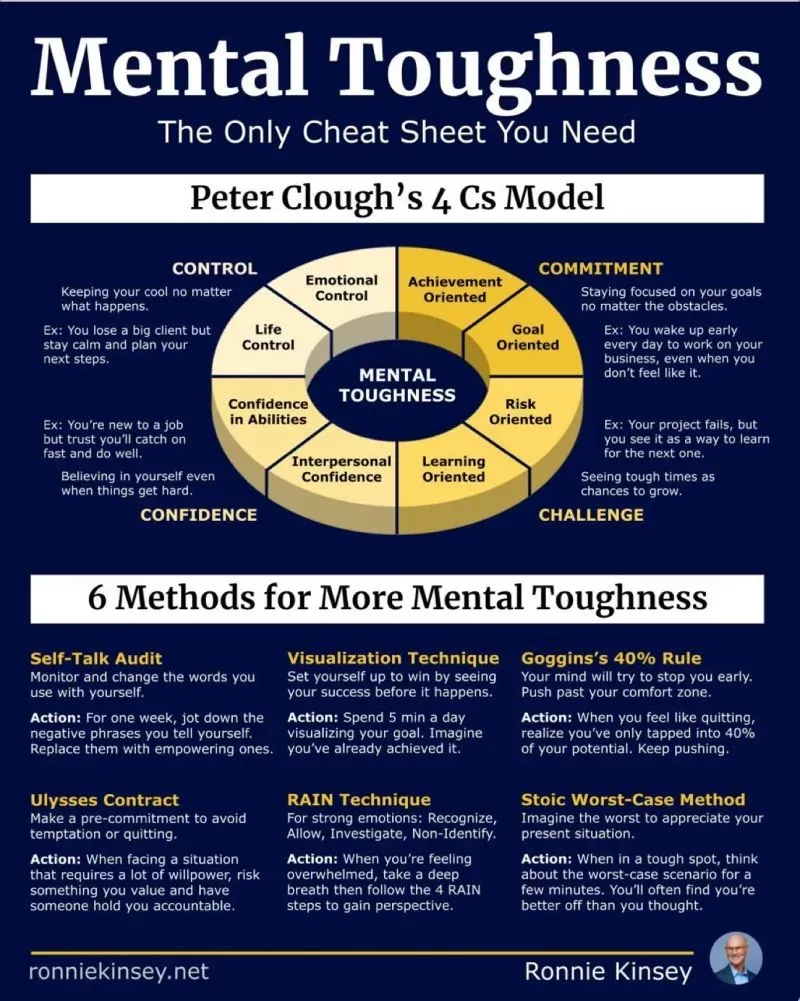
| Key Components of Mental Toughness | Description |
|---|---|
| Control | Managing thoughts and emotions during pressure. |
| Commitment | Setting goals and determination to achieve them. |
| Challenge | Seeing challenges as growth opportunities. |
| Confidence | Believing in one’s ability to succeed despite obstacles. |
Summary
Mental toughness is crucial for success in both sports and life, representing the ability to face adversity with resilience and mental fortitude. As demonstrated in the article, athletes cultivate this toughness through various means such as control, commitment, embracing challenges, and self-confidence. The training they undergo is not limited to physical prowess but extends into developing a strong mindset capable of navigating high-pressure situations. Through techniques like stress management, goal setting, and teamwork, the lessons learned in competitive environments empower individuals to excel beyond the field. Mental toughness thus emerges as a vital life skill, benefiting personal growth, relationships, and professional endeavors alike.