Listen to this article
The recent Venezuela oil tanker seizure has highlighted the ongoing efforts of the U.S. to control Venezuelan oil exports amid increasing international tensions. In a strategic operation, U.S. forces have captured multiple vessels, with the latest being the Olina, marking the fifth tanker linked to Venezuelan oil taken in recent weeks. This action underscores the implementation of strict U.S. sanctions against Venezuela, aimed at stifling the revenues that support its government. Increasingly reliant on what are being termed dark fleet tankers and ghost fleet vessels, officials are finding ways to counteract the tactics employed by those evading sanctions. The U.S. military’s decisive measures send a powerful message that illicit trade in Venezuelan oil can no longer operate without consequence.
The recent seizure of a tanker tied to Venezuela’s oil trade reflects a larger trend of U.S. interventions in maritime shipping aligned with sanctions efforts. This operation, which involved apprehending vessels under false flags in the Caribbean, illustrates a concerted push to undermine the Venezuelan economy by targeting its energy exports. In the past weeks, the U.S. has ramped up actions against what is characterized as a shadow fleet, which illegally transports oil to evade international laws. With ongoing scrutiny on ghost fleet vessels, these maritime captures serve as an indicator of the U.S. strategy to dismantle networks exploiting loopholes in sanctions against Venezuela. This escalating maritime enforcement approaches signify the lengths to which authorities will go to ensure compliance with global trade regulations.
Impact of US Sanctions on Venezuela’s Oil Industry
The implementation of US sanctions against Venezuela has significantly impacted the nation’s oil exports, a pivotal part of its economy. These sanctions are designed to curtail revenue flowing to the Venezuelan government, which is predominantly dependent on oil sales for its finances. As the US government continues to exert pressure by seizing tankers associated with Venezuelan oil, the country finds itself struggling to maintain its production levels and meet international oil demands.
In response to these sanctions, Venezuela has attempted to adapt by utilizing alternative shipping routes and engaging so-called ‘dark fleet’ tankers—vessels that operate under false flags or evade tracking. This strategy, however, has not gone unnoticed by US authorities, who have intensified their maritime surveillance and interdiction efforts to disrupt these illicit activities.
The latest seizure of tankers has reinforced the notion that US sanctions are causing a ripple effect throughout Venezuela’s oil industry, leading to a decline in exports and financial instability. As the country’s economy continues to falter, the long-term ramifications of such sanctions raise questions about the future of Venezuelan oil production and its implications for the global oil market.
US Forces Oil Tanker Seizure: A Tactical Approach
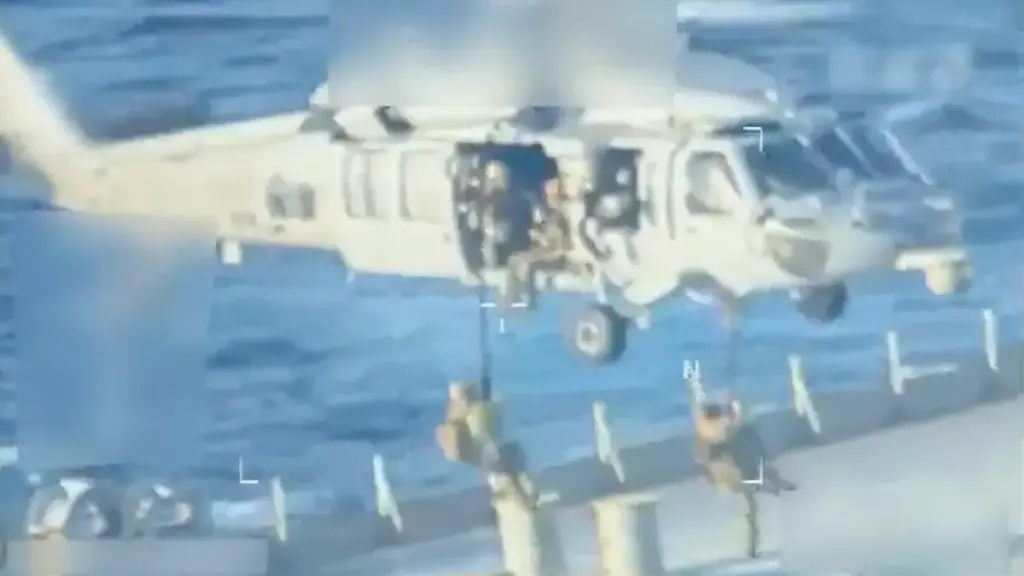
The US seizure of oil tankers linked to Venezuela, specifically the recent capture of the Olina, showcases a tactical approach to undermine the operations of the Maduro government. The US military has mobilized various resources, including the Department of Homeland Security and naval forces, to execute these complex maritime operations. These seizures send a clear signal to the international community about the consequences of engaging in the transport of sanctioned Venezuelan oil.
Officials report that the strategy includes not only intercepting these vessels but also raising awareness about the network of ghost fleet vessels operating globally to transport oil under the radar. By targeting these entities, the US aims to dismantle the infrastructure that supports Venezuela’s oil exports, thereby exerting further pressure on the regime. The coordinated efforts involving Marines and sailors highlight the seriousness of US commitment to enforcing these sanctions at sea.
The Dark Fleet: Evasion Tactics for Venezuelan Oil Transport
The concept of a ‘dark fleet’ has emerged as a critical aspect of Venezuela’s oil transport strategy, particularly in light of US sanctions. This term refers to a network of vessels that engage in illicit oil transport operations, often by circumventing tracking systems and operating under false flags. These tankers are primarily used to shuttle cargo primarily for sanctioned nations while attempting to maintain anonymity on the high seas.
As the US intensifies its seizure efforts, the dark fleet operates in a more secretive manner, employing tactics designed to evade detection from naval forces. The recent seizure of the Olina exemplifies this ongoing cat-and-mouse game between the US Navy and these shadowy operations. Maritime risk companies like Vanguard Tech are closely monitoring these developments, revealing that enforcing sanctions has become a multifaceted challenge for US authorities tasked with regulating international oil movements.
The Role of International Maritime Law in Tanker Seizures
The enforcement of US sanctions on Venezuelan oil exports raises complex issues regarding international maritime law. Under the United Nations framework, the legality of seizing stateless vessels—such as many ghost fleet tankers operating for Venezuela—is clear. These vessels, which lack a proper flag registration, become fair game for interception by any state, thus providing the US with a legal basis to carry out its maritime operations.
However, the legality of enforcing these sanctions can often become contentious, particularly when the international community has differing views on recognizing Venezuela’s government. Although US forces are within their rights to capture stateless vessels under maritime laws, the geopolitical implications of such actions can create diplomatic tensions, as other nations may have varying stances on how to approach sanctions against Venezuela.
Maritime Security: The Increasing Stakes
The ongoing seizure operations against vessels linked to Venezuelan oil exports highlight escalating stakes in maritime security. The US Navy’s active role in intercepting dark fleet tankers represents a commitment to maintaining the rule of law at sea, particularly in regions susceptible to illegal trading activities. As the government underscores the need for protecting vital economic interests, it becomes increasingly evident that maritime security is a national priority amidst broader geopolitical tensions.
Moreover, this surge in naval operations can lead to heightened risks of confrontations at sea, as the strategy includes elaborate pursuits and monitoring of suspicious vessels. Countries like Venezuela may respond with their own naval defenses, setting the stage for potential maritime conflicts that could have significant implications for regional stability and global oil markets.
Future of Venezuelan Oil Exports Amidst Seizures
The escalation of US forces’ seizure of Venezuelan oil tankers raises critical questions about the future viability of Venezuelan oil exports. With each vessel intercepted, the regime faces increasing financial strain, especially given the nation’s reliance on oil revenues to sustain its economy. The continued loss of tankers restricts Venezuela’s ability to engage in international oil trade, which has broader implications for global energy markets.
Analyzing the trajectory of Venezuelan oil exports indicates that without significant shifts in geopolitical relations or lifting of sanctions, the nation’s oil production capacity is likely to decline further. This situation could lead to more severe economic repercussions domestically, potentially exacerbating existing humanitarian crises as resources dwindle and dependency on the global market is further hampered.
US Military Operations in the Caribbean: A New Focus
The recent seizure of the Olina exemplifies the US military’s renewed focus on operations in the Caribbean region specifically aimed at countering Venezuelan oil trafficking. As the Trump administration emphasizes the importance of curbing illicit oil trade to support the Venezuelan people, naval operations have increased in frequency and sophistication to ensure effectiveness. The integration of military and intelligence assets allows for prompt responses to vessels attempting to breach the US embargo.
These operations signify a broader strategic pivot towards the Caribbean, where the majority of Venezuelan oil shipments are intercepted. By strengthening maritime security measures in this area, the US aims to deter not just Venezuelan exports but also any partnerships with other sanctioned nations like Russia and Iran, thus reinforcing its geopolitical stance in the region.
Consequences for Global Oil Markets and Venezuela’s Economy
The implications of US tanker seizures extend beyond Venezuela’s borders, profoundly impacting global oil markets. The consistent disruption of Venezuelan oil exports feeds into a larger narrative of scarcity and price volatility, as the country holds some of the world’s largest oil reserves yet is unable to effectively commercialize them. The cascading effect of reduced supply from Venezuela will continue to resonate through oil prices, particularly in an increasingly interconnected global environment.
Moreover, as Venezuela’s economy further spirals due to comprehensive sanctions and increasing military operations to seize oil tankers, the risk of heightened economic instability may escalate. This uncertainty can generate ripples of economic stress in oil-dependent nations and the global trade framework, making it crucial for investors and market analysts to closely monitor the unfolding situation and its potential consequences.
Political Ramifications of US Seizures on Venezuela
The political implications of US-sponsored tanker seizures are substantial for Venezuela’s current regime. Each interception acts as a potent reminder of the US strategy to undermine Nicolás Maduro’s government, further alienating it from international legitimacy and economic partners. As the US continues to enforce these sanctions, it weakens Maduro’s ability to govern effectively, pushing the nation toward a potential power vacuum.
As the Venezuelan government faces increasing internal pressure and reduced revenue, the potential for political change rises. These operations could catalyze opposition movements and force a reevaluation of alliances both domestically and internationally. Consequently, the ongoing tactical maneuvers by the US military not only seek to control oil exports but reshape the political landscape of Venezuela itself.
Frequently Asked Questions
What led to the recent Venezuela oil tanker seizure by US forces?
The recent Venezuela oil tanker seizure by US forces is part of ongoing efforts to control exports of Venezuelan oil. The US military’s Southern Command reported that the tanker ‘Olina’ was seized in the Caribbean after it attempted to evade US forces following a raid on President Nicolás Maduro’s operations.
How many oil tankers linked to Venezuela have been seized by US forces recently?
US forces have seized five oil tankers linked to Venezuela in recent weeks. This includes the ‘Olina,’ which is noted for its connections to Venezuelan oil exports and is one of several vessels targeted to dismantle what is referred to as the ‘dark fleet’ of tankers.
What is the significance of the ‘dark fleet’ in relation to Venezuelan oil exports?
The ‘dark fleet’ refers to a network of tankers operating under false flags or without proper registration, often involved in illicit Venezuelan oil exports. The US is targeting these vessels to exert pressure on Venezuela’s government and disrupt their oil trade, particularly those aiding in sanctions evasion.
What accusations led to the seizure of the Olina tanker linked to Venezuela?
The tanker Olina, previously named Minerva M, was sanctioned by the US for allegedly aiding in financing Russia’s war in Ukraine by transporting Russian oil. Its seizure is part of broader US efforts to limit Venezuelan oil exports and enforce sanctions against the country’s oil activities.
How has the US military conducted operations against ghost fleet vessels linked to Venezuela?
The US military has conducted operations against ghost fleet vessels, like the Olina, through coordinated efforts with agencies such as the Department of Homeland Security. This includes maritime pursuits and tactical boarding operations, as demonstrated by the recent capture of the Olina, which was intercepted after departing Venezuelan waters.
What role do international maritime laws play in the seizure of stateless vessels associated with Venezuelan oil?
International maritime laws allow authorities to board stateless vessels, which is significant in cases like the recent seizures of tankers linked to Venezuelan oil exports. This legal framework enables the US to undertake actions against vessels like the Marinera and M/T Sophia, which were found to be operating without legitimate flags.
What are the implications of the US sanctions against Venezuela in light of the recent oil tanker seizures?
The recent oil tanker seizures emphasize the strong implications of US sanctions against Venezuela. These actions are aimed at crippling the country’s oil exports and ensuring that oil revenues benefit the Venezuelan people, rather than a government seen as corrupt and oppressive.
What is the estimated value of oil expected to be turned over from Venezuela as a result of these seizures?
According to President Donald Trump, Venezuela is expected to turn over up to 50 million barrels of oil valued at approximately $2.8 billion. This oil would be sold in the marketplace, with proceeds managed to benefit the Venezuelan people.
| Key Point | Details |
|---|---|
| US Seizures | The US has seized the fifth oil tanker, Olina, linked to Venezuela in a campaign to control Venezuelan oil exports. |
| Military Operations | US military forces conducted the seizure operation in coordination with various agencies, including the Department of Homeland Security. |
| Maritime Risk | The Olina was attempting to evade a US naval blockade and was sailing under a false flag. |
| Previous Seizures | This seizure follows the prior capture of two other tankers linked to Venezuelan oil exports. |
| Venezuela’s Oil Reserves | Venezuela holds the largest proven oil reserves in the world, which the US aims to control through these actions. |
Summary
The Venezuela oil tanker seizure marks a significant escalation in the US efforts to enforce sanctions against Venezuelan oil exports. By seizing multiple vessels, including the Olina, the US aims to undermine the Maduro government’s ability to profit from its oil resources, while navigating around the extensive networks that enable these illicit activities. This strategy not only exerts pressure on the Venezuelan government but also signals a robust commitment to maritime law enforcement regarding stateless vessels involved in smuggling.