
Listen to this article
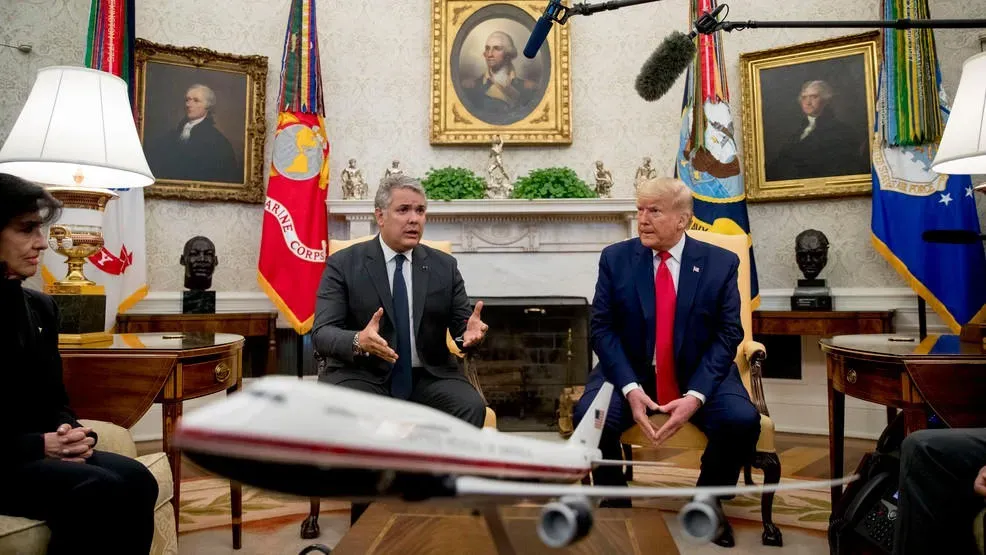
The upcoming Trump Colombian President meeting at the White House holds significant implications for US-Venezuela relations and the ongoing Colombia drug trade. President Donald Trump recently commended Colombian President Gustavo Petro for his diplomatic tone during a call, marking a pivotal moment in the partnership between these two nations. Amid rising tensions surrounding Venezuela’s political instability, the United States is intensifying its efforts to control Venezuelan oil sanctions, which directly impacts Colombia’s intricate drug trade networks. The discussion between Trump and Petro is expected to address critical issues, including how Colombia can aid in stabilizing the region while navigating the complexities of the drug cartels operating within its borders. As both leaders prepare for this high-stakes meeting, the global spotlight remains on the strategic alliance between the Trump White House and Colombia, particularly under the specter of international drug distribution and energy politics.
In light of the imminent meeting between the US President and the head of the Colombian government, diplomatic dialogues surrounding the geopolitical landscape of South America are taking center stage. This encounter not only involves President Donald Trump and his counterpart Gustavo Petro, but also touches upon broader matters affecting US-Venezuela relations and their repercussions on regional stability. Notably, the Colombia drug trade and the enforcement of Venezuela oil sanctions will likely be key topics as discussions unfold. The historical context behind these negotiations reveals underlying alliances and conflicts that have shaped the dynamics between these nations over the years. As political leaders engage in dialogue, the emphasis on constructing fruitful relations is more important than ever for addressing issues like drug trafficking and energy trade.
Trump’s Upcoming Meeting with Gustavo Petro: What to Expect
US President Donald Trump has officially announced a forthcoming meeting with Colombian President Gustavo Petro at the White House, a significant development in US-Colombia relations. This meeting comes at a time when Colombia is facing pressing issues regarding drug trafficking and its complicated relationship with neighboring Venezuela. Trump’s praise for Petro’s recent communication style indicates a newfound diplomatic openness, which could be crucial in addressing the challenges both nations face in the context of the ongoing drug trade. As Colombia continues to be a pivotal player in the narcotics market, the outcome of this meeting may determine future policies that center around drug enforcement and cooperation.
The backdrop of Trump and Petro’s meeting is also rooted in recent US operations aimed at the heart of Venezuelan governance, which reflects the strategic importance of Colombia in US foreign policy. With the US intensifying its stance against Nicolás Maduro’s regime, this upcoming dialogue could foster a collaborative framework on issues ranging from drug trafficking to economic dealings. Both countries will have to navigate a complicated landscape, influenced by Venezuela’s chaotic political situation and its impact on Colombia, especially as sanctions on Venezuelan oil tighten and affect regional trade.
Impact of US-Venezuela Relations on Colombia’s Drug Trade
As the US ramps up its sanctions on Venezuela, concerns over how these measures affect the Colombian drug trade are paramount. Venezuela has long been seen as a transit point for Colombian narcotics heading to international markets, particularly the United States. With the US pursuing a more aggressive policy towards Venezuela, there are fears that striking at Maduro’s government may inadvertently destabilize the region further. Colombian President Gustavo Petro’s administration must tread carefully to balance its international relations with the United States while managing internal security and the pervasive influence of drug cartels.
Moreover, the sanctions against Venezuelan oil could alter the dynamics of illicit drug flows through Colombia. If Venezuelan access to international markets diminishes, the resulting economic pressure might prompt a surge in drug production and trafficking as a means of economic survival. This potential outcome underscores the complexity of US-Venezuela relations and their ripple effects throughout Colombia. With both Trump and Petro acknowledging these multifaceted issues, their meeting could pave the way for joint initiatives tackling not only drug trafficking but also the socio-economic conditions contributing to it.
Gustavo Petro: Navigating Challenges Amidst US Pressure
President Gustavo Petro is currently in a precarious position, having to defend his administration’s stance against drug trafficking while facing pressure from the US government. The recent sanctions imposed on Petro for allegedly failing to curb drug production have heightened tensions between the two countries. Petro asserts that he has been actively combating drug cartels and has previously claimed that coca crop expansion has been managed under his leadership. Amidst Trump’s vocal criticisms and remarks about Colombia’s drug trade, Petro is now tasked with addressing concerns that could affect bilateral relations.
Petro’s strong warning against potential US military actions underscores the fragility of US-Colombia relations as both countries grapple with the valid concerns of the drug trade and endangerment of national sovereignty. Moving forward, it is vital for Petro to articulate a clear strategy that aligns Colombian interests with US objectives. Securing a fruitful dialogue and collaboration from the upcoming meeting with Trump is essential in mitigating US dissatisfaction regarding Colombia’s drug policies while also ensuring that Colombia’s rights and sovereignty are respected in the process.
The Role of Oil Sanctions in US Foreign Policy
The ongoing sanctions on Venezuelan oil are a critical element of US foreign policy that reverberate throughout Latin America, particularly in Colombia. As the US aims to undermine Maduro’s regime, it simultaneously places pressure on regional partners like Colombia to adopt stringent anti-drug trafficking measures. The intersection of oil sanctions and drug trafficking illustrates the complexities of foreign policy wherein economic strategies can have unintended consequences on neighboring nations’ internal policies. Colombia’s oil reserves, alongside its role in the narcotics trade, makes it a focal point in these discussions.
For Colombian officials, the tightening of oil sanctions against Venezuela presents both opportunities and threats. While it may provide a chance for Colombia to increase its standing with the US, it also serves as a reminder of the challenges posed by domestic drug cartels, which could exploit a destabilizing Venezuela. Furthermore, as Trump’s administration continues to tighten restrictions on Venezuela, it could potentially create a vacuum that might further exacerbate Colombia’s longstanding issues with drug trafficking. It’s essential that both nations work together strategically to find solutions that foster stability without compromising security.
Potential Outcomes of the Trump-Petro Meeting
The anticipated meeting between President Trump and President Petro holds much promise for transforming US-Colombia relations. It could lead to new agreements concerning drug trafficking and collaborative efforts in fighting the cocaine trade that has plagued Colombia for decades. To effectively tackle these issues, both leaders must develop a united front that addresses the complexities of regional politics, drug cartels, and economic cooperation. Given Trump’s critical remarks towards Petro, setting forth a constructive dialogue will be key to establishing a workable partnership.
Additionally, outcomes from their discussions may also affect the broader dynamics of US-Latin America relations, particularly in the context of Venezuela. A successful meeting could enhance Colombia’s geopolitical standing, galvanizing the country as a key ally in the regional fight against drugs and crime linked to Venezuela’s growing instability. The stakes are high, and both Trump and Petro must demonstrate willingness to engage in pragmatic solutions that not only elevate bilateral cooperation but also confront the narcotics crisis head-on.
Reactions to US Interventions in Latin America
The escalating US interventions in Latin America, particularly the recent military operations targeting Venezuela, have sparked significant reactions within Colombia. President Gustavo Petro, expressing concerns over sovereignty, suggested that any military action could provoke strong nationalistic sentiments among Colombians. This sentiment amplifies the historical context of US involvement in Latin America, which has often been met with resistance and criticism. The upcoming meeting with Trump could serve as a platform for Petro to articulate these apprehensions while seeking assurances that Colombia’s sovereignty will be respected.
Moreover, the reactions to US interventions are not solely confined to political rhetoric; they influence public opinion and socio-political stability within Colombia. The fear of becoming embroiled in colonial-style interventions could destabilize the region further. Thus, Petro’s dialogue with Trump will also play a crucial role in shaping public perception of the US-Colombia partnership and determining whether it can evolve from a history of intervention into a more collaborative framework. Open, honest conversation is paramount in addressing these sensitive geopolitical concerns.
The Dynamics of US-Colombia Cooperation
The relationship between the US and Colombia has been characterized by complex interactions shaped by historical ties and mutual interests. As US involvement in the Colombian drug trade continues to be a focal point of concern, it will be crucial for the two nations to cultivate a cooperative dynamic that emphasizes partnership rather than unilateral actions. Trump’s upcoming meeting with Petro is an opportunity to realign their cooperation efforts, ensuring both countries can jointly tackle the multifaceted challenges of narcotics trafficking while respecting Colombia’s national integrity.
Additionally, the evolution of US-Colombia cooperation will need to address the socio-economic conditions that drive drug trafficking in Colombia. Collaboratively developing initiatives that support economic growth, social stability, and security reforms will be vital in reducing reliance on the drug trade. By fostering sustainable partnerships, the US and Colombia can work towards creating a viable path forward that reflects the interests of both nations while improving safety and prosperity across the region.
Future Implications for Colombia’s Drug Policy
The developments following Trump and Petro’s anticipated meeting will inevitably have far-reaching implications for Colombia’s drug policy. As Trump pushes for stringent measures against drug trafficking, Colombia may be compelled to align its policies with US expectations. However, it is imperative for Petro to advocate for policies that consider the complexities of the drug trade and the socio-economic realities facing Colombian farmers and communities. His administration’s approach should not only fulfill US demands but also foster domestic growth and social welfare.
Conversely, failure to achieve a constructive outcome in the meeting could lead to continued tensions and further sanctions, complicating the already challenging landscape of drug policy in Colombia. This highlights the importance of negotiation: both countries must arrive at a balanced agreement that enables effective drug control while promoting Colombia’s development. Addressing these policies with a focus on collaboration and respect for sovereignty could pave the way for a more stable and effective approach to combating drug trafficking.
Conclusion: Navigating a Complex Landscape
In conclusion, the upcoming meeting between President Trump and Gustavo Petro presents an opportunity for both leaders to navigate a complex landscape of geopolitical dynamics, drug trafficking, and national sovereignty. As the US seeks to bolster its stance against Maduro and the Venezuelan regime, Colombia remains a pivotal ally that must balance foreign demands with domestic needs. Strategic dialogue will be key as both nations address their shared challenges while forging a path towards cooperation that respects the intricate realities present in the region.
Ultimately, the success of US-Colombia relations lies in the ability of both countries to transcend historical tensions and embrace a future defined by mutual respect and strategic collaboration. Should Trump and Petro manage to establish a productive relationship, it could redefine not only the dynamics of their countries but also the broader framework of US engagement in Latin America. As they prepare to meet, the eyes of the world are on them, watching closely to see how these two leaders will steer their nations through uncertain waters.
Frequently Asked Questions
What is the significance of the Trump Colombian President meeting with Gustavo Petro?
The Trump Colombian President meeting with Gustavo Petro at the White House signifies a pivotal moment in US-Colombia relations, particularly concerning issues such as the Colombia drug trade and US Venezuela relations. Trump’s acknowledgment of Petro’s ‘tone’ during their call reflects an intention to strengthen diplomatic ties.
How might the Trump White House approach the Colombia drug trade during the meeting with Petro?
During the Trump White House meeting with Colombian President Gustavo Petro, discussions are expected to focus on combating the Colombia drug trade, especially concerning cocaine production. The US aims to address concerns over rising drug trafficking and find collaborative approaches to mitigate these challenges.
What potential impact will US Venezuela relations have on the Trump Colombian President meeting?
US Venezuela relations will likely play a crucial role in the Trump Colombian President meeting, especially following recent US military actions in Venezuela. The discussions may cover how Colombia can assist the US in modifying its stance on Venezuela, particularly regarding oil sanctions and regional stability.
What topics are likely to be addressed in the Trump Colombian President meeting?
Topics in the Trump Colombian President meeting are expected to include the Colombia drug trade, US Venezuela relations, and economic partnerships. With Colombia’s crucial role in drug production and its geopolitical significance, these discussions will aim to foster cooperation and address mutual concerns.
How does the meeting between Trump and Gustavo Petro relate to Venezuelan oil sanctions?
The meeting between Trump and Gustavo Petro is intricately linked to Venezuelan oil sanctions, as the Trump administration is poised to redefine its strategy in the region. As both Colombia and Venezuela are key players in oil production, discussions may include how sanctions affect trade dynamics and regional stability.
Why did Trump express a cautious tone towards Petro regarding drug issues?
Trump expressed a cautious tone towards President Gustavo Petro concerning drug issues because Colombia has been a major source of cocaine production. His remarks reflect the US’s frustration with the perceived increase in drug trafficking under Petro’s administration and illustrate the importance of addressing this issue in their upcoming meeting.
What are the implications of Trump’s comments about Colombia’s role in drug trafficking during the meeting?
Trump’s comments about Colombia’s role in drug trafficking during the Trump Colombian President meeting highlight the US’s strict stance on drug enforcement. His characterization of Petro’s administration underlines the urgency of cooperation to combat drug production and aims to pressure Colombia into more effective anti-drug policies.
How might the outcome of the Trump Colombian President meeting affect future US foreign policy?
The outcome of the Trump Colombian President meeting could significantly influence US foreign policy in Latin America, especially regarding US Venezuela relations and the approach to drug trafficking and sanctions. A strategic partnership with Colombia may lead to enhanced efforts to restrict drug trade while establishing stronger diplomatic relations.
What warnings did Trump give to Petro before their upcoming meeting?
Before their upcoming meeting, Trump warned Colombian President Gustavo Petro to ‘watch his ass,’ signaling a tough stance on drug trafficking and implying consequences if Colombia fails to cooperate with US efforts to combat the drug trade.
What was the reaction from Colombia regarding the US military actions in Venezuela before the meeting?
Colombia’s reaction, articulated by President Gustavo Petro, was one of warning against potential military action by the US in Venezuela. Petro indicated that any aggression towards his nation could provoke a strong response, emphasizing the delicate balance in US-Colombia relations ahead of the Trump Colombian President meeting.
| Key Point | Details |
|---|---|
| Meeting Announcement | Trump to meet Colombian President Gustavo Petro at the White House soon. |
| Call Appreciation | Trump praised Petro’s tone during a recent conversation. |
| Colombian Drug Trade | Colombia is a crucial center for cocaine production and has large oil reserves. |
| US-Venezuela Relations | The US conducted a raid in Venezuela, capturing Maduro and resulting in many casualties. |
| Military Threat | Petro warned of military actions if the US acts against Colombia. |
| US Sanctions | In October, the US sanctioned Petro for failing to tackle drug trafficking. |
Summary
The Trump Colombian President meeting, set to take place at the White House, highlights the intricate relationship between the US and Colombia involving drug trade and military concerns. While President Trump has praised Gustavo Petro’s willingness to discuss these issues, tensions remain due to recent events involving Venezuela. As both leaders prepare for future collaboration, the effectiveness of Colombia’s policies on drug production will be under scrutiny. It is crucial for both nations to navigate these challenges to foster a more stable and productive partnership.

