Listen to this article
In a dramatic twist of modern geopolitics, the arrest of Nicolás Maduro has sent shockwaves through Venezuela and beyond. This high-stakes operation, known as “Operation Absolute Resolve,” marked a significant escalation in US military interventions, reminiscent of Cold War maneuvering. Early Saturday morning, Maduro was apprehended inside a fortified compound as US forces executed a surprise attack aimed at dismantling his regime. The unfolding events, now deemed as a landmark moment in international relations, have left many reeling as images of the capture dominate the news. As Maduro faces serious charges related to narco-terrorism, the implications of this operation are being felt across the political landscape and in the hearts of Venezuelans.
The recent apprehension of Venezuela’s leader has ignited fervent discussions surrounding the political tensions in the region. With Nicolás Maduro now in custody, the term ‘Maduro capture’ is quickly garnering headlines, sparking debates on sovereignty and interventionism. The rapid execution of ‘Operation Absolute Resolve’ highlights a highly coordinated military effort that many see as a significant turnaround in US foreign policy towards South America. As analysts delve into the geopolitical ramifications, they are closely monitoring how this important development in Venezuela news will influence the broader narrative on drug trafficking and international justice.
Unprecedented Military Operation: Operation Absolute Resolve
The US military operation, referred to as ‘Operation Absolute Resolve,’ represented an audacious maneuver aimed at capturing Nicolás Maduro, the president of Venezuela. Launched under the directive of former President Donald Trump, the operation was meticulously planned over several months, yet its execution lasted a mere 150 minutes. The attack took place early on a Saturday morning, catching Maduro and his officials by surprise. The operation marked a significant turning point in U.S.-Venezuelan relations and heightened international political tensions.
US military forces targeted key locations in Caracas, with reports indicating focused strikes on vital infrastructures including Fuerte Tiuna, a military complex that housed Maduro and his leadership circle. The covert nature of the operation and the efficiency with which it was executed showcased the enhanced capabilities of the US military in executing high-stakes operations. General Dan Caine, leading the operation, confirmed that total surprise was achieved, crucially aiding in the apprehension of Maduro and his wife, Cilia Flores.
The Strategic Capture of Nicolás Maduro
The strategic arrest of Nicolás Maduro during Operation Absolute Resolve demonstrates the lengths to which the US is willing to go to reassert its interests in Latin America. Captured by Delta Force operatives, Maduro and his wife attempted to reach a fortified safe room at Fuerte Tiuna but were thwarted by the rapid response of US troops. Trump’s rhetoric framed the event as a triumph of American efforts against narco-terrorism, emphasizing the gravity of the charges lodged against them.
Maduro’s arrest not only underscores issues surrounding his regime’s drug trafficking connections but also signals a potential shift in the political landscape of Venezuela. As he faces serious accusations such as conspiracy to commit narco-terrorism, the ramifications of his capture could reverberate through Venezuelan politics for years to come. The capture serves as a stark reminder of the ongoing battle against drug-related crime impacting not just Venezuela but the broader region.
Impact of Maduro’s Arrest on Venezuela and International Relations
The arrest of Nicolás Maduro has profound implications for Venezuela’s political future and its relationship with external powers, particularly the United States. Following his capture, the prospect of a power vacuum emerges, raising questions about who may step into leadership roles amidst the uncertainty. The opposition within Venezuela has been reinvigorated in the wake of this significant event, as they see an opportunity to capitalize on the apparent weakening of Maduro’s regime.
On the international stage, Maduro’s capture may lead to polarized responses from various countries. While nations allied with Maduro’s government may rally against the perceived US aggression, others critical of his administration may view this as a pivotal moment to consolidate power against narcoterrorism. The US’s approach, marked by military intervention to achieve regime change, might set a precedent leading to increased tensions, not only in Venezuela but across the Latin American region.
Inside the Operation: Execution and Results
The execution of Operation Absolute Resolve was marked by speed and precision, with initial explosions marking the beginning of the offensive at 02:00 local time. By taking tactical control over key vantage points, US forces were able to dismantle Maduro’s defenses, thus facilitating a swift approach towards capturing the president. The coordinated efforts of intelligence and military units showcased an integrated strategy aimed explicitly at achieving a critical military objective: the safe capture of Maduro and his inner circle.
General Caine’s leadership was central to the success of the operation, as strategic decisions in the heat of action determined the eventual outcomes, including the unhindered capture of Maduro and his wife. This demonstrates an evolution of US military capabilities in urban warfare and precision operations, reinforcing the importance of preparation coupled with the ability to adapt dynamically during missions.
Maduro’s Transportation from Caracas to New York Jail
Immediately following their capture, Nicolás Maduro and Cilia Flores were swiftly evacuated from Caracas to a US naval vessel in the Caribbean. The journey marked a significant transition from the stronghold of their regime to the heart of American justice. The choice of the USS Iwo Jima as a transport vessel highlights the logistical complexities involved in moving high-profile detainees under heavy scrutiny and security measures.
Upon arrival in New York, the couple was placed under strict surveillance, emphasizing the seriousness of their charges related to narco-terrorism. The transition from a military capture operation to a judicial process reflects the US’s intent to pursue legal accountability, reinforcing the adage that no one is above the law, irrespective of their political stature. As Maduro now faces multiple serious charges, the court proceedings will surely draw international attention.
Visual Evidence: The Images and Maps of the Operation
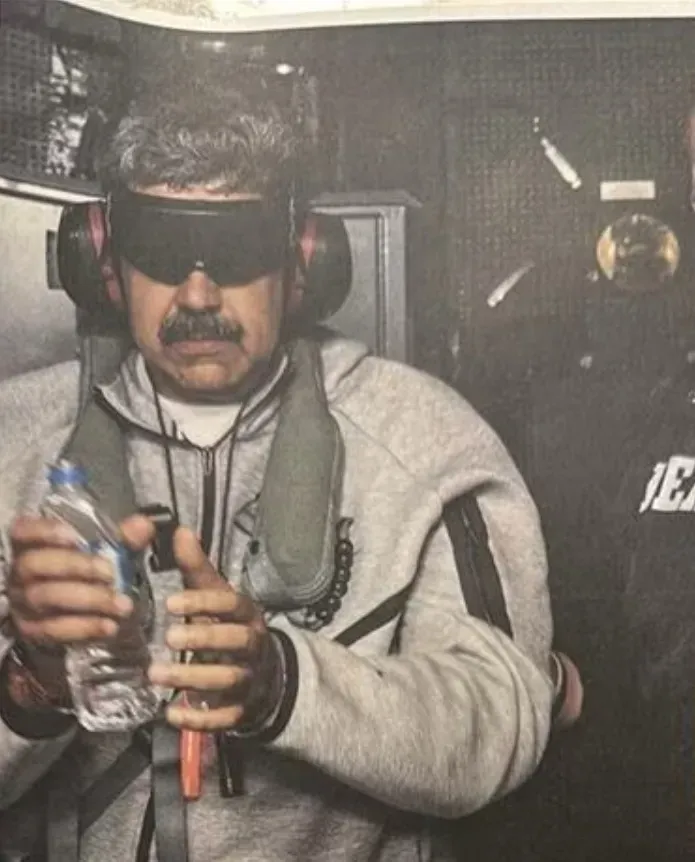
The recent military operation has brought forth shocking visual documentation surrounding the arrest of Nicolás Maduro. Images depicting the aftermath of the attack on Fuerte Tiuna reveal the severe damage inflicted on a facility that once epitomized strength for the Venezuelan government. Photographs of smoldering vehicles and debris have surfaced, illustrating the chaotic scene that enveloped Caracas during those early hours of the operation.
In addition to photos, maps have been released demonstrating the tactical approach taken by US forces. They reveal not only the targeted locations but also the strategic pathways utilized to ensure a swift operation, minimizing risks and maximizing success. Such visual aids are not only crucial for historical archives but also serve as powerful tools to communicate the gravity of US military actions on foreign soil.
Reactions to Maduro’s Arrest Around the World
The international community’s reaction to Maduro’s arrest has been largely polarized. Some nations, particularly those critical of the US, view the military operation as an unwarranted act of aggression that infringes on Venezuela’s sovereignty. Allies of Maduro, including Russia and China, condemned the actions taken by the US, framing them as exacerbating tensions in an already unstable region.
Conversely, several countries that have been impacted by the fallouts from Venezuela’s drug trafficking crisis expressed support for the operation. They see the capture of Maduro not just as a victory for US law enforcement but an opportunity to bolster regional security against narco-terrorism. The split in reactions highlights the global divide on issues of military intervention and national sovereignty, setting the stage for ongoing diplomatic battles.
Legal Proceedings Following the Arrest
With Maduro now in US custody, the legal landscape becomes paramount. The charges against him and his wife are severe, including serious accusations of conspiracy to commit narco-terrorism, which carries substantial consequences. Attorney General Pam Bondi has declared that the Maduros will face the full extent of American law, emphasizing the commitment to accountability and the fight against global drug trafficking.
The implications of these legal proceedings are extensive, as they will not only determine the fates of Maduro and his wife but also impact Venezuelan politics moving forward. The proceedings are expected to attract significant media attention, drawing in supporters and critics alike, as the world watches how American justice will approach such a high-profile case. Overall, the legal repercussions of this operation could redefine reckonings around drug-related crimes and international political accountability.
Historical Context: The Downfall of a Regime
The dramatic events leading to Nicolás Maduro’s arrest must be contextualized within the broader historical narrative of Venezuela’s political environment. Over the past decade, Maduro’s presidency has been riddled with accusations of corruption, human rights abuses, and the mismanagement of the nation’s economy. These factors have contributed to widespread discontent among Venezuelans and have paved the way for international intervention.
This operation is not an isolated incident but rather a culmination of years of escalating tensions between the US and Maduro’s government. The fall of a regime marked by authoritarian practices underscores a potential turning point for a nation struggling under the weight of its political crises. The arrest could initiate a new phase towards reconstruction, democracy, and international collaboration, all dependent on how the situation unfolds in the coming months.
Frequently Asked Questions
What led to Nicolás Maduro’s arrest during Operation Absolute Resolve?
Nicolás Maduro’s arrest was part of a US military operation called Operation Absolute Resolve, which was executed in Caracas, Venezuela. The operation involved months of planning and included a surprise attack that lasted approximately 150 minutes, culminating in the capture of Maduro and his wife as they attempted to escape into a secure area within Fuerte Tiuna, a military complex.
How did the US military manage the capture of Maduro?
The US military operation to capture Nicolás Maduro involved elite soldiers from Delta Force and included disabling power in Caracas to achieve total surprise. The operation commenced around 02:00 local time, with troops deploying swiftly to apprehend Maduro and Cilia Flores, who surrendered without a struggle but attempted to reach a fortified safe room.
What charges are Nicolás Maduro and Cilia Flores facing after their arrest?
Nicolás Maduro and his wife, Cilia Flores, are facing serious charges including conspiracy to commit narco-terrorism, importation of cocaine, possession of machine guns, and conspiracy related to these weapons. These charges highlight their involvement in activities against US law.
What were the immediate consequences of Maduro’s capture by the US military?
Following Nicolás Maduro’s capture, he was flown approximately 2,100 miles to New York City. The Maduros faced heavy security during their transport and arrival at the detention center. The operation marked a significant event in international relations, showcasing US military intervention in Venezuela.
What significance does Operation Absolute Resolve hold in the context of US-Venezuela relations?
Operation Absolute Resolve signifies a drastic shift in US military policy towards Venezuela, representing an unprecedented direct intervention and demonstration of force. The operation illustrates the US’s commitment to addressing what it views as narco-terrorism emanating from Maduro’s government, reshaping diplomatic relations and the geopolitical landscape.
How has the capture of Maduro impacted Venezuela and its political situation?
The capture of Nicolás Maduro has intensified political turmoil in Venezuela, raising questions about the future of governance in the country. It has encouraged opposition movements and may lead to further instability as supporters and dissenters react to the unprecedented action taken by the US.
What were the strategic objectives of Operation Absolute Resolve?
The strategic objectives of Operation Absolute Resolve included disabling Venezuela’s air defenses, ensuring total surprise for US military forces, and capturing Nicolás Maduro and his administration to dismantle their control over narco-terrorism operations that are said to support drug trafficking to the US.
What evidence is available regarding Maduro’s attempted escape during the operation?
During the operation, it was reported that Nicolás Maduro attempted to flee into a reinforced safe room within the military complex. However, US troops intercepted him before he could access the secure area, illustrating the efficiency of the operation aimed at capturing him.
| Key Points | Details |
|---|---|
| Planning for Capture | Operation Absolute Resolve was meticulously planned over months but executed in about 150 minutes. |
| Execution of Operation | The operation commenced early morning with US military helicopters attacking Caracas, leading to Maduro’s capture. |
| Capture Location | Maduro and Cilia Flores were captured at Fuerte Tiuna, a Venezuelan military complex after attempting to escape into a fort-like room. |
| US Military Involvement | Delta Force troops executed the capture with minimal resistance from Maduro, who surrendered after a brief attempt to flee. |
| Transport to US | Following their capture, the Maduros were flown to New York City by helicopter and then transferred to a detention center. |
| Charges Filed | Both Maduro and his wife face serious charges, including narco-terrorism and weapons possession. |
| Public Reaction and Security | Heavy security surrounded their arrival in New York; Maduro appeared at the DEA headquarters soon after. |
Summary
The Maduro arrest marks a significant turning point in international politics, showcasing the involvement of US military operations in foreign leadership changes. Following months of careful planning, the operation resulted in the sudden capture of Nicolás Maduro and his wife during a surprise attack in Caracas. Facing multiple serious charges, the couple is now held in a New York detention center, indicating a bold approach by the US government towards narco-terrorism. This unprecedented event highlights the complexities of modern diplomacy and military intervention, setting a notable precedent in global governance.